Field Report: High-Power Deep Penetration Commissioning – Turin Industrial Sector
This report details the technical commissioning and performance evaluation of a 20kW high-power Industrial Laser Welder deployed at a heavy fabrication facility in Turin, Italy. The primary objective was to transition a critical structural assembly line from Submerged Arc Welding (SAW) to advanced Laser Technology to address throughput bottlenecks in Thick Plate Steel welding applications.
Site Context and Infrastructure Integration
The facility, located in the industrial outskirts of Turin, specializes in the production of heavy-duty chassis components for the European transport and rail sectors. Historically, these components relied on multi-pass GMAW or SAW, which introduced significant heat input and subsequent distortion. By integrating a dedicated Industrial Laser Welder, the aim was to achieve single-pass, full-penetration welds on 15mm to 25mm S355JR structural steel.
Turin’s industrial power grid and the workshop’s existing cooling infrastructure presented initial challenges. The Laser Technology implemented here utilizes a Ytterbium fiber source, which requires a highly stabilized chiller circuit to maintain a ΔT of ±1°C. During the first week of deployment, we identified that the workshop’s ambient temperature fluctuations required an upgrade to the secondary heat exchanger to prevent thermal lensing in the processing head.
Synergy Between Laser Technology and Industrial Hardware
The success of deep penetration welding is not merely a function of raw power; it is the synergy between the Industrial Laser Welder’s control architecture and the underlying Laser Technology. In this specific application, we utilized a 200µm delivery fiber, which provides the necessary power density to maintain a stable “keyhole” at depths exceeding 18mm.
Beam Dynamics and Keyhole Stability
In Thick Plate Steel welding, the primary hurdle is maintaining the vapor tunnel (keyhole) against the hydrostatic pressure of the molten pool. The Industrial Laser Welder used in Turin features a customized optical train that allows for beam oscillation (wobble). By applying a 1.5mm transverse oscillation at 200Hz, we successfully widened the fusion zone, which mitigated the risk of centerline cracking—a common failure mode when applying high-intensity Laser Technology to thick sections.
Gas Dynamics and Plasma Suppression
While fiber lasers (operating at ~1.06µm) are less susceptible to plasma shielding than CO2 lasers, the sheer volume of metal vapor generated during 20mm Thick Plate Steel welding necessitates precise shield gas management. We implemented a coaxial Argon-Helium mix at 25L/min. The Industrial Laser Welder’s nozzle assembly was modified with a “knife” air curtain to protect the cover slide from spatter, which is significantly more violent at these power levels than in thin-sheet applications.
Technical Analysis: Thick Plate Steel Welding Performance
The core of the Turin field trials focused on the square-butt joint configuration of 20mm S355JR plates. Standard arc processes would typically require a 60-degree V-groove and five to seven passes. Using the Industrial Laser Welder, we moved to a zero-gap square-butt preparation.
Parameters for 20mm Penetration
- Power: 19.5 kW at the workpiece.
- Travel Speed: 1.2 meters per minute.
- Focal Position: -8mm (buried focal point to maximize energy distribution within the plate).
- Joint Preparation: Laser-cut or machined edges are mandatory.
The resulting weld profile showed a depth-to-width ratio of approximately 10:1. This is the hallmark of advanced Laser Technology. The Heat Affected Zone (HAZ) was reduced by 85% compared to the previous SAW process. This reduction is critical for the Turin facility, as it eliminates the need for post-weld flame straightening, saving approximately four man-hours per chassis component.
Metallurgical Observations
Cross-sectional analysis of the Thick Plate Steel welding samples revealed a highly refined martensitic-bainitic structure in the fusion zone. Due to the rapid cooling rates inherent in Laser Technology, hardness values peaked at 320 HV10. While this is acceptable for S355JR, we implemented a slight induction pre-heat (150°C) using a localized coil ahead of the Industrial Laser Welder head to ensure the toughness values met the Eurocode 3 standards for cold-weather impact resistance.
Lessons Learned and Field Hardened Solutions
1. The “Turin Fit-up” Challenge
The most significant “lesson learned” during this deployment was the sensitivity of Laser Technology to joint fit-up. In traditional Thick Plate Steel welding, a 1mm or 2mm gap is easily bridged by filler wire. With the Industrial Laser Welder, a gap exceeding 0.3mm resulted in significant underfill or drop-through.
The Solution: We had to overhaul the shop’s upstream tacking and clamping procedures. We introduced hydraulic “bridge” clamps to ensure a zero-gap fit-up before the laser head entered the sequence.
2. Back-Reflection Management
When welding thick steel, particularly if there are surface contaminants like mill scale, back-reflection can damage the optical fiber. Even though the Industrial Laser Welder is equipped with back-reflection sensors, frequent trips were stalling production.
The Lesson: We integrated a pre-weld cleaning station utilizing a secondary low-power pulsed laser to strip mill scale 20mm wide along the weld path. This synergy between two different types of Laser Technology ensured 99% uptime of the primary welding source.
3. Optical Contamination in Heavy Industry
A Turin workshop in August is hot and dusty. The sensitive optics of an Industrial Laser Welder do not thrive in such environments.
The Solution: We transitioned from a standard passive cooling cabinet to a pressurized, climate-controlled “laser house” for the power source. Furthermore, we implemented a strict “Cover Slide Protocol” where slides are inspected every four hours of beam-on time. This reduced the incidence of “thermal shift” which was causing the focal point to drift during long 6-meter welds on Thick Plate Steel welding runs.
Operational Synergy: The Human Element
Transitioning to Laser Technology in a traditional Italian engineering hub required a shift in operator mindset. The welders in Turin are highly skilled in manual processes, but the Industrial Laser Welder requires more “technician” skills than “craftsman” skills. We spent three weeks training the staff on CNC programming and optical maintenance. The synergy here is found in combining their knowledge of steel behavior (noting how the plate “moves” under heat) with the precision of the laser.
Final Assessment and Conclusion
The deployment in Turin confirms that high-power Laser Technology is now a mature solution for Thick Plate Steel welding. The Industrial Laser Welder demonstrated its ability to replace multiple arc-welding stations, reducing the total energy consumption of the facility by 40% per meter of weld.
For future deployments, the focus must remain on joint preparation and optical cleanliness. While the 20kW source provides the “brute force” necessary to penetrate 25mm steel, the “finesse” of the process lies in the stabilization of the keyhole and the precision of the upstream fabrication. The Turin facility now stands as a benchmark for European heavy industry, proving that the transition from traditional arc to Industrial Laser Welder systems is not only viable but essential for remaining competitive in high-labor-cost markets.
Key Performance Indicators (KPIs) Achieved:
- Weld Speed Increase: 450% over SAW.
- Rework Rate: Dropped from 8% to <1.5% after fit-up optimization.
- Consumable Cost: 60% reduction (elimination of flux and 70% reduction in filler wire).
Signed,
Senior Welding Engineer, Field Operations
-


LT240S tube laser cutting machine
-
LT120S tube laser cutting machine
-
Sale

Tank Fillet Welding Machine
Original price was: $1,000.00.$900.00Current price is: $900.00. -
Sale

MAK100 tube laser cutting machine
Original price was: $5,500.00.$5,000.00Current price is: $5,000.00. -

portable plasma air cutting machine
$1,200.00 -

2in1 fiber laser cutting machine
-

Air cooling Laser welding machine
-

HF h beam laser cutting machine
-

LT240 laser cutting machine
-

Laser welding machine
-


Cobot Welding Station
-

Gantry welding robot solution
-

Tracked Wheeled AGV Welding robot
-

LFH6020 Fiber laser cutting machine
-
LFP6020
-

robotic welidng machine
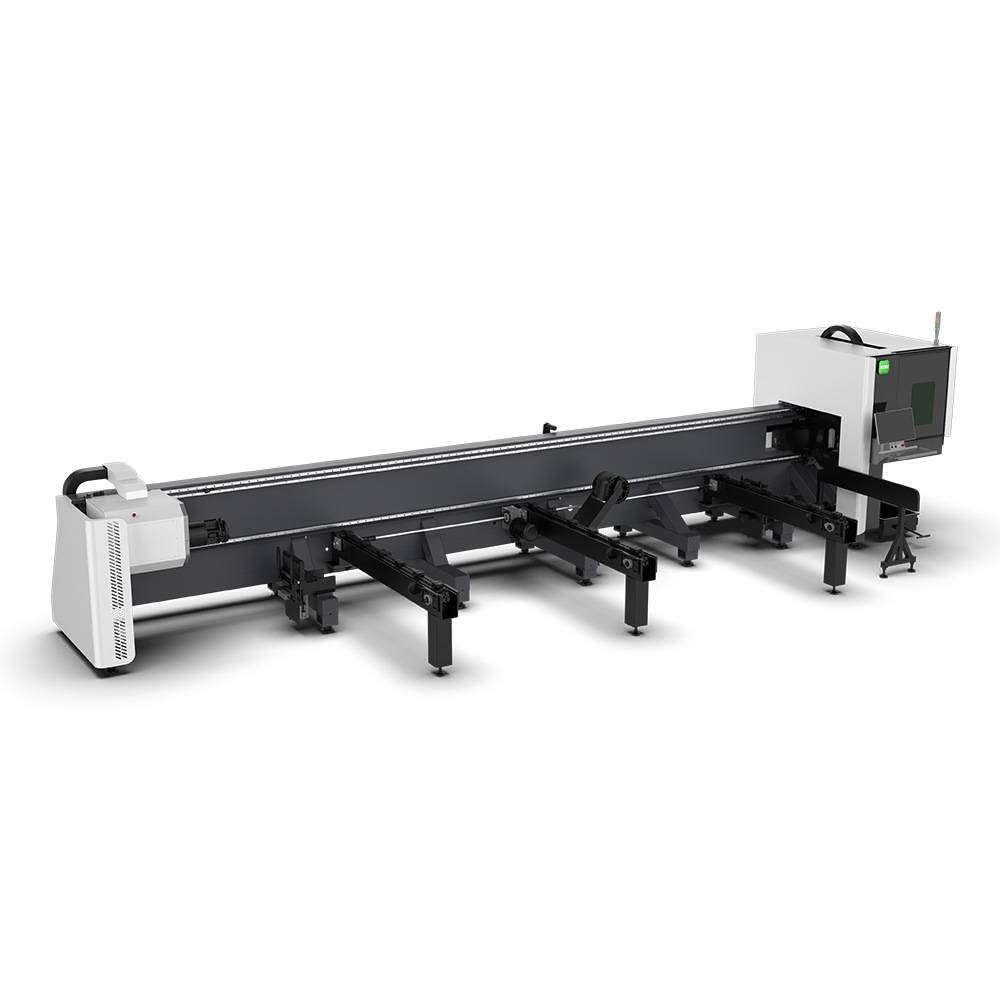
Advanced Fiber Laser Tube Processing Technology
Our CNC Fiber Laser Tube Cutting systems revolutionize metal fabrication by integrating high-precision cutting, punching, and profiling into a single automated workflow. Designed for versatility, this technology handles a wide array of profiles including Round, Square, Rectangular, and Oval tubes, as well as complex L-shaped and U-shaped channels.
- Precision Punching: High-speed hole punching with micron-level accuracy, eliminating the need for mechanical drilling or die-stamping.
- Complex Profiling: Advanced 3D pathing allows for intricate interlocking joints and specialized notch cuts, ideal for structural frames.
- High Material Efficiency: Intelligent nesting software minimizes scrap, reducing raw material costs across large production runs.
- Clean Finish: Delivers oxide-free, burr-free edges that require zero secondary grinding before welding.

Seamlessly processing multiple profiles with consistent precision.
Global Delivery & Logistics



From our high-tech manufacturing facility directly to your global site. PCL WeldCut ensures secure packaging, professional handling, and reliable international logistics to safeguard your equipment throughout the entire journey.