Engineering Review: Precision CMT Robotic Arm Welder – Rayong, Thailand
In this article
- Field Report: Optimization of CMT Robotic Arm Welder for Galvanized Pipe Production
- Location: Rayong Industrial Park, Thailand
- Project Overview: Automotive Exhaust and Structural Component Integration
- The Synergy of the Robotic Arm Welder and Industrial Automation
- Hardware Configuration and Site-Specific Adaptations
- Technical Challenges in Galvanized Pipe Welding
- Addressing Porosity through Waveform Modulation
- The Impact of Humidity on Shielding Gas
- The Role of Industrial Automation in Quality Control
- Automated Maintenance Cycles
- Lessons Learned and Senior Engineering Insights
- 1. The “Push” Technique is Non-Negotiable
- 2. Gap Consistency is Key
- 3. Managing the Zinc Smoke
Field Report: Optimization of CMT Robotic Arm Welder for Galvanized Pipe Production
Location: Rayong Industrial Park, Thailand
Project Overview: Automotive Exhaust and Structural Component Integration
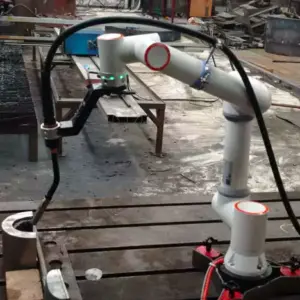
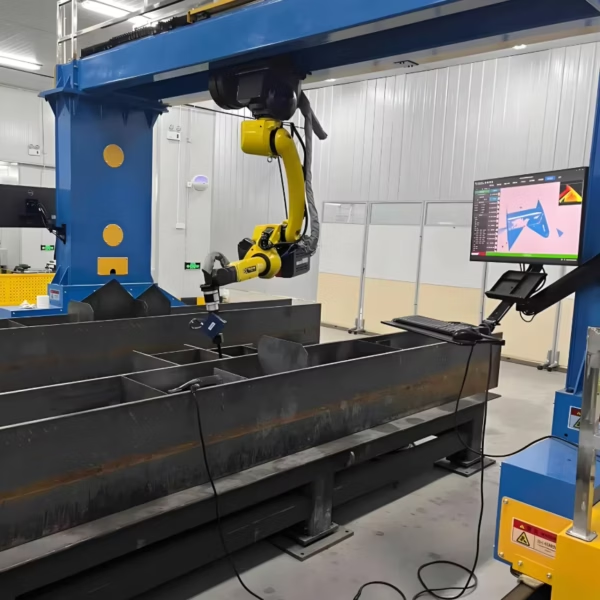
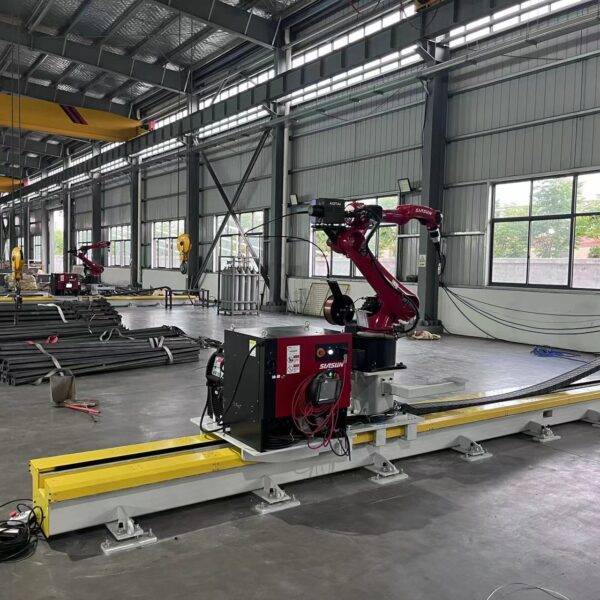
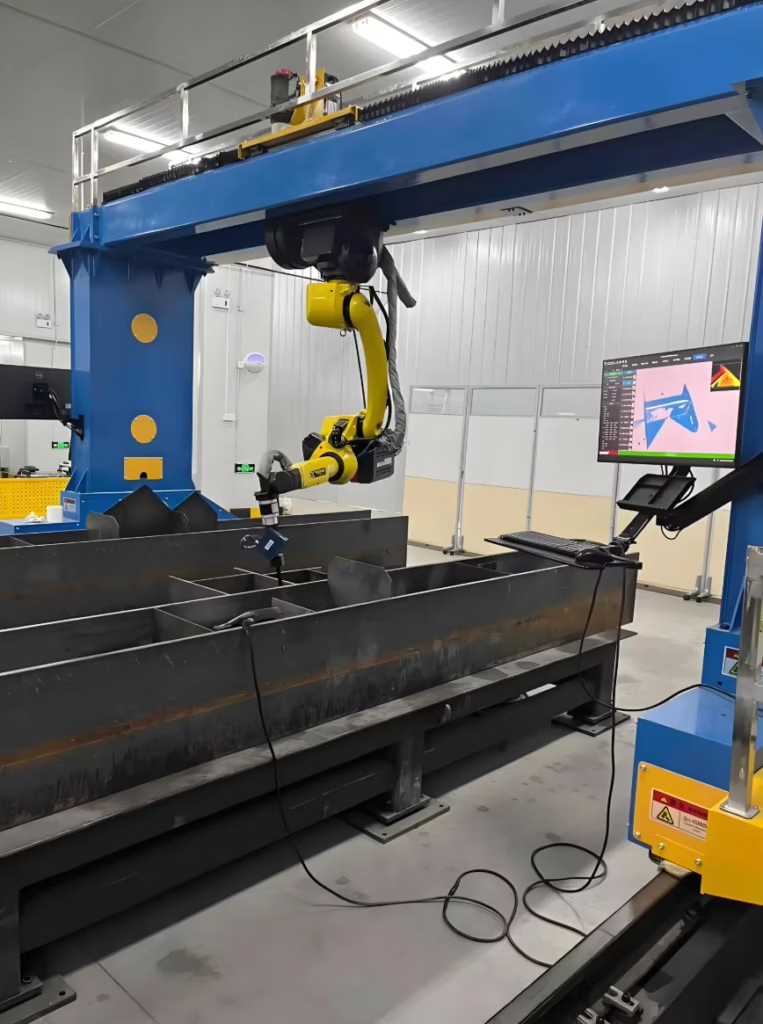
This report details the technical deployment and optimization of a 6-axis Robotic Arm Welder integrated with a Cold Metal Transfer (CMT) power source at our Rayong facility. The primary objective was the high-volume production of galvanized pipes, a task historically plagued by high spatter and porosity due to the volatile nature of zinc coatings. By embedding this system within a broader Industrial Automation framework, we successfully transitioned from manual GTAW/GMAW processes—which were suffering from a 15% reject rate—to an automated cell achieving 98.2% first-pass yield.
The Rayong site presents unique environmental challenges, specifically high ambient humidity and temperature fluctuations, which directly impact shielding gas stability and wire feed consistency. This report outlines the engineering adjustments required to stabilize Galvanized Pipe welding in these specific tropical industrial conditions.
The Synergy of the Robotic Arm Welder and Industrial Automation
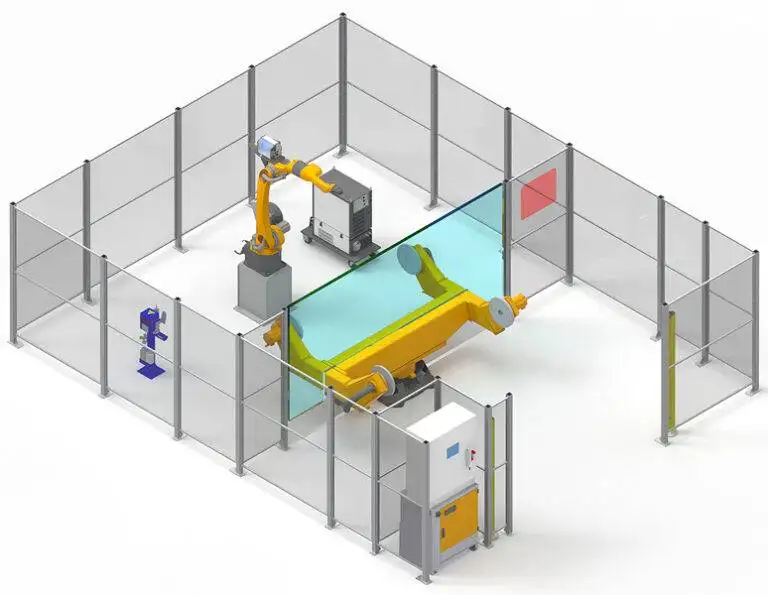
In the context of the Rayong workshop, a Robotic Arm Welder is not a standalone tool; it is a node within a sophisticated Industrial Automation ecosystem. The synergy here is found in the handshake between the robot controller and the external PLC managing the rotary positioners and pneumatic clamping jigs.
For Galvanized Pipe welding, the synchronization must be micro-second precise. When the pipe is rotated, the surface speed must match the wire feed speed perfectly to maintain the CMT “cold” droplet detachment. If the Industrial Automation sequence lags, heat builds up, the zinc coating vaporizes violently, and the weld pool collapses. We utilized a Profinet interface to ensure zero-latency communication between the robot’s motion kernels and the power source’s waveform generator. This allows the system to adjust parameters in real-time based on the pipe’s diameter variations and seam tolerances.
Hardware Configuration and Site-Specific Adaptations
The Robotic Manipulator
The 6-axis Robotic Arm Welder was selected for its ±0.05mm repeatability. In Rayong, we observed that thermal expansion of the arm during the afternoon shift (where ambient temperatures reach 38°C in the plant) necessitated a mid-shift TCP (Tool Center Point) calibration routine. We automated this using a touch-sense probe integrated into the cleaning station, ensuring the torch neck alignment remained true despite the heat.
CMT Power Source Logic
Standard GMAW (MIG) is unsuitable for thin-walled galvanized pipes because the continuous heat input boils the zinc (boiling point 906°C) before the steel melts (melting point ~1500°C). The CMT process solves this by mechanically retracting the wire when a short circuit is detected, facilitating droplet detachment at near-zero current. This “cold” process is the only way to manage Galvanized Pipe welding without blowing holes through the 1.5mm wall thickness.
Technical Challenges in Galvanized Pipe Welding
The fundamental problem with Galvanized Pipe welding is the “Zinc Explosion.” When the arc hits the galvanized layer, the zinc turns to gas instantly. If the weld pool solidifies too quickly, that gas is trapped as internal porosity. If the pool is too hot, the zinc vaporizes so violently it ejects the molten steel, creating spatter that fouls the Robotic Arm Welder nozzle.
Addressing Porosity through Waveform Modulation
In our Rayong trials, we found that a standard CMT cycle was insufficient for the heavy 275g/m² zinc coating used on our structural pipes. We implemented a “CMT Pulse” mix. This adds a pulsing period to the CMT cycle, which keeps the weld pool fluid just long enough for the zinc vapor to escape before the “cold” retraction phase begins.
Optimized Parameters for 48mm OD Galvanized Pipe:
- Wire: ER70S-6 (0.8mm diameter)
- Gas: 92% Ar / 8% CO2 (Specific mix for Rayong humidity)
- Travel Speed: 65 cm/min
- Wire Feed Speed: 4.5 m/min
- Correction: -15% arc length correction to keep the arc tight and minimize the Heat Affected Zone (HAZ).
The Impact of Humidity on Shielding Gas
One “lesson learned” in the Rayong facility was the impact of atmospheric moisture on Industrial Automation sensors and gas purity. We initially saw “wormhole” porosity in our Galvanized Pipe welding despite perfect CMT settings. We traced this to condensation in the gas lines during the night shift. We installed point-of-use gas dryers and switched to high-flow 25 L/min shielding rates to create a more robust “gas envelope” around the arc, successfully counteracting the cross-drafts in the open-sided Rayong plant.
The Role of Industrial Automation in Quality Control
By integrating the Robotic Arm Welder into the factory’s Industrial Automation network (Industry 4.0), we gained the ability to monitor “Arc-On” time and “Gas Flow” in real-time. This is critical for Galvanized Pipe welding because the zinc residue builds up on the contact tip much faster than with black steel.
Automated Maintenance Cycles
We programmed the Industrial Automation logic to trigger a torch cleaning cycle every 10 pipes. The robot maneuvers to a Reamer station, sprays anti-spatter fluid, and clears the nozzle. This prevents the “arc wandering” that occurs when zinc dust accumulates on the ceramic shroud, ensuring that the Robotic Arm Welder maintains a consistent aim on the pipe’s fillet joint.
Throughput Improvements
Before automation, a manual welder could complete 40 pipes per shift with significant fatigue-related defects toward the end of the day. The automated cell now produces 220 pipes per shift with zero variation in weld profile. This 5.5x increase in productivity is a direct result of the Robotic Arm Welder‘s ability to maintain a 90% duty cycle.
Lessons Learned and Senior Engineering Insights
1. The “Push” Technique is Non-Negotiable
When programming the Robotic Arm Welder for Galvanized Pipe welding, a “push” angle (forehand welding) of 10-15 degrees is mandatory. This pushes the zinc vapor ahead of the weld pool. A “drag” angle (backhand) traps the vapor under the bead, leading to catastrophic sub-surface porosity. This was a hard-learned lesson during the first week of commissioning in Rayong.
2. Gap Consistency is Key
Industrial Automation is only as good as the parts fed into it. We found that if the pipe’s “fit-up” gap exceeded 0.5mm, the CMT process would struggle to bridge the gap without increasing heat input. We had to go upstream and recalibrate the pipe-cutting saws to ensure 0.1mm tolerances. Automation forces discipline in the preceding manufacturing steps.
3. Managing the Zinc Smoke
The volume of white zinc oxide smoke produced by 24/7 Galvanized Pipe welding is hazardous and can foul the robot’s optical sensors. We integrated a high-vacuum extraction system directly into the Industrial Automation safety circuit. If the extraction pressure drops, the Robotic Arm Welder pauses. This protects both the hardware and the operators in the Rayong plant.
Conclusion
The deployment of the Robotic Arm Welder at the Rayong site has redefined our approach to Galvanized Pipe welding. By leveraging the precision of Industrial Automation and the low-heat characteristics of CMT, we have eliminated the rework loop that previously choked our production schedule. The synergy between high-speed motion control and advanced metallurgy allows us to weld coated materials at speeds previously reserved for clean steel.
Moving forward, we recommend a quarterly audit of the shielding gas delivery systems and a bi-weekly calibration of the robot’s zero-position to account for the local climate’s impact on hardware. The Rayong facility now serves as the benchmark for our Southeast Asian automated welding operations.