Engineering Review: 1500W MAG Cobot Welder – Busan, South Korea
In this article
- Field Report: Deployment of 1500W MAG Cobot Welder in Busan Structural Steel…
- 1. Site Overview and Environmental Context
- 2. Technical Specification of the MAG Cobot Welder
- 3. Implementing Arc Welding Solutions in a Real-World Workshop
- 4. Performance Analysis: Structural Steel Welding
- 5. Lessons Learned and Engineering Field Notes
- 6. Safety and Compliance in the South Korean Context
- 7. Conclusion and Technical Outlook
Field Report: Deployment of 1500W MAG Cobot Welder in Busan Structural Steel Fabrication
1. Site Overview and Environmental Context
This report documents the field integration and performance evaluation of the 1500W MAG Cobot Welder at a medium-scale structural steel facility in Busan, South Korea. The facility primarily services the local shipbuilding and civil infrastructure sectors, specializing in high-mix, low-volume production of H-beam reinforcements and gusset plate assemblies.
Busan’s coastal industrial environment presents specific challenges for automated welding, notably high ambient humidity (averaging 75% during the evaluation period) and fluctuating power grid stability typical of older industrial zones. The objective was to transition a significant portion of the structural steel welding workload from manual GMAW (Gas Metal Arc Welding) to a collaborative robotic framework to address a localized shortage of 6G-certified welders and to stabilize bead consistency across long-seam applications.
2. Technical Specification of the MAG Cobot Welder
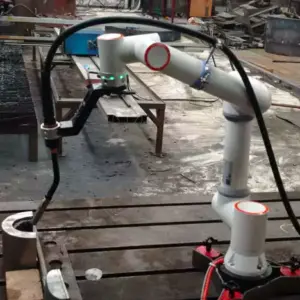
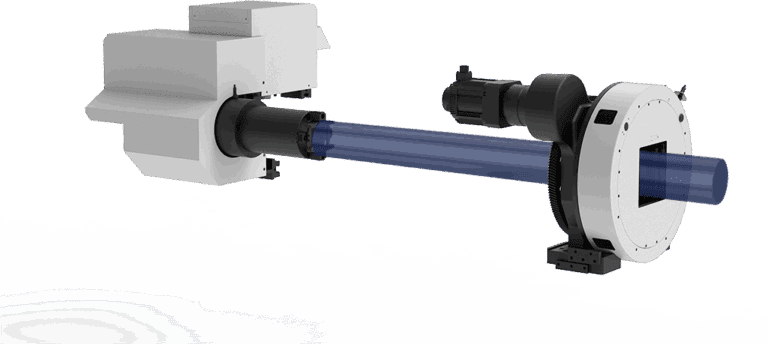
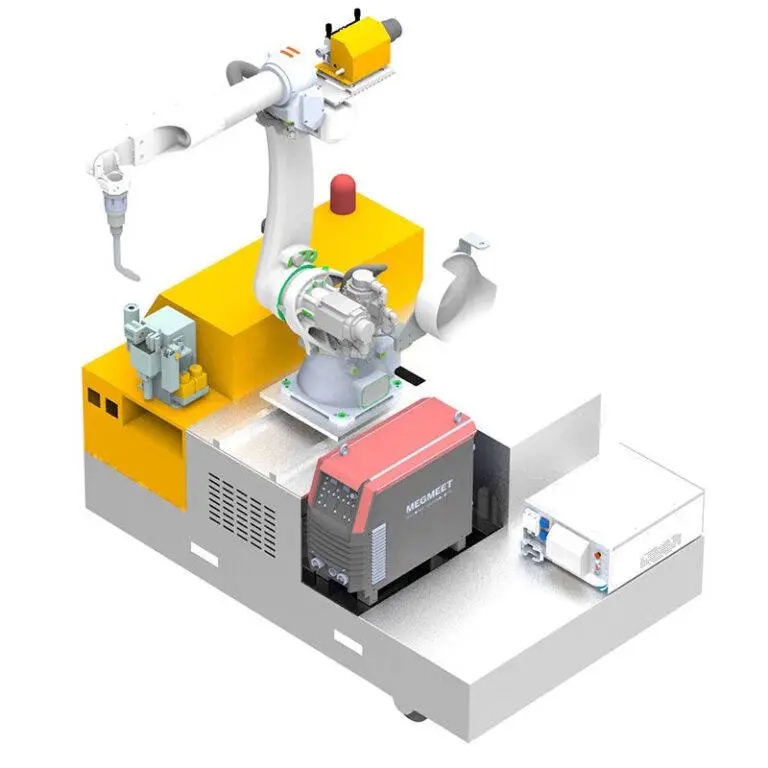
The unit deployed is a 1500W integrated MAG Cobot Welder. Unlike traditional high-payload industrial robots, this system utilizes a 10kg payload collaborative arm with sensitive torque sensors in all six joints. The “1500W” designation in this field context refers to the peak output capacity of the integrated fiber-laser-assisted ignition system or the high-efficiency inverter power source, depending on the specific module configuration used for thin-to-medium gauge penetration.
2.1 Power Source and Wire Feed Synchronization
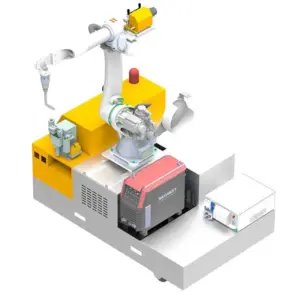
The synergy between the power source and the cobot’s motion controller is the backbone of modern Arc Welding Solutions. In this Busan deployment, we utilized a pulsed-MAG process. The cobot communicates via EtherCAT with the power source, allowing for millisecond-level adjustments to the Wire Feed Speed (WFS) based on the actual tool center point (TCP) velocity. During structural steel welding on 12mm A36 carbon steel, we maintained a constant WFS of 8.5 m/min with a travel speed of 350 mm/min, a feat difficult to sustain manually over an eight-hour shift.
3. Implementing Arc Welding Solutions in a Real-World Workshop
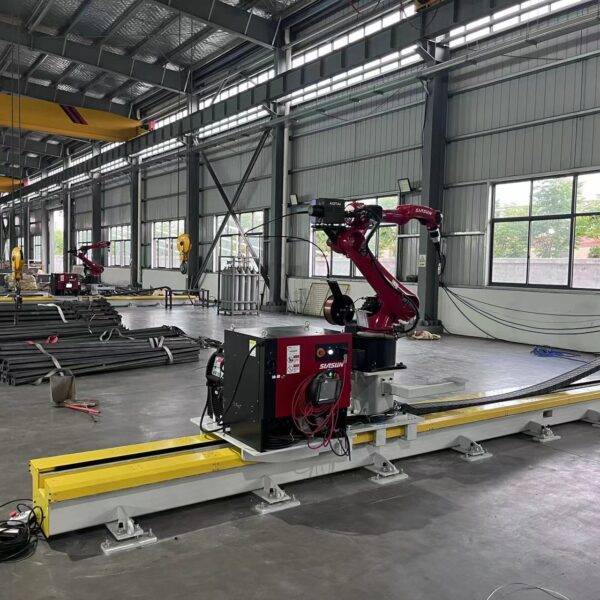
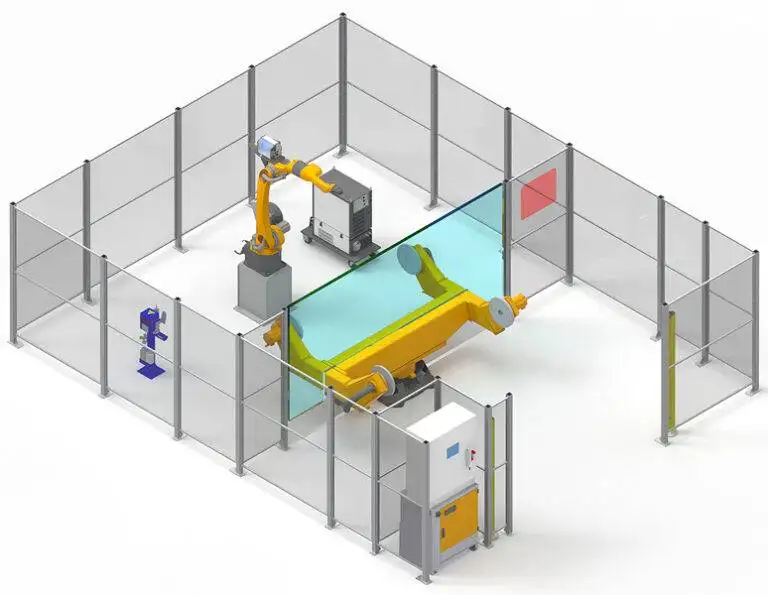
The term “Arc Welding Solutions” is often used broadly, but in the Busan workshop, it manifested as a specific three-tier ecosystem: the hardware (cobot and power source), the software (weld sequencing and path planning), and the peripheral environment (modular clamping and fume extraction).
3.1 Interface and Programming
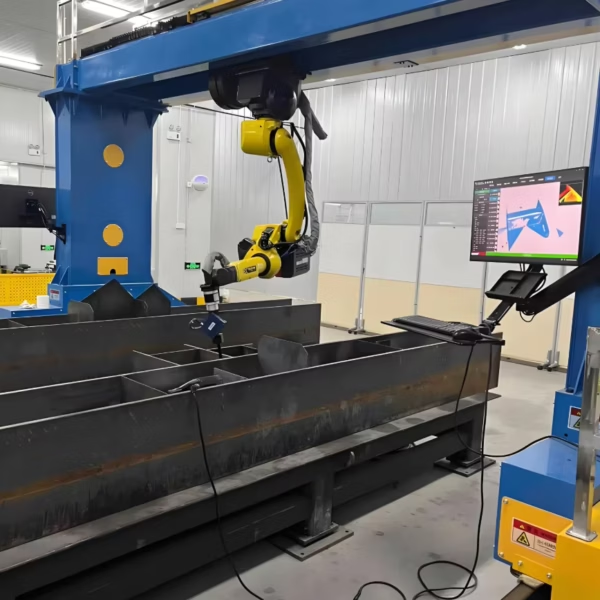
The primary advantage observed was the “Lead-Through” programming. A senior welder—not a roboticist—positioned the MAG Cobot Welder by hand at the start and end points of the fillet joints. The software then calculated the linear interpolation. This eliminated the need for complex G-code entry, which is the traditional barrier to entry for small-scale structural steel welding firms in the region. We reduced setup time for a standard stiffener plate from 45 minutes (traditional industrial robot) to 6 minutes.
3.2 Adaptive Arc Logic
Within the suite of Arc Welding Solutions, the ‘Seam Tracking’ capability proved vital. Structural steel is rarely perfect; H-beams often arrive with slight bows or mill-scale variances. The 1500W system utilized through-arc sensing to monitor current fluctuations. If the gap widened, the cobot automatically adjusted its weave frequency to ensure the throat thickness of the weld remained within the AWS D1.1 specifications.
4. Performance Analysis: Structural Steel Welding
The core of the evaluation focused on the transition of manual fillet welds to the MAG Cobot Welder. We targeted the welding of flange-to-web connections on 15mm thick structural members.
4.1 Metallurgical Observations
Using a 1.2mm ER70S-6 solid wire and an 80/20 Argon/CO2 gas mix, the MAG Cobot Welder produced a significantly narrower Heat Affected Zone (HAZ) compared to manual operations. This is attributed to the consistent travel speed and optimized pulsed arc. Macro-etch testing of the Busan samples showed deep, consistent penetration into the root of the joint, with a notable absence of undercut—a common defect in manual high-amperage structural steel welding.
4.2 Throughput Metrics
- Manual Welding: 12 meters of weld per shift (including breaks and fatigue-related slowdown).
- MAG Cobot Welder: 28 meters of weld per shift.
- Defect Rate: Dropped from 4.2% (manual) to 0.5% (cobot), primarily by eliminating stop-start craters in the middle of long runs.
5. Lessons Learned and Engineering Field Notes
No deployment is without technical friction. The following observations are critical for senior engineers looking to replicate these Arc Welding Solutions in similar maritime or heavy-industry hubs like Busan.
5.1 The “Busan Humidity” Factor
We encountered initial porosity issues during the morning shifts. The high humidity in the Busan workshop led to moisture condensation on the structural steel welding surfaces. While manual welders often “dry” the steel with a quick pass of a torch, the cobot follows its program regardless of surface conditions.
Lesson: We integrated a pre-heat induction cycle into the cobot’s logic for the first pass of the day. Furthermore, we switched to high-quality copper-coated wire to prevent oxidation within the liner, which is exacerbated by salt-laden air.
5.2 Grounding and Electromagnetic Interference (EMI)
In a crowded shipyard workshop, grounding is often neglected. The MAG Cobot Welder is a sensitive electronic instrument. We experienced “ghosting” in the touch-screen interface when a neighboring overhead crane was in operation.
Lesson: Dedicated earth-grounding for the cobot base is non-negotiable. Do not rely on the common workshop ground. We installed a dedicated copper rod for the 1500W unit, which stabilized the arc sensors immediately.
5.3 The Role of the “Welder-Operator”
A common misconception is that the cobot replaces the welder. In Busan, the most successful implementation occurred when the senior welder acted as the ‘Orchestrator.’ The welder handles the fit-up and tacking, while the MAG Cobot Welder handles the monotonous long-arc time. This synergy increased shop morale by offloading the most physically taxing and UV-heavy tasks to the machine.
6. Safety and Compliance in the South Korean Context
South Korean KCS (Korea Certification Mark) standards for collaborative robots are stringent. The 1500W system had to be calibrated for force-limiting thresholds. If the arm encounters an obstruction (e.g., a worker’s hand), it must stop within 0.5 seconds. During our structural steel welding trials, we found that the weight of the heavy-duty MAG torch required fine-tuning the gravity compensation algorithms to prevent false-positive safety stops, which can lead to “cold starts” in the weld bead.
7. Conclusion and Technical Outlook
The deployment of the 1500W MAG Cobot Welder in Busan demonstrates that Arc Welding Solutions have matured beyond light-gauge sheet metal. For structural steel welding, the cobot provides a level of volumetric consistency that manual labor cannot match in a high-production environment.
The success of the Busan site was not merely due to the hardware, but the integration of adaptive software that accounts for the imperfections of heavy steel. As we scale this out to other facilities in Ulsan and Gwangju, the focus will remain on refining the ‘Lead-Through’ templates for complex geometries. The 1500W platform has proven itself a robust workhorse capable of surviving the rigors of a coastal Korean winter while maintaining ISO 5817 Level B weld quality.
End of Report
Prepared by: Senior Welding Engineer, Site Operations – Busan.