Engineering Review: Multi-pass Welding MIG/MAG Welding Robot – London, UK
In this article
- Field Engineering Report: Multi-Pass Robotic Integration for Structural Carbon Steel
- Location: London, UK – Structural Fabrication Sector
- Lead Engineer: Senior Welding Engineer
- 1. System Architecture and Shop Floor Integration
- 2. Multi-Pass Strategy for Heavy Carbon Steel
- 3. Technical Synergy: Hardware Meets Software
- 4. Metallurgical Considerations in Carbon Steel Welding
- 5. Consumables and Shielding Gas Optimization
- 6. Lessons Learned and Practical Field Notes
- 7. Quality Assurance and British Standards
- 8. Conclusion
Field Engineering Report: Multi-Pass Robotic Integration for Structural Carbon Steel
Location: London, UK – Structural Fabrication Sector
Lead Engineer: Senior Welding Engineer
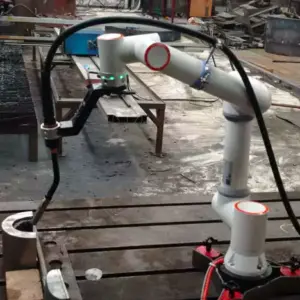
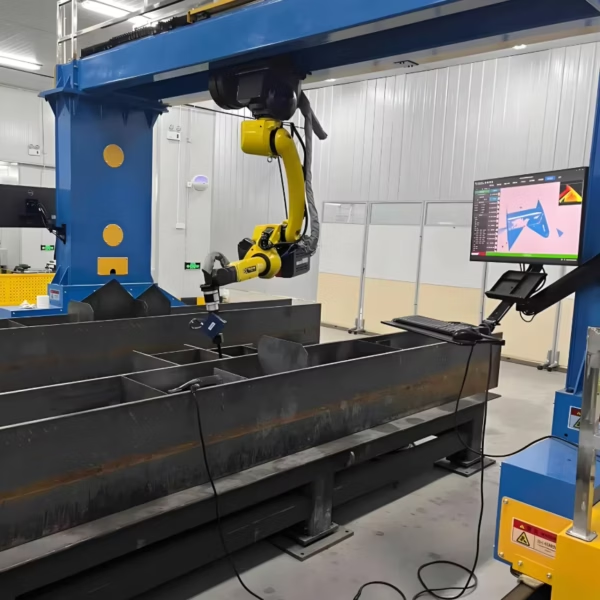
The following report outlines the technical deployment and optimization of a high-capacity MIG/MAG Welding Robot within a restricted-footprint workshop in London. The project involved the transition from manual FCAW (Flux-Cored Arc Welding) to an automated multi-pass strategy for heavy-section Carbon Steel welding. The focus of this evaluation is the synergy between the robotic hardware and integrated Arc Welding Solutions to meet BS EN ISO 15614-1 specifications under aggressive delivery timelines.
1. System Architecture and Shop Floor Integration
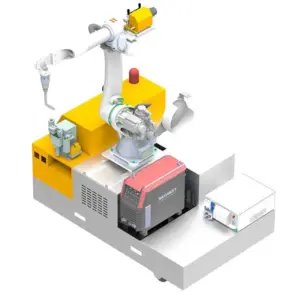
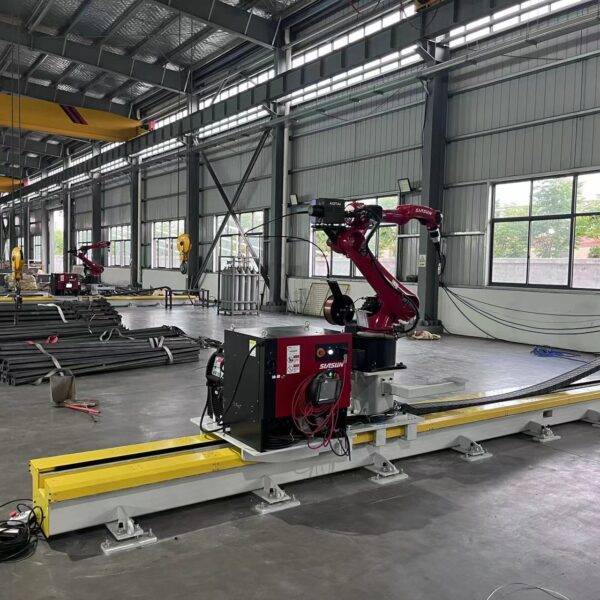
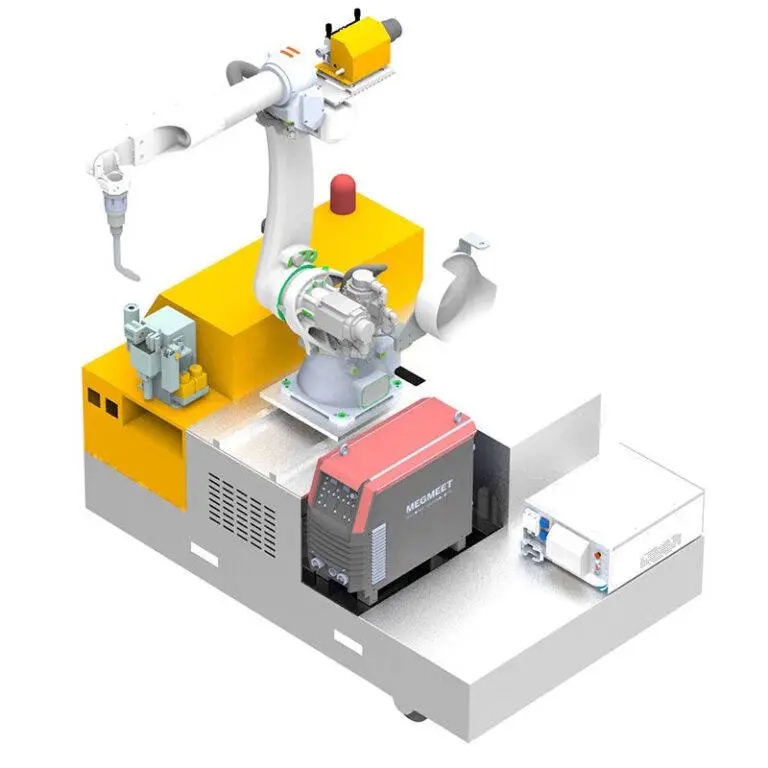
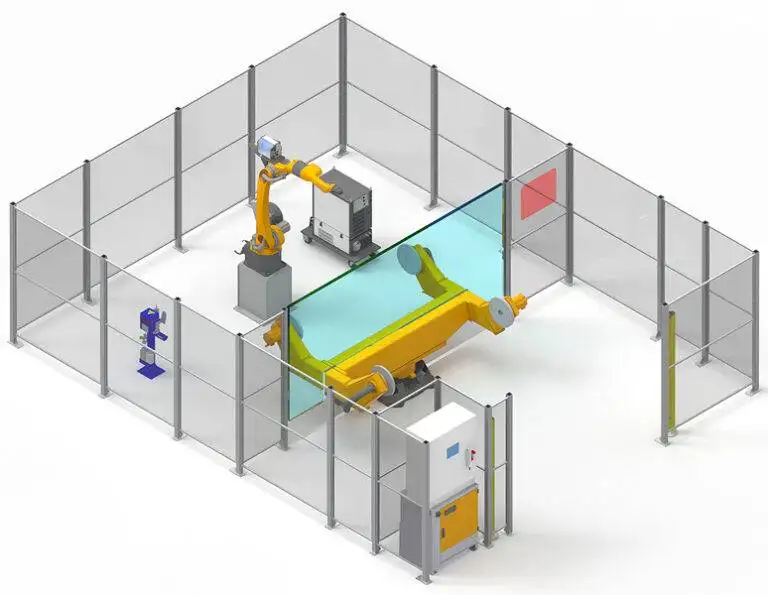
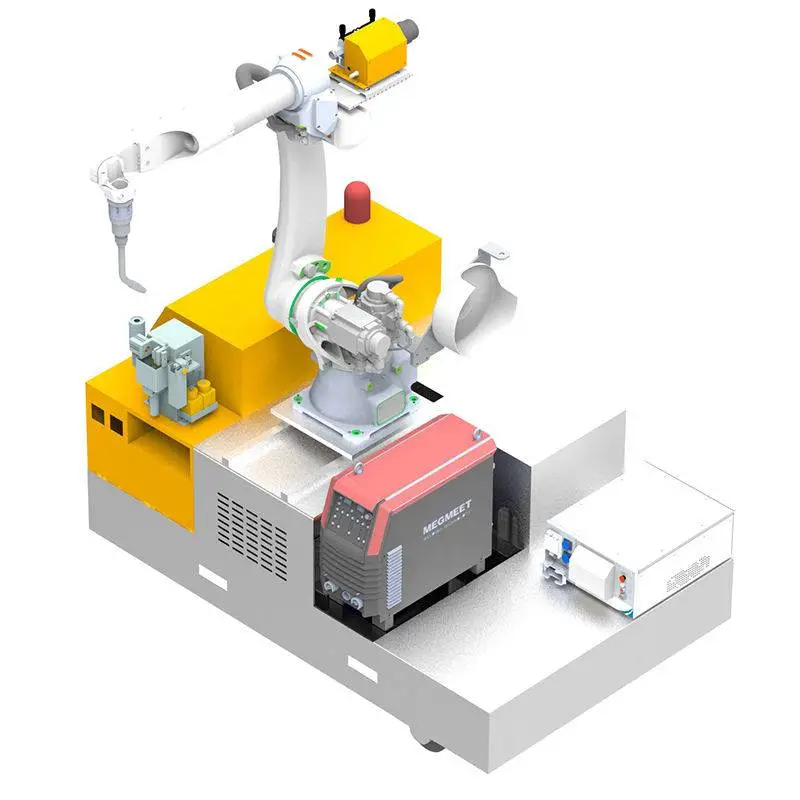
In the London fabrication landscape, space is a premium commodity. The deployment site required a compact 6-axis MIG/MAG Welding Robot mounted on a fixed pedestal with a dual-station H-frame positioner. This configuration allows for “arc-on” time optimization; the operator loads Station B while the robot executes multi-pass sequences on Station A.
The core of the system is the integration of digital Arc Welding Solutions. Unlike legacy analog systems, the current setup utilizes a high-speed fieldbus interface between the robot controller and the inverter power source. This ensures that parameters such as Wire Feed Speed (WFS), Voltage, and Inductance are adjusted in real-time (sub-millisecond response), which is critical when navigating the heat-sink variations common in heavy-gauge Carbon Steel welding.
2. Multi-Pass Strategy for Heavy Carbon Steel
The project involved S355JR structural sections with thickness ranges from 20mm to 40mm. Manual welding of these joints typically resulted in inconsistent interpass cleaning and variable penetration profiles. By utilizing a MIG/MAG Welding Robot, we implemented a structured multi-pass logic:
Root Pass Parameters
The root pass is the most critical phase. We utilized a modified short-circuit transfer mode provided by our Arc Welding Solutions package. This “Cold Metal” style process allows for a stable root bridge even with inconsistent fit-up (gaps ranging from 2mm to 4mm). By maintaining a consistent Contact Tip to Work Distance (CTWD), the robot prevents the burn-through common in manual attempts on these specific carbon steel grades.
Fill and Cap Passes
For the fill passes, the system shifts to a high-deposition spray transfer mode. We programmed the MIG/MAG Welding Robot to utilize a “weave” pattern to ensure side-wall fusion. Lessons learned from the first week of production showed that a 15-degree torch lead angle was optimal for gas coverage in deep-groove preparations. The cap pass was executed using a slightly lower travel speed to achieve the aesthetic and reinforcement profile required by London-based structural auditors.
3. Technical Synergy: Hardware Meets Software
The effectiveness of a MIG/MAG Welding Robot is limited by the “intelligence” of its software. In this London facility, we faced significant thermal distortion issues due to the high volume of Carbon Steel welding. To combat this, we integrated advanced Arc Welding Solutions including “Touch Sensing” and “Through-Arc Seam Tracking” (TAST).
- Touch Sensing: Before the arc ignites, the robot uses the welding wire or a gas nozzle sensor to locate the exact position of the workpiece. This compensates for any slight misalignments in the jigging or thermal expansion of the carbon steel parts.
- TAST (Through-Arc Seam Tracking): During the fill passes, the robot monitors the fluctuations in welding current. If the arc length changes due to plate warping, the robot automatically adjusts its path. This is a vital “Arc Welding Solution” for multi-pass work where the groove geometry changes slightly with every layer of deposited metal.
4. Metallurgical Considerations in Carbon Steel Welding
When dealing with high-yield Carbon Steel welding in a robotic environment, the cooling rate (t8/5 time) is paramount. In our London shop tests, we noted that the increased duty cycle of the MIG/MAG Welding Robot (compared to manual welders) led to a significant increase in interpass temperatures. Without intervention, this would result in a coarse grain structure in the Heat Affected Zone (HAZ), reducing the impact toughness of the joint.
Field Adjustment: We programmed “thermal pauses” into the robot’s logic. The Arc Welding Solutions software now monitors an external pyrometer. If the interpass temperature of the carbon steel exceeds 250°C, the robot enters a wait state or moves to a different joint on the assembly to allow for localized cooling. This ensures the mechanical properties meet the stringent UK CA marking requirements for structural steelwork.
5. Consumables and Shielding Gas Optimization
For this specific application, we moved away from standard CO2 to an Argon/CO2 (80/20) mix. While CO2 is cheaper, the MIG/MAG Welding Robot performs significantly better with a stable Argon-rich mix, which produces less spatter. Reducing spatter is not just about aesthetics; it is about protecting the robotic torch’s consumables. In a high-production London environment, downtime for nozzle cleaning is a profit-killer. By utilizing high-quality copper-coated ER70S-6 wire, we ensured consistent electrical contact and feedability through the 3-meter robotic cable assembly.
6. Lessons Learned and Practical Field Notes
Transitioning a workshop to a MIG/MAG Welding Robot involves more than just unboxing equipment. Here are the senior-level takeaways from the London project:
Wire Cast and Helix
We discovered that the “cast” of the wire in large bulk drums was causing the robot to miss the weld path by 1-2mm. We had to install a wire straightener between the drum and the robot’s feeder. In Carbon Steel welding, even a small deviation in the root pass can lead to lack-of-fusion defects that are costly to repair.
The “Black Art” of Grounding
Robotic Arc Welding Solutions are highly sensitive to “arc blow.” We found that the standard magnetic ground clamps were insufficient for the high currents used in multi-pass spray transfer. We switched to dual-rotary grounding points on the positioner. This eliminated the arc wander we were seeing at the end of long 1.5m carbon steel seams.
Programming for Repair
The biggest mistake was assuming the robot would always finish the cycle. We had to develop “Resume” routines. If the MIG/MAG Welding Robot experiences a wire-out or a power flicker, the Arc Welding Solutions software must allow the operator to restart the arc with a 10mm overlap on the existing bead to ensure tie-in integrity. In Carbon Steel welding, a cold start is a failure point.
7. Quality Assurance and British Standards
All welds produced by the robot underwent Non-Destructive Testing (NDT), specifically Ultrasonic Testing (UT) and Magnetic Particle Inspection (MPI). The consistency of the MIG/MAG Welding Robot resulted in a 98% first-time pass rate, compared to 84% for previous manual operations on the same components. This improvement is attributed to the precise control of heat input (kJ/mm) which is automatically calculated and logged by the Arc Welding Solutions data-monitoring module.
8. Conclusion
The integration of the MIG/MAG Welding Robot in this London-based structural project has proven that automation is no longer optional for heavy Carbon Steel welding. By leveraging the data-driven capabilities of modern Arc Welding Solutions, we have mitigated the risks associated with thermal distortion and human error. The project stands as a benchmark for high-deposition, multi-pass robotic fabrication in the UK market. Future phases will look into integrating AI-based vision systems to further enhance the “search and weld” capabilities of the cell.