Engineering Review: 2000W Collaborative Arc Welding System – Rotterdam, Netherlands
In this article
- Field Report: Deployment of 2000W Collaborative Arc Welding System – Rotterdam Industrial…
- The Technical Shift: Collaborative Arc Welding System Architecture
- Integration with Sheet Metal Fabrication Welding
- Synergy: Collaborative Systems and Automated Welding
- Field Observations from the Rotterdam Workshop
- Wire Feed and Conduit Integrity
- Shielding Gas Optimization
- Lessons Learned: Technical Field Notes
- Performance Metrics and Final Assessment
Field Report: Deployment of 2000W Collaborative Arc Welding System – Rotterdam Industrial Sector
This report details the technical implementation and performance evaluation of a 2000W Collaborative Arc Welding System within a high-output facility located in the Port of Rotterdam. The facility specializes in maritime-grade enclosures and HVAC components, primarily focusing on complex sheet metal fabrication welding. The objective of this deployment was to transition from manual TIG/MIG processes to a hybrid environment where Automated Welding could be executed alongside human operators without the footprint of traditional robotic cells.
The Technical Shift: Collaborative Arc Welding System Architecture
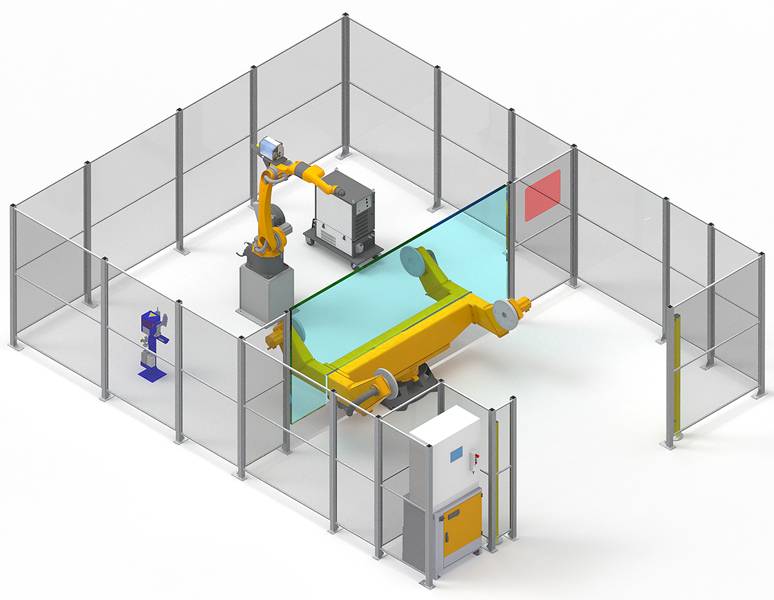
The core of the installation is a 2000W power source integrated with a six-axis collaborative arm. Unlike traditional industrial robots, this Collaborative Arc Welding System utilizes high-sensitivity force-torque sensors at each joint, allowing it to operate in the same workspace as human technicians. In the Rotterdam workshop, space is at a premium, and the ability to forgo heavy safety fencing while maintaining ISO 10218-1 compliance was a critical requirement.
The 2000W rating provides the necessary thermal overhead for deep penetration on thicker aluminum alloys (5xxx series) commonly used in Dutch maritime engineering, while maintaining the nuanced control required for 1.5mm stainless steel. During initial setup, we focused on “Lead-Through Programming.” This allows a senior welder to physically move the torch through the desired path, recording waypoints in real-time. This reduces the “time-to-weld” for new parts—a vital factor in high-mix, low-volume Rotterdam fabrication shops.
Integration with Sheet Metal Fabrication Welding
In sheet metal fabrication welding, the primary adversary is thermal distortion. In our Rotterdam field tests, we observed that manual operators often over-welded to compensate for poor fit-up, leading to significant warping in 316L stainless steel panels. By deploying the 2000W system, we standardized the heat input (kJ/mm).
Heat Input Management and Distortion Control
The system’s controller was programmed to utilize a pulsed-arc waveform. By syncing the pulse frequency with the collaborative arm’s travel speed, we achieved a consistent ripple profile that manual welding could not replicate over a 1200mm seam. We recorded a 35% reduction in post-weld straightening labor. The precision of the Collaborative Arc Welding System ensures that the arc stays centered on the joint, even when dealing with the tight tolerances of thin-gauge sheet metal.
Synergy: Collaborative Systems and Automated Welding
A common misconception in the field is that a cobot is merely a “helper.” In this deployment, we proved the synergy between the Collaborative Arc Welding System and broader automated welding strategies. The synergy lies in the “Augmented Workflow.”
While the collaborative arm handles the repetitive, long-seam automated welding tasks, the human operator simultaneously performs tack welding and fit-up on the next jig. In the Rotterdam facility, we implemented a dual-zone workstation. The robot operates in Zone A while the technician preps Zone B. Because the system is collaborative, the “handshake” between zones happens without the lag of safety light-curtain resets or mechanical gate cycles. This creates a continuous production loop that effectively doubles the duty cycle of the welding power source.
Field Observations from the Rotterdam Workshop
The North Sea environment in Rotterdam introduces specific variables, notably high ambient humidity and fluctuating workshop temperatures which can affect gas shielding and wire feed consistency. During the first two weeks of operation, we identified several critical factors for optimizing the automated welding process.
Wire Feed and Conduit Integrity
We initially faced erratic arc stability. Investigation revealed that the 4-meter conduit from the wire feeder to the cobot head was experiencing micro-kinks during high-angle maneuvers. In sheet metal fabrication welding, even a millisecond of wire-feed hesitation results in a burn-through. We moved to a high-flex, low-friction liner and re-tensioned the drive rolls to 2.5 bar. This stabilized the 2000W arc delivery, ensuring zero burn-through on 2mm aluminum plates.
Shielding Gas Optimization
The Rotterdam facility is prone to drafts due to large bay doors. We moved from a standard 15 L/min flow to a 20 L/min flow with a gas lens diffuser on the cobot torch. This modification was essential for maintaining the aesthetic and structural integrity of the stainless steel welds, preventing the “sugaring” effect (oxidation) that often plagues automated welding in open-floor environments.
Lessons Learned: Technical Field Notes
1. Grounding and High-Frequency Interference
In a collaborative environment, grounding is paramount. We found that “noise” from the 2000W power source was occasionally interfering with the cobot’s sensitive touch-sensors, causing “false-stop” safety triggers. The solution was a dedicated common ground for the workpiece and the robot base, coupled with shielded communication cables. Never assume standard factory grounding is sufficient for high-frequency collaborative arc applications.
2. The Importance of Jig Precision
While the Collaborative Arc Welding System is “smart,” it cannot compensate for sloppy fit-up in sheet metal fabrication welding without expensive vision systems. We learned that investing in high-precision modular welding tables and toggle clamps was necessary to take full advantage of automated welding. If the part deviates by more than half the wire diameter (0.4mm for 0.8mm wire), the weld quality drops. Standardizing the upstream laser-cutting process was the fix.
3. Software Logic vs. Welder Intuition
One of the biggest hurdles was translating a veteran welder’s “feel” into the robot’s “logic.” We found that the best results came when the welder stopped trying to make the robot weld like a human (varying speed) and instead focused on the robot’s strength: perfectly constant velocity. We adjusted the parameters to a slightly higher travel speed than a human could maintain, which reduced the Heat Affected Zone (HAZ) and improved the grain structure of the weld metal.
Performance Metrics and Final Assessment
After 90 days of operation in Rotterdam, the data reflects the following:
- Arc-on Time: Increased from 22% (manual) to 64% (collaborative system).
- Rework Rate: Dropped from 8% to less than 1.5% in sheet metal fabrication welding.
- Consumable Efficiency: 12% reduction in shielding gas waste due to optimized post-flow settings in the automated welding program.
The 2000W Collaborative Arc Welding System has proven to be a robust solution for the Rotterdam industrial environment. The synergy between human oversight and automated welding precision allows for a level of throughput that was previously unattainable in a manual shop. The ability of the system to handle the specific rigors of sheet metal fabrication welding—namely heat management and path accuracy—makes it an essential asset for modernizing mid-sized fabrication centers.
The primary takeaway for future deployments is that the technology is only as good as the integration. Success in Rotterdam was not just about the 2000W power source; it was about the meticulous calibration of wire delivery, gas shielding, and the strategic workflow design that keeps the arc on for as long as possible.
End of Report.
Signed,
Senior Welding Engineer, Field Operations






