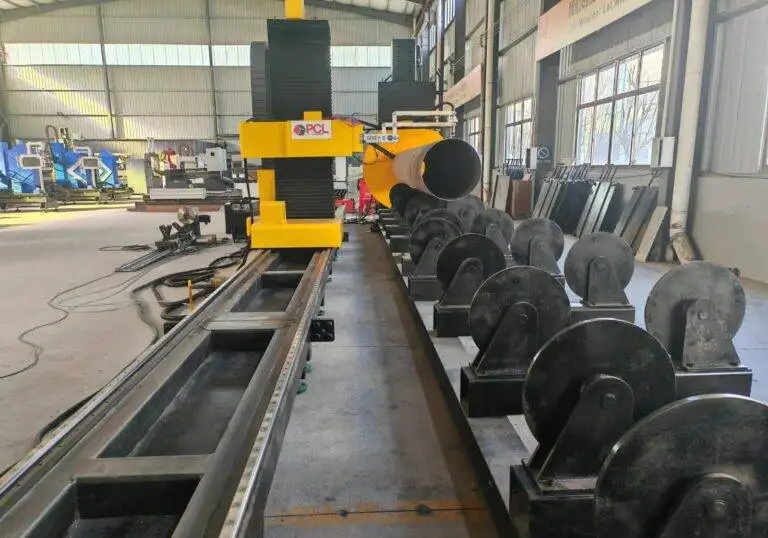
Beam Processing Center with Narrow Gap welding for for LNG Projects
In this article
Advanced Beam Processing Centers for LNG Structural Frameworks
The construction of Liquefied Natural Gas (LNG) liquefaction and regasification terminals involves massive quantities of structural steel, primarily H-beams and heavy-wall sections. These structures must withstand seismic loads, extreme wind speeds, and cryogenic exposure. To achieve the required structural reliability, industrial engineers are increasingly pivoting toward automated beam processing centers that utilize Plasma Cutting Technology as the primary thermal severance method. Unlike standard fabrication, LNG projects demand a high degree of repeatable precision to facilitate Narrow Gap Welding (NGW). This welding technique is preferred for thick-section joints because it minimizes the volume of weld metal and reduces the overall heat input, which is critical for maintaining the fracture toughness of the base material.
Precision Plasma Cutting and Intersection Accuracy
The primary challenge in 3D beam processing is achieving high-order Intersection Accuracy. In LNG pipe racks and module frames, beams often intersect at complex angles, requiring cope cuts, blocks, and bolt holes that must align perfectly across multi-ton assemblies. High-definition plasma systems integrated with robotic arms allow for six-axis movement, enabling the torch to maintain a perpendicular or specific beveled orientation relative to the beam surface at all times.
From an engineering standpoint, intersection accuracy is a function of the kinematic calibration of the processing center and the software’s ability to compensate for the beam’s inherent camber and sweep. When preparing an H-beam for a narrow gap butt joint, the tolerance for the root face and the bevel angle is exceptionally tight—often within plus or minus 0.5 degrees. Advanced plasma centers utilize laser scanning or mechanical probing to map the actual profile of the beam before the first cut is made. This “as-built” data is then compared to the CAD/BIM model (typically from Tekla or SDS/2), and the cutting path is adjusted in real-time. This level of precision ensures that when two heavy-section beams meet on-site or in the shop, the fit-up gap is consistent, preventing the excessive weld shrinkage or blow-through common in manual preparations.
Multi-Axis Beveling for Narrow Gap Preparation
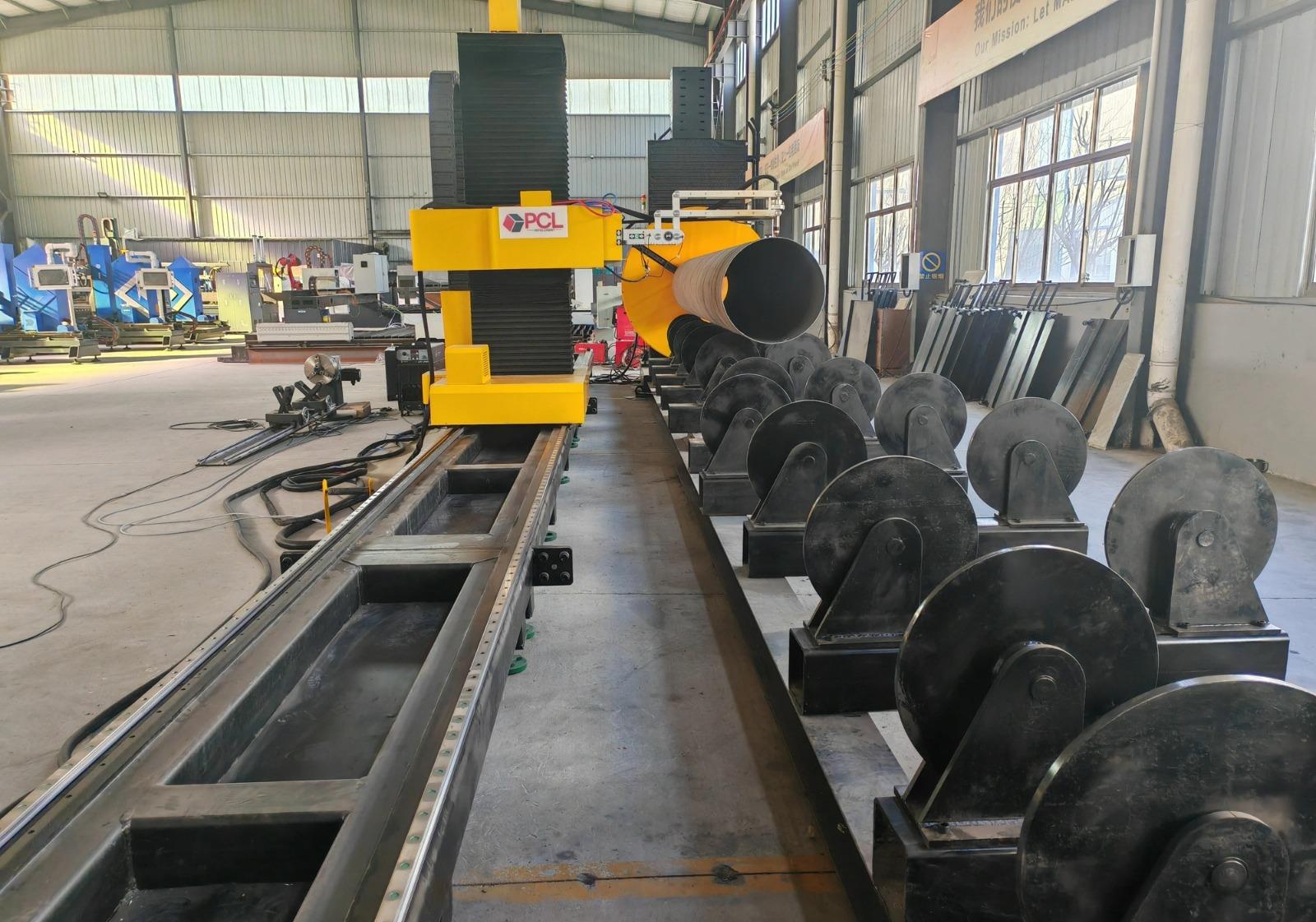
Narrow Gap Welding requires a specific groove geometry—often a deep J-groove or a tight V-groove with an included angle of less than 20 degrees. Achieving this in thick-walled structural steel (exceeding 40mm) is where plasma cutting excels. Multi-axis plasma heads can perform complex beveling operations in a single pass. The ability to vary the bevel angle along a single cut path is essential for transition joints where the beam flange thickness may change or where the geometry transitions from a straight cut to a contoured cope.
The metallurgical impact of the plasma arc is also a key consideration. High-definition plasma systems using oxygen or nitrogen as plasma gases produce a narrow heat-affected zone (HAZ) and a surface finish that often requires zero secondary grinding. For LNG applications, where stainless steel or 9% nickel steel may be used in specific structural supports, the ability of plasma to cut through non-ferrous materials with high speed and low distortion is a significant advantage. The concentrated energy density of the plasma arc ensures that the edge chemistry remains stable, providing a clean substrate for the subsequent narrow gap welding process.
Low Maintenance and Operational Uptime in H-Beam Processing
In the heavy industrial environment of an LNG fabrication yard, equipment durability is a prerequisite for project profitability. Structural Steel Processing centers must operate in high-dust, high-duty-cycle conditions. Plasma systems are inherently robust. Unlike more sensitive optical cutting methods, plasma components are designed for high-vibration environments and are relatively immune to the ambient dust and humidity often found in shipyards and modular yard facilities.
The maintenance profile of a plasma-based beam center is centered on consumable management. Modern plasma torches feature “quick-change” consumables and automated gas consoles that monitor electrode wear in real-time. This predictability allows maintenance teams to schedule swaps during natural breaks in production rather than dealing with unplanned downtime. Furthermore, the mechanical infrastructure of an H-beam plasma center—the conveyor systems, the cross-transfers, and the slag extraction units—is engineered for longevity. Slag management is particularly vital; high-volume plasma cutting generates significant dross. Integrated systems that feature automated slag scrapers and high-capacity downdraft filtration ensure that the machine remains clean and the air quality in the fabrication shop meets safety standards.
Optimizing Throughput for LNG Module Fabrication
The ultimate goal of implementing a high-end beam processing center is the reduction of “man-hours per ton.” In LNG module fabrication, thousands of individual beams must be processed. By utilizing plasma cutting for all holes, copes, and bevels, the need for manual layout and manual cutting is eliminated. This not only increases safety by reducing the handling of heavy materials but also ensures that the Narrow Gap Welding stations are never starved for material.
The synergy between the cutting center and the welding station cannot be overstated. When the plasma center delivers a beam with perfect bevel geometry and zero-deviation length tolerances, the welding robot or manual welder can maintain a high arc-on time. There is no need for “buttering” or filling oversized gaps caused by poor thermal cutting. In the context of the thick-section steel used in LNG liquefaction trains, this precision results in a direct reduction in the volume of expensive filler wire required and a corresponding decrease in the total energy consumed per joint.
Conclusion of Engineering Requirements
Industrial engineers overseeing LNG projects must prioritize systems that offer the best balance of precision, durability, and operational cost. The automated beam processing center, powered by high-definition plasma, stands as the backbone of modern structural fabrication. By focusing on intersection accuracy and specialized beveling for narrow gap applications, these machines provide the foundational quality required for cryogenic-rated structures. The low maintenance requirements of plasma systems further ensure that project timelines are met, providing a reliable, high-output solution that addresses the most demanding specifications of the global energy sector.