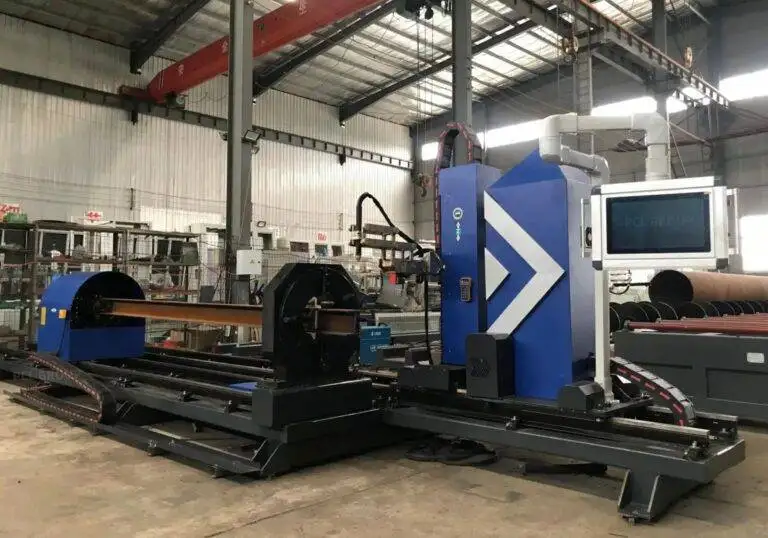
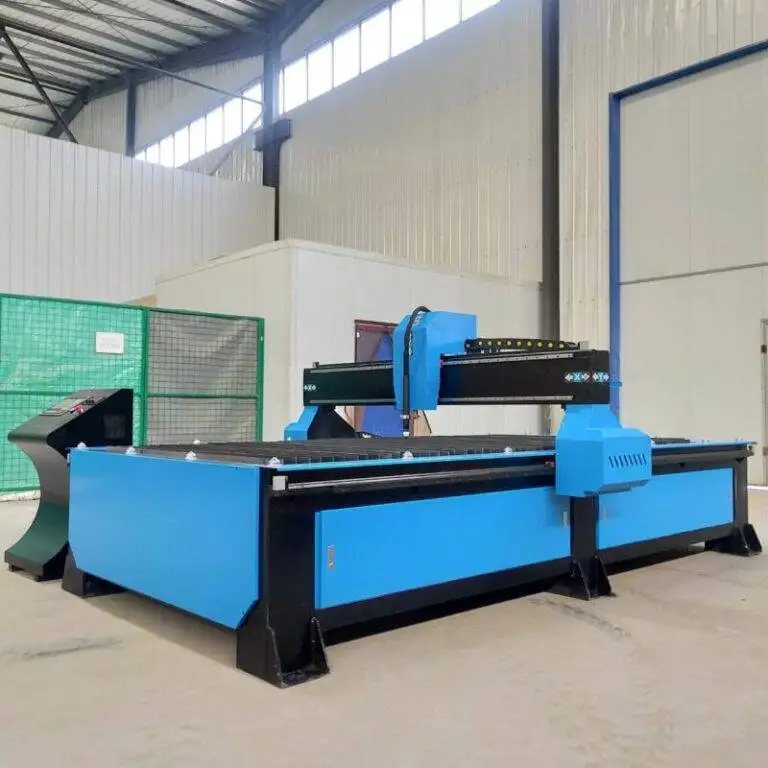
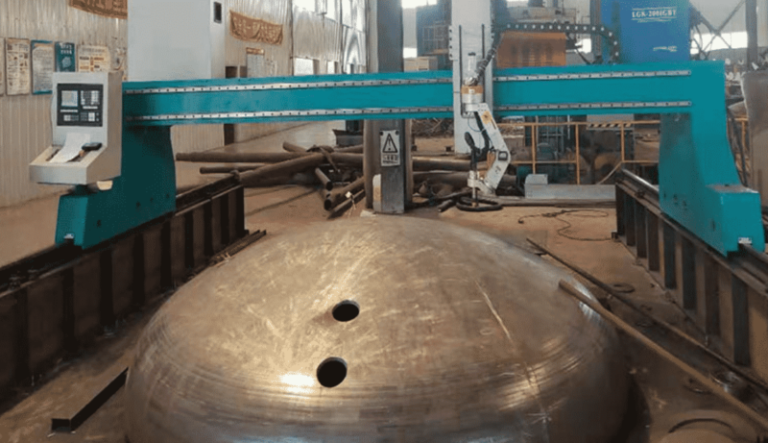
H-Beam Production Line with Arc Voltage Control for Oil & Gas Tanks
In this article
Optimizing H-Beam Fabrication for High-Pressure Environments
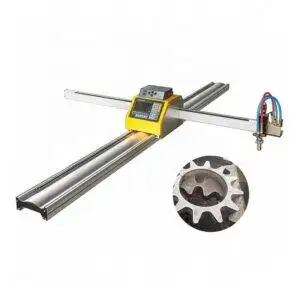
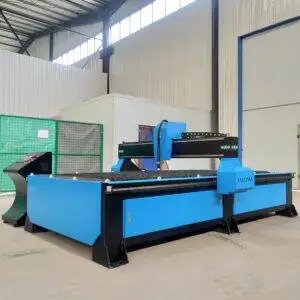
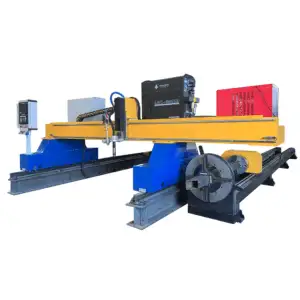
The structural integrity of Oil and Gas storage tanks relies heavily on the precision of the supporting H-beam infrastructure. These beams must withstand immense hydrostatic pressures and environmental stressors, necessitating a fabrication process that prioritizes dimensional accuracy and material consistency. In modern industrial engineering, the transition toward automated Plasma Cutting Technology has redefined how these heavy profiles are processed. Unlike traditional mechanical sawing or manual torching, automated plasma lines integrated with advanced feedback loops ensure that every cut adheres to the stringent tolerances required by international safety standards.
The primary challenge in H-beam processing involves the inherent irregularities of hot-rolled steel. Web eccentricity, flange tilt, and surface scaling can cause significant deviations during the cutting process. To counteract these variables, the implementation of Arc Voltage Control (AVC) is critical. This technology allows the system to dynamically adjust the torch position in real-time, ensuring that the thermal energy is delivered consistently across the entire geometry of the beam, regardless of surface inconsistencies.
The Mechanics of Arc Voltage Control (AVC)
At the core of a high-performance H-Beam Production Line is the ability to maintain a constant standoff distance between the plasma electrode and the workpiece. Arc Voltage Control operates on the principle that the voltage of the plasma arc is directly proportional to the length of the arc. As the distance between the torch and the H-beam changes due to material warping or positioning errors, the measured voltage fluctuates.
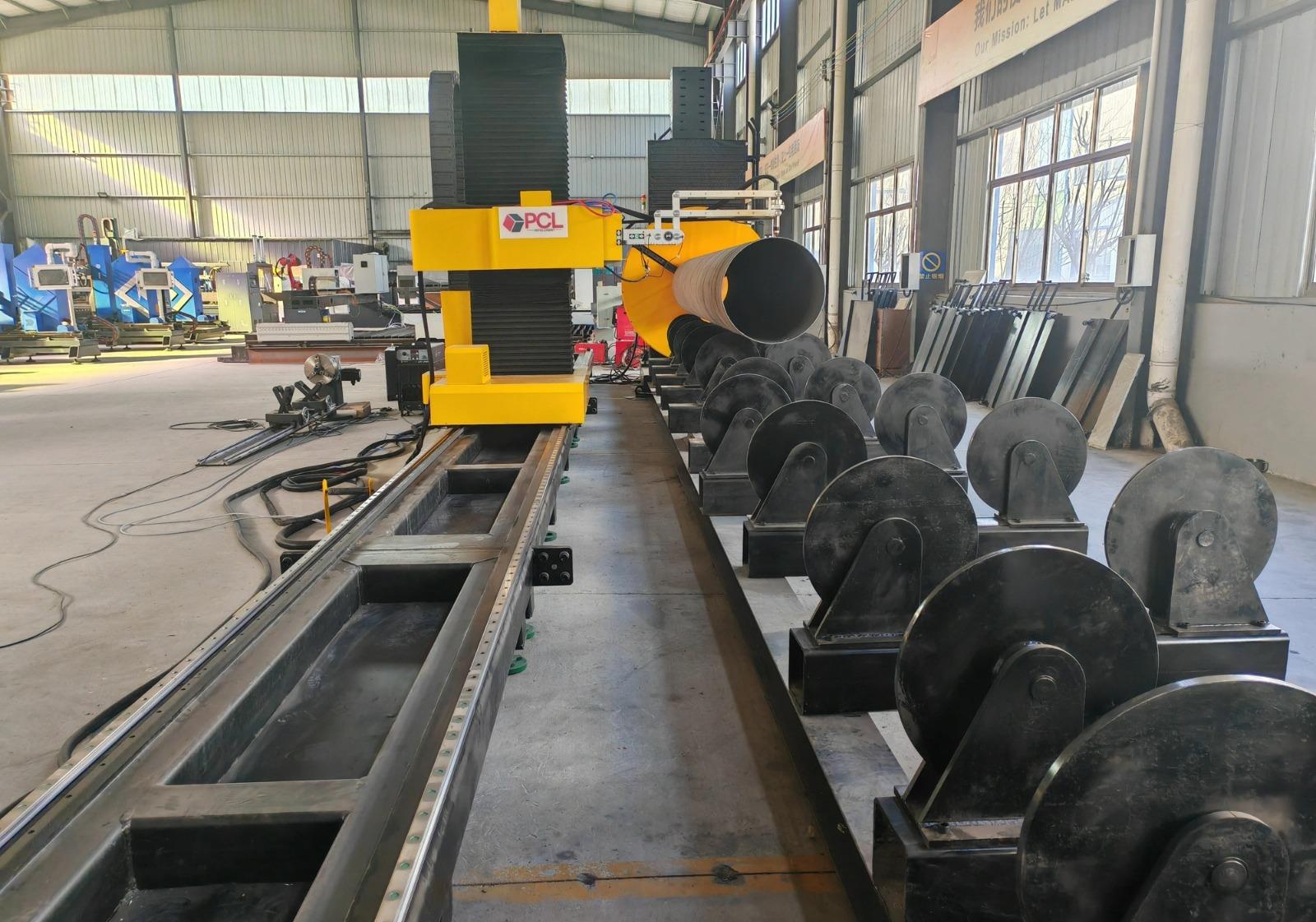
The AVC system monitors these voltage variations at millisecond intervals. If the voltage increases, indicating a widening gap, the Z-axis motor lowers the torch. Conversely, a drop in voltage triggers an immediate retraction. For Oil and Gas tank fabrication, where beams often exceed 12 meters in length, this automated height regulation prevents torch collisions and eliminates kerf width variations. By stabilizing the arc, the system ensures a uniform Heat Affected Zone (HAZ), which is vital for maintaining the metallurgical properties of the structural steel.
Achieving Superior Intersection Accuracy
Intersection cuts, where one H-beam meets another or interfaces with the curved shell of a storage tank, represent the most complex phase of structural fabrication. Intersection Accuracy is not merely a matter of aesthetic fit; it is a fundamental requirement for load distribution. In a plasma-based H-beam line, multi-axis robotic heads calculate the complex trigonometry required to create “cope” cuts and notches that follow the exact profile of the mating member.
The use of specialized software allows engineers to import BIM or CAD models directly into the cutting interface. The plasma torch then executes a programmed path that accounts for the beam’s internal radii and flange thickness. Because the AVC maintains the precise focal point of the arc, the resulting edges are sharp and clean, with minimal dross. This high-fidelity cutting ensures that when the beams are assembled on-site at a refinery or tank farm, the gaps are minimal, facilitating a more efficient assembly process and reducing the need for secondary grinding or shim work.
Advanced Beveling for Structural Integrity
In the Oil and Gas sector, heavy-duty H-beams often require complex edge preparations to accommodate high-penetration joints. Beveling Precision is where plasma technology significantly outperforms traditional mechanical methods. A 5-axis or 6-axis plasma head can transition seamlessly from a straight 90-degree cut to a V, Y, or K-style bevel in a single pass.
The AVC system plays a pivotal role during beveling. When the torch tilts to create an angle, the distance to the material changes relative to the vertical axis. Advanced control algorithms compensate for this geometric shift, maintaining the correct arc length throughout the beveling sequence. This precision is essential for the thick-walled sections of H-beams used in tank foundations, where consistent root faces and bevel angles are mandatory for subsequent structural bonding phases. The ability to automate these bevels reduces labor costs and eliminates the human error associated with manual torch beveling.
Low Maintenance and Operational Longevity
From an industrial maintenance perspective, plasma-based H-beam lines offer significant advantages over other thermal or mechanical cutting systems. The mechanical simplicity of a plasma torch, compared to the complex optical paths or high-pressure components of alternative technologies, translates to higher uptime. In the harsh environments typical of Oil and Gas equipment manufacturing—where dust, vibration, and temperature fluctuations are common—plasma systems demonstrate remarkable resilience.
Modern plasma power sources are designed with robust solid-state electronics and high duty cycles, capable of continuous operation in multi-shift environments. The consumables, such as nozzles and electrodes, are the only high-frequency replacement items, and their replacement can be performed in minutes without specialized tools. Furthermore, the absence of complex beam delivery systems or sensitive transmission components minimizes the risk of catastrophic failure, ensuring that the production line remains operational during critical project phases.
Integration with Material Handling and Logistics
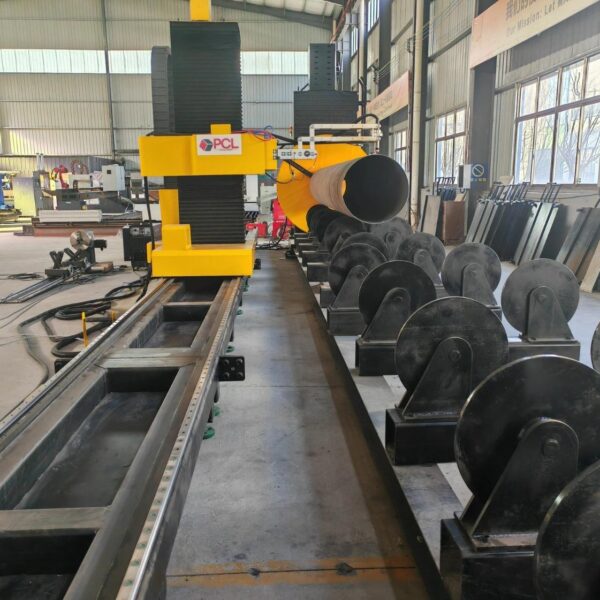
A complete H-beam production line is more than just the cutting station; it is a synchronized system of infeed conveyors, measuring carriages, and outfeed buffers. The integration of plasma cutting into this workflow allows for a “one-touch” fabrication philosophy. As the beam moves through the line, laser or mechanical sensors detect the leading edge, and the software offsets the cutting program to match the physical position of the beam.
For tank contractors, this means that every beam processed is a digital twin of the design specification. The high speed of plasma cutting, combined with automated AVC-driven height adjustment, allows for rapid throughput without sacrificing quality. This efficiency is particularly valuable when managing the thousands of tons of structural steel required for large-scale liquefied natural gas (LNG) terminals or crude oil storage facilities.
Conclusion: Engineering Efficiency in Tank Support Systems
The adoption of H-beam production lines equipped with plasma technology and Arc Voltage Control represents a strategic investment for firms serving the Oil and Gas industry. By prioritizing Intersection Accuracy and Beveling Precision, manufacturers can deliver structural components that meet the rigorous safety and durability standards of the energy sector. The reduction in manual labor, coupled with the low maintenance requirements of plasma systems, ensures a sustainable competitive advantage. As global energy infrastructure continues to expand, the reliance on high-precision, automated thermal processing will remain a cornerstone of industrial engineering excellence.