Fiber Laser Cutting Machine with Arc Voltage Control for Steel Structure
In this article
- Technical Optimization of Structural Steel Processing via Fiber Laser
- Mechanics of Arc Voltage Control in Laser Height Regulation
- Capacitive Sensing and Real-Time Adjustment
- The Integrated Punch-Mark-Cut Workflow
- Surface Marking and Part Identification
- Precision Hole Cutting versus Mechanical Punching
- Eliminating Secondary Processes: The “No-Grinding” Standard
- Structural Integrity and Heat-Affected Zone Analysis
- Conclusion on Systemic ROI
Technical Optimization of Structural Steel Processing via Fiber Laser
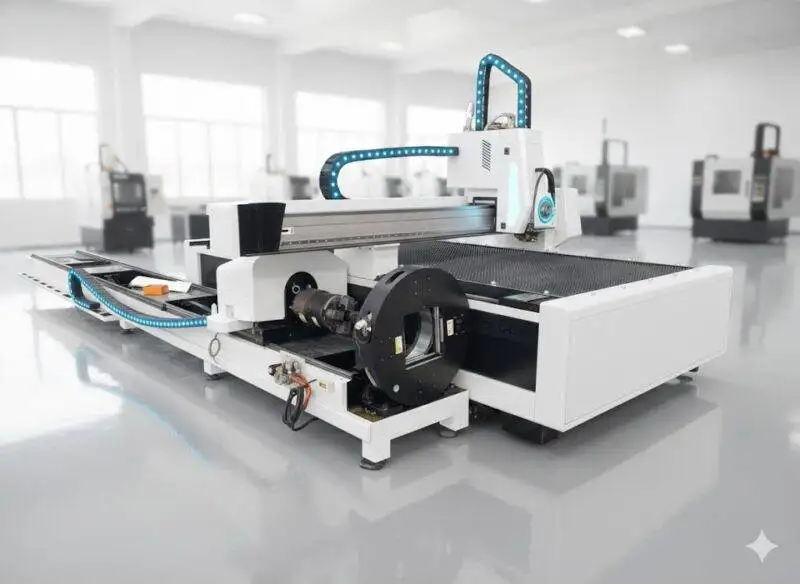
In the current landscape of heavy industrial fabrication, the shift toward structural steel fiber laser technology represents a fundamental change in throughput calculations. Traditional mechanical processing of H-beams, I-beams, and heavy plate relies on fragmented workflows—drilling, sawing, and manual layout marking. Fiber laser systems consolidate these operations into a single CNC-controlled environment. The core advantage lies in the power density of the 1.07-micron wavelength beam, which allows for narrow kerf widths and high-speed thermal erosion of the substrate without the mechanical stress associated with physical contact tools.
For industrial engineers, the primary metric is the reduction of “touch time.” When a fiber laser is utilized, the precision of the cut is so high that the heat-affected zone (HAZ) is minimized to a negligible margin. This leads to a finish that adheres to ISO 9013 standards, typically eliminating the requirement for secondary grinding operations. This creates a direct path from the cutting table to the assembly jig, bypassing the cleaning station entirely.
Mechanics of Arc Voltage Control in Laser Height Regulation
While often associated with other thermal processes, the application of arc voltage height control principles in high-end fiber laser heads refers to the sophisticated Z-axis sensing mechanisms. In structural steel, material flatness is rarely perfect; beams may have slight cambers, and plates often exhibit surface undulations. A rigid Z-axis would lead to focal point shifts, resulting in poor edge quality or nozzle collisions.
Capacitive Sensing and Real-Time Adjustment
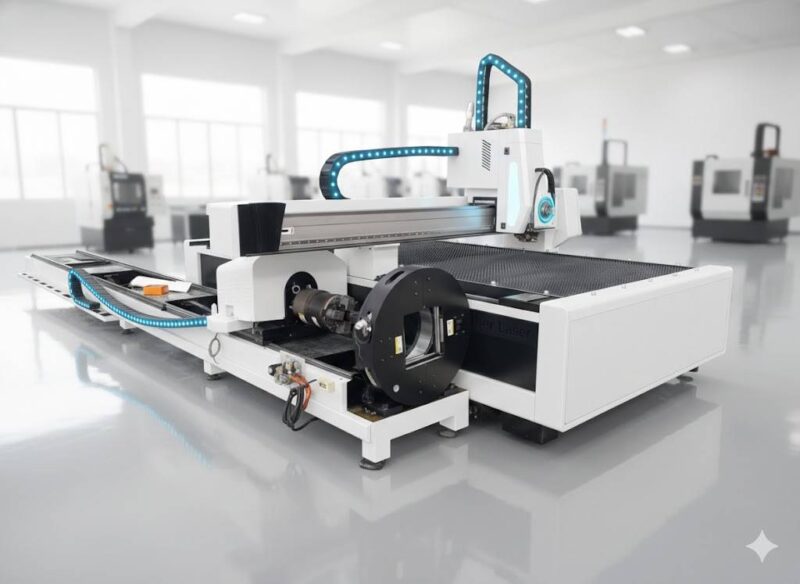
The system utilizes a high-frequency voltage loop between the nozzle and the workpiece. By monitoring the electrical potential (the “arc voltage” analog in laser sensing), the CNC controller maintains a constant standoff distance. This ensures that the focal point remains exactly where the software dictates—whether on the surface for piercing or slightly submerged for high-pressure nitrogen cutting. In structural applications where I-beams may have variations in flange thickness, this real-time adjustment is critical for maintaining consistent kerf geometry.
Dynamic Response and Collision Avoidance
The sensitivity of the voltage control system allows the cutting head to react within milliseconds to any deviation in the material plane. For structural engineers, this translates to reliability. If a beam has a 5mm twist over a 12-meter length, the laser head follows that contour seamlessly. This precision prevents the “dross” or “slag” accumulation that typically occurs when the focal point wanders, ensuring that bolt holes are perfectly cylindrical and ready for immediate fastening.
The Integrated Punch-Mark-Cut Workflow
One of the most significant efficiency gains in a modern fiber laser cell is the integrated marking and cutting capability. Historically, layout marking was a manual task involving soapstone or punch tools based on blueprint measurements. Modern fiber lasers handle this digitally, pulling data directly from BIM (Building Information Modeling) or TEKLA structures files.
Surface Marking and Part Identification
The laser can be modulated to perform low-wattage surface etching. This is used to “punch” center points for secondary drilling (if required for oversized holes) or to etch assembly instructions directly onto the steel members. Because this is done in the same coordinate system as the primary cut, the accuracy is unmatched. There is no risk of human error in translating dimensions from a drawing to the physical steel.
Precision Hole Cutting versus Mechanical Punching
Mechanical punching creates localized stress and deformation around the hole circumference. A fiber laser, however, creates holes through rapid vaporization. This allows for the creation of slotted holes, countersinks, and complex geometries in thick-walled structural tubing or heavy plate that a mechanical punch simply cannot handle. The result is a hole that meets the tight tolerances required for high-strength bolting in seismic-rated structures.
Eliminating Secondary Processes: The “No-Grinding” Standard
The economic justification for a automated beam processing fiber laser system often hinges on the elimination of the grinding station. Grinding is a labor-intensive, high-noise, and high-dust activity that represents a significant bottleneck in structural shops.
Edge Quality and Slag Prevention
By optimizing the auxiliary gas pressure (typically Oxygen for carbon steel or Nitrogen for stainless) and combining it with the precise Z-axis voltage control, the fiber laser produces a “burr-free” edge. The gas flow effectively ejects the molten metal before it can solidify on the underside of the cut. For structural steel, this means the part is ready for immediate fit-up. The surface roughness is low enough that specialized coatings and paints can be applied without additional surface preparation beyond standard cleaning.
Nesting Efficiency and Scrap Reduction
Industrial engineers focus heavily on material utilization. The narrow kerf of the fiber laser (often less than 0.2mm) allows for tighter nesting of parts compared to older thermal methods. Common-line cutting, where two parts share a single cut path, further reduces the time the laser is in motion and maximizes the weight of the finished product per ton of raw material. In the context of large structural projects where steel prices fluctuate, a 5-8% increase in material yield can equate to hundreds of thousands of dollars in annual savings.
Structural Integrity and Heat-Affected Zone Analysis
A common concern in structural engineering is the impact of thermal cutting on the base metal’s metallurgy. Fiber lasers provide a distinct advantage here due to their speed. The “dwell time” at any single point is significantly lower than other methods. This results in a very narrow HAZ. The grain structure of the steel remains largely unchanged, ensuring that the mechanical properties—such as yield strength and ductility—meet the design specifications of the structural engineer.
Consistency Across Batch Production
Because the process is entirely digital and the voltage control compensates for material variations, the first part produced is identical to the thousandth. This level of repeatability is essential for modular construction where steel components are fabricated off-site and must fit together perfectly on the job site. The elimination of manual layout and manual cutting removes the “fit-up” issues that frequently plague large-scale structural erections.
Conclusion on Systemic ROI
The integration of fiber laser technology with precision voltage sensing is not merely an incremental upgrade; it is a systemic overhaul of the structural fabrication process. By combining marking, punching, and high-precision cutting into a single automated cycle, manufacturers can significantly reduce lead times. The removal of grinding and manual layout not only saves labor costs but also improves the safety and environment of the shop floor. For the industrial engineer, the data is clear: the fiber laser is the optimal tool for high-accuracy, high-volume structural steel production where quality and speed are non-negotiable.






