Fiber Laser Cutting Machine with Arc Voltage Control for Pressure Vessels
In this article
Optimizing Pressure Vessel Fabrication with High-Precision Fiber Lasers
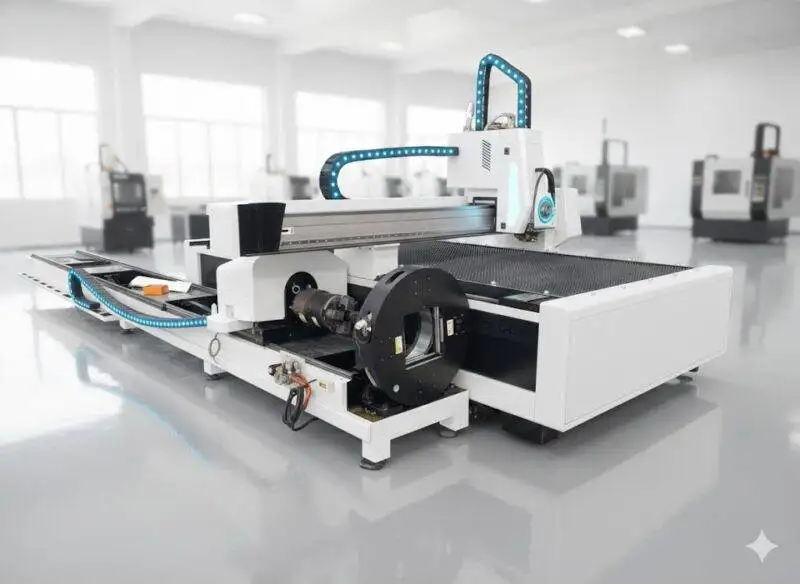
In the heavy industrial sector, specifically within the production of boilers, storage tanks, and reactors, the transition toward fiber Laser Cutting technology represents a significant leap in process efficiency. For decades, pressure vessel manufacturing relied on mechanical cutting or thermal processes that required extensive secondary finishing. However, the introduction of fiber laser systems, particularly those integrated with specialized height tracking or arc-voltage-style sensing, has redefined the standard for edge quality and geometric accuracy.
Industrial engineers focus on the total cost of ownership and throughput. When fabricating pressure vessels, the primary challenge lies in the material thickness and the non-linear surfaces of dish ends and cylindrical shells. A fiber laser system provides a concentrated energy density that results in a narrow kerf width, allowing for complex geometries to be cut with tolerances often exceeding +/- 0.1mm. This precision is foundational for downstream assembly, ensuring that fit-up tolerances are met without manual intervention.
The Role of Arc Voltage and Capacitive Height Control
While the term Arc Voltage Control (AVC) is often associated with traditional thermal processes, in the context of modern fiber laser integration for vessel components, it refers to the sophisticated Z-axis tracking system. In pressure vessel production, raw plates and formed heads often possess surface irregularities or slight deformations from the rolling process. Fiber laser cutting requires a constant standoff distance between the nozzle and the workpiece to maintain the focal point of the beam.
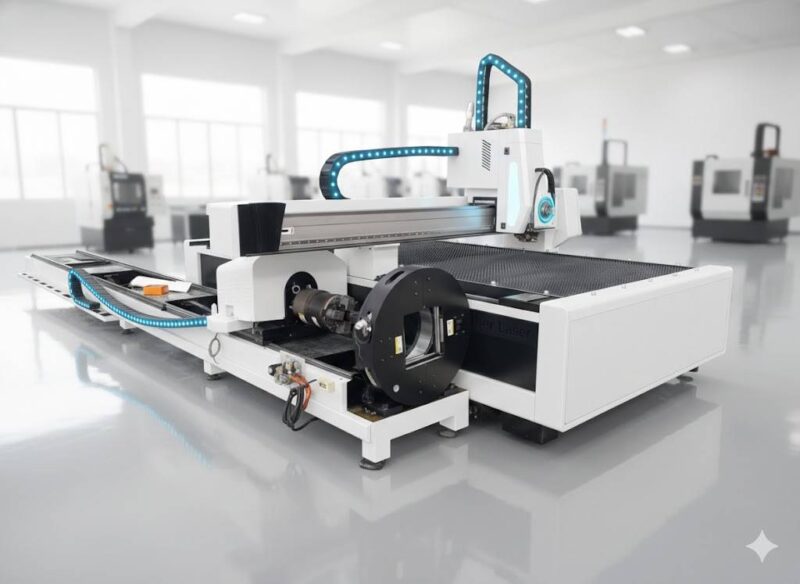
The height control system acts as the “eyes” of the CNC. It utilizes high-frequency capacitive sensing to detect minute changes in the distance to the material. By maintaining a constant gap, the system prevents dross formation and ensures that the laser energy is consistently applied at the optimal depth. for Pressure Vessels, where safety and structural integrity are paramount, this consistency prevents localized overheating and preserves the mechanical properties of the base metal.
The Integrated Workflow: Punch, Mark, and Cut
One of the most significant advantages of high-tier fiber laser machines is the ability to execute a multi-functional workflow within a single nesting program. This eliminates the need for transporting large, heavy workpieces between different stations, thereby reducing the risk of material damage and lowering labor costs.
Precision Punching and Piercing
Instead of mechanical drilling, the fiber laser performs high-speed piercing. By modulating the laser pulse frequency and power, the machine creates clean entry points for the cut. This is vital for thick-walled vessels where the pierce point must be controlled to prevent “cratering” or excessive thermal buildup that could weaken the heat-affected zone (HAZ).
Automated Marking for Traceability
Quality control in pressure vessel manufacturing demands rigorous traceability. Fiber lasers can be detuned to lower power levels to etch heat numbers, part IDs, or welding instructions directly onto the surface. Unlike ink or physical tags, laser marking is permanent and resists the high temperatures of subsequent stress-relief heat treatments.
Final High-Speed Cutting
The final stage is the high-precision cut. Because the fiber laser operates at a wavelength of approximately 1.06 microns, it is highly absorbed by most metals used in vessel construction, including carbon steel, stainless steel, and nickel alloys. The result is a vertical, clean edge that requires no further processing.
Eliminating the Need for Post-Process Grinding
Traditional cutting methods often leave a hardened edge or significant dross, necessitating no grinding as a target for modern lean manufacturing. Manual grinding is not only a labor-intensive bottleneck but also a source of ergonomic injury and environmental dust. A fiber laser equipped with high-pressure nitrogen or oxygen assist gases produces an edge with such low roughness that it can move directly to the longitudinal or circumferential welding stage.
The reduction in the heat-affected zone is another critical factor. Because the laser moves at high feed rates with a narrow focal spot, the surrounding material remains relatively cool. This prevents the formation of martensite or other brittle phases in the edge of the plate, which is essential for vessels operating under high cyclic pressure or in cryogenic environments.
Geometric Accuracy in Dish End Processing
Vessel heads, such as ellipsoidal or torispherical ends, present a unique challenge for flat-bed cutting systems. Advanced fiber laser machines for this application often feature a five-axis head or a synchronized rotary axis. The height control system (AVC logic) becomes crucial here, as it must account for the curvature of the dish.
The CNC controller calculates the vector of the cut while the sensor maintains the perpendicularity of the nozzle to the surface. This ensures that the bevel angle (if required) or the hole geometry for nozzles and manways is perfectly circular and accurately positioned. For an industrial engineer, this means a reduction in the “trial and error” phase of assembly, as every component fits according to the CAD model.
Efficiency Metrics and Material Utilization
Material costs represent a significant portion of the total expense in pressure vessel fabrication. Pressure vessel plates are often made of specialized, expensive alloys. Fiber laser systems utilize sophisticated nesting software that minimizes the skeleton waste between parts.
Furthermore, the speed of the fiber laser significantly reduces the cycle time per vessel. In a 10mm carbon steel application, a 12kW fiber laser can achieve cutting speeds that are quadruple those of older technologies. When multiplied across hundreds of meters of cuts per vessel, the impact on the factory’s annual capacity is transformative.
Technical Parameter Control for Pressure Ratings
The integrity of a vessel is determined by its weakest point. When using a fiber laser, the industrial engineer must optimize the following parameters to meet ASME or PED standards:
- Gas Pressure: Ensuring sufficient assist gas to clear the melt pool and prevent oxide inclusion.
- Pulse Frequency: Tailoring the energy delivery to the specific thickness to maintain a stable kerf.
- Feed Rate: Balancing speed with edge smoothness to avoid micro-striations that could act as stress concentrators.
Conclusion: The Strategic Advantage
The implementation of Fiber Laser Cutting Machines with integrated height sensing technology provides a decisive advantage in the competitive landscape of pressure vessel manufacturing. By consolidating the punch, mark, and cut phases into a single automated process, facilities can achieve higher precision while simultaneously removing the costly and hazardous grinding phase.
From an engineering perspective, the data-driven nature of CNC laser systems allows for continuous process improvement. Real-time monitoring of the cutting head and the feedback loops provided by the height sensors ensure that every cut meets the stringent requirements of high-pressure applications. As the industry moves toward further automation, the fiber laser stands as the primary tool for achieving the necessary tolerances and surface finishes required for the next generation of industrial vessels.






