Fiber Laser Cutting Machine with Arc Voltage Control for Oil & Gas Tanks
In this article
Precision Engineering in Oil and Gas Tank Fabrication
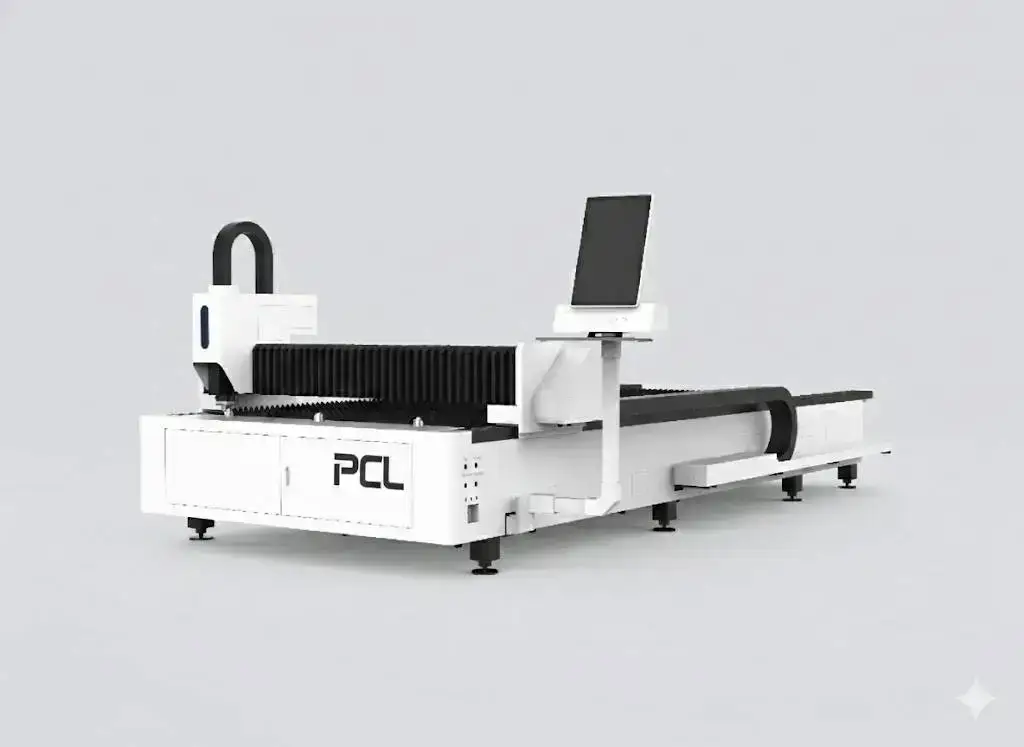
The manufacturing of oil and gas storage tanks and pressure vessels requires adherence to stringent geometric tolerances and structural integrity standards. Traditional methods of plate preparation often involve multi-step processes including mechanical shearing, thermal cutting, and extensive secondary grinding to remove dross and oxide layers. The introduction of fiber Laser Cutting systems has fundamentally altered this workflow. By utilizing high-density energy beams delivered through flexible optical fibers, engineers can achieve cutting speeds and edge qualities that were previously unattainable with legacy thermal processes.
For large-scale tank components, such as shell plates and dished ends, maintaining a constant focal point is critical. This is where the adaptation of arc voltage control (AVC) logic—traditionally used in height sensing—becomes vital for the laser head. In a fiber laser environment, this manifests as a high-speed capacitive sensing system that mimics the responsiveness of AVC to maintain a precise standoff distance between the nozzle and the workpiece. This ensures that even with the slight material deformations common in large-format heavy plates, the laser maintains an optimal kerf width and consistent penetration.
The Technical Advantage of Fiber Laser Integration
Fiber laser resonators generate a beam with a wavelength of approximately 1.06 microns. This shorter wavelength, compared to CO2 alternatives, allows for higher absorption rates in metallic materials, particularly carbon steel and stainless steel used in tank construction. From an industrial engineering perspective, the efficiency of the fiber laser cutting process is measured by its ability to perform three distinct functions in a single CNC program: punching, marking, and precision cutting.
Eliminating Secondary Grinding Operations
One of the primary cost drivers in tank fabrication is post-cut cleanup. Conventional thermal cutting often leaves a heavy slag or a hardened edge that interferes with the integrity of the tank. Fiber laser systems, when optimized with high-pressure nitrogen or oxygen assist gases, produce a dross-free edge. This “ready-to-use” surface eliminates the need for manual grinding, which reduces labor hours by as much as 30% per plate. The reduction in mechanical grinding also minimizes the risk of introducing surface contaminants, which is crucial for tanks designed to store corrosive petrochemicals.
Advanced Punching and Marking Capabilities
Modern fiber laser heads are equipped with high-speed piercing sensors. Instead of traditional drilling for bolt holes or manhole starts, the laser performs high-frequency pulsing to “punch” through thick-walled plates with minimal splatter. Following the pierce, the system can switch parameters on-the-fly to perform architectural marking. This includes etching weld lines, part numbers, and assembly guides directly onto the steel. This integrated marking ensures traceability throughout the lifecycle of the oil and gas asset, meeting ISO and ASME documentation requirements without requiring a separate station or tool change.
Arc Voltage Control Logic in Height Sensing
While arc voltage control is a term frequently associated with electrical arc stability, its application in the context of high-end laser cutting refers to the real-time feedback loop governing the Z-axis. Oil and gas tanks often utilize plates that exhibit “oil-canning” or slight bowing due to internal stresses. A standard fixed-height laser would lose focus, leading to “lost cuts” or nozzle damage.
Dynamic Surface Tracking
The sensing system utilizes the nozzle itself as a probe, measuring the capacitance between the cutting head and the grounded plate. This feedback loop operates at kilohertz frequencies, allowing the Z-axis motor to compensate for elevation changes as small as 0.1mm. For the industrial engineer, this means the machine can process a 12-meter shell plate with a 5mm surface deviation without any degradation in cut quality or risk of collision. This level of automation is essential for maintaining the high uptime required in 24/7 fabrication facilities.
Thermal Management and Material Integrity
In the oil and gas sector, the heat-affected zone (HAZ) is a critical metric. Excessive heat input during the cutting process can alter the grain structure of the steel, leading to localized brittleness or reduced corrosion resistance. Fiber lasers offer a highly concentrated heat source, which results in a significantly narrower HAZ compared to other thermal methods. By restricting the thermal input to a localized area, the structural properties of the base metal remain intact, ensuring that the tank meets its design pressure ratings without the risk of stress-corrosion cracking at the edges.
Optimizing Kerf Precision for Fit-Up
The precision of the kerf (the width of the material removed by the laser) is typically within the range of ±0.05mm. In large-diameter tank construction, cumulative errors in plate dimensions can lead to significant alignment issues during the fit-up stage. By utilizing fiber laser technology, engineers can guarantee that every shell segment is identical. This precision simplifies the assembly of cylindrical sections, as the edges meet with near-perfect uniformity, facilitating high-quality downstream joining processes that do not require gap-filling or corrective trimming.
Operational Efficiency and Throughput Metrics
From a throughput standpoint, the fiber laser’s ability to move at high traverse speeds (often exceeding 100m/min) between cuts minimizes non-productive time. When processing 15mm to 25mm thick plates for pressure vessels, a 20kW fiber laser can maintain a consistent cutting speed that outperforms mechanical methods by a factor of four. The lack of tool wear is another significant advantage; unlike mechanical punches or saws, the laser beam does not degrade, ensuring the first cut of the day is identical to the last.
Maintenance and Power Consumption
Industrial engineers must also consider the wall-plug efficiency of the equipment. Fiber lasers typically operate at 35% to 45% electrical efficiency, which is significantly higher than older laser technologies. Furthermore, the absence of complex beam delivery optics (such as external mirrors and bellows) reduces the maintenance burden. The solid-state nature of the fiber source means there are no moving parts within the resonator, leading to a Mean Time Between Failures (MTBF) of over 100,000 hours.
Strategic Implementation in Heavy Industry
The deployment of a fiber laser cutting system with integrated height sensing is a strategic investment for any facility focusing on oil and gas infrastructure. The ability to transition from a raw plate to a precision-cut, marked, and ready-to-assemble component in a single operation represents the pinnacle of modern manufacturing efficiency. By eliminating secondary processes like grinding and manual layout marking, manufacturers can significantly increase their annual tonnage output while maintaining the highest levels of safety and quality compliance.
The convergence of high-power fiber laser cutting and advanced motion control systems provides the oil and gas industry with the tools necessary to meet increasing global demands. As tank designs become more complex and material specifications more demanding, the precision and versatility of the fiber laser will remain the benchmark for industrial fabrication excellence.






