Field Report: Deployment of 1500W Industrial Laser Welder in Casablanca, Morocco
1. Introduction and Site Context
This report details the technical commissioning and operational evaluation of a 1500W fiber-source Industrial Laser Welder within an aerospace-grade fabrication facility located in the Ain Sebaâ industrial zone, Casablanca, Morocco. The primary objective of this deployment was to transition from traditional Gas Tungsten Arc Welding (GTAW) to advanced Laser Technology for high-precision Titanium welding applications.
Casablanca’s coastal environment presents unique challenges for high-precision optics, specifically regarding ambient humidity and airborne particulate matter common in the Atlantic corridor. As a senior welding engineer, my focus remained on the metallurgical integrity of Grade 2 and Grade 5 Titanium alloys and the stability of the fiber delivery system under local grid conditions.
2. Hardware Specifications: The 1500W Industrial Laser Welder
The unit deployed is a continuous-wave (CW) 1500W Industrial Laser Welder equipped with a handheld wobble-head delivery system. Unlike CO2 systems, this fiber-based Laser Technology operates at a wavelength of 1070nm, which offers superior absorption rates in non-ferrous metals, particularly titanium and aluminum.
Power Density and Beam Profile
The 1500W threshold was selected as the “sweet spot” for this Casablanca facility. It provides sufficient energy density to achieve “keyhole” mode penetration in 4mm Titanium plates while maintaining a small enough footprint for the shop’s manual assembly lines. The integration of an IP64-rated chiller system was mandatory to counteract the high ambient temperatures of the Moroccan summer, ensuring the laser source maintains a delta T of less than 2°C during peak operation.
3. Synergy: Industrial Laser Welder and Advanced Laser Technology
The synergy between a modern Industrial Laser Welder and the underlying Laser Technology is most evident in the control of the Heat Affected Zone (HAZ). In the Casablanca workshop, the transition from TIG to laser resulted in a 70% reduction in total heat input.
Laser Technology allows for high-frequency “wobble” parameters—where the beam oscillates in circular or ovoid patterns—bridging the gap between a focused pinpoint and a broader weld pool. This synergy ensures that the Industrial Laser Welder does not just melt metal but manages the fluid dynamics of the weld pool. In the context of Titanium welding, this precision is the difference between a flight-certified component and a brittle, oxidized failure.
4. Primary Application: Precision Titanium Welding
Titanium welding is notoriously sensitive to atmospheric contamination. At temperatures above 400°C, titanium becomes a “universal solvent” for oxygen, nitrogen, and hydrogen. Our field tests in Casablanca focused on Grade 5 (Ti-6Al-4V) aerospace ducting.
4.1. Gas Shielding Protocols
The Industrial Laser Welder was configured with a specialized coaxial gas nozzle supplemented by a custom-fabricated trailing shield. Because Laser Technology concentrates energy so efficiently, the duration the metal remains at critical temperatures is significantly shorter than in arc welding. However, the speed of the Industrial Laser Welder (often exceeding 20mm/s) means that the trailing shield must be elongated to ensure the weld bead remains under argon cover until it cools below 400°C.
4.2. Metallurgical Observations
During the Casablanca trials, we observed that the high cooling rates inherent in Laser Technology produced a very fine martensitic alpha-prime structure in Grade 5 Titanium. This resulted in a weld zone that actually exceeded the base metal’s tensile strength, though it required a slight trade-off in ductility. We mitigated this by fine-tuning the pulse frequency of the Industrial Laser Welder to allow for a more controlled grain growth period.
5. Field Challenges in Casablanca: Environmental Factors
Operating an Industrial Laser Welder in Morocco’s largest port city requires addressing two specific environmental variables: humidity and power fluctuations.
Humidity and Optical Condensation
High humidity in Casablanca can lead to “sweating” on the protective windows of the laser head. We implemented a dry-air purge system. Without this, the 1070nm Laser Technology would experience beam scattering, leading to “pitting” in the Titanium welding process. A lesson learned here: never start the chiller before the dry-air purge has stabilized the internal head environment.
Grid Stability
Local industrial grids can experience voltage sags. Fiber Laser Technology is sensitive to input power quality. We installed a dedicated 20kVA stabilizer for the Industrial Laser Welder to prevent “clipping” of the laser power during the ramp-up phase of the duty cycle, which is critical for consistent penetration in Titanium welding.
6. Lessons Learned and Engineering Recommendations
6.1. The Importance of Surface Prep
One of the hardest lessons learned on the shop floor was that Laser Technology is less forgiving of surface contamination than TIG. Any residual hydrocarbons (oils or fingerprints) on the titanium will be instantly vaporized and trapped in the weld, causing porosity. For any Industrial Laser Welder operation in this region, a dedicated chemical cleaning station (Acetone/Stainless brush) must be physically adjacent to the welding cell.
6.2. Tackling the “Blue Weld” Myth
In many workshops, a blue or purple tint in Titanium welding is seen as “acceptable.” My directive to the Casablanca team was clear: for aerospace-grade 1500W laser applications, any color beyond “silver” or “light straw” indicates a failure of the shielding synergy. We adjusted the flow rate to 25 L/min and increased the trailing shield length to 100mm to achieve a pristine silver finish, utilizing the high-speed capability of the Industrial Laser Welder to outpace the thermal saturation of the part.
6.3. Wobble Width vs. Penetration
When performing Titanium welding on butt joints with imperfect fit-up, the temptation is to increase the wobble width of the Industrial Laser Welder. However, our data shows that increasing wobble width beyond 2.0mm significantly decreases effective penetration depth. We found the optimal setting for 3mm titanium to be a 1.2mm circular wobble at 150Hz. This leverages Laser Technology to create a robust bead without sacrificing the “keyhole” advantage.
7. Conclusion
The implementation of the 1500W Industrial Laser Welder in Casablanca marks a significant technological leap for the local manufacturing sector. By combining the power of modern Laser Technology with rigorous Titanium welding protocols, the facility has achieved a 4x increase in throughput compared to manual GTAW.
The success of this deployment hinges not just on the hardware, but on the engineer’s ability to manage the atmospheric conditions of the Moroccan coast and the strict metallurgical requirements of reactive metals. The synergy between the Industrial Laser Welder’s control interface and the operator’s understanding of heat input is the new benchmark for industrial excellence in North Africa.
Sign-off:
Senior Welding Engineer
Field Report #CAS-772-2024
-


Cantilever Welding Robot solution
-


GF laser cutting machine
-

P3015 plasma cutting machine
-

LFP3015 Fiber Laser Cutter
-

pipe plasma cutting machine
-
LFH 4020 Fiber Laser Cutting Machine
-
LFP4020
-

gantry plasma air cutting machine
-

3D robot cutting machine
-

8 axis plasma cutting machine
-

5 axis plasma cutting machine
-

LT360 tube laser cutting machine
-

robot welding workstation
-

SF6060 fiber laser cutting machine
Advanced Fiber Laser Tube Processing Technology
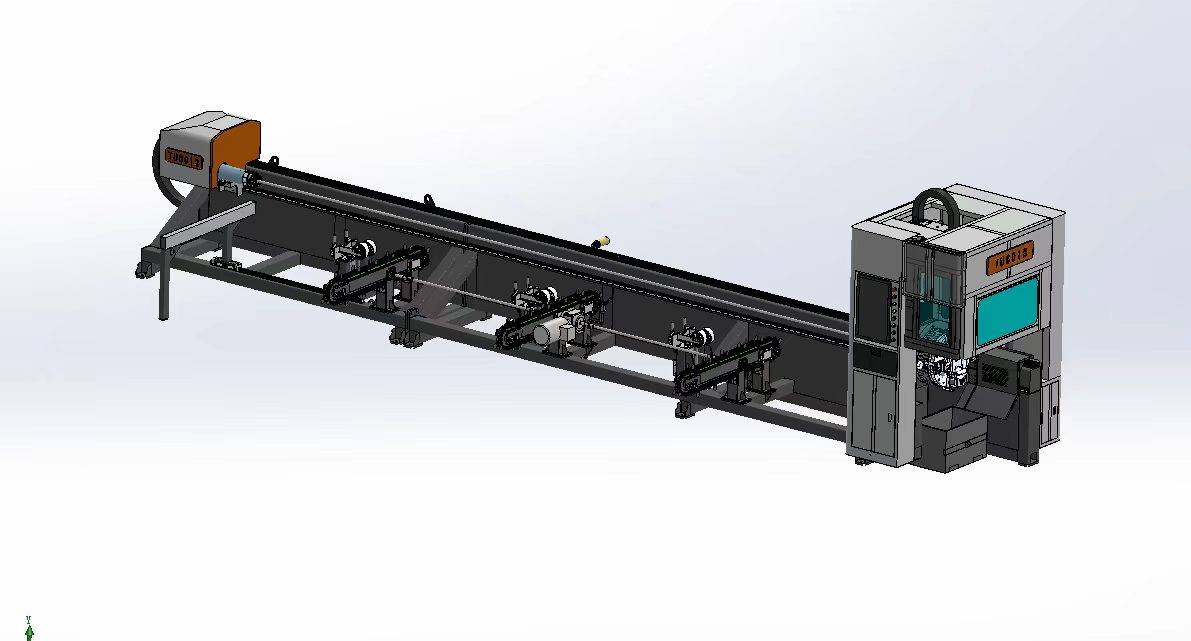
Our CNC Fiber Laser Tube Cutting systems revolutionize metal fabrication by integrating high-precision cutting, punching, and profiling into a single automated workflow. Designed for versatility, this technology handles a wide array of profiles including Round, Square, Rectangular, and Oval tubes, as well as complex L-shaped and U-shaped channels.
- Precision Punching: High-speed hole punching with micron-level accuracy, eliminating the need for mechanical drilling or die-stamping.
- Complex Profiling: Advanced 3D pathing allows for intricate interlocking joints and specialized notch cuts, ideal for structural frames.
- High Material Efficiency: Intelligent nesting software minimizes scrap, reducing raw material costs across large production runs.
- Clean Finish: Delivers oxide-free, burr-free edges that require zero secondary grinding before welding.

Seamlessly processing multiple profiles with consistent precision.
Global Delivery & Logistics



From our high-tech manufacturing facility directly to your global site. PCL WeldCut ensures secure packaging, professional handling, and reliable international logistics to safeguard your equipment throughout the entire journey.