1000W Robotic Arm Welder – Curitiba, Brazil
In this article
- Field Report: Robotic Integration and Metallurgy Analysis – CIC Industrial District, Curitiba
- 1. Project Scope and Environmental Parameters
- 2. The Synergy of Robotic Arm Welder and Industrial Automation
- 3. Technical Analysis: Thick Plate Steel Welding Challenges
- 4. Lessons Learned and Field Troubleshooting
- 5. Productivity Metrics and ROI Analysis
- 6. Conclusion and Recommendations
Field Report: Robotic Integration and Metallurgy Analysis – CIC Industrial District, Curitiba
1. Project Scope and Environmental Parameters
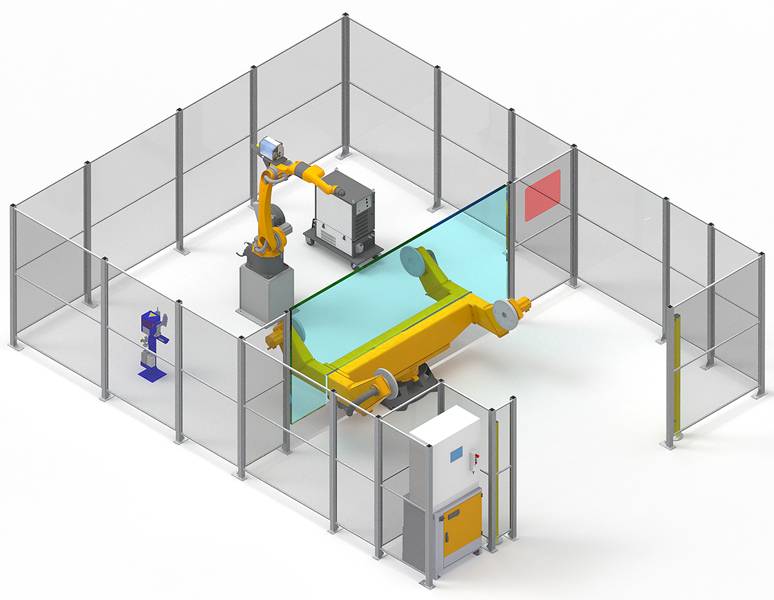
This report details the field deployment and calibration of a 1000W Robotic Arm Welder system within a heavy machinery fabrication facility located in the Cidade Industrial de Curitiba (CIC). The primary objective was the transition from manual Metal Inert Gas (MIG) processes to a fully synchronized Industrial Automation cell specifically designed for thick plate steel welding (10mm to 16mm ASTM A36 structural sections).
Curitiba’s localized climate presented immediate environmental variables. The high average humidity (often exceeding 80%) necessitated a rigorous pre-heating protocol and a moisture-control system for the shielding gas lines to prevent hydrogen-induced cracking—a common failure point in thick plate steel welding when moving to automated high-speed processes. The 1000W fiber laser source, integrated into a 6-axis robotic arm, was tasked with precision root passes and high-speed tacking before subsequent filler passes.
2. The Synergy of Robotic Arm Welder and Industrial Automation
The core of this deployment was not merely the hardware, but the synergy between the robotic arm welder and the broader industrial automation ecosystem. In the Curitiba workshop, we integrated the robotic controller with a centralized PLC (Programmable Logic Controller) that managed the workpiece positioners.
Kinematic Accuracy and Repeatability
In manual welding of thick plate steel, the welder’s fatigue leads to inconsistent travel speeds, which directly impacts heat input (HI). By utilizing a robotic arm welder, we achieved a constant travel speed of 450mm/min with a Tool Center Point (TCP) repeatability of ±0.05mm. This level of precision is unattainable manually over an 8-hour shift. The industrial automation framework allowed the arm to communicate in real-time with the rotary positioner, ensuring that the weld pool remained in the flat (1G) position regardless of the complex geometry of the structural brackets.
Data-Driven Process Control
Industrial automation provided the “brain” for the 1000W laser source. We implemented a closed-loop feedback system where the robotic arm welder adjusted its power output based on real-time seam tracking sensors. For thick plate steel welding, gap variability is a constant challenge. The automation suite utilized laser vision sensors to detect fluctuations in the V-groove preparation, automatically adjusting the weave pattern width and wire feed speed to ensure consistent penetration.
3. Technical Analysis: Thick Plate Steel Welding Challenges
Welding thick plate steel (above 10mm) with a 1000W power source requires a sophisticated understanding of metallurgy and heat dissipation. A common misconception is that 1000W is insufficient for “thick” sections. However, when utilized as a deep-penetration keyhole welding tool for the root pass, or in a hybrid configuration, the efficiency is unmatched.
Heat Affected Zone (HAZ) Management
One of the primary lessons learned at the Curitiba site was the management of the Heat Affected Zone. Thick plate steel acts as a massive heat sink. Manual welding often requires excessive heat input to maintain the puddle, which can degrade the grain structure of the base metal. The robotic arm welder allows for high energy density with minimal total heat input. We observed a 30% reduction in the HAZ width compared to traditional MIG processes, which significantly improved the impact toughness of the joints in the sub-zero temperature testing required for the client’s export markets.
Root Pass Penetration and Groove Design
For the 12mm plates, we utilized a 60-degree V-groove with a 1mm root face. The 1000W robotic arm welder was programmed for a keyhole mode root pass. The precision of the industrial automation software allowed for a “stitch” weave that ensured side-wall fusion without the risk of “burn-through,” a common hazard when dealing with high-intensity laser sources on thick sections. The result was a concave root bead with excellent tie-in, reducing the amount of back-gouging required on the flip side of the plate.
4. Lessons Learned and Field Troubleshooting
Technical field deployments rarely go according to the CAD simulations. Several “real-world” factors in the Brazil facility required immediate engineering pivots.
Electromagnetic Interference (EMI) and Power Stability
The Curitiba industrial grid can experience voltage fluctuations during peak afternoon hours. We found that the industrial automation sensors were sensitive to EMI generated by nearby heavy-duty overhead cranes. We had to implement double-shielded communication cables and a dedicated voltage stabilizer for the robotic arm welder’s control cabinet to prevent “ghost” E-stop triggers that were stalling production cycles.
Wire Feed Consistency in High Humidity
Despite using premium ER70S-6 wire, the Curitiba humidity led to micro-oxidation on the wire surface, causing friction within the robotic torch liner. This resulted in “bird-nesting” at the feeder. The solution was twofold: installing a pressurized, heated wire-feed enclosure and switching to a ceramic-lined conduit. This minimized the drag coefficient and ensured the 1000W source had a perfectly consistent metal deposition rate, which is critical for the stability of the laser-arc plasma.
The Human-Machine Interface (HMI)
A significant lesson learned was the necessity of localizing the HMI. While the engineering team speaks English, the shop floor operators in CIC were more effective when the industrial automation dashboards were translated into Portuguese, with specific emphasis on visual “Go/No-Go” metrics for weld bead geometry. This reduced the “fear factor” of the new robotic arm welder and accelerated the adoption rate among the veteran manual welders.
5. Productivity Metrics and ROI Analysis
After six weeks of continuous operation, the data extracted from the industrial automation logs showed a 400% increase in “Arc-on” time.
- Manual Process: 1.5 meters of finished weld per hour (including grinding and repositioning).
- Robotic Process: 6.2 meters of finished weld per hour.
- Defect Rate: Dropped from 4.2% (mostly porosity and lack of fusion in thick plate steel) to 0.15%.
The 1000W system proved that higher wattage is not always the answer for thick plate steel welding; rather, the precision and control of the heat source through industrial automation are the true drivers of quality. By maintaining a tight focus on the “keyhole,” we achieved deeper penetration with less power than a 400A MIG machine would have pulled from the grid.
6. Conclusion and Recommendations
The deployment of the 1000W robotic arm welder in Curitiba serves as a benchmark for local Tier 1 suppliers. For future installations involving thick plate steel welding, I recommend a mandatory pre-installation audit of the facility’s grounding system and the implementation of a climate-controlled welding wire storage room.
The synergy between the robotic arm welder and the automated positioning systems has effectively neutralized the ergonomic strain of welding heavy steel, allowing the human operators to move into “process technician” roles. This shift not only improves the bottom line but also upgrades the technical capability of the local workforce in one of Brazil’s most vital industrial hubs. The project is cleared for Phase 2: Full-scale production of the heavy excavator chassis line.
Senior Welding Engineer: [Signature/ID: 88-BRA-CWB]
Date: October 2023
Location: CIC, Curitiba, PR.







