Industrial Engineering Optimization for Shipbuilding: Tank Fillet Welding
In the heavy industry sector of shipbuilding, particularly the construction of tankers and large-scale bulk carriers, the volume of linear fillet welding is staggering. The structural integrity of these vessels relies heavily on the quality of fillet welds between hull plates and internal stiffeners, or “tanks.” Traditionally, this process was dominated by manual or semi-automatic methods that were susceptible to human fatigue and environmental variance. The introduction of the Tank Fillet Welding Machine represents a critical shift toward mechanized efficiency, focusing on travel consistency and geometric precision.
From an industrial engineering perspective, the objective is to maximize the arc-on time while minimizing defects and rework. Unlike stationary workshop environments, shipbuilding involves field construction where the environment is vertical, overhead, or confined. A mechanized system must provide not only the welding power but also the physical stability to operate on non-horizontal planes.
The Mechanics of Magnetic Crawler Stability
The core of a field-ready fillet welding system is the traction mechanism. For shipbuilding, a Magnetic Crawler Welding unit is the preferred solution. These machines utilize high-strength permanent magnets or switchable electromagnets to adhere to the steel surface. This magnetic grip provides the necessary friction to counteract gravity, ensuring that the welding torch maintains a constant distance from the joint (the “stick-out”) regardless of the orientation.
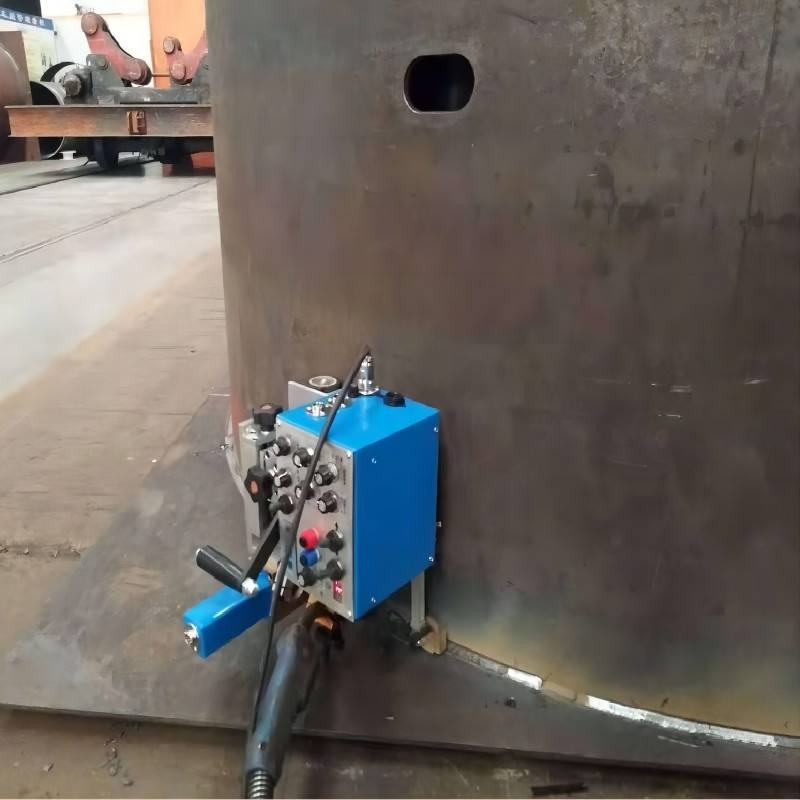
Stability in a field environment is not merely about staying on the plate; it is about vibration dampening and travel speed uniformity. If the crawler experiences “jitter” due to uneven surface conditions or magnetic flux variations, the weld bead profile will become irregular. Industrial engineers prioritize crawlers with independent drive wheels and high-torque motors that can overcome small surface obstructions, such as mill scale or tack welds, without sacrificing speed consistency.
Key Components of Field-Stable Systems
- Four-wheel drive traction with synchronized encoders for precise speed control.
- Adjustable magnetic force settings to accommodate different plate thicknesses and coatings.
- Heavy-duty wire feeder integration to minimize wire-delivery friction.
- Integrated heat shields to protect internal electronics from the high radiant heat of continuous fillet processes.
Implementing Offline Programming for Shipbuilding
The most significant bottleneck in automated welding is the setup time. In traditional automation, “teaching” a path involves manually moving the machine to specific points, which is counterproductive in a one-off or low-volume environment like a ship tank. Offline Programming for Shipbuilding (OLP) addresses this by decoupling the programming phase from the actual welding time.
By using the 3D CAD models of the ship’s structure, engineers can generate the welding path in a virtual environment. The OLP software calculates the exact coordinates, torch angles, and travel speeds required for each fillet joint. This data is then exported to the mechanized crawler. When the machine is placed on the steel plate, it simply requires a single reference point alignment to begin executing the pre-planned path.
Advantages of OLP in Large-Scale Tanks
OLP allows for the simulation of potential collisions between the machine and internal stiffeners or bulkheads. In the confined spaces of a tank, knowing the clearance before the machine starts is essential for preventing equipment damage. Furthermore, OLP enables the standardization of weld parameters across multiple units. If a shipyard is deploying ten crawlers simultaneously, OLP ensures that every unit follows the exact same weld procedure specification (WPS), leading to uniform structural integrity across the vessel.
Improving Field Construction Efficiency and Throughput
The primary metric for evaluating a Field Construction Efficiency upgrade is the “Duty Cycle” or “Arc-on Time.” Manual welding in tanks often yields a duty cycle of 25% to 30% due to the need for frequent breaks, repositioning, and helmet adjustments. A mechanized magnetic crawler can push this duty cycle to 70% or higher.
Beyond the speed of the arc, the mechanized system reduces the total volume of weld metal required. Manual welders often “over-weld” to ensure they meet the minimum throat thickness required by class societies. This results in wasted consumables and increased heat input, which leads to plate distortion. A mechanized system, guided by OLP, maintains a precise leg length, reducing consumable waste by up to 15% and significantly lowering the post-weld straightening costs associated with thermal distortion.
Quality Control and NDT Yield
In shipbuilding, non-destructive testing (NDT), such as ultrasonic or magnetic particle inspection, is mandatory. Manual welding often results in “stop-start” defects where the welder had to reposition. These points are the most common areas for porosity or slag inclusions. A mechanized crawler can perform continuous welds over much longer distances (e.g., 2 meters or more) than a human welder. This reduction in stop-start points directly correlates to a higher NDT pass rate and lower repair costs.
Operational Challenges and Engineering Solutions
While the benefits are clear, the deployment of mechanized crawlers in ship tanks involves specific logistical challenges. The first is power distribution. Large shipyards require robust cabling solutions to ensure that voltage drops do not occur over long distances from the power source to the crawler. Engineers often implement localized inverter power sources to mitigate this.
The second challenge is the physical weight of the unit. For a crawler to be effective in “field construction,” it must be light enough for a single operator or a two-person team to lift and position without specialized rigging. Industrial designers achieve this by using aircraft-grade aluminum frames and high-density permanent magnets that provide high holding force-to-weight ratios.
Conclusion: The Future of Mechanized Shipbuilding
The integration of the Tank Fillet Welding Machine with Offline Programming for Shipbuilding is no longer a luxury but a necessity for competitive ship construction. By focusing on the mechanical stability of the Magnetic Crawler Welding system and the data-driven precision of OLP, shipyards can achieve a level of Field Construction Efficiency that was previously unattainable. The result is a vessel with superior structural integrity, built in a shorter timeframe, with significantly reduced labor and material overhead. As global shipping demands increase, the reliance on these mechanized systems will only grow, setting a new standard for maritime engineering excellence.
-
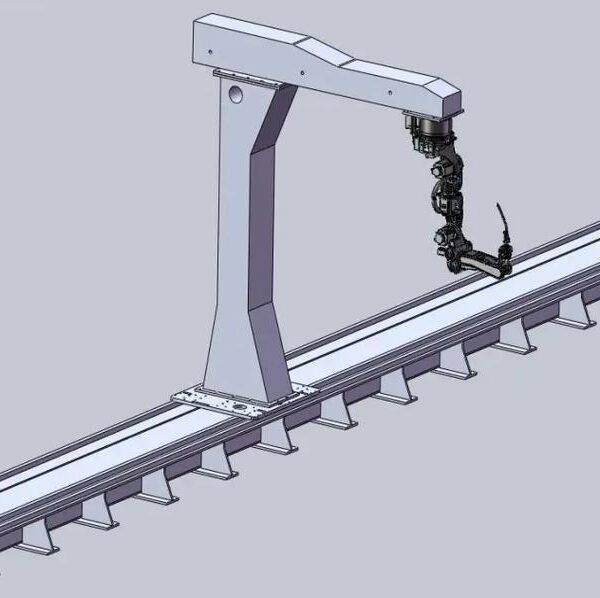

Cantilever Welding Robot solution
-
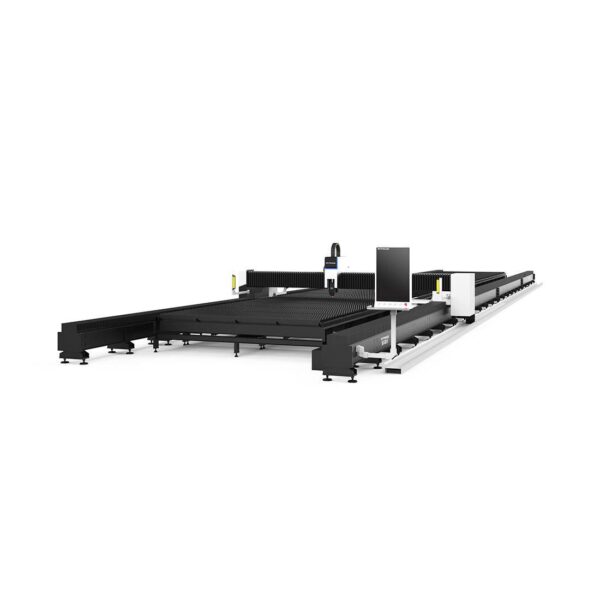

GF laser cutting machine
-
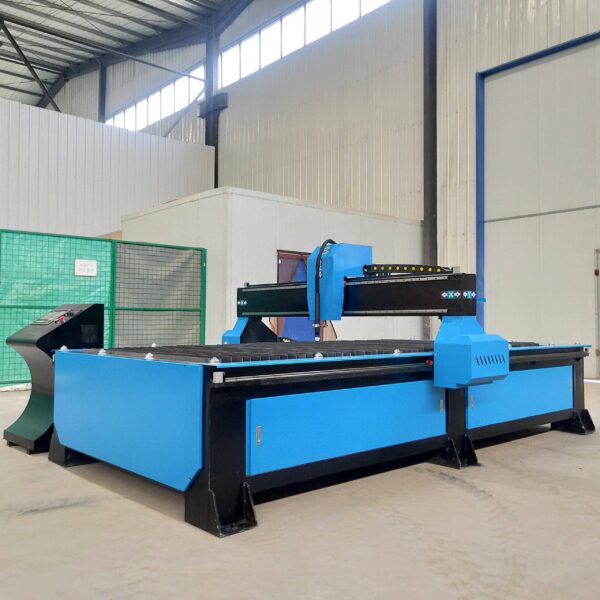
P3015 plasma cutting machine
-

LFP3015 Fiber Laser Cutter
-
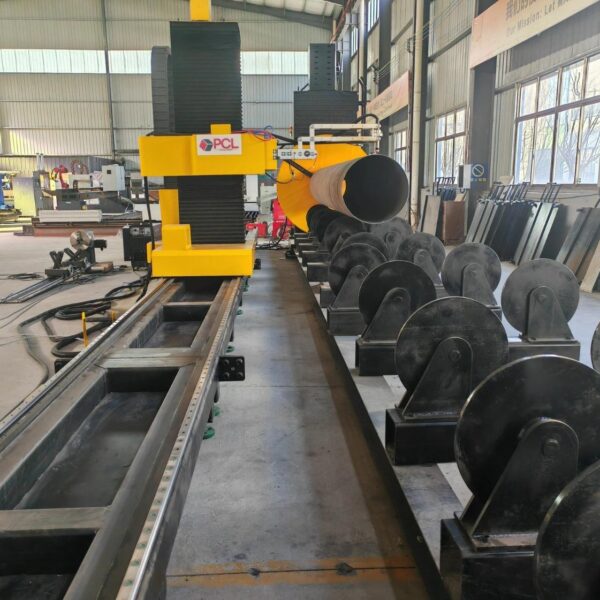
pipe plasma cutting machine
-
LFH 4020 Fiber Laser Cutting Machine
-
LFP4020
-
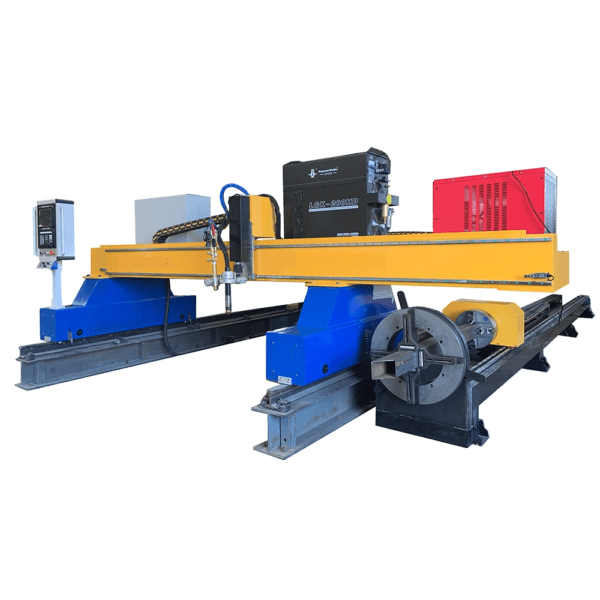
gantry plasma air cutting machine
-
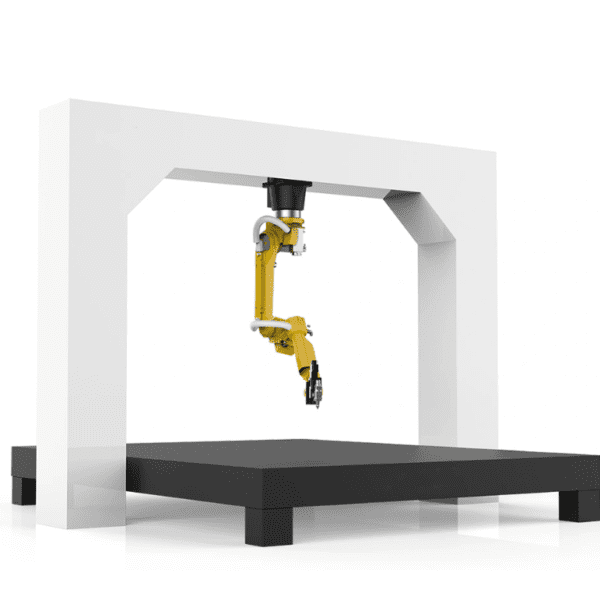
3D robot cutting machine
-
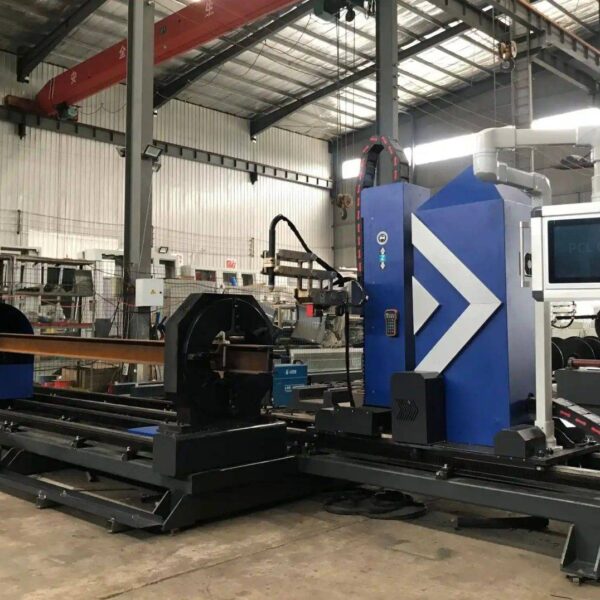
8 axis plasma cutting machine
-
5 axis plasma cutting machine
-

LT360 tube laser cutting machine
-
robot welding workstation
-

SF6060 fiber laser cutting machine
