Engineering Optimization of Ship Tank Fillet Welding
In the maritime industry, the construction of cargo tanks, ballast tanks, and fuel storage compartments represents a significant portion of total man-hours. These structures require extensive fillet welding along the intersections of longitudinal stiffeners, bulkheads, and floor plates. From an industrial engineering perspective, manual welding of these joints is inefficient due to the physical scale and the demanding environment of a shipyard. The transition to shipbuilding tank construction using mechanized solutions is essential for maintaining competitive production timelines and ensuring structural integrity.
The primary challenge in tank fabrication is maintaining weld consistency over long, continuous joints. Variations in travel speed and torch angle in manual processes lead to fluctuations in weld bead geometry and penetration depth. By utilizing mechanized magnetic crawlers paired with narrow gap techniques, shipyards can achieve a higher duty cycle and a more uniform Heat Affected Zone (HAZ).
The Role of Magnetic Crawler Systems in Field Stability
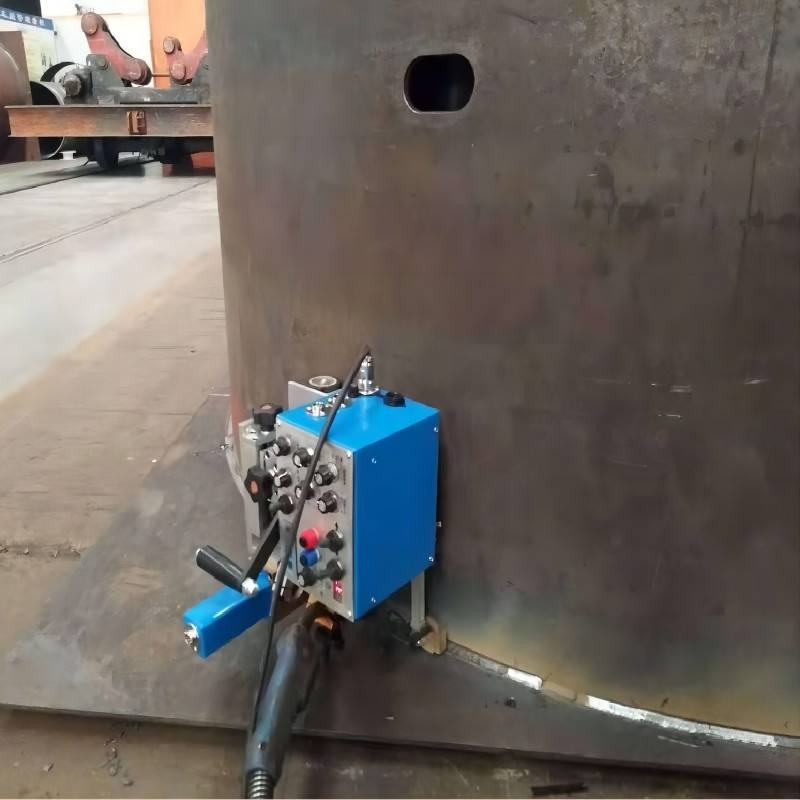
A magnetic welding crawler is a specialized carriage designed to navigate the ferromagnetic surfaces of ship plates. These machines utilize high-strength permanent magnets or electromagnets to provide the necessary tractive force to maintain position, even on vertical or overhead surfaces. In the context of tank construction, where surfaces may be primed or slightly uneven, the stability provided by magnetic adhesion is critical.
Mechanical Traction and Surface Adhesion
The crawler’s drive system must overcome the friction of the welding cables and the weight of the torch assembly. Industrial-grade crawlers use four-wheel drive systems with heat-resistant silicone or rubber wheels, integrated with internal magnets that generate a strong downward force. This force ensures that the torch maintains a constant distance from the joint (the “stick-out” length), which is vital for maintaining a stable arc voltage. In field conditions, where vibrations from other shipyard activities are prevalent, the magnetic grip acts as a dampening mechanism, preventing arc blow or oscillation deviations.
Control Systems for Linear Precision
Modern crawlers are equipped with guide rollers that track the vertical member of the fillet joint. This mechanical tracking, combined with the magnetic pull, ensures the welding wire remains centered in the root of the joint. For industrial engineers, this reduces the need for constant operator intervention, allowing a single technician to oversee multiple machines simultaneously, thereby increasing the labor efficiency ratio.
Narrow Gap Welding Principles for Fillet Joints
While narrow gap welding is traditionally associated with butt joints in heavy-wall pressure vessels, its principles are increasingly applied to fillet welds in shipbuilding to minimize filler metal consumption and reduce total heat input. The narrow gap welding approach in a fillet context focuses on optimizing the groove angle—if the plate is prepped—or simply using high-density current settings to achieve deep penetration in a confined area.
Metallurgical Advantages of Controlled Heat Input
By narrowing the focus of the arc and increasing the travel speed via mechanization, the total energy per unit length is reduced. This is critical in ship tanks where excessive heat leads to plate distortion and “oil-canning” effects. A mechanized crawler maintains a travel speed that manual welders cannot consistently match, resulting in a refined grain structure within the weld metal. This refinement improves the fatigue resistance of the tank’s structural members, which are subject to cyclic loading from sea states.
Shielding Gas Dynamics in Confined Fillets
Narrow gap techniques require precise gas shielding to prevent porosity. In the confined angles of a tank fillet, the crawler’s torch must be equipped with specialized nozzles that provide laminar flow. Because the magnetic crawler moves at a constant velocity, the gas envelope remains stable, protecting the molten pool from atmospheric contamination even in the drafty environments of an open-air shipyard.
Operational Efficiency and Throughput Metrics
The implementation of weld penetration stability through mechanized crawlers directly impacts the bottom line. In a standard shipbuilding project, the total length of fillet welds can reach several kilometers.
Reduction in Rework and NDT Failures
Manual welding in ship tanks often results in undercut or lack of fusion at the start and stop points. Mechanized crawlers eliminate most mid-seam stops, as they can carry larger spools of wire and operate continuously for the entire length of a stiffener. Reducing the number of weld starts and stops significantly lowers the probability of defects detected during Non-Destructive Testing (NDT), such as ultrasonic or radiographic inspections.
Calculating the Duty Cycle Improvement
An industrial engineer must look at the duty cycle—the percentage of time the arc is actually burning. Manual welders typically have a duty cycle of 25-30% due to fatigue and the need for frequent repositioning. A magnetic crawler can operate at a duty cycle of 60-80%. When combined with the increased travel speeds enabled by the narrow gap technique, the total linear meters of weld produced per shift can triple compared to traditional methods.
Technical Considerations for Implementation
To successfully deploy these systems, shipyards must standardize their joint preparation. The plates must be free of heavy scale and excessive moisture, which can interfere with the magnetic traction and the electrical conductivity of the arc. Furthermore, the selection of the power source is critical. The power supply must support high-speed pulsing or modified short-circuit transfer modes to take full advantage of the narrow gap geometry without causing spatter that could foul the crawler’s drive wheels.
Maintenance protocols for magnetic crawlers are also an essential factor. In a shipyard, grinding dust and metallic particles are attracted to the crawler’s magnets. Industrial engineers must implement a strict cleaning regimen to ensure that these particles do not migrate into the drive gears or the torch oscillation mechanism, which would compromise the precision of the weld.
Conclusion
The integration of magnetic crawler systems with Narrow Gap welding represents a strategic advancement in ship tank fabrication. By focusing on mechanical stability and process repeatability, shipyards can overcome the inherent challenges of large-scale structural welding. This mechanized approach not only improves the metallurgical quality of the fillet welds but also provides a measurable increase in productivity and a reduction in long-term structural maintenance costs. For the industrial engineer, the transition from manual to mechanized magnetic welding is not merely a technical upgrade, but a fundamental shift toward optimized production flow.
-
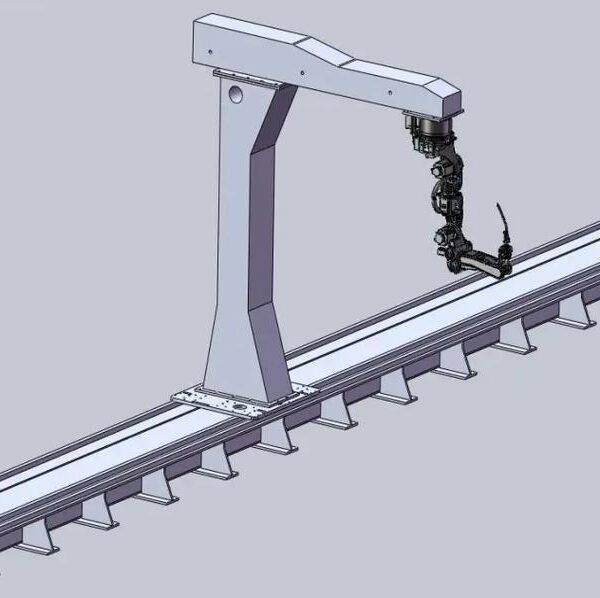

Cantilever Welding Robot solution
-
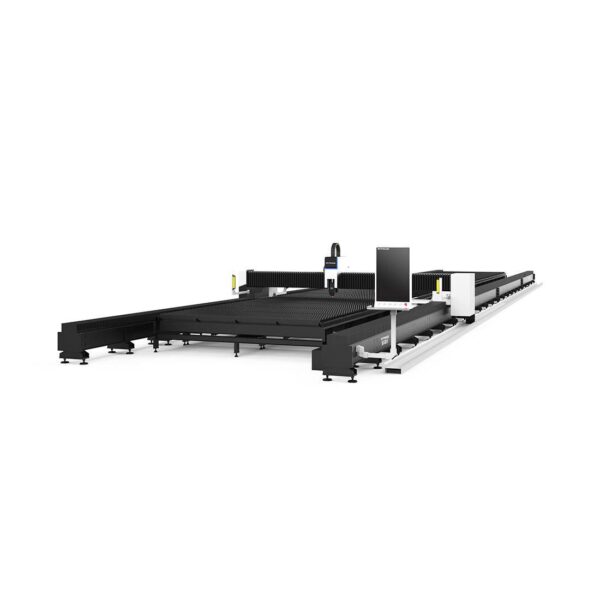

GF laser cutting machine
-
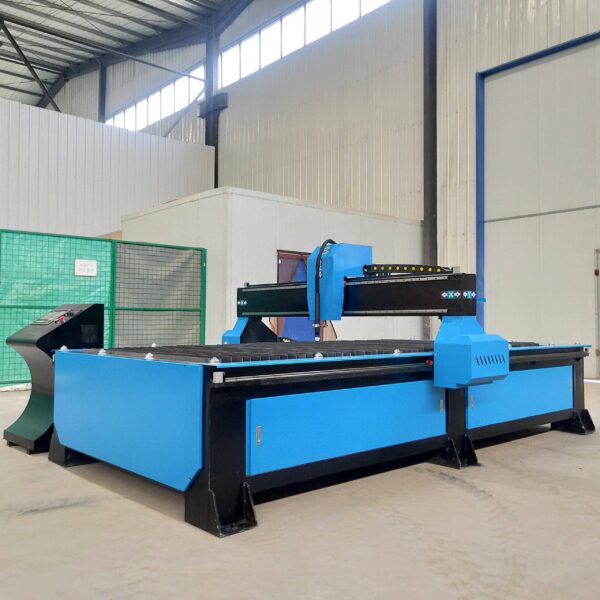
P3015 plasma cutting machine
-

LFP3015 Fiber Laser Cutter
-
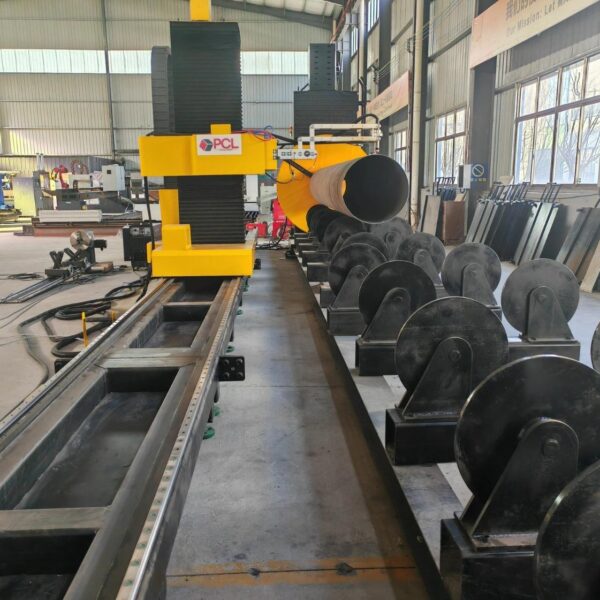
pipe plasma cutting machine
-
LFH 4020 Fiber Laser Cutting Machine
-
LFP4020
-
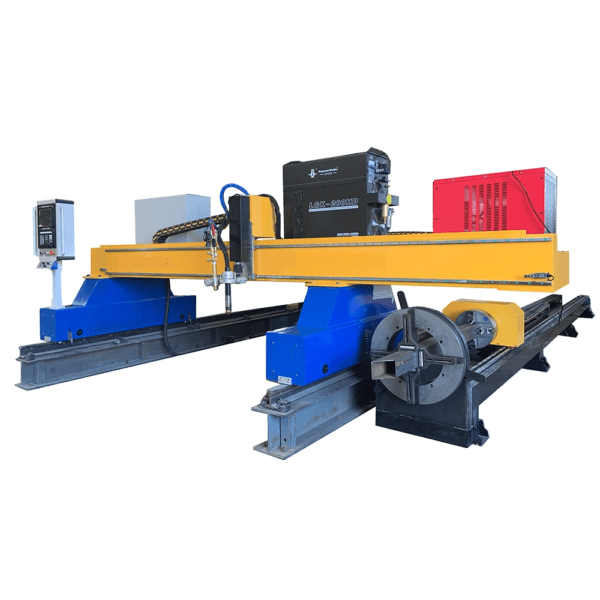
gantry plasma air cutting machine
-
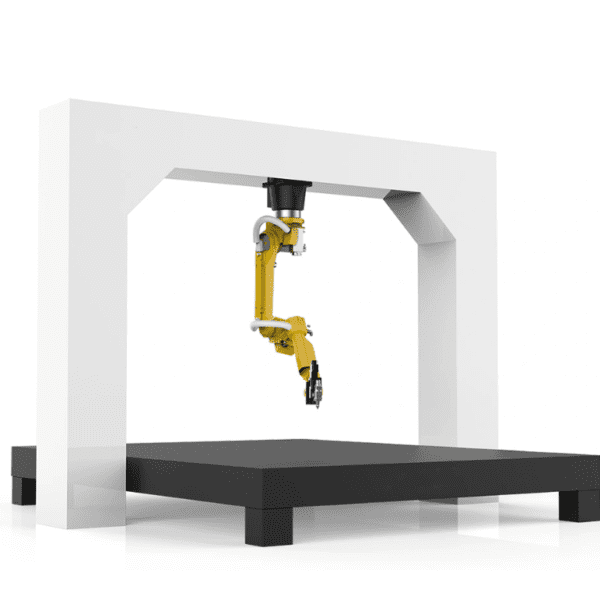
3D robot cutting machine
-
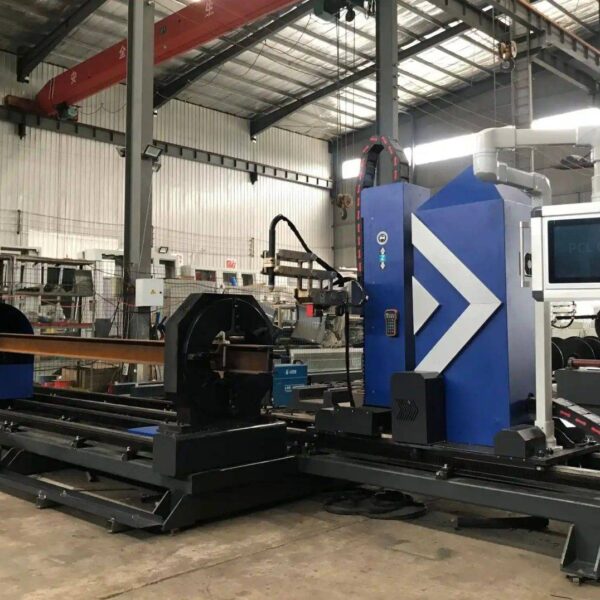
8 axis plasma cutting machine
-
5 axis plasma cutting machine
-

LT360 tube laser cutting machine
-
robot welding workstation
-

SF6060 fiber laser cutting machine
