Technical Integration of 3D Vision in Automated Bridge Truss Fillet Welding
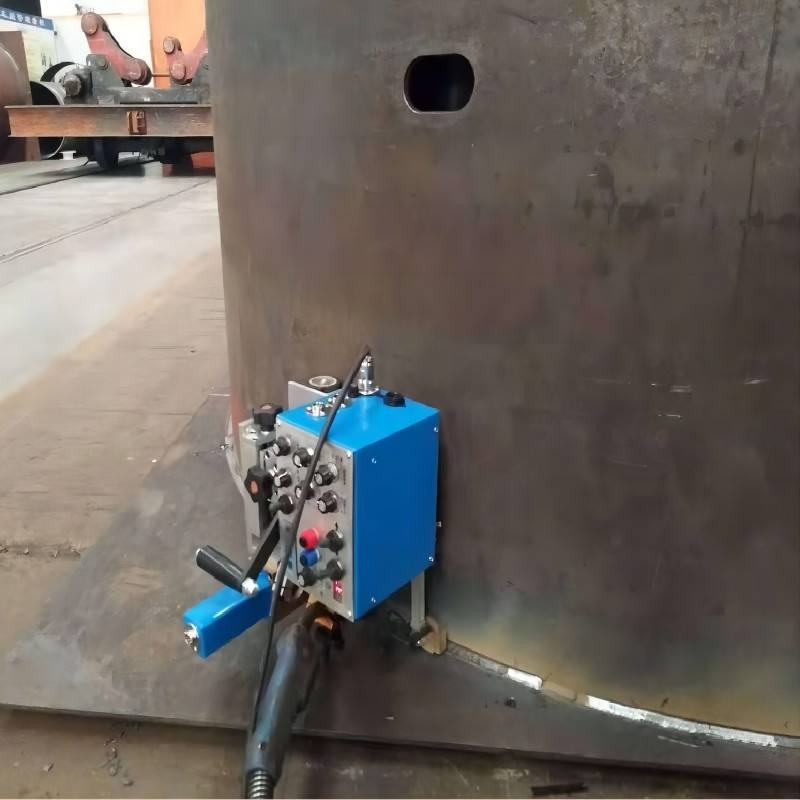
In the heavy structural engineering sector, specifically the fabrication of bridge trusses and large-scale box girders, the transition from manual welding to automated systems is no longer a luxury but a fundamental requirement for economic viability. The implementation of a tank fillet welding machine equipped with 3D vision positioning represents a significant leap in field-ready automation. These systems are specifically engineered to handle the rigorous demands of long, straight seams and vertical fillet joints that characterize massive steel structures. By utilizing a magnetic crawler platform, the welding apparatus can navigate the expansive surfaces of bridge components with high stability, ensuring that the weld bead remains consistent regardless of the operator’s physical fatigue levels or the environmental conditions of the shipyard or fabrication shop.
The Mechanics of Magnetic Crawler Stability in Field Conditions
The core of the tank fillet welding system is the magnetic crawler chassis. Unlike traditional rail-mounted tractors, a magnetic crawler utilizes high-flux permanent magnets or switchable electromagnets to adhere directly to the ferromagnetic substrate of the bridge truss. This eliminates the time-consuming setup of temporary tracks, which is a major bottleneck in manual or semi-automated operations. From a technical standpoint, the crawler must maintain a constant magnetic attractive force that exceeds the gravitational pull and the torque generated by the welding torch lead, especially when performing vertical-up or overhead fillet welds.
Engineering these crawlers involves a delicate balance of friction coefficients and motor torque. The drive system typically employs high-torque stepper or brushless DC motors coupled with planetary gearboxes to provide smooth, jitter-free motion at speeds ranging from 100 to 1500 mm/min. This stability is critical for 3D vision systems, as any mechanical vibration can introduce noise into the visual data stream, leading to path-correction errors. In bridge truss applications, where plate thicknesses often exceed 25mm, the crawler must also be capable of carrying heavy-duty water-cooled torches and wire-feeding mechanisms without losing traction or alignment.
3D Vision Positioning and Real-Time Seam Tracking
The primary differentiator of modern automated welding is the integration of 3D vision positioning. Traditional “track-and-weld” machines rely on the assumption that the joint is perfectly straight and the fit-up is uniform. In large-scale bridge truss fabrication, thermal distortion and manufacturing tolerances make this assumption impractical. 3D vision sensors, typically utilizing laser line triangulation, map the joint geometry in real-time. The sensor projects a laser line across the fillet joint, and a high-speed camera captures the deformation of that line to calculate the exact coordinates of the root, the leg lengths, and the gap width.
This data is processed by an onboard industrial PC or high-speed PLC, which adjusts the torch position via a motorized cross-slide. If the 3D vision positioning system detects a variation in the gap, it can dynamically adjust the welding parameters—such as travel speed, wire feed speed, and voltage—to maintain the required throat thickness. This capability is essential for meeting the stringent quality standards of bridge construction, where weld defects can lead to catastrophic structural failure. The vision system also provides “pre-scan” capabilities, allowing the machine to map the entire length of a 20-meter truss seam before striking an arc, identifying potential obstructions or tack welds that require specific torch maneuvers.
Optimizing Long Straight Seams in Bridge Construction
Bridge trusses are characterized by repetitive, long-distance fillet welds connecting webs to flanges. Manual welding of these sections is fraught with inconsistency. A human welder must break the weld into segments, leading to numerous start-stop points which are notorious for being the primary locations of porosity and lack of fusion. The tank fillet welding machine allows for continuous welding over several meters. The magnetic crawler maintains the torch at the optimal work angle (usually 45 degrees for fillets) and travel angle, ensuring deep penetration and a smooth toe transition.
Quantitative Analysis of Labor Cost Reduction
The primary driver for adopting 3D vision-guided crawlers is the drastic labor cost reduction. In a manual welding scenario, the “operator duty cycle”—the percentage of time the arc is actually burning—rarely exceeds 20% to 30% due to the need for repositioning, electrode changes, and physical rest. An automated crawler increases this duty cycle to 70% or 80%. Specifically, for bridge truss projects, the labor savings can be categorized into three main areas:
1. Reduction in Man-Hours: A single operator can oversee two or even three magnetic crawler units simultaneously. While the machines handle the heavy welding, the operator focuses on setup and final quality checks, effectively tripling the output per man-hour.
2. Elimination of Rework: Weld defects in bridge trusses are incredibly expensive to repair, often requiring carbon arc gouging and re-welding. The precision of 3D vision positioning ensures that the weld is placed correctly the first time, minimizing the non-destructive testing (NDT) failure rate. This reduces the need for specialized repair crews and the associated overhead costs.
3. Reduced Post-Weld Cleanup: Manual welding often results in excessive spatter and irregular bead profiles that require grinding. The controlled environment of an automated system produces a clean, aesthetic weld profile that meets structural codes without the need for secondary abrasive processes. This saves on consumables like grinding discs and further reduces labor hours dedicated to finishing.
Maintenance and Durability in Industrial Environments
From an industrial engineering perspective, the reliability of the tank fillet welding machine is paramount. The 3D vision sensors must be ruggedized with air knives or replaceable splash guards to prevent weld spatter and smoke from obscuring the optics. The magnetic crawler must be sealed against metallic dust which can interfere with electromagnetic components. Regular maintenance schedules for these machines focus on the calibration of the 3D sensors and the inspection of the drive wheels to ensure that the magnetic grip remains at peak performance. By investing in high-tier automated welding technology, bridge manufacturers can achieve a faster return on investment through the combined benefits of high-speed production and a significant labor cost reduction, ensuring competitiveness in an increasingly demanding global infrastructure market.
-
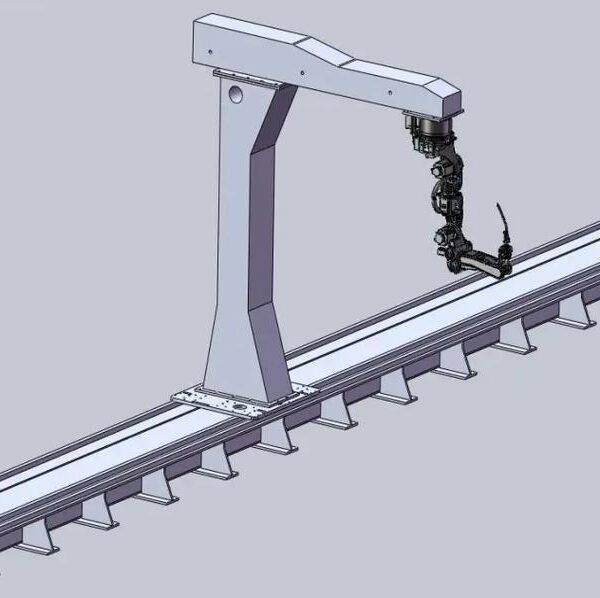

Cantilever Welding Robot solution
-
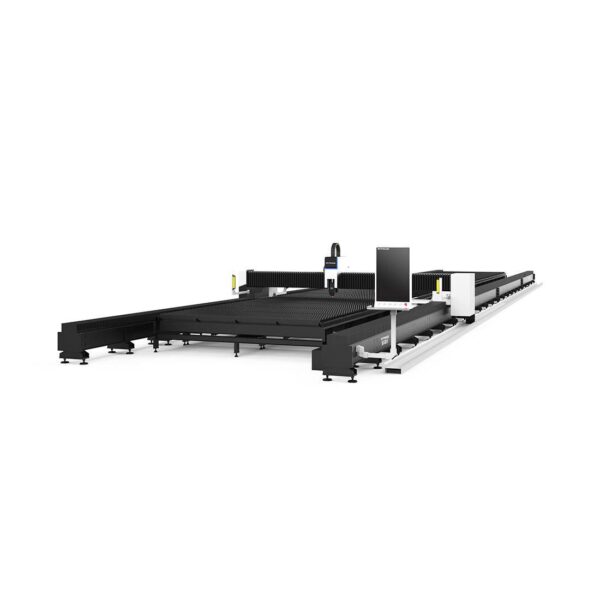

GF laser cutting machine
-
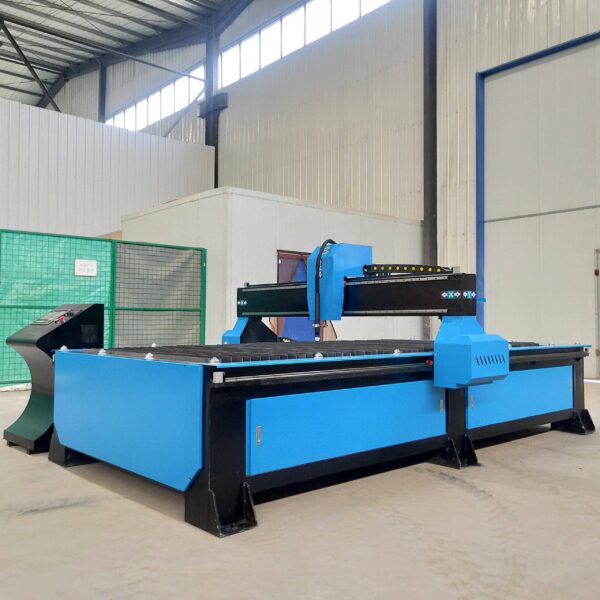
P3015 plasma cutting machine
-

LFP3015 Fiber Laser Cutter
-
pipe plasma cutting machine
-
LFH 4020 Fiber Laser Cutting Machine
-
LFP4020
-
gantry plasma air cutting machine
-
3D robot cutting machine
-
8 axis plasma cutting machine
-
5 axis plasma cutting machine
-

LT360 tube laser cutting machine
-
robot welding workstation
-
SF6060 fiber laser cutting machine
Advanced Fiber Laser Tube Processing Technology
Our CNC Fiber Laser Tube Cutting systems revolutionize metal fabrication by integrating high-precision cutting, punching, and profiling into a single automated workflow. Designed for versatility, this technology handles a wide array of profiles including Round, Square, Rectangular, and Oval tubes, as well as complex L-shaped and U-shaped channels.
- Precision Punching: High-speed hole punching with micron-level accuracy, eliminating the need for mechanical drilling or die-stamping.
- Complex Profiling: Advanced 3D pathing allows for intricate interlocking joints and specialized notch cuts, ideal for structural frames.
- High Material Efficiency: Intelligent nesting software minimizes scrap, reducing raw material costs across large production runs.
- Clean Finish: Delivers oxide-free, burr-free edges that require zero secondary grinding before welding.

Seamlessly processing multiple profiles with consistent precision.
Global Delivery & Logistics



From our high-tech manufacturing facility directly to your global site. PCL WeldCut ensures secure packaging, professional handling, and reliable international logistics to safeguard your equipment throughout the entire journey.