Optimizing Wind Tower Fabrication: The Magnetic Crawler Integration
Wind tower production necessitates the management of large-diameter steel sections, often ranging from 4 to 8 meters. Conventional welding methods involve massive stationary gantries or manual operators working in suboptimal ergonomic conditions. To drive efficiency, industrial engineers are increasingly pivoting toward mobile Robotic Welding systems. Specifically, the magnetic crawler serves as a mobile platform that traverses the circumference and longitudinal seams of the tower sections, providing a stable foundation for high-precision welding arms.
The core advantage of a magnetic crawler system lies in its ability to maintain a consistent torch-to-workpiece distance regardless of the tower’s orientation. By utilizing high-flux permanent magnets or switchable magnetic tracks, these robots adhere to the convex or concave surfaces of the steel cans. This eliminates the need for expensive, floor-space-consuming roller beds and heavy positioning equipment, effectively turning the workpiece itself into the robot’s track.
MAG Welding Process Parameters in Automated Cells
The selection of the MAG welding (Metal Active Gas) process for Wind Tower fabrication is driven by deposition rates and the structural integrity required for sub-zero operating environments. In these cells, the power source is typically a high-performance inverter capable of pulsed or double-pulsed MAG. This allows for superior control over the weld pool, even when the crawler is moving in a vertical or overhead position.
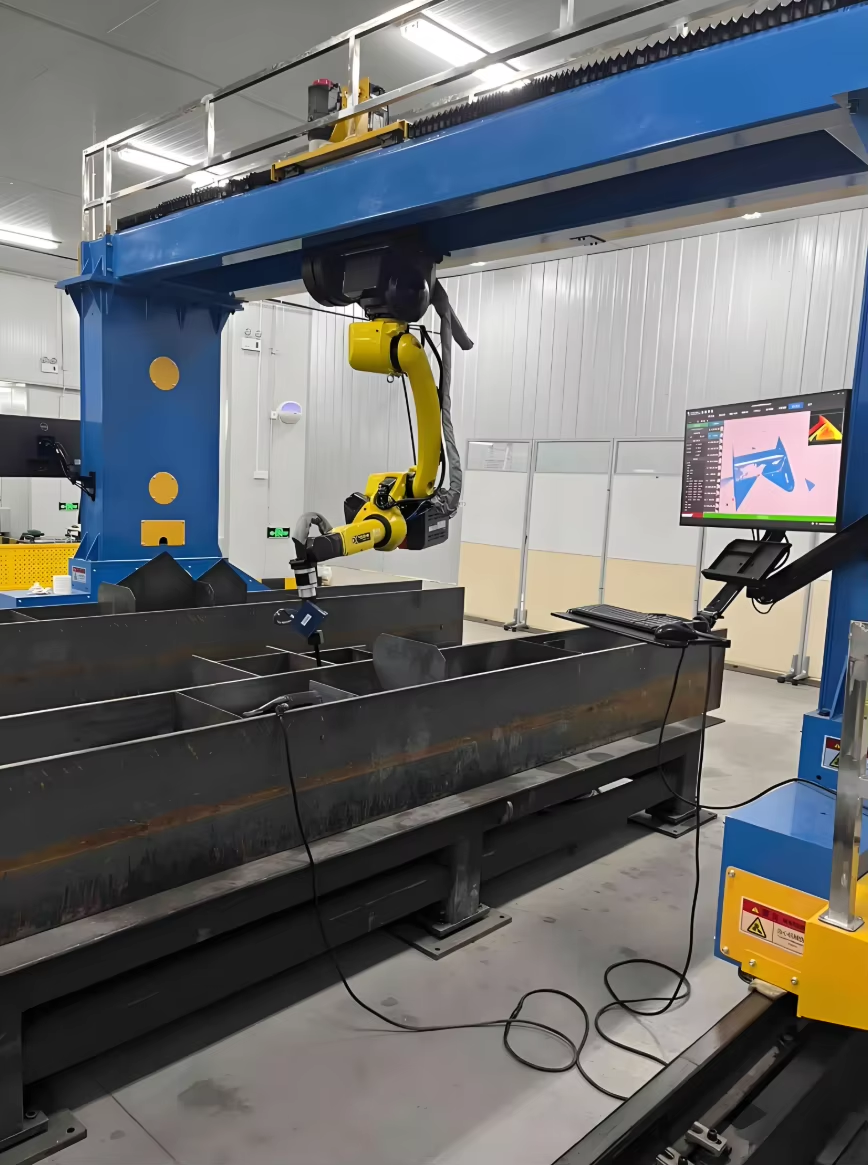
For wind towers, the material thickness often requires multi-pass welding. The robotic system utilizes integrated laser-line sensors or through-arc seam tracking to adjust the torch path in real-time. This ensures that even with slight fit-up deviations or thermal distortion, the root pass and subsequent fill passes are placed with surgical precision. Industrial engineers must optimize the shielding gas mix—typically a blend of Argon and CO2—to balance penetration depth with spatter reduction. Minimizing spatter is critical for automated systems to prevent sensor interference and reduce post-weld cleaning time.
System Components and Mobility
The Magnetic Crawler is equipped with a multi-axis robotic arm, usually with six degrees of freedom, though sometimes a simplified four-axis configuration is used to reduce weight. The weight-to-payload ratio is a critical KPI for engineers. A lighter crawler consumes less energy and places less strain on the magnetic adherence system, yet it must be rigid enough to withstand the reactive forces of the wire feeder and the umbilical cord (carrying gas, power, and cooling water).
Maintenance Protocols for High-Duty Cycle Operations
In a 24/7 manufacturing environment, the Mean Time Between Failures (MTBF) must be maximized. Maintenance in a Robotic Welding Cell is categorized into the mechanical crawler unit and the welding peripherals. Because the crawler moves across raw steel surfaces, the magnetic tracks must be inspected daily for the accumulation of metallic dust or grinding grit, which can compromise adhesion or cause surface scoring.
Torch and Consumable Management
The welding torch is the most vulnerable component. Automated torch cleaning stations (reamers) are integrated into the cell’s workflow. At scheduled intervals—typically after every few meters of welding or between tower sections—the robot docks with a reamer to remove spatter from the nozzle and apply anti-spatter spray. Contact tip wear is another significant concern; engineers implement predictive maintenance by monitoring the voltage drop across the arc. An unexpected increase in resistance often signals tip erosion, triggering a proactive replacement before the weld quality degrades.
Umbilical and Cable Management
Unlike stationary robots, a magnetic crawler involves dynamic cable management. The “umbilical cord” is subjected to constant twisting and pulling as the crawler traverses the tower. Industrial engineers must specify high-flex, torsion-rated cables and robust cable carriers to prevent internal wire breakage. Regular inspection of these conduits prevents unplanned downtime caused by gas leaks or intermittent signal loss in the feedback loops.
Financial Analysis: Labor ROI and Throughput
The primary driver for adopting robotic crawler cells is the labor ROI. The wind energy sector faces a chronic shortage of certified high-pressure welders. By shifting to an automated model, the role of the human worker evolves from a manual welder to a “Cell Operator” or “System Technician.”
Quantifying Productivity Gains
Manual welding on wind towers involves significant non-productive time, including scaffolding setup, operator fatigue breaks, and position changes. A robotic crawler operates at a 90% duty cycle, whereas a manual welder rarely exceeds 30-40% arc-on time in large-scale fabrication.
A typical ROI calculation for this technology includes:
1. Reduction in man-hours per tower section (often exceeding 50%).
2. Elimination of rework: Robotic consistency ensures that Ultrasonic Testing (UT) or Radiographic Testing (RT) failure rates drop from roughly 5-8% in manual processes to less than 1%.
3. Material savings: Precise control over the wire feed speed and weave parameters reduces filler metal consumption by 10-15% by avoiding over-welding.
TCO and Payback Period
While the initial capital expenditure (CAPEX) for a magnetic crawler cell is higher than traditional manual setups, the operational expenditure (OPEX) is significantly lower. When factoring in the current labor rates for certified welders and the throughput requirements of a modern wind farm project, the payback period for a robotic crawler system is typically between 14 to 22 months. This calculation assumes a two-shift operation and accounts for the depreciation of the robotic hardware over a seven-year lifecycle.
Strategic Implementation and Safety
From an industrial engineering perspective, the implementation of these cells improves shop floor safety. Manual welding of wind towers requires working at heights and exposure to intense heat and fumes. The robotic crawler allows the operator to monitor the process from a ground-level HMI (Human Machine Interface), significantly reducing the risk of workplace injuries. Integrated fume extraction systems can be mounted directly on the crawler, capturing gases at the source more effectively than general factory ventilation.
Future-Proofing the Fabrication Line
As wind tower dimensions continue to grow for offshore applications, the scalability of magnetic crawlers becomes even more apparent. Unlike fixed gantries that have a maximum physical limit, a crawler can be deployed on a tower of any diameter. This flexibility ensures that the investment remains viable even as turbine designs evolve. By focusing on high-deposition MAG welding, robust maintenance cycles, and the clear financial benefits of labor automation, manufacturers can secure a competitive advantage in the global renewable energy infrastructure market.
-


LT240S tube laser cutting machine
-
LT120S tube laser cutting machine
-
Sale

Tank Fillet Welding Machine
Original price was: $1,000.00.$900.00Current price is: $900.00. -
Sale

MAK100 tube laser cutting machine
Original price was: $5,500.00.$5,000.00Current price is: $5,000.00. -

portable plasma air cutting machine
$1,200.00 -

2in1 fiber laser cutting machine
-

Air cooling Laser welding machine
-

HF h beam laser cutting machine
-

LT240 laser cutting machine
-

Laser welding machine
-


Cobot Welding Station
-

Gantry welding robot solution
-

Tracked Wheeled AGV Welding robot
-

LFH6020 Fiber laser cutting machine
-
LFP6020
-

robotic welidng machine
Advanced Fiber Laser Tube Processing Technology
Our CNC Fiber Laser Tube Cutting systems revolutionize metal fabrication by integrating high-precision cutting, punching, and profiling into a single automated workflow. Designed for versatility, this technology handles a wide array of profiles including Round, Square, Rectangular, and Oval tubes, as well as complex L-shaped and U-shaped channels.
- Precision Punching: High-speed hole punching with micron-level accuracy, eliminating the need for mechanical drilling or die-stamping.
- Complex Profiling: Advanced 3D pathing allows for intricate interlocking joints and specialized notch cuts, ideal for structural frames.
- High Material Efficiency: Intelligent nesting software minimizes scrap, reducing raw material costs across large production runs.
- Clean Finish: Delivers oxide-free, burr-free edges that require zero secondary grinding before welding.

Seamlessly processing multiple profiles with consistent precision.
Global Delivery & Logistics



From our high-tech manufacturing facility directly to your global site. PCL WeldCut ensures secure packaging, professional handling, and reliable international logistics to safeguard your equipment throughout the entire journey.