Integrating Magnetic Crawler Technology in Construction Equipment Fabrication
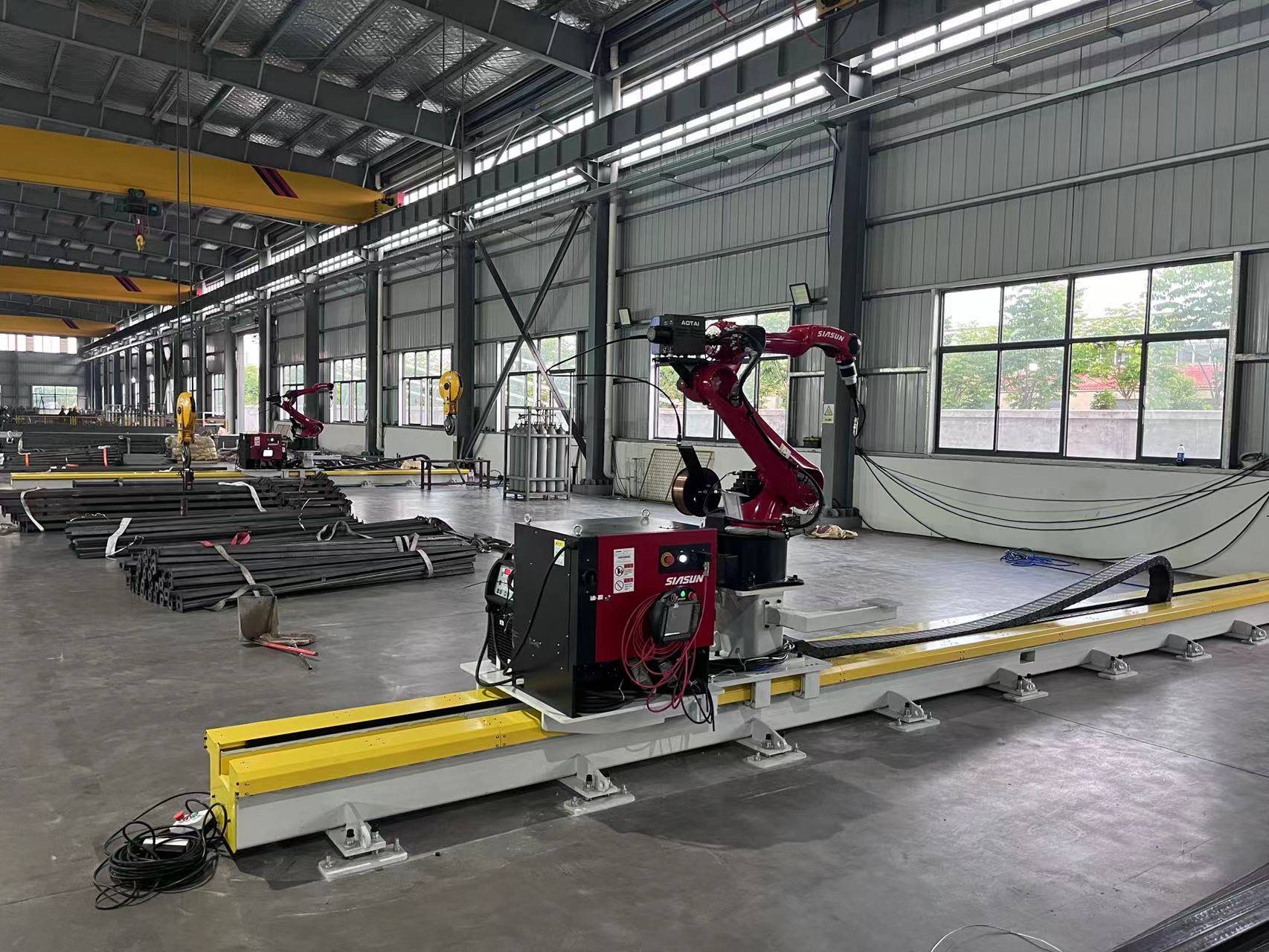
The manufacturing of heavy construction machinery, such as excavator booms, chassis frames, and bulldozer blades, presents a unique challenge for standard industrial robotics. Traditional fixed-base robots often lack the reach required for long-seam welding on structures exceeding six meters. The introduction of a magnetic crawler provides a mobile platform that adheres directly to the carbon steel workpiece. By utilizing high-flux permanent magnets or switchable electromagnets, these crawlers navigate vertical and overhead planes, effectively turning the entire workpiece into a localized rail system for the welding head.
Optimization of the Metal Active Gas (MAG) Process
In the context of heavy-duty machinery, Metal Active Gas (MAG) welding is the industry standard due to its high deposition rates and deep penetration capabilities. For structural components using S355 or high-strength low-alloy (HSLA) steels, the robotic cell is typically configured for pulse-MAG or spray-arc transfer modes.
Wire Feed and Gas Shielding Parameters
To maximize structural integrity, the system utilizes 1.2mm to 1.6mm solid wire. The shielding gas mixture, usually 80% Argon and 20% CO2, is optimized to minimize spatter while ensuring a stable arc at high currents (350A-500A). The robotic crawler’s control system must synchronize the travel speed with the wire feed rate to maintain a consistent throat thickness. Industrial engineers prioritize the “takt time” reduction by increasing the deposition rate to 5-8 kg/h, a figure significantly higher than manual capabilities when factoring in the 100% duty cycle of the robotic power source.
Weld Path Programming and Sensing
Crawler-based systems utilize “Through-the-Arc” Seam Tracking (TAST) to compensate for minor deviations in joint fit-up. Because heavy plates often exhibit thermal distortion during the welding process, the crawler must dynamically adjust its trajectory. Laser-based tracking is avoided here to maintain focus on the mechanical and electrical feedback loops of the MAG torch itself, ensuring the robot maintains the correct contact tip to work distance (CTWD).
Maintenance Protocols for High-Utility Robotic Cells
The reliability of a Robotic Welding Cell is directly proportional to its preventive maintenance schedule. In a heavy industrial environment, dust, spatter, and heat are the primary drivers of component failure.
Torch and Consumable Management
The MAG torch is the most vulnerable component. Automated torch cleaning stations (reamers) are integrated into the cell’s periphery. Every 30 to 60 minutes of arc-on time, the crawler returns the arm to a home position where the nozzle is mechanically cleaned, sprayed with anti-spatter liquid, and the wire is clipped to ensure a clean strike for the next sequence. Contact tips are replaced based on wire throughput (typically every 100kg of wire) to prevent “keyholing,” which leads to arc instability.
Crawler Drive and Magnetic Adhesion Integrity
The magnetic crawler requires specific mechanical oversight. The drive wheels or tracks must be inspected for metal filing accumulation, which can bridge the magnetic gap and reduce grip force. Engineers must implement a weekly check of the fail-safe braking systems. Since these crawlers often operate on vertical surfaces, any loss of power must trigger an immediate mechanical lock to prevent the unit from falling, which would result in catastrophic damage to both the robot and the workpiece.
Power Source and Wire Feed Calibration
Quarterly calibration of the inverter power source ensures that the programmed voltages match the actual output at the arc. Wire feed rollers undergo tension testing to prevent slippage, which is a common cause of porosity in MAG welding. The cooling system for the water-cooled torches must also be flushed to prevent mineral buildup that could impede thermal dissipation during high-amperage cycles.
Economic Impact and Labor ROI Analysis
The transition from manual welding to a labor ROI focused robotic strategy is driven by the scarcity of certified high-pressure welders and the demand for increased OEE (Overall Equipment Effectiveness).
Labor Substitution and Upskilling
A single operator managing a magnetic crawler robotic cell can replace three to four manual welders. However, the shift is not merely about headcount reduction; it is about labor reallocation. The “welder” becomes a “system technician,” responsible for setup, program selection, and quality assurance. This reduces the physical strain and respiratory risks associated with manual MAG welding on large-scale components, leading to lower turnover rates and reduced insurance premiums.
Throughput and Quality Gains
Manual welding on large construction machinery often involves significant downtime for repositioning the workpiece or moving scaffolding. The magnetic crawler eliminates this “non-value-added” time. ROI is typically realized within 18 to 24 months through:
1. Reduction in rework: Robotic precision ensures that the bead profile meets structural specs on the first pass, eliminating costly grinding and re-welding.
2. Consumable efficiency: Controlled MAG parameters lead to a 15% reduction in wire waste and shielding gas consumption compared to manual trigger-pull methods.
3. Shift consistency: The robot maintains the same speed and quality at the end of an 8-hour shift as it does at the beginning, unlike human operators subject to fatigue.
1. Reduction in rework: Robotic precision ensures that the bead profile meets structural specs on the first pass, eliminating costly grinding and re-welding.
2. Consumable efficiency: Controlled MAG parameters lead to a 15% reduction in wire waste and shielding gas consumption compared to manual trigger-pull methods.
3. Shift consistency: The robot maintains the same speed and quality at the end of an 8-hour shift as it does at the beginning, unlike human operators subject to fatigue.
Total Cost of Ownership (TCO)
While the initial Capital Expenditure (CAPEX) for a crawler-based robotic cell is higher than traditional floor-mounted robots due to the specialized drive systems, the TCO is lower when factoring in the lack of expensive heavy-duty positioners. By moving the robot to the part rather than the part to the robot, manufacturers save on floor space and hydraulic positioning equipment, which are notorious for high maintenance costs.
Conclusion for Industrial Implementation
The integration of a magnetic crawler into a MAG robotic welding cell represents a strategic shift in construction machinery manufacturing. By focusing on high-deposition MAG processes, rigorous maintenance of the mobile platform, and a clear understanding of labor ROI, facilities can achieve a level of scalability previously hindered by the physical dimensions of their products. This automated approach ensures that the structural integrity of heavy machinery meets rigorous safety standards while simultaneously optimizing the production cost per unit.
-


LT240S tube laser cutting machine
-
LT120S tube laser cutting machine
-
Sale

Tank Fillet Welding Machine
Original price was: $1,000.00.$900.00Current price is: $900.00. -
Sale

MAK100 tube laser cutting machine
Original price was: $5,500.00.$5,000.00Current price is: $5,000.00. -

portable plasma air cutting machine
$1,200.00 -

2in1 fiber laser cutting machine
-

Air cooling Laser welding machine
-

HF h beam laser cutting machine
-

LT240 laser cutting machine
-

Laser welding machine
-


Cobot Welding Station
-

Gantry welding robot solution
-

Tracked Wheeled AGV Welding robot
-

LFH6020 Fiber laser cutting machine
-
LFP6020
-

robotic welidng machine
Advanced Fiber Laser Tube Processing Technology
Our CNC Fiber Laser Tube Cutting systems revolutionize metal fabrication by integrating high-precision cutting, punching, and profiling into a single automated workflow. Designed for versatility, this technology handles a wide array of profiles including Round, Square, Rectangular, and Oval tubes, as well as complex L-shaped and U-shaped channels.
- Precision Punching: High-speed hole punching with micron-level accuracy, eliminating the need for mechanical drilling or die-stamping.
- Complex Profiling: Advanced 3D pathing allows for intricate interlocking joints and specialized notch cuts, ideal for structural frames.
- High Material Efficiency: Intelligent nesting software minimizes scrap, reducing raw material costs across large production runs.
- Clean Finish: Delivers oxide-free, burr-free edges that require zero secondary grinding before welding.

Seamlessly processing multiple profiles with consistent precision.
• Automotive Chassis
• Fitness Equipment
• Structural Steelwork
• Agricultural Machinery
• Modern Furniture
Global Delivery & Logistics



From our high-tech manufacturing facility directly to your global site. PCL WeldCut ensures secure packaging, professional handling, and reliable international logistics to safeguard your equipment throughout the entire journey.