Field Engineering Report: Integration of Fiber Laser Cobot Systems in Structural Steel Fabrication
1.0 Executive Summary of Field Operations
This report details the technical deployment and operational assessment of Fiber Laser Cobot systems within a heavy-scale structural steel facility in Dubai, UAE. Over a six-month evaluation period, we focused on replacing traditional manual GMAW (MIG) processes with automated Laser Technology to address high-volume throughput requirements for architectural steel nodes and infrastructure supports. The objective was to quantify the synergy between collaborative robotics and high-density fiber laser sources in a high-ambient-temperature environment.
2.0 The Synergy of Fiber Laser Cobot and Laser Technology
The integration of a Fiber Laser Cobot represents a fundamental shift from traditional arc-based welding. In our Dubai workshop, the primary challenge was maintaining metallurgical integrity while increasing travel speeds. Traditional Laser Technology, when fixed in a hard-automation cell, often lacks the dexterity required for the complex geometries found in structural steel welding.
2.1 Beam Delivery and Power Density
By utilizing a 3kW continuous wave (CW) fiber laser source, we achieved energy densities that manual MIG cannot replicate. The cobot facilitates a “wobble” head movement—a high-frequency oscillation of the laser beam. This oscillation is critical in structural steel applications to bridge fit-up gaps that are common in large-scale fabrication. The synergy here is clear: the laser provides the concentrated heat input, while the cobot provides the path precision and constant velocity necessary to prevent burn-through or lack of fusion.
2.2 Thermal Management in the UAE Climate
Operating laser technology in Dubai requires specific attention to the cooling infrastructure. Unlike manual MIG power sources that are relatively resilient to ambient heat, the fiber laser source and the cobot’s control cabinet require a stabilized environment. We implemented localized industrial chillers with a 5kW cooling capacity to maintain the resonator at a constant 22°C, despite external workshop temperatures reaching 45°C. We found that any fluctuation in the chiller’s performance directly impacted the beam’s focal point, leading to inconsistent penetration depths in 12mm S355 structural plates.
3.0 Technical Application: Structural Steel Welding
Structural steel welding in the UAE often involves heavy sections (S275JR and S355J2+N). Our field tests focused on fillet and butt welds on 10mm to 20mm thicknesses.
3.1 Deep Penetration and HAZ Reduction
One of the primary “lessons learned” during this deployment was the drastic reduction in the Heat Affected Zone (HAZ). Manual MIG welding on a 12mm T-joint typically results in significant thermal distortion, requiring post-weld straightening. The Fiber Laser Cobot, operating at 1.2 meters per minute, localized the heat so effectively that angular distortion was reduced by approximately 70%. For the structural steel welding sector in Dubai, where high-rise tolerances are millimeter-specific, this reduction in rework is a significant economic driver.
3.2 The Role of Wire Feed Integration
While the laser provides the heat, the “MIG” component of the hybrid-style cobot setup provides the filler metal. In structural applications, autogenous laser welding (no filler) is rarely sufficient due to chemistry requirements and gap bridging. We utilized a synchronized cold-wire feeder. The cobot’s controller manages the wire feed speed (WFS) in direct correlation to the laser’s travel speed. If the cobot slows down for a radius, the laser power and WFS ramp down simultaneously, preventing over-welding—a common failure point in manual structural steel fabrication.
4.0 Practical Field Observations and Lessons Learned
The transition from a manual mindset to a Fiber Laser Cobot mindset requires a shift in upstream processes. As a senior engineer, the following observations were critical to the project’s success:
4.1 Upstream Precision: The “Fit-up” Mandate
The most significant lesson learned in the Al Quoz workshop was that Laser Technology is unforgiving of poor fit-up. In manual structural steel welding, a welder can “fill” a 3mm gap by weaving. A Fiber Laser Cobot, even with a 2mm wobble parameters, struggles if the root opening is inconsistent. We had to implement CNC plasma cutting and tighter edge preparation protocols to ensure the laser stayed within its effective joinery window. You cannot automate a mess; the laser demands precision that starts at the cutting table.
4.2 Shielding Gas Optimization
In the humid coastal environment of Dubai, moisture ingress in gas lines can lead to porosity, which is exacerbated by the high speeds of laser welding. We switched from a standard Ar/CO2 mix to a high-purity Argon with 2% Nitrogen for certain stainless structural elements. For carbon steel, we found that increasing the flow rate to 25 L/min was necessary to counteract the draft from the workshop’s high-velocity cooling fans. Without this adjustment, the laser plume would become unstable, leading to surface oxidation.
4.3 Safety and Class 4 Environment
A cobot is “collaborative” when it’s just a robotic arm, but once you attach a Fiber Laser, it becomes a Class 4 laser hazard. We had to design custom modular laser-safe enclosures with interlocked light curtains. In a busy Dubai shop, the traditional “open floor” concept for structural welding is not viable for laser technology. The risk of specular reflections off galvanized steel surfaces is a major safety concern that requires rigorous technician training.
5.0 Performance Metrics: Manual vs. Cobot
To provide a technical baseline, we compared a standard 10mm fillet weld on structural steel (A36 grade):
- Process: Manual MIG (GMAW) | Speed: 350 mm/min | Post-Weld Cleaning: High (Spatter removal).
- Process: Fiber Laser Cobot | Speed: 1100 mm/min | Post-Weld Cleaning: Minimal (Zero spatter).
The data shows a 3x increase in linear travel speed. Furthermore, the total heat input was calculated at 0.4 kJ/mm for the laser compared to 1.5 kJ/mm for the manual MIG. This lower heat input is what preserves the mechanical properties of the structural steel, particularly the yield strength in the HAZ.
6.0 Maintenance and Sustainability in the UAE
Dust is the enemy of Laser Technology. In the UAE, fine desert dust can infiltrate optical components. We implemented a daily maintenance checklist:
- Inspection of the protective window (cover glass) every 4 hours of arc-on time.
- Positive pressure filtration for the cobot controller.
- Weekly calibration of the laser-to-wire alignment to ensure the focal point remained centered on the wire tip.
Failure to maintain the protective window resulted in a 15% power drop in one week due to “lens frosting” from burnt dust particles. This is a non-negotiable task for the operator.
7.0 Conclusion
The deployment of Fiber Laser Cobot systems for structural steel welding in Dubai is technically viable and economically superior to traditional methods, provided the infrastructure supports the technology. The synergy between the precision of the laser and the flexibility of the cobot allows for high-quality welds with minimal distortion. However, the success of this technology depends less on the robot itself and more on the engineering rigor applied to fit-up tolerances, gas purity, and environmental cooling. For the UAE’s infrastructure sector, this represents the next logical step in fabrication evolution, moving away from labor-intensive manual processes toward high-density energy welding.
Report End.
Lead Welding Engineer – Dubai Structural Operations
-


LT240S tube laser cutting machine
-
LT120S tube laser cutting machine
-
Sale

Tank Fillet Welding Machine
Original price was: $1,000.00.$900.00Current price is: $900.00. -
Sale

MAK100 tube laser cutting machine
Original price was: $5,500.00.$5,000.00Current price is: $5,000.00. -

portable plasma air cutting machine
$1,200.00 -

2in1 fiber laser cutting machine
-

Air cooling Laser welding machine
-

HF h beam laser cutting machine
-

LT240 laser cutting machine
-

Laser welding machine
-


Cobot Welding Station
-

Gantry welding robot solution
-

Tracked Wheeled AGV Welding robot
-

LFH6020 Fiber laser cutting machine
-
LFP6020
-

robotic welidng machine
Advanced Fiber Laser Tube Processing Technology
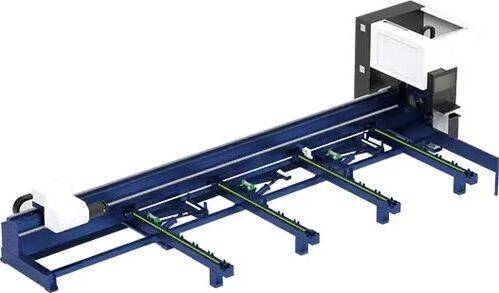
Our CNC Fiber Laser Tube Cutting systems revolutionize metal fabrication by integrating high-precision cutting, punching, and profiling into a single automated workflow. Designed for versatility, this technology handles a wide array of profiles including Round, Square, Rectangular, and Oval tubes, as well as complex L-shaped and U-shaped channels.
- Precision Punching: High-speed hole punching with micron-level accuracy, eliminating the need for mechanical drilling or die-stamping.
- Complex Profiling: Advanced 3D pathing allows for intricate interlocking joints and specialized notch cuts, ideal for structural frames.
- High Material Efficiency: Intelligent nesting software minimizes scrap, reducing raw material costs across large production runs.
- Clean Finish: Delivers oxide-free, burr-free edges that require zero secondary grinding before welding.

Seamlessly processing multiple profiles with consistent precision.
Global Delivery & Logistics



From our high-tech manufacturing facility directly to your global site. PCL WeldCut ensures secure packaging, professional handling, and reliable international logistics to safeguard your equipment throughout the entire journey.