Engineering Efficiency: The Role of Zero-Tailing Plasma Cutting
In the heavy industrial sector, the fabrication of structural steel components demands a balance between high-speed throughput and rigorous dimensional accuracy. As projects become more complex, the reliance on traditional manual layout and cutting methods creates bottlenecks that compromise project timelines. The introduction of zero-tailing technology in plasma cutting systems has addressed one of the most persistent inefficiencies in the shop: material waste. By re-engineering the material handling and torch positioning mechanisms, industrial engineers can now ensure that raw H-beams, channels, and angles are utilized to their absolute maximum capacity.
Zero-tailing refers to the ability of the CNC system to process a workpiece to the very end of its physical length. In standard configurations, a “tail” of several hundred millimeters is often left unusable due to the limitations of the clamping or feeding rollers. Modern plasma cutting units designed for Steel Structures utilize specialized chuck systems or dual-driven trolley mechanisms that allow the plasma torch to reach the final edge of the beam. This optimization directly impacts the bottom line by reducing scrap rates and lowering the material cost per project.
Precision in Intersection Cutting for Complex Geometries
One of the primary challenges in steel structure fabrication is the execution of complex intersections. Whether it is a pipe-to-beam connection or a web-penetrating flange cut, the fit-up must be near-perfect to ensure structural integrity during assembly. Multi-axis plasma cutting heads provide the necessary degrees of freedom to execute these 3D profiles with high intersection accuracy.
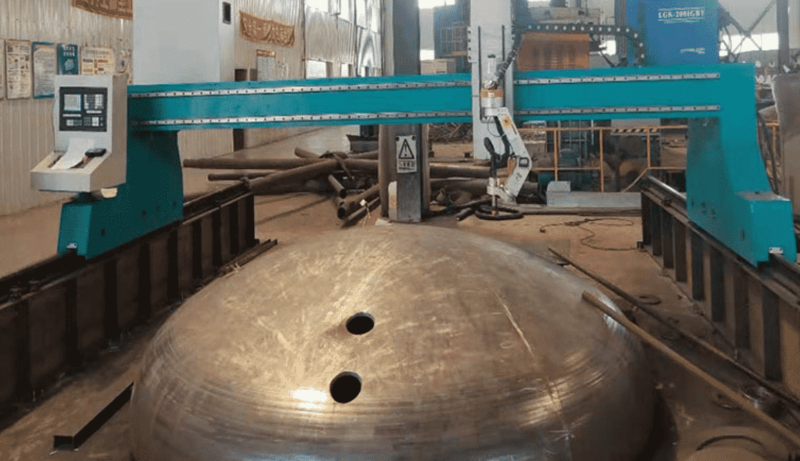
The engineering requirement for these cuts involves sophisticated software algorithms that calculate the kerf compensation and torch angle in real-time. Because plasma is an arc-based process, the stability of the voltage and the height control are critical. By maintaining a constant distance from the workpiece—even as the torch rotates around the radius of an H-beam—the system ensures that the cut path remains consistent. This precision eliminates the need for manual rework, such as grinding or filling large gaps caused by poor fit-up, thereby streamlining the downstream assembly process.
H-Beam Processing: Low Maintenance and Industrial Durability
From an operational management perspective, the choice of cutting technology is often dictated by the harshness of the environment. Structural steel shops are characterized by dust, vibration, and temperature fluctuations. In this context, the H-beam low maintenance profile of plasma systems is a significant advantage. Unlike optical-based cutting systems, plasma torches are mechanically robust and relatively simple to service.
The consumables—nozzles, electrodes, and swirl rings—are the primary maintenance items. These are easily replaced by operators without requiring specialized technical intervention. Furthermore, the power sources used in modern plasma units are designed for high duty cycles, meaning they can operate continuously across multiple shifts without overheating or degradation in cut quality. This reliability is essential for maintaining a consistent production heartbeat in large-scale fabrication facilities where downtime can cost thousands of dollars per hour.
Advanced Beveling for Superior Weld Preparation
Structural steel often requires specific edge preparations to facilitate full-penetration or partial-penetration welds. A Plasma Cutting Machine equipped with a robotic or tilt-rotate head can perform V, X, and Y-type bevels automatically during the primary cutting phase. This integration of beveling into the CNC program removes the need for secondary bevelling machines or manual torch work.
The plasma cutting arc is particularly suited for thick-plate beveling because it can penetrate structural sections at angles up to 45 or 50 degrees without a significant loss in speed. For industrial engineers, this means the part coming off the machine is “weld-ready.” The accuracy of these bevels ensures that when two components meet, the root gap is uniform, leading to higher quality welds and faster pass rates during ultrasonic or radiographic inspections.
Optimizing Throughput with Automated Material Handling
A zero-tailing plasma machine is only as effective as the material handling system supporting it. Integration with in-feed and out-feed conveyors, cross-transfers, and automated measuring systems allows for a continuous workflow. When the system detects the length of an incoming H-beam, the nesting software automatically adjusts the part sequence to minimize the “tail” based on the zero-tailing capabilities of the machine.
This level of automation reduces the labor-intensive task of measuring and marking beams manually. By feeding the BIM (Building Information Modeling) data directly into the machine’s control system, the margin for human error is virtually eliminated. The engineer can oversee the entire flow from raw material to finished component, focusing on quality control rather than manual labor coordination.
Thermal Management and Material Integrity
A common concern in thermal cutting is the Heat Affected Zone (HAZ). While plasma cutting is a high-heat process, the speed at which it operates minimizes the duration of heat exposure to the base material. Modern high-definition plasma systems use constricted arcs and specialized gas mixtures (such as Oxygen or H35) to produce a narrow kerf and a localized HAZ. This ensures that the mechanical properties of the structural steel, particularly in high-strength grades, remain within the specified tolerances required by building codes and engineering standards.
Technical Integration and Software Synergy
The transition to 3D plasma cutting for steel structures is supported by the synergy between hardware and CAM (Computer-Aided Manufacturing) software. The software must account for the physical geometry of the H-beam, including the varying thickness between the web and the flange. By utilizing zero-tailing technology, the software can nest parts so tightly that the cut-off from one part becomes the starting edge for the next, achieving a “common cut” scenario that further increases efficiency.
Conclusion: The Economic Impact of Plasma Adoption
For a structural steel enterprise, the investment in a multi-axis plasma cutting system with zero-tailing capability represents a strategic move toward lean manufacturing. The combination of high intersection accuracy, minimal material waste, and the inherent durability of plasma hardware creates a robust production environment. By focusing on these core mechanical advantages, facilities can produce higher quality structural components at a faster rate, ensuring they remain competitive in an increasingly demanding global market. The reduction in secondary processing and the optimization of every millimeter of raw material establish plasma cutting as the workhorse of the modern steel fabrication industry.
-


LT240S tube laser cutting machine
-
LT120S tube laser cutting machine
-
Sale

Tank Fillet Welding Machine
Original price was: $1,000.00.$900.00Current price is: $900.00. -
Sale

MAK100 tube laser cutting machine
Original price was: $5,500.00.$5,000.00Current price is: $5,000.00. -

portable plasma air cutting machine
$1,200.00 -

2in1 fiber laser cutting machine
-

Air cooling Laser welding machine
-

HF h beam laser cutting machine
-

LT240 laser cutting machine
-

Laser welding machine
-


Cobot Welding Station
-

Gantry welding robot solution
-

Tracked Wheeled AGV Welding robot
-

LFH6020 Fiber laser cutting machine
-
LFP6020
-

robotic welidng machine
Advanced Fiber Laser Tube Processing Technology
Our CNC Fiber Laser Tube Cutting systems revolutionize metal fabrication by integrating high-precision cutting, punching, and profiling into a single automated workflow. Designed for versatility, this technology handles a wide array of profiles including Round, Square, Rectangular, and Oval tubes, as well as complex L-shaped and U-shaped channels.
- Precision Punching: High-speed hole punching with micron-level accuracy, eliminating the need for mechanical drilling or die-stamping.
- Complex Profiling: Advanced 3D pathing allows for intricate interlocking joints and specialized notch cuts, ideal for structural frames.
- High Material Efficiency: Intelligent nesting software minimizes scrap, reducing raw material costs across large production runs.
- Clean Finish: Delivers oxide-free, burr-free edges that require zero secondary grinding before welding.

Seamlessly processing multiple profiles with consistent precision.
Global Delivery & Logistics



From our high-tech manufacturing facility directly to your global site. PCL WeldCut ensures secure packaging, professional handling, and reliable international logistics to safeguard your equipment throughout the entire journey.