Optimizing LNG Structural Fabrication via Plasma Cutting
Liquefied Natural Gas (LNG) projects demand rigorous structural integrity due to the cryogenic environments and high-pressure conditions involved in storage and transport. The primary challenge for industrial engineers in this sector is the efficient processing of large-scale structural steel, including H-beams, channels, and heavy-walled pipes. Implementing a plasma cutting technology solution equipped with multi-axis capabilities and offline programming (OLP) addresses the dual requirements of throughput and geometric precision.
Unlike traditional mechanical methods, modern plasma systems utilize a high-velocity jet of ionized gas to melt and eject material, creating a narrow kerf. In the context of LNG modular construction, where thousands of tons of steel are assembled into pipe racks and support skids, the speed of plasma cutting significantly reduces the lead time per ton compared to oxy-fuel or mechanical sawing and drilling.
Achieving Critical Intersection Accuracy
In LNG facility design, complex intersections between structural members are frequent. Whether it is a pipe-to-pipe saddle cut or an H-beam flange notch, the intersection accuracy determines the quality of the subsequent fit-up. Poorly cut joints result in excessive gaps, which require additional filler metal and increase the risk of weld failure under thermal stress.
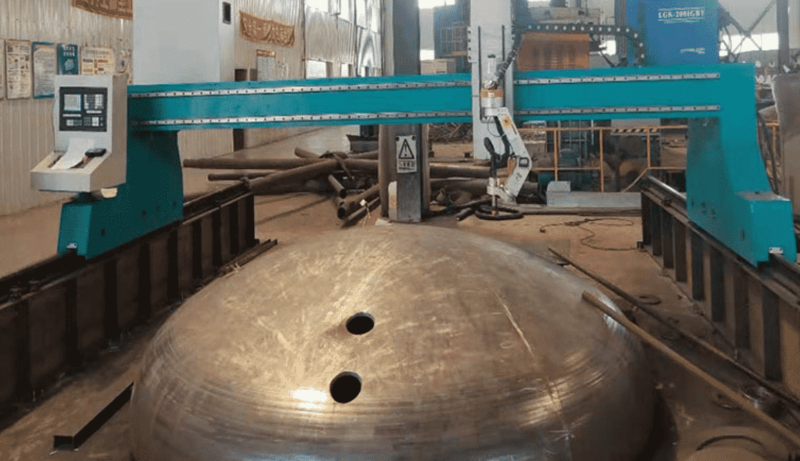
Precision is maintained through the synchronization of the plasma torch’s motion with the machine’s CNC controller. Advanced plasma systems utilize 5-axis or 6-axis robotic arms or gantry-mounted bevel heads to maintain the torch’s perpendicularity or specific angle relative to the material surface. for LNG Projects, where tolerances are often tighter than standard architectural steel requirements, the ability to maintain a tolerance of ±0.5mm on complex profile intersections is a key performance indicator. This accuracy ensures that components can be “snapped” together in the assembly yard, minimizing the need for manual grinding or “make-buy” adjustments in the field.
The Role of Offline Programming (OLP) in Production Continuity
One of the most significant bottlenecks in heavy steel fabrication is machine downtime caused by manual programming at the controller. Offline programming software allows industrial engineers to generate cutting paths and nested patterns on a remote workstation while the plasma machine is actively cutting. This decoupling of programming from production maximizes the “arc-on” time.
OLP software utilizes the original CAD models (BIM or TEKLA files) to calculate the optimal toolpath, taking into account the plasma arc’s kerf width and lead-in/lead-out requirements. This digital workflow eliminates the human error associated with manual data entry at the HMI. Furthermore, OLP environments provide 3D simulation capabilities. Engineers can visualize the torch movement to detect potential collisions with the workpiece or fixtures before the first spark is struck. This is particularly vital when processing large H-beams for LNG modules, where a single collision can result in costly torch damage and production delays.
Low Maintenance Advantages for H-Beam Processing
H-beams are the backbone of LNG infrastructure. Traditional processing involves a combination of band sawing for length and magnetic drilling for bolt holes. These mechanical processes involve high consumable costs (blades and bits) and significant maintenance requirements for lubrication and chip removal. Transitioning to a dedicated plasma H-beam line offers a low maintenance profile that is highly attractive for high-volume projects.
A plasma system replaces multiple mechanical stations. The non-contact nature of plasma cutting means there is no tool wear in the traditional sense. The primary maintenance tasks are limited to the replacement of consumables (electrodes, nozzles, and shields) and the periodic cleaning of the slag collection system. Without the vibration and mechanical force associated with drilling and sawing, the structural longevity of the machine frame is extended. For the industrial engineer, this translates to a lower Total Cost of Ownership (TCO) and higher machine availability, which is critical when working against the strict deadlines of LNG project milestones.
Precision Beveling for High-Integrity Weld Preparation
Welding in LNG projects must meet stringent codes such as AWS D1.1 or ASME Section IX. To achieve full penetration welds on thick structural sections, precise beveling is mandatory. Plasma systems equipped with a tilting head can execute V, Y, X, and K-type bevels in a single pass. This capability is a drastic improvement over manual oxy-fuel beveling, which often produces inconsistent angles and heavy dross.
The robotic beveling process integrated into plasma machines allows for “on-the-fly” angle adjustments. This is necessary when cutting structural members that have slight deviations in material flatness. Sensors, such as initial height sensing and voltage-based height control, ensure the torch remains at the optimal distance from the plate, maintaining a consistent bevel land and angle. This consistency is paramount for automated welding processes used later in the fabrication chain, as it ensures a uniform heat-affected zone (HAZ) and reduces the volume of weld metal required.
Nesting Optimization and Material Utilization
Given the high cost of structural steel for LNG projects, material utilization is a primary focus for cost control. Offline programming allows for advanced nesting algorithms that can handle complex shapes and common-line cutting. By nesting various parts—such as gussets, base plates, and stiffeners—on a single large plate or along the length of a beam, fabricators can achieve scrap rates as low as 10-15%.
OLP systems also manage the “nesting” of beam cuts, allowing for the strategic placement of notches and holes to minimize the number of times the material must be repositioned. In a multi-axis plasma environment, the software can calculate the most efficient sequence of cuts to maintain the structural rigidity of the beam for as long as possible during the process, preventing material “walking” or warping that could compromise dimensional accuracy.
Conclusion: Integrating Systems for Scalable Production
For industrial engineers overseeing LNG fabrication, the transition to plasma cutting with Offline Programming is not merely a hardware upgrade; it is a strategic process improvement. By prioritizing intersection accuracy through digital twin simulations and leveraging the low maintenance nature of non-contact thermal cutting, facilities can scale their production to meet the demands of global energy infrastructure. The ability to perform precision beveling on-site and on-demand ensures that the final assembly meets the rigorous safety and performance standards required for cryogenic and high-pressure gas applications. The result is a streamlined workflow that minimizes labor-intensive manual layout, reduces material waste, and maximizes the throughput of the fabrication shop.
-


LT240S tube laser cutting machine
-
LT120S tube laser cutting machine
-
Sale

Tank Fillet Welding Machine
Original price was: $1,000.00.$900.00Current price is: $900.00. -
Sale

MAK100 tube laser cutting machine
Original price was: $5,500.00.$5,000.00Current price is: $5,000.00. -

portable plasma air cutting machine
$1,200.00 -

2in1 fiber laser cutting machine
-

Air cooling Laser welding machine
-

HF h beam laser cutting machine
-

LT240 laser cutting machine
-

Laser welding machine
-


Cobot Welding Station
-

Gantry welding robot solution
-

Tracked Wheeled AGV Welding robot
-

LFH6020 Fiber laser cutting machine
-
LFP6020
-

robotic welidng machine
Advanced Fiber Laser Tube Processing Technology
Our CNC Fiber Laser Tube Cutting systems revolutionize metal fabrication by integrating high-precision cutting, punching, and profiling into a single automated workflow. Designed for versatility, this technology handles a wide array of profiles including Round, Square, Rectangular, and Oval tubes, as well as complex L-shaped and U-shaped channels.
- Precision Punching: High-speed hole punching with micron-level accuracy, eliminating the need for mechanical drilling or die-stamping.
- Complex Profiling: Advanced 3D pathing allows for intricate interlocking joints and specialized notch cuts, ideal for structural frames.
- High Material Efficiency: Intelligent nesting software minimizes scrap, reducing raw material costs across large production runs.
- Clean Finish: Delivers oxide-free, burr-free edges that require zero secondary grinding before welding.

Seamlessly processing multiple profiles with consistent precision.
Global Delivery & Logistics



From our high-tech manufacturing facility directly to your global site. PCL WeldCut ensures secure packaging, professional handling, and reliable international logistics to safeguard your equipment throughout the entire journey.
One thought on “Plasma Cutting Machine with Offline Programming for for LNG Projects”
Solid build quality. This is a heavy-duty machine designed for long shifts.