Optimizing Pressure Vessel Fabrication via Precision Plasma Systems
In the heavy industrial sector, specifically the manufacturing of pressure vessels under ASME Section VIII standards, the initial thermal cutting phase dictates the efficiency of all subsequent assembly processes. The transition toward Plasma Cutting technology has redefined how engineers approach the preparation of thick-walled shells and dished heads. Unlike traditional methods, modern high-definition plasma systems offer the thermal density required to achieve surgical precision on carbon steel and stainless alloys, ensuring that the metallurgical integrity of the base material remains intact for high-pressure containment.
Mechanical Rigidity and the Structural H-Beam Design
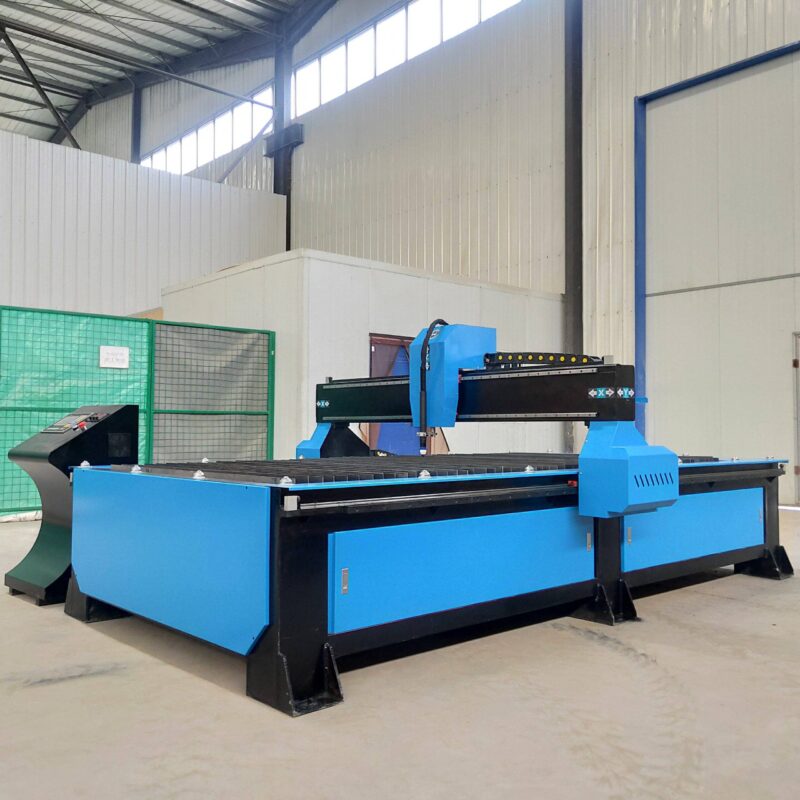
The foundation of cutting accuracy starts with the gantry architecture. For pressure vessel shops dealing with large-scale plates and heavy-walled cylinders, the equipment must withstand significant thermal loads and mechanical vibrations. Implementing a structural H-beam design for the machine rails and gantry bridge provides the necessary moment of inertia to resist deflection during high-speed directional changes.
From a maintenance perspective, the H-beam configuration facilitates a low-wear environment. By utilizing hardened ground rails mounted directly to a stabilized H-beam, the system achieves superior vibration damping. This rigidity is critical when the torch is extended for large-diameter vessel cuts. Industrial engineers favor this design because it minimizes the frequency of recalibration. The stability of the motion system ensures that the rack-and-pinion drive maintains zero-backlash synchronization, extending the lifespan of the drive motors and reducing the Total Cost of Ownership (TCO) compared to lighter, cantilevered alternatives.
Achieving Mathematical Intersection Accuracy in Nozzle Openings
Pressure vessels are characterized by complex geometries, primarily where nozzles and manways intersect the main shell. Achieving intersection accuracy in these areas is one of the most significant challenges in vessel fabrication. The plasma cutting system must calculate the 3D projection of a cylinder intersecting another cylinder or a hemispherical head.
Modern CNC controllers utilize 5-axis interpolation to adjust the torch angle dynamically as it traverses the cut path. This compensates for the varying wall thickness encountered during a saddle cut. When the intersection is calculated correctly, the fit-up gap between the nozzle and the shell is uniform. This uniformity is not merely a matter of aesthetics; it is a structural requirement. Inconsistent gaps lead to uneven heat distribution during welding, which can result in hydrogen cracking or residual stress concentrations that compromise the vessel’s safety rating. High-definition plasma ensures that the kerf width is consistent, allowing for a light-tight fit that facilitates automated welding processes.
Multi-Axis Beveling for Narrow Gap Welding Preparation
The primary driver for using high-end plasma systems in pressure vessel shops is the ability to perform complex beveling. Narrow gap welding preparation requires specific joint geometries, such as deep J-grooves or narrow V-grooves with tight root face tolerances. These preparations are designed to minimize the volume of weld metal deposited, which significantly reduces the thermal cycle and the width of the heat-affected zone (HAZ).
A 5-axis plasma head allows for real-time beveling, eliminating the need for secondary beveling operations with handheld grinders or oxy-fuel tractors. By integrating the beveling into the primary cutting cycle, engineers eliminate the stack-up of tolerances that occurs when a part is moved between stations. The plasma arc, when controlled with high-precision gas consoles (using mixtures like Argon-Hydrogen or Nitrogen-Water injection), produces a dross-free surface that is often weld-ready. This level of edge quality is essential for narrow gap configurations where the torch accessibility is limited and the weld bead must fuse perfectly with the sidewalls of the groove.
Operational Efficiency and Thermal Management
In the context of industrial engineering, throughput is measured by the ratio of arc-on time to total floor time. Plasma systems optimized for pressure vessel work feature rapid traverse speeds and advanced height control sensors. Torch height control (THC) is particularly vital when cutting rolled plates that may have slight deviations in circularity. The THC maintains a constant voltage, ensuring the standoff distance is millimetric, which prevents variations in the bevel angle and kerf width.
Thermal management is another critical factor. While plasma is a thermal process, the speed at which it operates minimizes the total heat input into the plate compared to oxy-fuel. This speed prevents the warping of large diameter shells, ensuring that the circumference of the vessel remains within the tolerances required for the longitudinal and circumferential seam alignments. For shops specializing in high-alloy materials, the use of water-misted plasma cutting can further narrow the HAZ, preserving the corrosion-resistant properties of the material.
Maintenance Protocols for High-Duty Cycle Environments
To maintain the precision required for narrow gap prep, a proactive maintenance schedule is mandatory. Industrial engineers focus on the consumables—nozzles, electrodes, and swirl rings. In a high-definition system, even slight wear on the nozzle orifice can cause arc blow, which tilts the cut angle and ruins the intersection accuracy. Implementing automated consumable monitoring allows the CNC to alert the operator before the cut quality deviates from the specified ISO 9013 range.
Furthermore, the cleanliness of the H-beam rails and the lubrication of the planetary gearboxes are central to maintaining the smooth motion required for beveling. Dust collection systems, whether downdraft or water table, must be integrated to protect the precision linear guides from the abrasive metallic dust generated during the plasma process. By protecting these mechanical components, the facility ensures that the machine’s repeatability remains within the tenths of a millimeter over years of multi-shift operation.
Economic Impact of Precision Cutting
The shift to advanced plasma cutting for Pressure Vessels represents a strategic investment in downstream efficiency. When a shell is cut with high intersection accuracy and a precise bevel for narrow gap welding, the time required for fit-up and welding is reduced by up to 40%. The reduction in filler metal consumption and the decrease in rework or grinding hours directly improve the margin on each vessel. By focusing on the mechanical integrity of the cutting gantry and the sophisticated software required for 3D intersections, manufacturers can achieve a level of consistency that is required for the most demanding energy and chemical processing applications.
-


Cantilever Welding Robot solution
-


GF laser cutting machine
-

P3015 plasma cutting machine
-

LFP3015 Fiber Laser Cutter
-

pipe plasma cutting machine
-
LFH 4020 Fiber Laser Cutting Machine
-
LFP4020
-

gantry plasma air cutting machine
-

3D robot cutting machine
-

8 axis plasma cutting machine
-

5 axis plasma cutting machine
-

LT360 tube laser cutting machine
-

robot welding workstation
-

SF6060 fiber laser cutting machine
Advanced Fiber Laser Tube Processing Technology
Our CNC Fiber Laser Tube Cutting systems revolutionize metal fabrication by integrating high-precision cutting, punching, and profiling into a single automated workflow. Designed for versatility, this technology handles a wide array of profiles including Round, Square, Rectangular, and Oval tubes, as well as complex L-shaped and U-shaped channels.
- Precision Punching: High-speed hole punching with micron-level accuracy, eliminating the need for mechanical drilling or die-stamping.
- Complex Profiling: Advanced 3D pathing allows for intricate interlocking joints and specialized notch cuts, ideal for structural frames.
- High Material Efficiency: Intelligent nesting software minimizes scrap, reducing raw material costs across large production runs.
- Clean Finish: Delivers oxide-free, burr-free edges that require zero secondary grinding before welding.

Seamlessly processing multiple profiles with consistent precision.
Global Delivery & Logistics



From our high-tech manufacturing facility directly to your global site. PCL WeldCut ensures secure packaging, professional handling, and reliable international logistics to safeguard your equipment throughout the entire journey.
One thought on “Plasma Cutting Machine with Narrow Gap welding for for Pressure Vessels”
Highly recommend for any professional metal fabrication workshop. Precision is top-notch.