Strategic Implementation of Plasma Cutting in Marine Engineering
In the heavy industry of shipbuilding, the demand for high-throughput fabrication of large-scale steel components is constant. The modern Plasma Cutting Machine has evolved from a simple thermal cutting tool into a sophisticated robotic cell capable of extreme precision. Unlike other thermal processes, plasma technology offers the optimal balance of cutting speed, kerf quality, and operational cost for the thick carbon steel and stainless steel plates typical of hull construction. For an industrial engineer, the focus remains on optimizing the workflow from raw plate to sub-assembly, where dimensional accuracy dictates the success of subsequent block integration.
Precision Through Laser Seam Tracking Systems
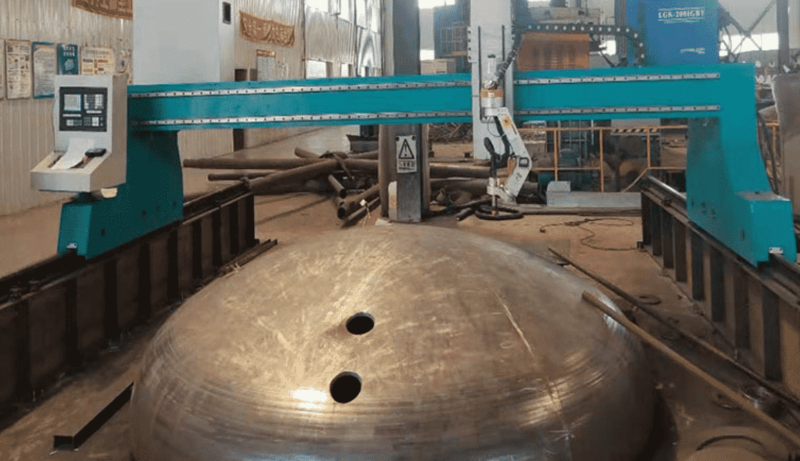
The core challenge in large-format cutting is the inherent irregularity of heavy plates and structural sections. Thermal expansion and material stress often lead to slight deviations during the cutting process. Integrating laser seam tracking addresses these variables by providing a closed-loop feedback mechanism. The laser sensor scans the workpiece surface or the joint geometry ahead of the plasma torch, calculating the exact coordinates and adjusting the torch height and path in real-time.
Real-Time Compensation for Material Distortion
Shipbuilding involves massive plates that may possess mill-scale irregularities or slight warping. A standard CNC program assumes a perfectly flat plane, which is rarely the case in shipyard environments. The laser tracking system compensates for these deviations by adjusting the Z-axis (height) and X/Y coordinates instantaneously. This ensures that the torch maintains the optimal standoff distance, which is critical for stabilizing the plasma arc and preventing dross accumulation.
Achieving High-Tier Intersection Accuracy
One of the most complex tasks in shipbuilding is the preparation of pipe-to-plate and pipe-to-pipe intersections. These geometries require precise mathematical modeling to ensure a snug fit during assembly. Intersection accuracy is the primary KPI for these operations. When a plasma torch is guided by a laser-tracked system, the machine can identify the exact curvature of a cylindrical or conical section, ensuring that the cut profile matches the mating component with tolerances often exceeding ±0.5mm.
Mitigating Fit-Up Errors
Poor intersection accuracy leads to excessive gap widths, requiring more filler metal and increasing the risk of thermal distortion during the joining phase. By utilizing high-definition plasma power sources and laser-corrected paths, shipyards can eliminate manual grinding and trimming. This reduction in “secondary operations” directly impacts the labor-hour per ton metric, a standard efficiency measurement in marine fabrication.
H-Beam Processing and Structural Longevity
Structural skeletons of modern vessels rely heavily on H-beams and I-beams for internal reinforcement. Processing these sections requires a machine that can handle multi-surface cutting without frequent downtime. A significant advantage of modern plasma systems in this sector is H-beam processing with a focus on low maintenance requirements.
Mechanical Reliability and Low Maintenance
From an industrial maintenance perspective, the elimination of mechanical contact during the cutting process is a major benefit. Unlike mechanical sawing or drilling, plasma cutting involves no tool wear. The laser seam tracking system further protects the machine by preventing “torch crashes” against misplaced beams. Modern plasma systems are designed with modular components, where the only consumables are the nozzle and electrode, allowing for predictable maintenance schedules and high machine uptime.
Automated Web and Flange Cutting
Advanced plasma units can rotate the torch head to cut both the web and the flanges of an H-beam in a single setup. The laser sensor identifies the exact center of the beam, accounting for any rolling tolerances from the steel mill. This ensures that bolt holes and coping cuts are perfectly aligned, which is essential for the structural integrity of the ship’s bulkhead and deck supports.
Advanced Beveling for Weld Preparation
Shipbuilding plates are almost never cut with a straight 90-degree edge. To ensure full penetration in heavy-duty structural joints, plates must undergo complex beveling. Modern plasma machines equipped with five-axis or six-axis heads can execute V, Y, X, and K-style bevels in a single pass.
Consistent Bevel Angles via Laser Feedback
Maintaining a consistent bevel angle is difficult on large plates that may sag under their own weight. The laser seam tracking system monitors the plate’s topography and adjusts the tilt and rotation of the plasma head. This ensures that the root face and the bevel angle remain uniform across the entire length of a 20-meter cut. Consistent beveling is the foundation of high-quality automated welding processes that follow, as it ensures a predictable volume for the weld bead.
Economic Analysis and Throughput Optimization
From a CAPEX and OPEX perspective, the integration of laser-guided plasma systems represents a high-return investment. The primary cost drivers in shipbuilding are material waste and labor-intensive rework. By increasing the precision of the initial cut, the “first-time-right” ratio is significantly improved.
Reducing Material Waste
Nesting software combined with high-accuracy plasma cutting allows for tighter spacing between parts on a single plate. When the machine can reliably track the plate’s edge and internal stresses, the safety margins for nesting can be reduced, leading to a 3% to 5% increase in material utilization. In a shipyard processing thousands of tons of steel annually, these savings are substantial.
Data-Driven Manufacturing
The integration of these machines into the shipyard’s PLM (Product Lifecycle Management) system allows for real-time tracking of production metrics. Industrial engineers can analyze the data provided by the laser sensors to identify patterns in material quality or machine performance, leading to proactive maintenance and continuous process improvement.
Conclusion: The Future of Shipyard Fabrication
The transition to automated plasma cutting with Laser Seam Tracking is not merely a technical upgrade; it is a shift toward precision-driven manufacturing in an industry traditionally dominated by manual labor and wide tolerances. By prioritizing intersection accuracy, streamlining H-beam processing, and mastering complex beveling, shipyards can achieve the structural standards required for modern naval and commercial vessels. The result is a more resilient production line, lower operational costs, and a significant leap in overall maritime engineering quality.
-


LT240S tube laser cutting machine
-
LT120S tube laser cutting machine
-
Sale

Tank Fillet Welding Machine
Original price was: $1,000.00.$900.00Current price is: $900.00. -
Sale

MAK100 tube laser cutting machine
Original price was: $5,500.00.$5,000.00Current price is: $5,000.00. -

portable plasma air cutting machine
$1,200.00 -

2in1 fiber laser cutting machine
-

Air cooling Laser welding machine
-

HF h beam laser cutting machine
-

LT240 laser cutting machine
-

Laser welding machine
-


Cobot Welding Station
-

Gantry welding robot solution
-

Tracked Wheeled AGV Welding robot
-

LFH6020 Fiber laser cutting machine
-
LFP6020
-

robotic welidng machine
Advanced Fiber Laser Tube Processing Technology
Our CNC Fiber Laser Tube Cutting systems revolutionize metal fabrication by integrating high-precision cutting, punching, and profiling into a single automated workflow. Designed for versatility, this technology handles a wide array of profiles including Round, Square, Rectangular, and Oval tubes, as well as complex L-shaped and U-shaped channels.
- Precision Punching: High-speed hole punching with micron-level accuracy, eliminating the need for mechanical drilling or die-stamping.
- Complex Profiling: Advanced 3D pathing allows for intricate interlocking joints and specialized notch cuts, ideal for structural frames.
- High Material Efficiency: Intelligent nesting software minimizes scrap, reducing raw material costs across large production runs.
- Clean Finish: Delivers oxide-free, burr-free edges that require zero secondary grinding before welding.

Seamlessly processing multiple profiles with consistent precision.
Global Delivery & Logistics



From our high-tech manufacturing facility directly to your global site. PCL WeldCut ensures secure packaging, professional handling, and reliable international logistics to safeguard your equipment throughout the entire journey.