Technical Overview of Plasma Systems in Heavy Fabrication
In the production of construction machinery such as excavators, cranes, and earth-movers, the structural integrity of the chassis and boom assemblies is paramount. Industrial engineers prioritize Plasma Cutting systems due to their ability to handle high-thickness carbon steel and alloy plates with significant thermal efficiency. The core of modern plasma efficiency lies in the implementation of Arc Voltage Control (AVC), a feedback mechanism that regulates the distance between the torch tip and the workpiece. This regulation is critical when dealing with large-scale industrial components where material flatness deviations are common.
The Mechanics of Arc Voltage Control (AVC)
The plasma cutting process relies on an ionized gas stream to melt and blow away metal. However, the quality of the cut is highly sensitive to the Torch-to-Work Distance (TWD). If the torch is too close, slag accumulation damages the nozzle; if it is too far, the arc broadens, leading to excessive dross and poor edge quality. Arc Voltage Control functions by measuring the voltage between the electrode and the plate. Since voltage is directly proportional to the arc length, the CNC system can adjust the Z-axis height in real-time to maintain a constant voltage.
for Construction Machinery, where plates often exceed 20mm in thickness and may possess slight warping from mill processing, AVC ensures that the kerf width remains uniform. This consistency is not merely aesthetic; it dictates the precision of subsequent assembly phases. By maintaining a stable arc, the heat-affected zone (HAZ) is minimized, preserving the mechanical properties of the high-tensile steel used in load-bearing structures.
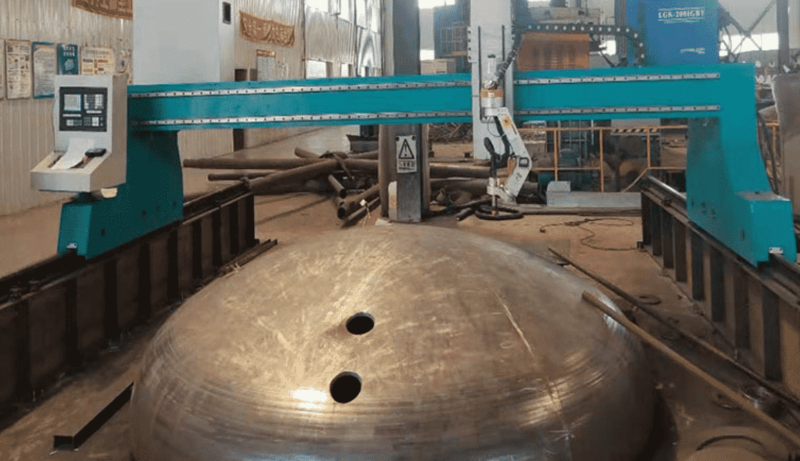
Enhancing Intersection Accuracy in Complex Geometries
Construction equipment often involves the intersection of structural members, such as tube-to-beam or plate-to-beam joints. Achieving high Intersection Accuracy is one of the most significant challenges in heavy engineering. When a plasma torch moves along a complex 3D path to create a saddle cut or a pipe penetration hole, any deviation in height translates into a dimensional error in the profile.
Advanced plasma systems utilize high-resolution encoders and fast-response AVC units to ensure the torch follows the programmed path precisely, even on curved surfaces. This level of accuracy eliminates the need for manual fit-up adjustments during the assembly of booms and outriggers. When the intersection points are cut to sub-millimeter tolerances, the gap between mating parts is minimized, leading to stronger, more reliable welded joints that can withstand the dynamic loads of construction environments.
H-Beam Processing and Low Maintenance Requirements
The use of H-beams and I-beams is standard in the fabrication of heavy machinery frames. Traditional mechanical methods, such as sawing or drilling, involve significant tool wear and downtime for blade replacement. H-beam Processing via plasma cutting offers a high-speed alternative with remarkably low maintenance requirements. Unlike mechanical tools, a plasma arc does not experience physical wear from friction.
The maintenance profile of a plasma system is primarily focused on consumables—nozzles and electrodes—which can be replaced in seconds. For H-beams, the ability of the plasma torch to reach into the web and flange areas allows for complex cutouts and bolt hole patterns in a single setup. By utilizing an automated torch height control, the system can navigate the transition between the flange and the web without manual intervention. This reduces the total cost per cut and increases the duty cycle of the machine, ensuring that the production line remains fluid and bottlenecks are avoided.
Optimization of Beveling Operations for Weld Preparation
Welding heavy plates requires specific edge preparations, including V, Y, X, and K-shaped bevels. In the context of construction machinery, these bevels are essential for achieving full-penetration welds. Traditional straight-edge cutting followed by manual grinding for beveling is labor-intensive and inconsistent. Modern plasma machines equipped with 5-axis tilt-rotate heads allow for Beveling Operations to be performed simultaneously with the profile cutting.
The integration of AVC during beveling is technically demanding but vital. As the torch tilts to create a 45-degree angle, the arc length increases relative to the vertical Z-axis. The control software must mathematically compensate for this tilt to maintain the correct tip-to-work distance. High-precision beveling ensures that the root gap and bevel angle are consistent throughout the entire length of the cut, which is a prerequisite for robotic welding systems used in large-scale equipment manufacturing.
Throughput Efficiency and Material Utilization
From an industrial engineering perspective, the efficiency of a plasma cutting station is measured by its “green light time”—the duration the machine is actively cutting. By integrating automated AVC and high-speed nesting software, material utilization is maximized. In the construction machinery sector, where raw material costs for thick steel are substantial, reducing scrap via tight nesting and precise lead-ins/lead-outs provides a direct boost to the bottom line.
Furthermore, the reduction in secondary processing is a key performance indicator. Because the plasma cut with AVC is stable, the resulting edge is often clean enough for immediate welding without the need for extensive grinding or deslagging. This streamlining of the workflow allows manufacturers to move components from the cutting table to the assembly jig with minimal delay, supporting Just-In-Time (JIT) manufacturing protocols in heavy industry.
Conclusion: Technical Resilience in Fabrication
The adoption of Plasma Cutting Machines with advanced Arc Voltage Control represents a strategic investment for construction machinery manufacturers. By focusing on the variables that govern Intersection Accuracy and Beveling Operations, facilities can achieve a level of precision that was previously unattainable with manual or less sophisticated thermal cutting methods. The inherent H-beam Processing advantages, characterized by low maintenance and high versatility, ensure that the production of structural frameworks remains both cost-effective and structurally sound. For the industrial engineer, the goal is clear: maximize the stability of the plasma arc to deliver components that meet the rigorous safety and performance standards of the global construction market.
-


Cantilever Welding Robot solution
-


GF laser cutting machine
-

P3015 plasma cutting machine
-

LFP3015 Fiber Laser Cutter
-

pipe plasma cutting machine
-
LFH 4020 Fiber Laser Cutting Machine
-
LFP4020
-

gantry plasma air cutting machine
-

3D robot cutting machine
-

8 axis plasma cutting machine
-

5 axis plasma cutting machine
-

LT360 tube laser cutting machine
-

robot welding workstation
-

SF6060 fiber laser cutting machine
Advanced Fiber Laser Tube Processing Technology
Our CNC Fiber Laser Tube Cutting systems revolutionize metal fabrication by integrating high-precision cutting, punching, and profiling into a single automated workflow. Designed for versatility, this technology handles a wide array of profiles including Round, Square, Rectangular, and Oval tubes, as well as complex L-shaped and U-shaped channels.
- Precision Punching: High-speed hole punching with micron-level accuracy, eliminating the need for mechanical drilling or die-stamping.
- Complex Profiling: Advanced 3D pathing allows for intricate interlocking joints and specialized notch cuts, ideal for structural frames.
- High Material Efficiency: Intelligent nesting software minimizes scrap, reducing raw material costs across large production runs.
- Clean Finish: Delivers oxide-free, burr-free edges that require zero secondary grinding before welding.

Seamlessly processing multiple profiles with consistent precision.
Global Delivery & Logistics



From our high-tech manufacturing facility directly to your global site. PCL WeldCut ensures secure packaging, professional handling, and reliable international logistics to safeguard your equipment throughout the entire journey.