Integrating Arc Voltage Control in Heavy-Duty Plasma Systems
In the fabrication of construction machinery, the demand for high-tensile strength plate processing requires thermal cutting solutions that balance speed with dimensional integrity. The Plasma Cutting Machine stands as the workhorse of this industry, particularly when equipped with a sophisticated Arc Voltage Control (AVC) system. For an industrial engineer, the AVC is not merely an add-on; it is the critical feedback loop that ensures the torch maintains a constant distance from the workpiece, regardless of material warping or table unevenness.
The physics of plasma cutting rely on a stabilized ionized gas arc. The voltage of this arc is directly proportional to its length. As the distance between the torch tip and the metal plate increases, the arc voltage rises; as the distance decreases, the voltage drops. The AVC system samples this voltage at high frequencies, comparing it to a preset reference value. If a deviation is detected, the Z-axis motor receives an instantaneous command to adjust the torch height. In construction machinery, where large-format steel plates often exhibit significant thermal distortion during the cutting process, this real-time adjustment prevents torch collisions and ensures a consistent kerf width.
Precision in Complex Intersection Accuracy
Construction equipment, such as excavators and cranes, utilizes complex structural nodes where multiple heavy-gauge plates intersect. Achieving high intersection accuracy is essential for the structural integrity of the final assembly. When cutting thick sections, the plasma arc tends to lag behind the torch movement, a phenomenon known as arc deflection. Modern plasma systems mitigate this through synchronized motion control and AVC response.
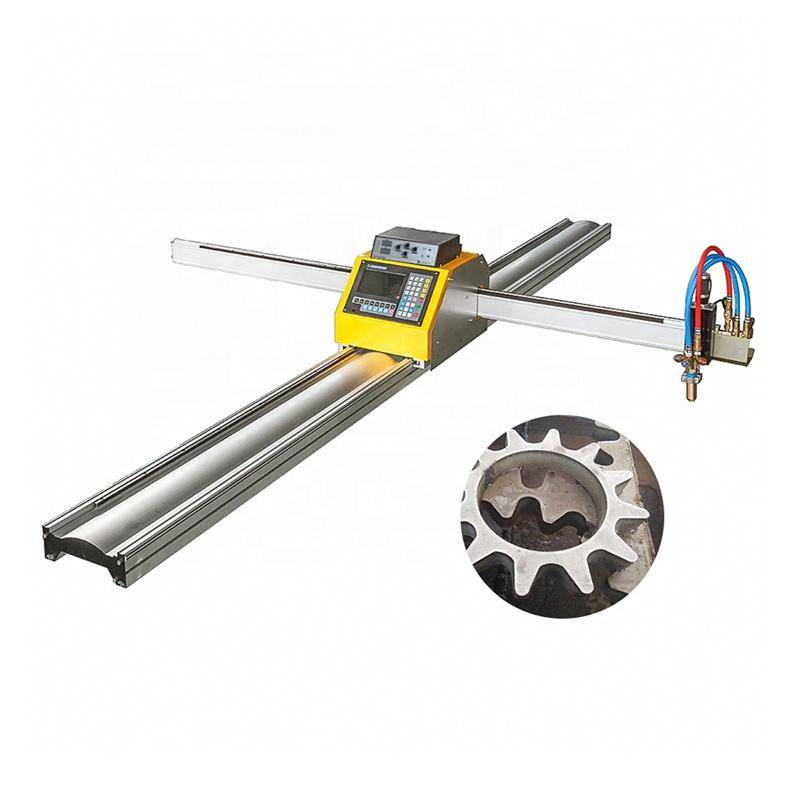
By maintaining a precise standoff distance, the AVC ensures that the arc energy remains focused at the optimal point of the plate thickness. This stability is vital when navigating tight radii or intricate geometries required for interlocking joints. Without precise height control, the angle of the cut face (taper) fluctuates, leading to misalignments during assembly. For industrial engineers, the goal is to achieve “bolt-hole quality” cuts directly from the plasma table, eliminating the need for secondary drilling or reaming operations. This level of accuracy ensures that heavy plates can be slotted together with minimal tolerance gaps, facilitating superior load distribution in the finished machine.
Operational Efficiency in H-Beam Processing
Structural steel components, particularly H-beams and I-beams, form the backbone of many construction machinery frames. Plasma cutting technology has revolutionized the way these sections are processed. Traditional mechanical sawing and drilling are time-consuming and lack the flexibility of thermal cutting. A plasma system designed for H-beams utilizes a rotary axis or a multi-axis head to wrap around the flanges and web of the beam.
One of the primary advantages of plasma in this application is H-beam low maintenance. Unlike mechanical systems that require frequent blade sharpening or cooling fluid management, plasma systems have fewer moving parts in contact with the material. The non-contact nature of the process means there is no mechanical stress on the machine frame, extending the service life of the gantry and rails. In H-beam processing, the AVC is particularly critical when transitioning from the flange to the web. The system must rapidly adjust to the change in material orientation to maintain arc stability. This high-speed responsiveness allows for the cutting of stiffener slots, bolt holes, and complex cope cuts in a single pass, significantly reducing the floor-to-floor time for structural members.
Advanced Beveling for Weld Preparation
Heavy machinery fabrication involves massive weldments that require deep penetration. To facilitate this, plate edges must be beveled into V, K, or Y profiles. A 5-axis plasma beveling head, controlled by advanced nesting software, allows these profiles to be cut directly on the plasma table. This integrates the cutting and edge-preparation phases into one operation.
The role of Arc Voltage Control during beveling is even more complex than in flat cutting. As the torch tilts to an angle, the relationship between the vertical Z-height and the actual arc length changes. Advanced AVC algorithms compensate for this geometric shift, ensuring that the tip-to-work distance is maintained along the angled path of the arc. This precision results in a uniform bevel face across the entire length of the cut. For the industrial engineer, this means that the fit-up in the welding department is consistent. Uniform bevels lead to predictable weld volumes and reduced consumption of filler metal, directly impacting the total cost of production.
Optimizing Consumable Life and Duty Cycle
A significant factor in the operational cost of plasma cutting is the longevity of consumables—specifically the electrode and nozzle. Frequent height variations or torch “diving” caused by poor voltage sensing can lead to catastrophic consumable failure. When the AVC is tuned correctly, it prevents the torch from dipping into the molten slag or touching the plate during the pierce sequence. This is achieved through Initial Height Sensing (IHS), where the machine determines the exact plate position before the arc is struck.
for Construction Machinery manufacturers operating on high duty cycles, every minute of downtime for a consumable change is a loss in productivity. Modern high-definition plasma systems use “long-wear” technology that coordinates gas flow with current ramping. When paired with a responsive AVC, these systems can achieve hundreds of pierces and thousands of feet of cutting before maintenance is required. This reliability is essential for maintaining the lean manufacturing flows required in modern industrial environments.
Strategic Implementation for Industrial Uptime
From a systems engineering perspective, the selection of a plasma cutting machine should prioritize the integration of the CNC, the power supply, and the torch height control. A fragmented system where the AVC is an aftermarket addition often suffers from communication latency, leading to “hunting” where the torch oscillates vertically. Integrated systems, however, offer seamless data exchange, allowing the CNC to signal the AVC to freeze its position during cornering or when crossing an existing kerf. This prevents the torch from diving into the void where voltage readings would otherwise spike.
Conclusion for Industrial Planning
In the competitive landscape of construction machinery manufacturing, the focus must remain on maximizing the efficiency of primary plate processing. Plasma cutting, bolstered by robust Arc Voltage Control, provides the necessary precision for intersection accuracy and the versatility for complex H-beam fabrication. By minimizing mechanical maintenance and optimizing the beveling process, manufacturers can ensure that their structural components meet the rigorous standards of the heavy equipment industry while maintaining a lean cost structure. The technical synergy between power electronics, gas dynamics, and motion control in a modern plasma system represents the pinnacle of thermal cutting efficiency for heavy-duty applications.
-


LT240S tube laser cutting machine
-
LT120S tube laser cutting machine
-
Sale

Tank Fillet Welding Machine
Original price was: $1,000.00.$900.00Current price is: $900.00. -
Sale

MAK100 tube laser cutting machine
Original price was: $5,500.00.$5,000.00Current price is: $5,000.00. -

portable plasma air cutting machine
$1,200.00 -

2in1 fiber laser cutting machine
-

Air cooling Laser welding machine
-

HF h beam laser cutting machine
-

LT240 laser cutting machine
-

Laser welding machine
-


Cobot Welding Station
-

Gantry welding robot solution
-

Tracked Wheeled AGV Welding robot
-

LFH6020 Fiber laser cutting machine
-
LFP6020
-

robotic welidng machine
Advanced Fiber Laser Tube Processing Technology
Our CNC Fiber Laser Tube Cutting systems revolutionize metal fabrication by integrating high-precision cutting, punching, and profiling into a single automated workflow. Designed for versatility, this technology handles a wide array of profiles including Round, Square, Rectangular, and Oval tubes, as well as complex L-shaped and U-shaped channels.
- Precision Punching: High-speed hole punching with micron-level accuracy, eliminating the need for mechanical drilling or die-stamping.
- Complex Profiling: Advanced 3D pathing allows for intricate interlocking joints and specialized notch cuts, ideal for structural frames.
- High Material Efficiency: Intelligent nesting software minimizes scrap, reducing raw material costs across large production runs.
- Clean Finish: Delivers oxide-free, burr-free edges that require zero secondary grinding before welding.

Seamlessly processing multiple profiles with consistent precision.
Global Delivery & Logistics



From our high-tech manufacturing facility directly to your global site. PCL WeldCut ensures secure packaging, professional handling, and reliable international logistics to safeguard your equipment throughout the entire journey.