The Engineering Logic of 5-Axis Plasma Systems in Steel Fabrication
In the heavy industrial sector, specifically within structural steel fabrication, the requirement for precision and speed is governed by the ability to manage complex geometries under rigorous timelines. The adoption of 5-axis plasma beveling has transitioned from a specialized luxury to a fundamental necessity for shops handling H-beams, I-beams, and heavy plate. Unlike traditional 2D cutting, a 5-axis system introduces tilt and rotation (commonly referred to as A and B axes), allowing the torch to maintain a perpendicular or specific angular relationship to the material surface throughout the entire cut path.
From an industrial engineering perspective, the primary objective is the reduction of non-value-added time. Traditional methods of preparing structural members for joining often involve a primary straight cut followed by manual grinding or secondary oxy-fuel beveling to create the necessary weld prep. By utilizing a 5-axis plasma head, these stages are consolidated into a single CNC process. This not only ensures dimensional consistency but also optimizes the material flow through the facility by eliminating the bottleneck of manual edge preparation.
Achieving Critical Intersection Accuracy
One of the most complex challenges in structural steel is the execution of intersections, particularly when dealing with non-planar surfaces or curved hollow sections (CHS). The intersection accuracy of a Plasma Cutting system is determined by the synergy between the motion control software and the mechanical rigidity of the gantry. When an H-beam requires a cope or a flange thinning cut to intersect with another structural member, the tolerance for error is minimal.
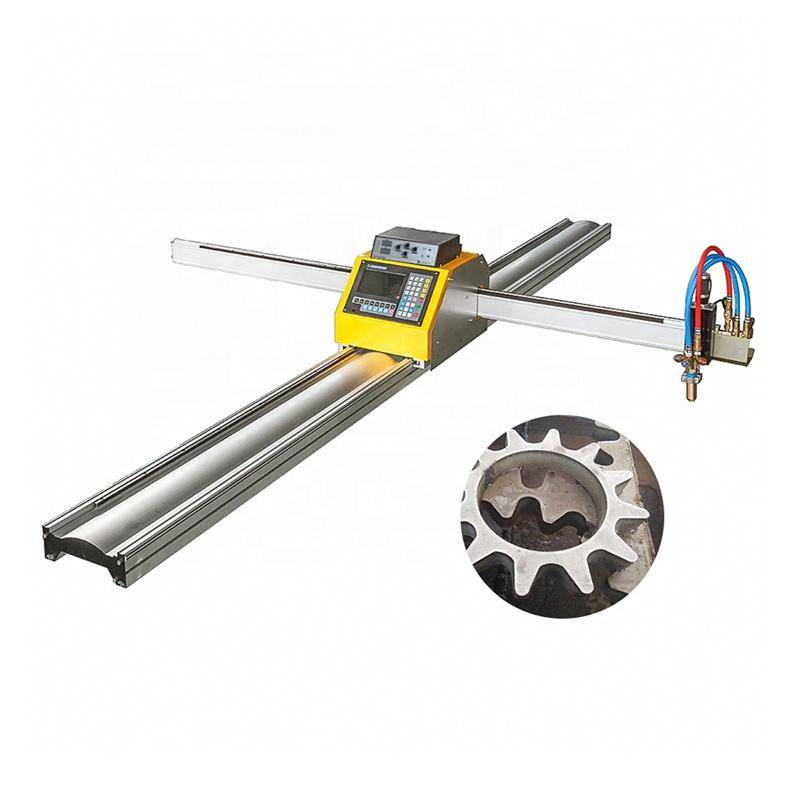
Kinematic Calibration and Torch Height Control
To maintain high intersection accuracy, the system must account for the “kerf” or the width of the material removed by the plasma arc. In a 5-axis environment, this kerf changes as the angle of the torch fluctuates. Advanced CNC controllers use real-time kinematic transformations to adjust the tool center point (TCP) dynamically. This ensures that even as the torch tilts to 45 degrees for a V-bevel, the actual edge of the cut remains precisely where the architectural drawing specifies.
Furthermore, Arc Voltage Height Control (AVHC) plays a vital role. In structural steel, beams are rarely perfectly straight. They often possess slight bows or surface irregularities. The AVHC monitors the voltage of the plasma arc to maintain a constant distance between the torch tip and the workpiece. For 5-axis work, this is even more critical, as the distance must be calculated along the vector of the torch, not just a simple vertical Z-axis measurement. Without this precision, the bevel angle would vary across the length of the beam, leading to poor fit-up during assembly.
The Mechanical Advantage: H-Beam Low Maintenance
In a heavy fabrication environment, equipment is subjected to high levels of dust, metallic particles, and extreme thermal cycles. Industrial engineers prioritize H-beam low maintenance profiles to ensure maximum uptime. Plasma systems are inherently robust compared to other thermal cutting technologies. The absence of complex optical paths or sensitive alignment mirrors makes the plasma torch assembly ideal for the “dirty” environment of a structural steel yard.
Ruggedized Torch Design
The 5-axis head is often the most vulnerable part of the machine. However, modern engineering has led to the development of “breakaway” torch holders that use magnets or pneumatic sensors to detect a collision. If a torch hits a tipped part or a slag pile, it detaches instantly without damaging the expensive 5-axis drive mechanism. Re-calibration is often as simple as snapping the torch back into place and resetting the zero point, which takes minutes rather than hours of specialized repair.
Consumable Lifecycle Management
Maintenance in plasma cutting is primarily centered on consumables: the electrode, nozzle, and swirl ring. For structural steel applications, where long, continuous cuts on thick-webbed H-beams are common, the cost per foot of cut is a key KPI. Modern high-definition plasma power sources have improved gas flow management, which cools the consumables more effectively. This results in a longer lifecycle for the copper components, reducing the frequency of operator intervention. By scheduling consumable changes during shift breaks, shops can maintain a near-continuous production cycle.
Optimizing Beveling for Structural Integrity
The ability to perform structural steel fabrication with integrated beveling transforms the workflow of the welding department. Weld preparation is not merely about aesthetics; it is about ensuring deep penetration and meeting the specifications of structural codes such as AWS D1.1. A 5-axis plasma machine can execute various weld preps including V-grooves, Y-grooves, X-grooves, and K-grooves.
Eliminating Secondary Processing
When an industrial engineer analyzes the cost-benefit of 5-axis plasma, the “hidden” savings are found in the assembly stage. If a plasma machine delivers a bevel with a tolerance of +/- 0.5 degrees and an intersection accuracy of +/- 1mm, the parts fit together perfectly on the jig. This eliminates the need for “gap-filling” or excessive grinding by the welding team. The precision of the 5-axis cut ensures that the Heat Affected Zone (HAZ) is minimized and the edge quality is sufficient for immediate bonding.
Software Integration: CAD to CAM
The efficiency of 5-axis beveling is heavily dependent on the software pipeline. Structural steel projects usually originate in BIM (Building Information Modeling) software like Tekla or Revit. Modern plasma systems allow for the direct import of DSTV or STEP files. The CAM software then automatically identifies the bevel requirements and generates the 5-axis toolpath. This “art-to-part” workflow reduces the probability of human error in interpreting complex blueprints, ensuring that the physical output matches the digital twin of the building structure.
Thermal Management and Material Stability
Cutting thick H-beams and plates introduces significant thermal energy into the material. As an industrial engineer, managing thermal distortion is paramount. Plasma cutting, while hot, is a high-speed process. The travel speed of a high-definition plasma torch means the heat is localized and dissipated quickly. In 5-axis beveling, where the torch may spend more time on a specific edge to create a steep angle, the CNC controller optimizes the cutting sequence. By jumping between different areas of the beam or plate (skip cutting), the system allows for more uniform heat distribution, preventing the beam from “bananaing” or warping out of tolerance.
Conclusion: The ROI of Precision Plasma
Investment in a 5-axis Plasma Cutting Machine specifically designed for structural steel is a strategic move toward automation and precision. The capability to handle complex intersections with high accuracy, combined with the low maintenance requirements of the plasma hardware, provides a resilient solution for modern fabrication shops. By consolidating cutting, coping, and beveling into a single automated station, facilities can achieve a higher throughput per square foot, reduce labor costs associated with manual grinding, and ensure that every structural member meets the highest standards of engineering integrity. The focus remains on the output: clean, accurate, and weld-ready steel components that form the backbone of modern infrastructure.
-


LT240S tube laser cutting machine
-
LT120S tube laser cutting machine
-
Sale

Tank Fillet Welding Machine
Original price was: $1,000.00.$900.00Current price is: $900.00. -
Sale

MAK100 tube laser cutting machine
Original price was: $5,500.00.$5,000.00Current price is: $5,000.00. -

portable plasma air cutting machine
$1,200.00 -

2in1 fiber laser cutting machine
-

Air cooling Laser welding machine
-

HF h beam laser cutting machine
-

LT240 laser cutting machine
-

Laser welding machine
-


Cobot Welding Station
-

Gantry welding robot solution
-

Tracked Wheeled AGV Welding robot
-

LFH6020 Fiber laser cutting machine
-
LFP6020
-

robotic welidng machine
Advanced Fiber Laser Tube Processing Technology
Our CNC Fiber Laser Tube Cutting systems revolutionize metal fabrication by integrating high-precision cutting, punching, and profiling into a single automated workflow. Designed for versatility, this technology handles a wide array of profiles including Round, Square, Rectangular, and Oval tubes, as well as complex L-shaped and U-shaped channels.
- Precision Punching: High-speed hole punching with micron-level accuracy, eliminating the need for mechanical drilling or die-stamping.
- Complex Profiling: Advanced 3D pathing allows for intricate interlocking joints and specialized notch cuts, ideal for structural frames.
- High Material Efficiency: Intelligent nesting software minimizes scrap, reducing raw material costs across large production runs.
- Clean Finish: Delivers oxide-free, burr-free edges that require zero secondary grinding before welding.

Seamlessly processing multiple profiles with consistent precision.
Global Delivery & Logistics



From our high-tech manufacturing facility directly to your global site. PCL WeldCut ensures secure packaging, professional handling, and reliable international logistics to safeguard your equipment throughout the entire journey.