Optimization of Pressure Vessel Fabrication via 5-Axis Plasma Cutting
In the heavy industrial sector, specifically pressure vessel manufacturing, the requirement for geometric precision is dictated by stringent international standards such as ASME Section VIII. The transition from manual layout and mechanical cutting to automated plasma beveling has redefined the efficiency of shell and head fabrication. Unlike standard 2D cutting, 5-axis plasma systems provide the necessary degrees of freedom to handle the contoured surfaces of cylindrical shells and hemispherical end caps, ensuring that weld preparations meet volumetric NDT (Non-Destructive Testing) requirements without extensive manual rework.
Mechanical Rigidity and H-Beam Frame Construction
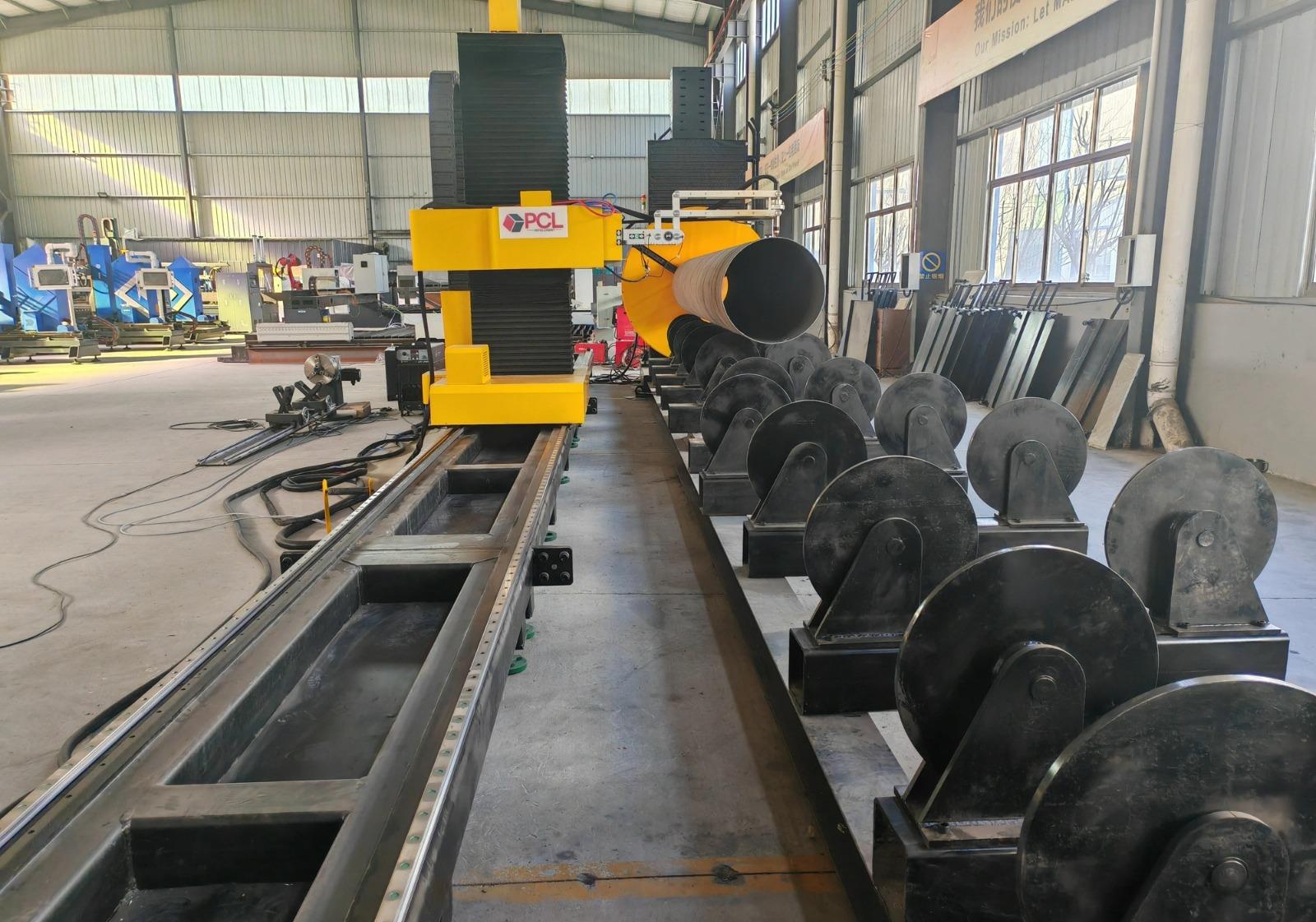
The foundation of a high-performance plasma system lies in its structural integrity. For industrial-scale pressure vessels, which often involve heavy-duty plates ranging from 10mm to over 50mm in thickness, the cutting gantry must withstand significant thermal and mechanical stresses. Utilizing an H-beam structural design for the machine bed and rails offers a distinct advantage in terms of low maintenance and long-term alignment stability.
Vibration Damping and Dimensional Stability
Heavy H-beam frames provide superior mass-to-stiffness ratios. In plasma cutting, the high-speed movement of the gantry can induce harmonic vibrations that negatively impact the cut surface finish. A rigid H-beam structure absorbs these oscillations, ensuring that the plasma torch maintains a consistent standoff distance. This rigidity is critical when executing high-definition plasma cuts where even a 0.5mm deviation in torch height can lead to significant kerf angle errors.
Lowering Maintenance Overheads
From an industrial engineering perspective, the H-beam low maintenance profile reduces the Total Cost of Ownership (TCO). Traditional hollow section frames may warp over years of thermal cycling from the plasma arc. In contrast, the stress-relieved H-beam configurations used in professional-grade plasma tables resist deformation. This ensures that the linear guide rails remain parallel, reducing wear on the drive motors and gearboxes, and extending the calibration intervals of the 5-axis kinematics.
The Kinematics of 5-Axis Beveling
Standard 3-axis cutting is insufficient for pressure vessel components that require V, Y, X, or K-profile bevels for groove welding. A 5-axis plasma head introduces two additional rotational axes (typically A and B), allowing the torch to tilt and rotate dynamically during the cutting process. This capability is essential for creating the edge preparations necessary for deep-penetration butt welds.
Advanced Weld Preparation Profiles
The ability to perform 5-axis beveling in a single pass eliminates the need for secondary edge milling or grinding. In pressure vessel fabrication, the welding of the longitudinal and circumferential seams requires precise land thicknesses and bevel angles. A 5-axis head can interpolate the torch angle relative to the plate surface, compensating for the natural taper of the plasma arc to produce perfectly square lands or specific bevel degrees ranging from 0 to 45 degrees. This precision ensures consistent fit-up, which is a prerequisite for automated longitudinal seam welding.
Dynamic Torch Height Control (THC)
When beveling at steep angles, the distance between the torch nozzle and the material changes drastically. Industrial 5-axis systems utilize specialized THC logic that calculates the real-time distance based on the tilt angle. This prevents collisions and ensures that the arc voltage remains stable, directly influencing the metallurgical integrity of the cut edge and reducing the width of the Heat Affected Zone (HAZ).
Precision in Complex Intersection Cuts
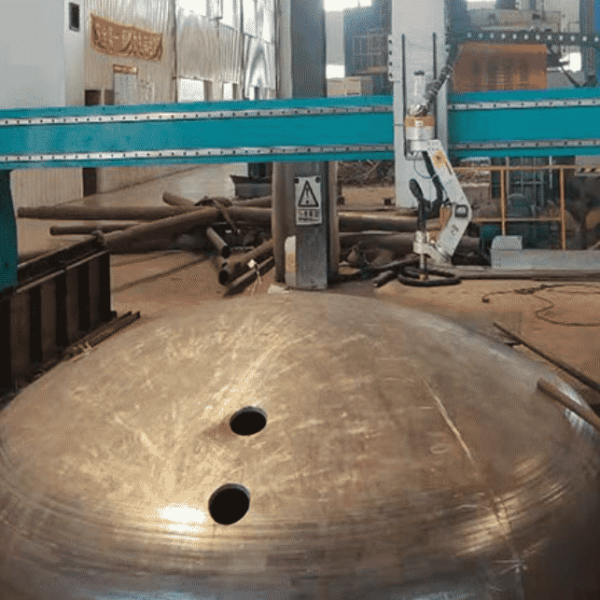
Pressure vessels are rarely simple cylinders; they are integrated systems featuring manways, nozzles, and instrumentation ports. The intersection of a small-diameter pipe (nozzle) with a large-diameter shell creates a complex 3D geometry known as a saddle curve. Achieving intersection accuracy in these scenarios is where 5-axis plasma technology proves its value.
Nozzle and Manway Apertures
Calculating the opening for a nozzle requires sophisticated CNC algorithms that account for the curvature of the shell and the angle of the nozzle entry. A 5-axis plasma machine can cut these apertures with the correct variable bevel angle along the entire perimeter of the hole. This ensures that when the nozzle is inserted, the gap is uniform, allowing for high-quality root passes during the welding phase. Without this accuracy, fitters must use filler material or excessive grinding to close gaps, compromising the vessel’s structural integrity.
Saddle and Hole Interpolation
The synchronization of the X, Y, Z, A, and B axes allows for the continuous motion required to cut non-planar intersections. In modern industrial engineering workflows, CAD/CAM software generates the G-code directly from 3D models of the pressure vessel. The plasma system then executes these complex paths with a high degree of repeatability, ensuring that every nozzle port on a multi-vessel production run is identical.
Operational Efficiency and Material Utilization
Beyond the technical precision of the cut, the integration of plasma cutting into the production line enhances overall shop throughput. Plasma cutting is inherently faster than mechanical methods for thick-walled carbon steel and stainless steel plates common in vessel construction.
Optimizing Gas Management
Industrial plasma systems utilize multi-gas consoles to select the optimal combination of oxygen, nitrogen, or H35 (hydrogen/argon mix) based on the material type. For stainless steel vessels, using an F5 (nitrogen/hydrogen) mix for the shield gas can produce dross-free edges that are ready for immediate welding. This eliminates the chemical cleaning or mechanical descaling often required after lower-quality thermal cutting processes.
Nesting and Scrap Reduction
Sophisticated nesting software, when paired with high-accuracy plasma systems, allows for tighter part spacing. For large-scale vessel plates, saving even 2-3% of material through efficient nesting of shell segments and reinforcing pads can result in significant annual cost savings. The precision of 5-axis heads also allows for “common line cutting” in certain beveling applications, further reducing the number of pierces and the total gas consumption.
Conclusion: The Engineering Impact on Throughput
The implementation of a 5-axis Plasma Cutting Machine represents a strategic investment in the quality and speed of pressure vessel fabrication. By prioritizing intersection accuracy and utilizing the mechanical stability of H-beam frames, manufacturers can significantly reduce the labor hours associated with weld preparation and fit-up. The transition from manual layout to 5-axis automated cutting ensures that the final product adheres to the tightest tolerances, facilitating faster assembly and more reliable performance in high-pressure environments. In an era where lead times and material costs are volatile, the efficiency of plasma-based beveling remains a cornerstone of competitive industrial engineering.
-
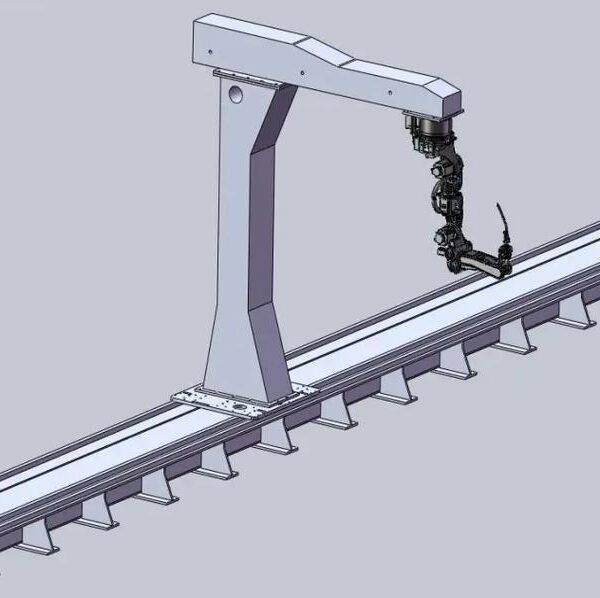

Cantilever Welding Robot solution
-
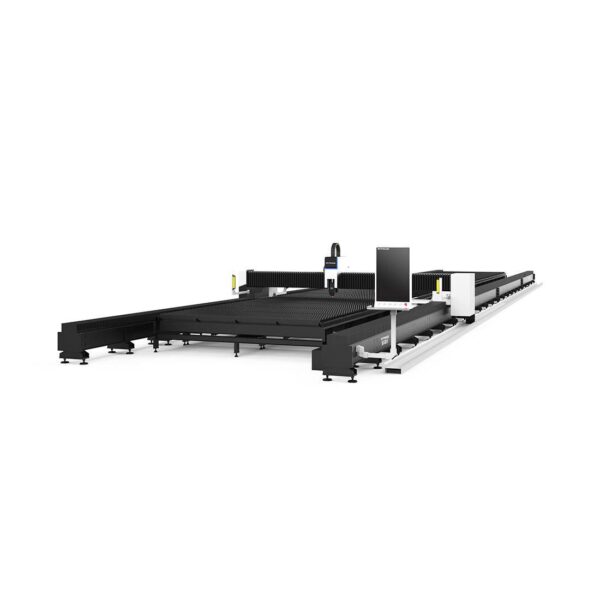

GF laser cutting machine
-
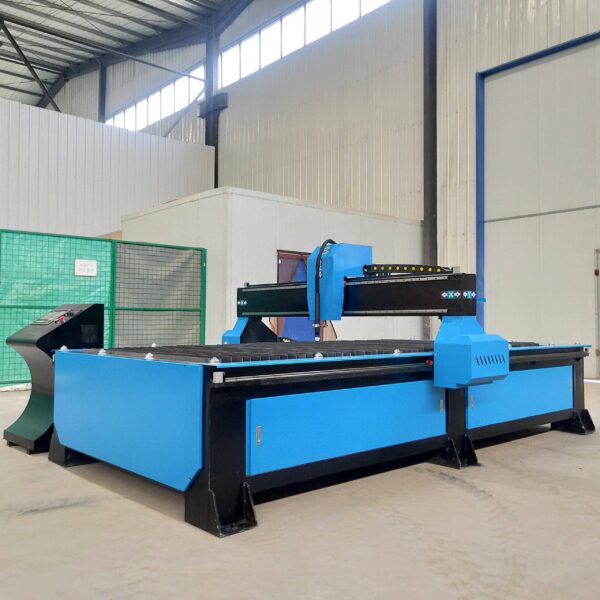
P3015 plasma cutting machine
-

LFP3015 Fiber Laser Cutter
-
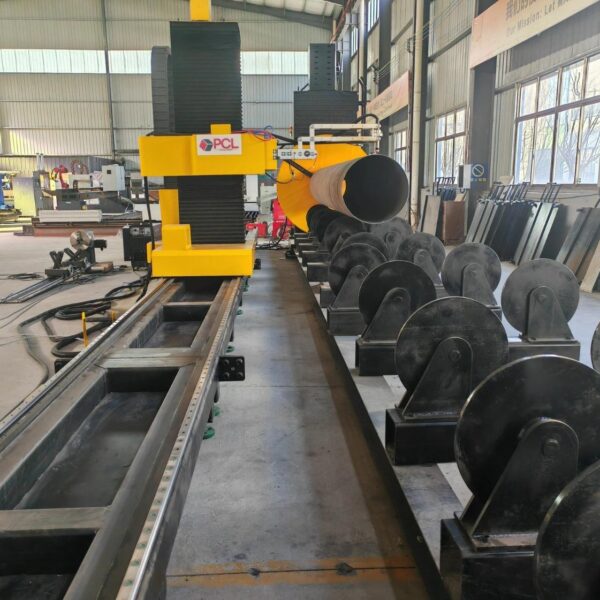
pipe plasma cutting machine
-
LFH 4020 Fiber Laser Cutting Machine
-
LFP4020
-
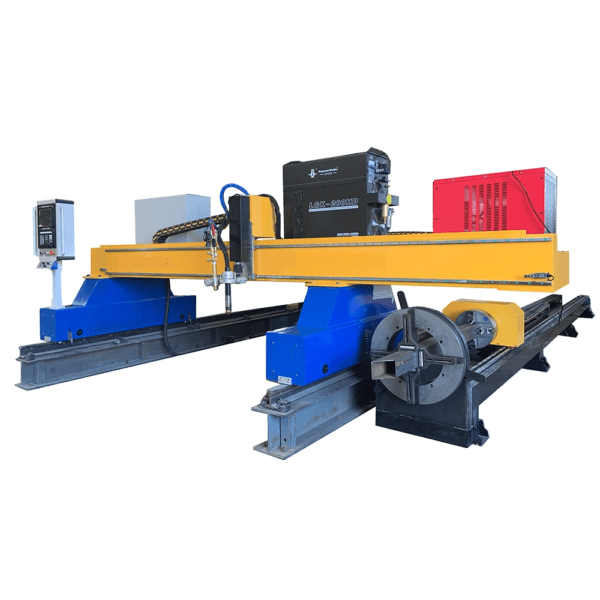
gantry plasma air cutting machine
-
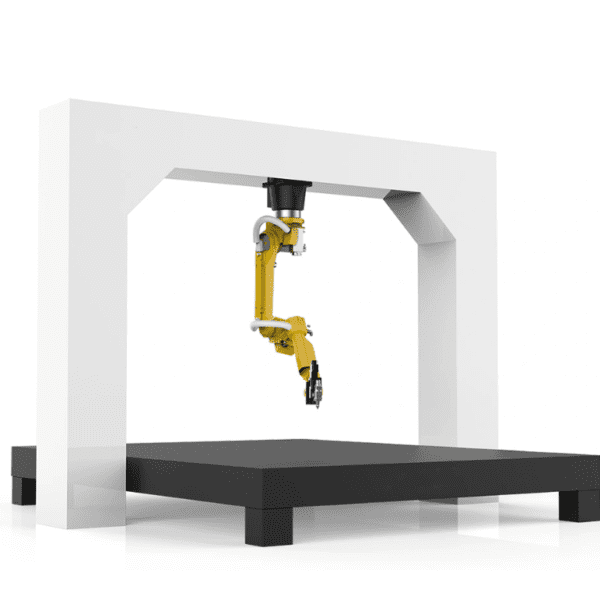
3D robot cutting machine
-
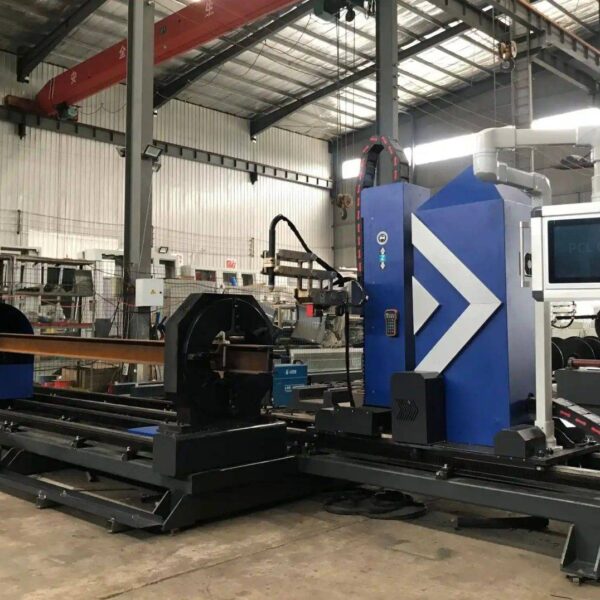
8 axis plasma cutting machine
-
5 axis plasma cutting machine
-

LT360 tube laser cutting machine
-
robot welding workstation
-
SF6060 fiber laser cutting machine
Advanced Fiber Laser Tube Processing Technology
Our CNC Fiber Laser Tube Cutting systems revolutionize metal fabrication by integrating high-precision cutting, punching, and profiling into a single automated workflow. Designed for versatility, this technology handles a wide array of profiles including Round, Square, Rectangular, and Oval tubes, as well as complex L-shaped and U-shaped channels.
- Precision Punching: High-speed hole punching with micron-level accuracy, eliminating the need for mechanical drilling or die-stamping.
- Complex Profiling: Advanced 3D pathing allows for intricate interlocking joints and specialized notch cuts, ideal for structural frames.
- High Material Efficiency: Intelligent nesting software minimizes scrap, reducing raw material costs across large production runs.
- Clean Finish: Delivers oxide-free, burr-free edges that require zero secondary grinding before welding.

Seamlessly processing multiple profiles with consistent precision.
Global Delivery & Logistics



From our high-tech manufacturing facility directly to your global site. PCL WeldCut ensures secure packaging, professional handling, and reliable international logistics to safeguard your equipment throughout the entire journey.