Technical Integration of 5-Axis Plasma Beveling in LNG Fabrication
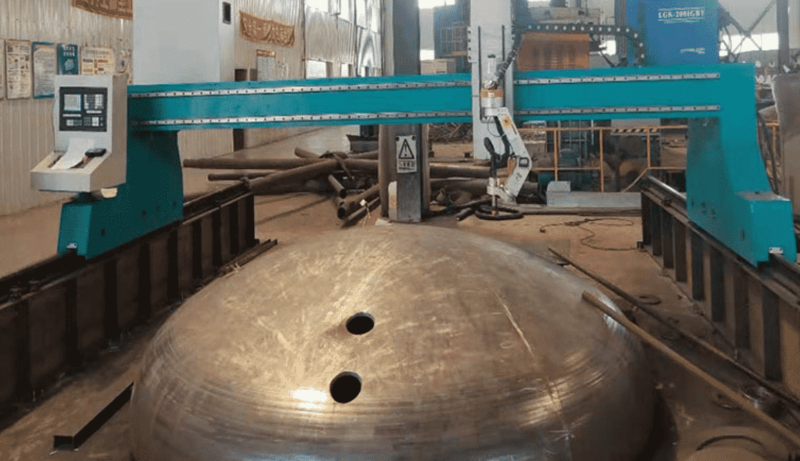
The construction of Liquefied Natural Gas (LNG) facilities involves some of the most stringent engineering requirements in the global energy sector. From liquefaction trains to regasification terminals, the structural and pressure-retaining components must withstand cryogenic temperatures and high pressure. Within this framework, 5-axis Plasma Cutting serves as a critical technology for preparing heavy-duty steel plates and structural profiles. Unlike standard 2D cutting, a 5-axis system incorporates rotational and tilt axes, allowing for complex beveling profiles—V, Y, X, and K—essential for full-penetration welds.
The industrial engineer’s focus is on maximizing throughput while maintaining the geometric precision required by ASME and AWS standards. In LNG projects, where large-diameter piping and thick-walled pressure vessels are standard, the ability of a plasma system to execute consistent bevels across varying plate thicknesses determines the efficiency of the entire assembly line.
Achieving Superior Intersection Accuracy in Piping Manifolds
One of the most complex tasks in LNG engineering is the fabrication of pipe-to-pipe and pipe-to-plate intersections. These geometries are not simple linear cuts; they are complex mathematical curves known as saddle cuts or olets. Intersection accuracy is paramount because even a 2mm deviation can lead to excessive gap-filling requirements, increasing the volume of weld consumables and the risk of thermal distortion.
5-axis plasma machines utilize sophisticated CNC algorithms to synchronize the movement of the gantry with the rotation of the torch head. This synchronization ensures that the torch remains perpendicular or at the specified bevel angle relative to the material surface at every point along the cut path. For LNG manifold fabrication, this precision allows for “tight-fit” assemblies where components slide into place with minimal manual grinding. The reduction in manual fit-up time directly improves the project’s labor productivity ratio.
Mechanical Stability and Torch Height Control
To maintain intersection accuracy, the plasma system must compensate for material irregularities. In large-scale LNG projects, structural steel and plates often exhibit slight warping. Advanced plasma systems utilize Arc Voltage Height Control (AVHC) to maintain a constant distance between the nozzle and the workpiece. By monitoring the plasma arc voltage, the system can make micro-adjustments in real-time, ensuring that the bevel angle remains consistent even if the material surface is not perfectly flat. This mechanical responsiveness is critical for maintaining the tight tolerances required for cryogenic service components.
H-Beam Processing and Structural Low Maintenance
The structural framework of an LNG module relies heavily on H-beams and I-beams to support the immense weight of the processing equipment. Traditional mechanical methods for cutting and coping these beams involve high consumable costs and frequent downtime for blade replacement. Modern plasma cutting systems designed for structural profiles offer a low-maintenance alternative that enhances operational uptime.
Low maintenance in plasma systems is achieved through the elimination of high-wear mechanical components found in saws and drills. The plasma torch is a non-contact cutting tool, meaning there is no mechanical stress on the machine gantry or the cutting head. For H-beam processing, the 5-axis capability allows the torch to reach around the flanges and web to perform complex copes, bolt holes, and flange thinning in a single pass.
Optimizing the Mean Time Between Failures
From an industrial engineering standpoint, the Total Cost of Ownership (TCO) is a primary metric. Plasma machines optimized for LNG Projects utilize robust cable carriers, pressurized electronics cabinets to keep out metal dust, and long-life electrodes. By selecting a system with high-quality gas regulation and cooling, fabrication shops can extend the life of consumables, thereby reducing the frequency of operator intervention. This “low-maintenance” profile ensures that the machine remains operational during high-intensity project phases, where any unscheduled downtime can derail a multi-million dollar construction schedule.
Thermal Dynamics and Material Integrity
LNG projects utilize specific alloys, including 9% nickel steel and various grades of stainless steel, to prevent brittle fracture at cryogenic temperatures. The thermal input of the cutting process must be strictly controlled to minimize the Heat-Affected Zone (HAZ). 5-axis plasma cutting, when calibrated correctly, provides a high energy density that allows for rapid travel speeds.
The speed of the plasma arc reduces the time the base metal is exposed to high temperatures, effectively narrowing the HAZ compared to older oxy-fuel methods. Engineers must optimize gas mixtures—often using argon-hydrogen or nitrogen-water injection—to achieve clean, dross-free cuts on these specialized alloys. A clean cut edge reduces the need for secondary mechanical cleaning, which is a significant bottleneck in heavy fabrication.
Software Synchronization and G-Code Optimization
The hardware of a 5-axis plasma machine is only as effective as the software driving it. In the context of LNG fabrication, Building Information Modeling (BIM) and specialized CAD/CAM software are used to generate complex cutting paths. The software must account for kerf compensation—the width of the material removed by the plasma arc—especially when performing beveled cuts where the kerf width varies with the angle.
Industrial engineer style dictates that the workflow from design to cut must be seamless. This is achieved through post-processors that convert 3D models directly into optimized G-code. By simulating the cut path in a virtual environment, engineers can identify potential collisions between the 5-axis head and the workpiece before the first arc is struck. This predictive capability is essential when working with expensive, long-lead-time materials common in the energy sector.
Impact on Downstream Assembly Processes
The ultimate goal of high-precision plasma cutting is to facilitate downstream assembly. In LNG module construction, where thousands of components are joined, the cumulative effect of precision is massive. If every H-beam and pipe intersection is cut to a tolerance of +/- 0.5mm, the structural integrity of the entire module is enhanced. This precision eliminates the need for “forced fit-ups,” which introduce residual stresses into the structure—stresses that could lead to premature failure in the fluctuating temperature environments of an LNG facility.
Conclusion on Process Efficiency
The integration of 5-axis plasma cutting with a focus on beveling and intersection accuracy represents a significant technical advantage for LNG contractors. By prioritizing low-maintenance H-beam processing and high-fidelity thermal cutting, facilities can meet the dual demands of rigorous safety standards and aggressive production timelines. The industrial engineer’s role is to ensure that these systems are utilized to their full potential, transforming raw steel into the complex, high-performance skeletons of the global energy infrastructure. Through precise calibration of plasma dynamics and automated motion control, the fabrication process becomes a predictable, high-output link in the LNG supply chain.
-


LT240S tube laser cutting machine
-
LT120S tube laser cutting machine
-
Sale

Tank Fillet Welding Machine
Original price was: $1,000.00.$900.00Current price is: $900.00. -
Sale

MAK100 tube laser cutting machine
Original price was: $5,500.00.$5,000.00Current price is: $5,000.00. -

portable plasma air cutting machine
$1,200.00 -

2in1 fiber laser cutting machine
-

Air cooling Laser welding machine
-

HF h beam laser cutting machine
-

LT240 laser cutting machine
-

Laser welding machine
-


Cobot Welding Station
-

Gantry welding robot solution
-

Tracked Wheeled AGV Welding robot
-

LFH6020 Fiber laser cutting machine
-
LFP6020
-

robotic welidng machine
Advanced Fiber Laser Tube Processing Technology
Our CNC Fiber Laser Tube Cutting systems revolutionize metal fabrication by integrating high-precision cutting, punching, and profiling into a single automated workflow. Designed for versatility, this technology handles a wide array of profiles including Round, Square, Rectangular, and Oval tubes, as well as complex L-shaped and U-shaped channels.
- Precision Punching: High-speed hole punching with micron-level accuracy, eliminating the need for mechanical drilling or die-stamping.
- Complex Profiling: Advanced 3D pathing allows for intricate interlocking joints and specialized notch cuts, ideal for structural frames.
- High Material Efficiency: Intelligent nesting software minimizes scrap, reducing raw material costs across large production runs.
- Clean Finish: Delivers oxide-free, burr-free edges that require zero secondary grinding before welding.

Seamlessly processing multiple profiles with consistent precision.
Global Delivery & Logistics



From our high-tech manufacturing facility directly to your global site. PCL WeldCut ensures secure packaging, professional handling, and reliable international logistics to safeguard your equipment throughout the entire journey.