Field Engineering Report: Fiber Laser Cobot Integration in Bursa’s Automotive Tier-1 Sector
1. Site Overview and Objective
This report details the operational deployment and performance validation of a Fiber Laser Cobot system at a major automotive component manufacturing facility in Bursa, Turkey. The primary objective was to transition from conventional semi-automatic Metal Active Gas (MAG) welding to an automated, low-spatter process for high-volume Mild Steel welding. In the Bursa industrial corridor, where production throughput and cost-per-part are the primary KPIs, the goal was to eliminate secondary grinding processes necessitated by weld spatter while maintaining the structural integrity of S235JR and S355JR grade mild steel assemblies.
2. The Synergy of Fiber Laser Cobot and Modern Laser Technology
The core of this deployment rests on the integration of high-density Laser Technology within a collaborative robotic framework. Unlike traditional fixed-cell industrial robots, the Fiber Laser Cobot provides a unique synergy of mobility and precision. In the Bursa workshop, floor space is at a premium. The cobot’s small footprint allowed us to integrate the unit directly into existing manual assembly lines without a total overhaul of the shop floor layout.
2.1 Beam Delivery and Fiber Optics
Utilizing a 2kW continuous wave (CW) fiber source, we leveraged the high brightness and beam quality inherent in modern Laser Technology. The fiber delivery system is critical here; it allows the cobot to maintain a consistent Tool Center Point (TCP) even during complex multi-axis movements. In Mild Steel welding, the absorption rate of the 1.07 μm wavelength is highly efficient, allowing for deep penetration with minimal heat input compared to traditional arc processes.
2.2 The Low-Spatter Mechanism
The “Low-Spatter” designation is achieved through a hybrid-like stabilization. While this is primarily a laser-focused application, the cobot governs a sophisticated “wobble” head. By oscillating the laser beam in specific patterns (circular and figure-8), we manipulated the molten pool dynamics. This oscillation prevents the turbulent metal expulsion typically seen in short-circuit transfer MAG welding. For the Bursa project, this meant a 95% reduction in post-weld cleanup time.
3. Practical Application: Mild Steel Welding Parameters
The transition to Mild Steel welding using a Fiber Laser Cobot requires a departure from standard arc-welding logic. We focused on 3.0mm to 6.0mm thickness profiles, which are standard for Turkish automotive chassis components.
3.1 Parameter Set-points
During the field trials, we established the following baseline for S355JR mild steel:
- Power: 1800W
- Weld Speed: 1.2 meters/minute
- Wobble Frequency: 150 Hz
- Wobble Width: 1.5 mm
- Shielding Gas: 100% Nitrogen or Ar/CO2 mix (depending on the required oxide finish)
The Laser Technology allowed us to achieve a narrow Heat Affected Zone (HAZ), which is vital for maintaining the tensile strength of the mild steel. In the Bursa facility, we observed that the Fiber Laser Cobot could maintain these parameters with a repeatability of ±0.03mm, far exceeding manual capabilities.
4. Lessons Learned from the Bursa Field Site
Engineering success is rarely a linear path. Our time in the Bursa workshop yielded several critical “lessons learned” that are now standard operating procedure for our Turkish deployments.
4.1 Fixturing Rigidity and Gap Management
One of the most significant challenges in Mild Steel welding with Laser Technology is gap tolerance. Unlike MAG welding, which can easily bridge 2mm gaps with filler wire, a Fiber Laser Cobot is less forgiving.
Lesson: We discovered that the existing manual-clamping fixtures in the Bursa plant were insufficient. We had to upgrade to pneumatic precision jigging to ensure a joint fit-up of less than 0.5mm. When the gap exceeds 10% of the material thickness, the laser beam tends to blow through rather than fuse. We compensated for this by integrating a wire-feed sub-system into the cobot head, transforming the process into a laser-cold-wire feed, which significantly improved gap bridging on irregular mild steel stampings.
4.2 Environmental Factors: Dust and Voltage Stability
The industrial environment in Bursa can be harsh. Dust from nearby grinding stations and voltage fluctuations in the local grid posed risks to the sensitive optics of the Fiber Laser Cobot.
Lesson: We implemented a pressurized, filtered optic chamber and installed a dedicated industrial voltage stabilizer. Fiber Laser Technology is highly sensitive to back-reflection; ensuring the laser head was angled at a 5-10 degree “leading” position prevented reflected photons from traveling back up the fiber and damaging the diode modules.
4.3 Local Workforce Upskilling
A recurring theme in Turkey’s manufacturing sector is the transition from manual labor to automation. The operators in Bursa were skilled in traditional welding but intimidated by “Laser Technology.”
Lesson: The collaborative nature of the cobot was the bridge. By using the “lead-through” programming feature—where the welder physically moves the cobot arm to define the path—we reduced the learning curve from weeks to days. The engineer’s role shifted from “welder” to “process technician.”
5. Performance Metrics: MAG vs. Fiber Laser Cobot
To justify the capital expenditure (CAPEX) for the Bursa facility, we conducted a direct comparison between the incumbent MAG process and the new Fiber Laser Cobot on a 500-unit production run of mild steel brackets.
5.1 Throughput and Efficiency
The MAG process averaged 4 minutes per component, including setup and spatter removal. The Fiber Laser Cobot reduced this to 45 seconds. The high power density of the Laser Technology allows for much higher travel speeds without sacrificing penetration. In the context of Mild Steel welding, we saw a 400% increase in throughput per shift.
5.2 Consumables and Energy
While the electricity consumption of the laser source is higher per hour, the drastically reduced cycle time resulted in a lower total energy cost per part. Furthermore, by eliminating the need for anti-spatter sprays and reducing the consumption of contact tips and gas nozzles, the operational expenditure (OPEX) trended downward after the initial 3-month mark.
6. Metallurgical Observations
Post-process analysis at the Bursa lab showed a refined grain structure in the fusion zone. Mild Steel welding often suffers from grain growth in the HAZ when using high-heat input methods like submerged arc or heavy MAG. The Fiber Laser Cobot‘s localized energy delivery resulted in a much smaller HAZ, which translated to better fatigue resistance in the automotive vibration tests. This is where the Laser Technology truly pays for itself—not just in speed, but in the superior metallurgical properties of the final joint.
7. Conclusion and Recommendations
The integration of the Fiber Laser Cobot in Bursa serves as a blueprint for modernizing Mild Steel welding operations across the region. The marriage of flexible automation and high-precision Laser Technology addresses the two biggest pain points in the industry: labor shortages and quality inconsistency.
For future installations, I recommend:
- Pre-process Cleaning: Even though the laser is powerful, mill scale on mild steel can cause porosity. A quick chemical or mechanical clean of the weld seam is essential for X-ray quality results.
- Reflective Safety: In the open-floor layout of many Bursa shops, Class 4 laser safety curtains are non-negotiable. The cobot is collaborative, but the laser beam is not.
- Consistent Wire Quality: If using a wire-feed assist, ensure the wire is of high metallurgical consistency to avoid erratic “popping” in the melt pool.
Final Note
The Bursa field test confirms that for Mild Steel welding, the Fiber Laser Cobot is no longer an “emerging” technology—it is a production-ready solution that eliminates the spatter-related bottlenecks of the past. The data speaks for itself: less rework, higher speeds, and satisfied engineers.
-


LT240S tube laser cutting machine
-
LT120S tube laser cutting machine
-
Sale

Tank Fillet Welding Machine
Original price was: $1,000.00.$900.00Current price is: $900.00. -
Sale

MAK100 tube laser cutting machine
Original price was: $5,500.00.$5,000.00Current price is: $5,000.00. -

portable plasma air cutting machine
$1,200.00 -

2in1 fiber laser cutting machine
-

Air cooling Laser welding machine
-

HF h beam laser cutting machine
-

LT240 laser cutting machine
-

Laser welding machine
-


Cobot Welding Station
-

Gantry welding robot solution
-

Tracked Wheeled AGV Welding robot
-

LFH6020 Fiber laser cutting machine
-
LFP6020
-

robotic welidng machine
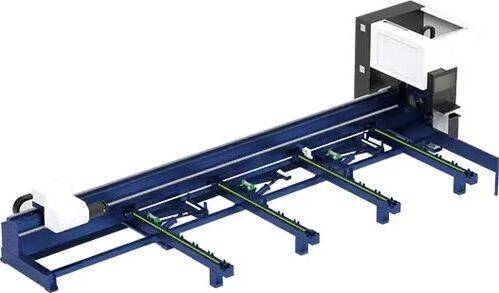
Advanced Fiber Laser Tube Processing Technology
Our CNC Fiber Laser Tube Cutting systems revolutionize metal fabrication by integrating high-precision cutting, punching, and profiling into a single automated workflow. Designed for versatility, this technology handles a wide array of profiles including Round, Square, Rectangular, and Oval tubes, as well as complex L-shaped and U-shaped channels.
- Precision Punching: High-speed hole punching with micron-level accuracy, eliminating the need for mechanical drilling or die-stamping.
- Complex Profiling: Advanced 3D pathing allows for intricate interlocking joints and specialized notch cuts, ideal for structural frames.
- High Material Efficiency: Intelligent nesting software minimizes scrap, reducing raw material costs across large production runs.
- Clean Finish: Delivers oxide-free, burr-free edges that require zero secondary grinding before welding.

Seamlessly processing multiple profiles with consistent precision.
Global Delivery & Logistics



From our high-tech manufacturing facility directly to your global site. PCL WeldCut ensures secure packaging, professional handling, and reliable international logistics to safeguard your equipment throughout the entire journey.