Optimizing Heavy Steel Fabrication with Magnetic Crawler Systems
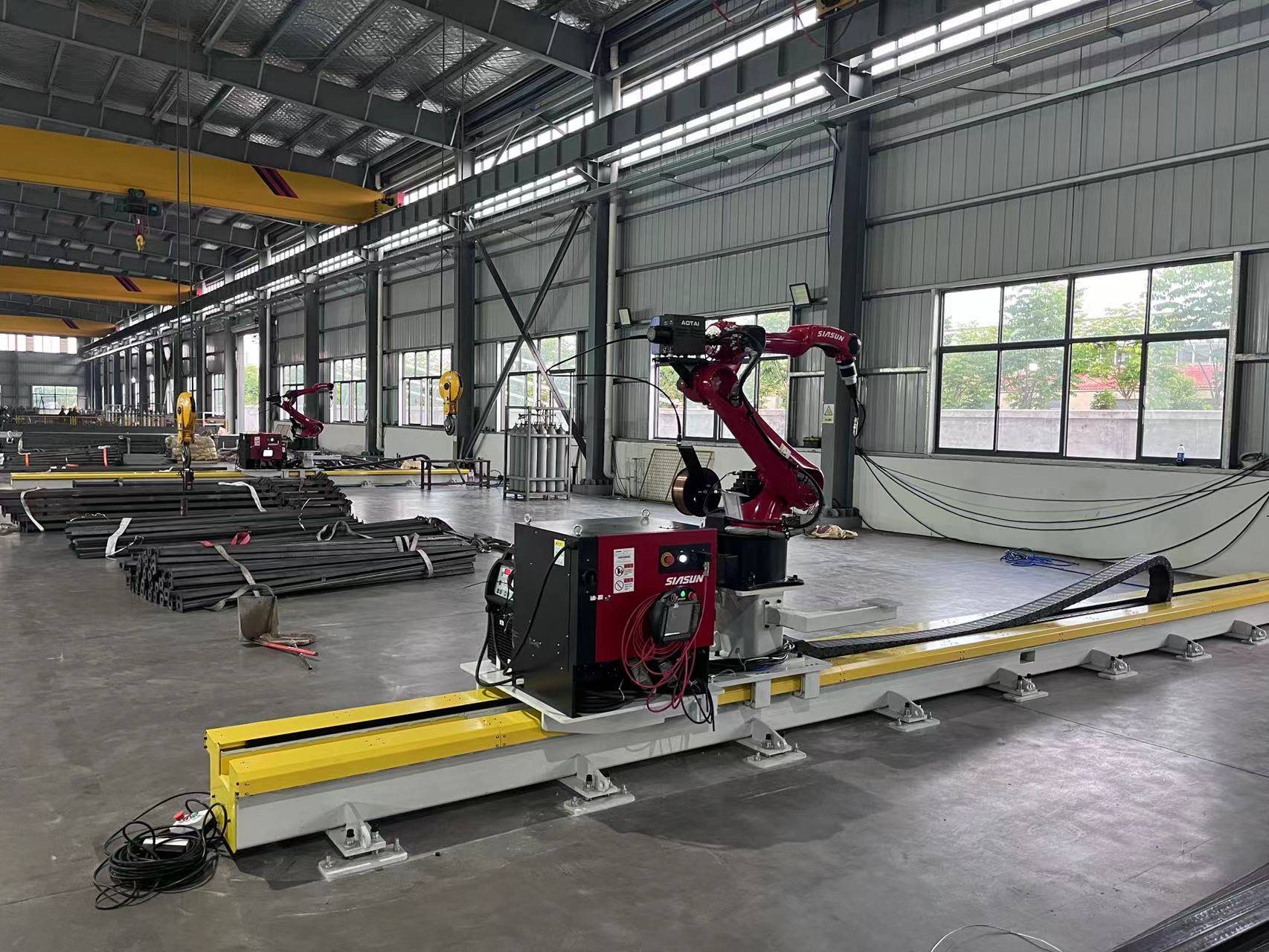
In the current industrial landscape, the fabrication of large-scale steel structures—such as ship hulls, oil storage tanks, and bridge girders—presents significant logistical challenges. Traditional manual welding requires extensive scaffolding, high labor costs, and exposes technicians to hazardous environments. The introduction of the Intelligent Robotic Welder mounted on a magnetic crawler chassis represents a shift toward high-efficiency automated production. This system integrates mechanical mobility with advanced Metal Active Gas (MAG) welding technology to deliver consistent, high-quality beads across vertical, horizontal, and overhead planes.
The Mechanics of Magnetic Adhesion and Locomotion
The core of the crawler system lies in its ability to maintain a constant grip on ferromagnetic surfaces while carrying a full welding payload. These robots utilize high-flux permanent magnets or switchable electromagnets integrated into a tracked or wheeled drive system. From an industrial engineering perspective, the adhesion force must be calculated with a safety factor of at least 3:1 to account for surface irregularities, paint thickness, and the dynamic loads generated during the welding process.
Surface Interaction and Traction Control
The Magnetic Crawler must navigate mill scale, rust, and slight geometric deviations. Intelligent crawlers utilize closed-loop feedback systems to monitor wheel slip and motor torque. By maintaining a constant distance between the magnetic array and the steel substrate, the robot ensures uniform traction. This stability is critical for the welding torch’s positioning accuracy, as any vibration or slippage directly translates to weld defects such as porosity or lack of fusion.
Advanced MAG Welding Integration
The primary process utilized in these robotic systems is MAG Welding (Metal Active Gas), specifically using CO2 or Argon-CO2 mixtures. Unlike manual processes, the robotic interface allows for precise control over wire feed speed, voltage, and travel speed, which are synchronized through the robot’s central processing unit.
Process Parameters and Bead Morphology
Industrial engineers specify MAG welding for Steel Structures due to its high deposition rates and deep penetration characteristics. The intelligent system utilizes seam tracking—often via through-arc sensing or laser-based vision—to adjust the torch position in real-time. This compensates for heat distortion or fit-up gaps that occur during the welding of thick plates. The ability to maintain a consistent torch angle and stick-out distance results in a uniform heat-affected zone (HAZ), which is vital for the structural integrity of the assembly.
Gas Shielding Integrity in Outdoor Environments
One challenge in field-deployed Robotic Welding is maintaining the integrity of the shielding gas. Magnetic crawlers are often equipped with specialized gas shrouds or localized wind shields. These components ensure that the MAG process remains stable even in moderate wind conditions, preventing atmospheric contamination that leads to nitrogen embrittlement or hydrogen cracking in the weld metal.
Maintenance Protocols for Robotic Welding Systems
To ensure maximum uptime and equipment longevity, a rigorous preventive maintenance (PM) schedule must be established. Robotic systems operating in welding environments are subjected to high heat, spatter, and fine metallic dust.
Daily and Weekly Maintenance Tasks
The welding torch and consumables require the most frequent attention. Contact tips must be inspected for wear (keyholing), as an oversized tip aperture leads to arc instability. The magnetic tracks must be cleaned of metallic debris that accumulates during operation, which can interfere with the magnetic flux and cause erratic movement. Additionally, the wire feeder drive rolls must be checked for tension and alignment to prevent bird-nesting or inconsistent wire delivery.
Long-term System Calibration
On a quarterly basis, the crawler’s drive motors and encoders require calibration to ensure travel speed accuracy. For the welding power source, voltage and amperage calibration against a secondary meter is necessary to maintain compliance with Welding Procedure Specifications (WPS). Proper lubrication of the crawler’s mechanical linkages using heat-resistant grease ensures the system can withstand the thermal radiation emitted during prolonged high-amperage cycles.
Economic Impact and Return on Investment (ROI)
The transition to Return on Investment (ROI) focused automation is driven by three primary factors: throughput, quality costs, and labor allocation.
Increased Deposition and Duty Cycles
A manual welder typically operates at an “arc-on” time of 25% to 35% due to fatigue, repositioning, and helmet adjustments. An intelligent magnetic crawler can achieve duty cycles exceeding 75%. In a typical shift, this translates to three times the linear meters of weld produced compared to a human operator. When calculating the ROI, the initial capital expenditure (CAPEX) of the robot is often recouped within 12 to 18 months through increased throughput alone.
Reduction in Rework and Non-Destructive Testing (NDT) Failures
Human error is the leading cause of weld defects such as undercut, overlap, and slag inclusions. Robotic MAG welding provides a level of repeatability that manual processes cannot match. By reducing the rework rate from an industry average of 5-8% down to less than 1%, firms save significantly on grinding, re-welding, and additional NDT inspections. These savings contribute directly to the bottom line and shorten project timelines.
Labor Redistribution and Safety
Implementing robotic crawlers does not necessarily eliminate the need for skilled personnel; rather, it shifts the welder’s role to that of a system operator. This reduces the physical strain on the workforce, lowering insurance premiums and costs associated with work-related injuries. In high-altitude steel erection, the cost of safety equipment and insurance for manual climbers is a significant overhead that is drastically reduced when the robot performs the majority of the vertical climbs.
Conclusion: The Future of Structural Steel Fabrication
The integration of intelligent magnetic crawlers in the welding sector is no longer a luxury but a necessity for competitive industrial operations. By focusing on the MAG process’s efficiency, maintaining strict mechanical upkeep, and leveraging the clear financial advantages of automation, companies can ensure superior structural quality and enhanced profitability. As the technology continues to evolve, the synchronization of multiple crawler units on a single structure will further compress fabrication schedules and set new benchmarks for industrial output.
-


LT240S tube laser cutting machine
-
LT120S tube laser cutting machine
-
Sale

Tank Fillet Welding Machine
Original price was: $1,000.00.$900.00Current price is: $900.00. -
Sale

MAK100 tube laser cutting machine
Original price was: $5,500.00.$5,000.00Current price is: $5,000.00. -

portable plasma air cutting machine
$1,200.00 -

2in1 fiber laser cutting machine
-

Air cooling Laser welding machine
-

HF h beam laser cutting machine
-

LT240 laser cutting machine
-

Laser welding machine
-


Cobot Welding Station
-

Gantry welding robot solution
-

Tracked Wheeled AGV Welding robot
-

LFH6020 Fiber laser cutting machine
-
LFP6020
-

robotic welidng machine
Advanced Fiber Laser Tube Processing Technology
Our CNC Fiber Laser Tube Cutting systems revolutionize metal fabrication by integrating high-precision cutting, punching, and profiling into a single automated workflow. Designed for versatility, this technology handles a wide array of profiles including Round, Square, Rectangular, and Oval tubes, as well as complex L-shaped and U-shaped channels.
- Precision Punching: High-speed hole punching with micron-level accuracy, eliminating the need for mechanical drilling or die-stamping.
- Complex Profiling: Advanced 3D pathing allows for intricate interlocking joints and specialized notch cuts, ideal for structural frames.
- High Material Efficiency: Intelligent nesting software minimizes scrap, reducing raw material costs across large production runs.
- Clean Finish: Delivers oxide-free, burr-free edges that require zero secondary grinding before welding.

Seamlessly processing multiple profiles with consistent precision.
Global Delivery & Logistics



From our high-tech manufacturing facility directly to your global site. PCL WeldCut ensures secure packaging, professional handling, and reliable international logistics to safeguard your equipment throughout the entire journey.