### The Physics of Power Density and Beam Dynamics
The core advantage of a fiber laser over traditional MAG welding lies in power density. A standard MAG arc distributes heat over a relatively wide area, creating a large Heat Affected Zone (HAZ). In contrast, a fiber laser concentrates energy into a spot size often measuring between 50μm and 200μm. This generates a power density exceeding $10^6 W/cm^2$, allowing for “keyhole” welding where the metal vaporizes and creates a narrow, deep cavity.
For Manchester-based manufacturers working with cold-rolled steel or aerospace-grade aluminum, this density translates to speed. Robotic arms can traverse at rates exceeding 100mm/second while maintaining a stable keyhole. However, the narrowness of the beam introduces a challenge: fit-up tolerance. If the gap between two thin sheets varies by even 0.1mm, the laser may pass through without joining the material.
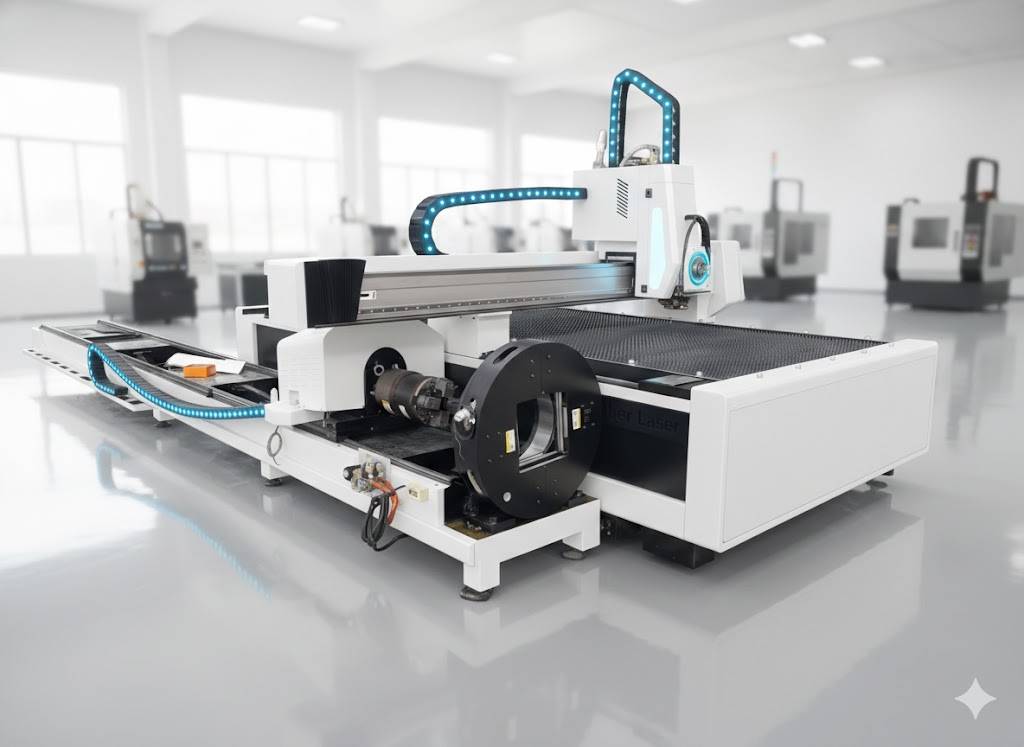
### Implementing Beam Wobble Parameters
To mitigate the sensitivity to part fit-up, modern robotic laser heads utilize “beam wobble” technology. This involves oscillating the laser beam in specific patterns—circular, transverse, or “figure-eight”—as it moves along the weld path.
1. **Amplitude:** For a 1.2mm lap joint, a transverse wobble amplitude of 0.5mm to 1.0mm effectively widens the weld pool, bridging gaps that would otherwise cause failure.
2. **Frequency:** Operating at frequencies between 150Hz and 500Hz ensures that the molten pool remains fluid enough to coalesce without the “humping” effect common in high-speed linear welds.
3. **Power Modulation:** Synchronizing the laser power with the wobble position prevents overheating at the edges of the oscillation, ensuring a uniform penetration profile.
By manipulating these parameters, the robot compensates for the minor structural inconsistencies found in mass-produced thin metal stampings. The result is a weld with the strength of a MAG bead but only a fraction of the metallurgical disturbance.
### Minimal Distortion and Metallurgical Integrity
Distortion in thin sheets is a function of the Total Heat Input ($Q = \eta \cdot V \cdot I / s$). Because the robotic fiber laser operates at significantly higher travel speeds ($s$) than manual or even automated MAG, the net heat input is drastically lower. This is critical for Manchester’s precision engineering sector, where post-weld straightening is a costly, non-value-added process.
When welding Grade 304 stainless steel or 1050 aluminum, the rapid solidification rate of the laser process minimizes the growth of large grain structures. This preserves the mechanical properties of the parent metal. Minimal distortion means that sub-assemblies can move directly to finishing or final assembly without the need for hydraulic pressing or thermal stress relieving.
### Safety and Collaborative Integration
The shift toward “Collaborative” robotic environments does not negate the inherent risks of Class 4 laser sources. In a Manchester factory setting, safety must be integrated into the logic of the robotic controller.
**The Collaborative Barrier:** Unlike traditional robotic MAG cells that rely solely on physical fencing, modern high-speed cells utilize a “layered defense” strategy. This includes:
* **Active Laser Guarding:** Sandwich panels with embedded sensors that kill the laser source if a beam breaches the inner skin.
* **Safety Scanners and Light Curtains:** Integrated via PROFIsafe or CIP Safety protocols to the robot’s E-stop circuit.
* **Lead-Through Programming:** Allowing veteran welders to hand-guide the robot to teach points, combining human intuition with robotic repeatability.
Collaboration is not just about sharing a workspace; it is about the interface between the welder’s metallurgical knowledge and the robot’s precision. In the UK, compliance with EN ISO 13849-1 (Performance Level d or e) is mandatory for these high-speed systems.
### ROI Logic for the Manchester Manufacturing Sector
The economic argument for deploying a robotic fiber laser welder in Greater Manchester is anchored in three variables: labor efficiency, consumables, and scrap reduction.
* **Labor Efficiency:** A single robotic cell can typically out-produce four manual MAG stations. With skilled fabricator rates in the North West ranging from £24 to £30 per hour, the reduction in man-hours per part significantly lowers the “Cost of Goods Sold” (COGS).
* **Consumables:** Fiber lasers eliminate the need for welding wire (in autogenous setups) and drastically reduce the consumption of shielding gases like Argon or $CO_2$. There are no contact tips or liners to replace.
* **Energy Consumption:** Modern Ytterbium fiber lasers boast wall-plug efficiencies of 30% to 40%, compared to the 3% to 10% efficiency of legacy $CO_2$ lasers or the high idle-draw of older MAG rectifiers.
For a mid-sized Manchester fabrication shop producing 50,000 units per year, the transition to robotic laser welding typically yields a Return on Investment (ROI) within 14 to 22 months. This calculation includes the capital expenditure (CAPEX) of the robot, the fiber source, and the necessary safety enclosures.
### Technical Calibration for Thin Sheets
Achieving the “Goldilocks” zone in thin sheet welding requires precise calibration of the focal point. For 1.0mm mild steel, the focus is often set 0.5mm below the surface (negative defocus) to ensure consistent root penetration. If the focus is too high, the plasma plume interferes with the beam; too low, and the energy density at the surface is insufficient to initiate the keyhole reliably.
Shielding gas delivery is also distinct from MAG. While MAG relies on a turbulent flow to protect the arc, robotic laser welding requires a laminar flow, often delivered via a coaxial nozzle or a specialized “trailing” shield. This prevents atmospheric contamination—specifically nitrogen and oxygen—from embrittling the weld bead during the rapid cooling phase.
### Engineering Leadership in the North West
Manchester’s industrial heritage was built on steam and heavy iron. The modern era is being built on photons and precision. As local firms compete on a global scale, the ability to produce lightweight, high-strength assemblies with zero distortion is a competitive necessity. The robotic arm is no longer a luxury; it is the primary tool for any facility serious about thin-metal fabrication.
Integrating a high-speed MAG-to-Laser transition requires more than just hardware. It requires a fundamental shift in how engineers design for manufacturing (DfM). Joints must be designed for accessibility by the laser head, and fixtures must be engineered with the repeatability required for a 100μm beam. When these elements align—power density, wobble parameters, and collaborative safety—the result is a manufacturing process that is faster, cleaner, and significantly more profitable than traditional methods.
-


LT240S tube laser cutting machine
-
LT120S tube laser cutting machine
-
Sale

Tank Fillet Welding Machine
Original price was: $1,000.00.$900.00Current price is: $900.00. -
Sale

MAK100 tube laser cutting machine
Original price was: $5,500.00.$5,000.00Current price is: $5,000.00. -

portable plasma air cutting machine
$1,200.00 -

2in1 fiber laser cutting machine
-

Air cooling Laser welding machine
-

HF h beam laser cutting machine
-

LT240 laser cutting machine
-

Laser welding machine
-


Cobot Welding Station
-

Gantry welding robot solution
-

Tracked Wheeled AGV Welding robot
-

LFH6020 Fiber laser cutting machine
-
LFP6020
-

robotic welidng machine
Advanced Fiber Laser Tube Processing Technology
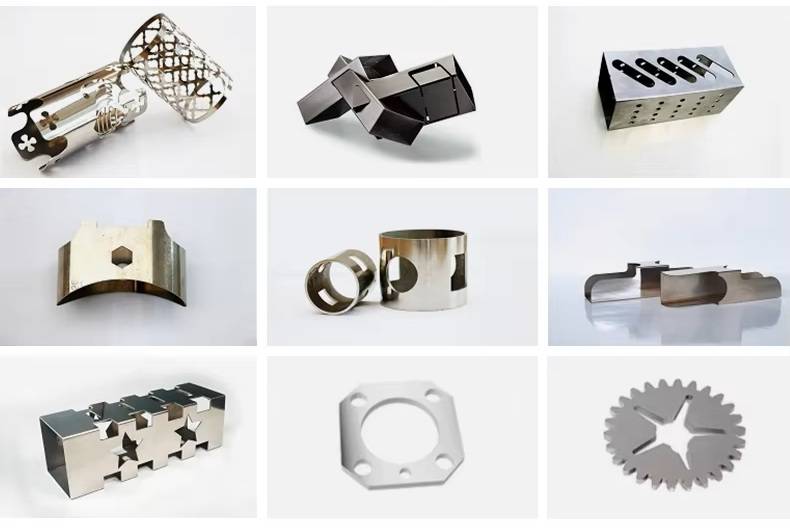
Our CNC Fiber Laser Tube Cutting systems revolutionize metal fabrication by integrating high-precision cutting, punching, and profiling into a single automated workflow. Designed for versatility, this technology handles a wide array of profiles including Round, Square, Rectangular, and Oval tubes, as well as complex L-shaped and U-shaped channels.
- Precision Punching: High-speed hole punching with micron-level accuracy, eliminating the need for mechanical drilling or die-stamping.
- Complex Profiling: Advanced 3D pathing allows for intricate interlocking joints and specialized notch cuts, ideal for structural frames.
- High Material Efficiency: Intelligent nesting software minimizes scrap, reducing raw material costs across large production runs.
- Clean Finish: Delivers oxide-free, burr-free edges that require zero secondary grinding before welding.

Seamlessly processing multiple profiles with consistent precision.
Global Delivery & Logistics



From our high-tech manufacturing facility directly to your global site. PCL WeldCut ensures secure packaging, professional handling, and reliable international logistics to safeguard your equipment throughout the entire journey.