Optimizing H-Beam Fabrication via High-Definition Plasma Integration
In the heavy industry sector, specifically regarding the internal structural components of wind towers, the efficiency of H-beam processing is a primary determinant of total project lead times. Wind tower internals require robust support systems, platforms, and ladder clips that must adhere to stringent geometric tolerances. The transition from manual layout to automated Plasma Cutting accuracy represents a shift toward data-driven manufacturing. High-definition plasma systems, when integrated into a dedicated H-Beam Production Line, provide the necessary thermal energy to penetrate thick-gauge structural steel while maintaining a narrow kerf width.
Industrial engineers must view the H-beam line not merely as a cutting station, but as a synchronized component of the larger tower assembly. The use of plasma technology in this context is selected for its superior speed-to-thickness ratio and its ability to handle the scale of H-beam profiles used in offshore and onshore wind structures. Unlike mechanical sawing or manual oxy-fuel methods, automated plasma systems provide the repeatability required for high-volume fabrication without the geometric drift associated with tool wear.
The Role of Offline Programming in Structural Steel Fabrication
The bottleneck in many H-beam lines is the programming time required for complex cuts, such as penetrations for cabling or structural intersections. Offline programming software (OLP) resolves this by allowing engineers to generate machine code directly from 3D CAD models. This removes the “teach” phase from the shop floor, ensuring the plasma gantry remains in operation rather than sitting idle while an operator manually inputs coordinates.
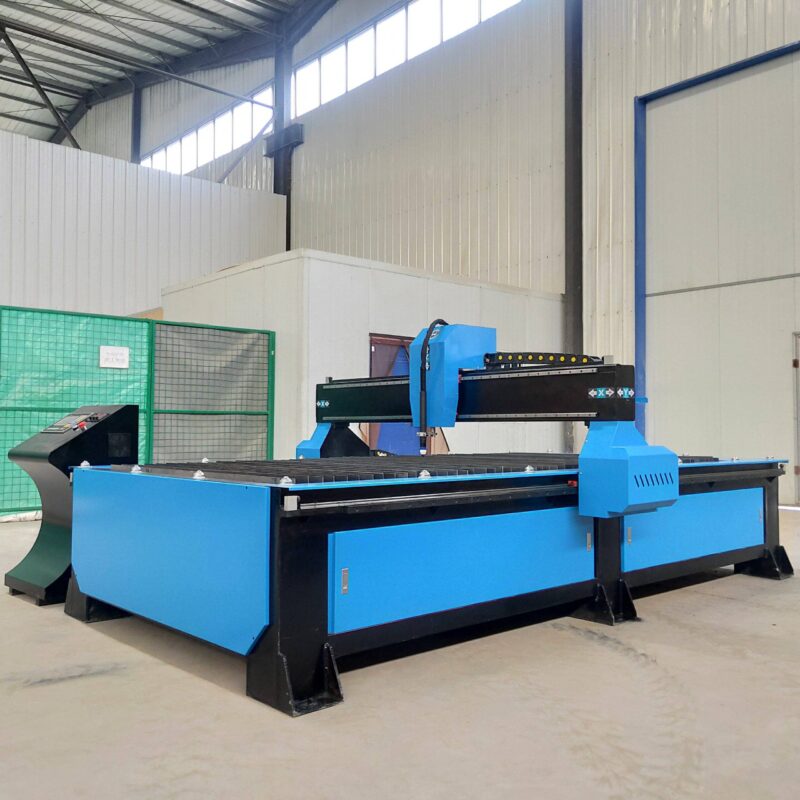
Eliminating Machine Downtime
With OLP, the production line functions in a continuous flow. The software accounts for the specific beam dimensions, including flange thickness variations and web off-centering, which are common in hot-rolled sections. By simulating the cutting path in a virtual environment, the system identifies potential collisions and optimizes the torch path for minimum travel. This proactive approach ensures that the physical H-beam line is dedicated solely to value-added processing.
Geometric Data Integrity
In wind tower fabrication, the internal structural frames must fit perfectly within the circular profile of the tower shells. OLP ensures that the H-beam notches and miter cuts are calculated based on the true geometry of the assembly. This precision minimizes the need for secondary grinding or rework, which are costly and labor-intensive processes in heavy steel environments.
Intersection Accuracy and Joint Preparation
One of the most critical aspects of H-beam production for wind towers is the accuracy of intersections. Where horizontal beams meet vertical supports or the curved interior of the tower shell, the fit-up must be exact to ensure structural integrity. Plasma cutting systems equipped with multi-axis robotic heads allow for the creation of complex “cope” cuts and pipe-to-beam intersections that were previously impossible to automate with high precision.
Volumetric Accuracy in Thermal Cutting
The ability of the plasma arc to maintain its consistency through the flange and into the web is a result of advanced torch height control (THC) and voltage sensing. For H-beams, this means the intersection point is not just a rough cut, but a finished edge that meets the design specifications. High-definition systems utilize a constrained plasma arc, which results in less dross and a smaller heat-affected zone (HAZ), preserving the metallurgical properties of the H-beam.
Automated Beveling for High-Strength Connections
Wind tower components are subjected to immense fatigue loads, necessitating deep penetration or full-penetration welds. Automated beveling is therefore a non-negotiable requirement for a modern H-beam line. Plasma systems with 5-axis or 6-axis capabilities can execute V, Y, X, and K-bevels in a single pass.
Weld Preparation Efficiency
Manual beveling of H-beam flanges is a high-cost activity involving significant ergonomic risks and dust generation. By automating this process within the plasma cutting cell, the bevel angle is maintained consistently over the entire length of the cut. This uniformity is essential for automated welding systems used later in the assembly process, as it ensures a constant gap and land thickness, leading to predictable weld pool behavior and reduced defect rates.
Optimizing the Bevel Path
Modern plasma controllers can adjust the bevel angle dynamically as the torch moves along a radius or a complex curve. For wind tower internals, this allows for the creation of transition zones where the H-beam must interface with curved surface plates. The result is a seamless fit-up that significantly reduces the volume of filler metal required during the joining phase.
Maintaining the H-Beam Production Line for Long-Term Reliability
From an industrial engineering perspective, H-beam low maintenance is a key KPI. Plasma systems are inherently robust for heavy industrial environments. Unlike systems that rely on sensitive optics or complex mirrors, plasma cutting uses electrical arcs and compressed gases, making it better suited for the vibrations and dust levels found in structural steel shops.
Consumable Management
Modern high-definition plasma torches are designed with long-life consumable technology. Features such as “cool shroud” designs and vented nozzle technology extend the life of electrodes and nozzles, even when performing the heavy-duty piercing required for thick H-beam webs. This reduces the frequency of operator intervention and ensures that the cut quality remains stable over long production shifts.
Mechanical Durability
The gantry systems used in H-beam lines are built to withstand the loading and unloading of multi-ton steel sections. The integration of plasma torches onto these rugged platforms ensures that the precision of the cut is not compromised by the harsh operating conditions. By focusing on a “clean” plasma setup with effective fume extraction and slag management, the maintenance requirements are localized to periodic cleaning and standard consumable replacement, maximizing the machine’s Up-Time (OEE).
Streamlining the Material Flow
The H-beam production line must be viewed as a continuous conveyor of material. Integrating the plasma cutting station with automated loading and unloading systems ensures that the high-speed capabilities of the plasma torch are not negated by material handling bottlenecks. When the H-beam enters the cutting zone, the OLP system recognizes the profile through laser scanning or mechanical probing, adjusts the cutting program for any material deviations, and executes the sequence.
This level of automation is essential for the wind energy sector, where the demand for tower components continues to scale. By eliminating the manual layout of H-beams and utilizing the high-speed, high-accuracy capabilities of modern plasma systems, manufacturers can achieve a throughput level that satisfies both quality standards and project timelines. The focus remains on the precision of the intersection and the quality of the bevel, ensuring that the structural backbone of the wind tower is built to last.
-


Cantilever Welding Robot solution
-


GF laser cutting machine
-

P3015 plasma cutting machine
-

LFP3015 Fiber Laser Cutter
-

pipe plasma cutting machine
-
LFH 4020 Fiber Laser Cutting Machine
-
LFP4020
-

gantry plasma air cutting machine
-

3D robot cutting machine
-

8 axis plasma cutting machine
-

5 axis plasma cutting machine
-

LT360 tube laser cutting machine
-

robot welding workstation
-

SF6060 fiber laser cutting machine
Advanced Fiber Laser Tube Processing Technology
Our CNC Fiber Laser Tube Cutting systems revolutionize metal fabrication by integrating high-precision cutting, punching, and profiling into a single automated workflow. Designed for versatility, this technology handles a wide array of profiles including Round, Square, Rectangular, and Oval tubes, as well as complex L-shaped and U-shaped channels.
- Precision Punching: High-speed hole punching with micron-level accuracy, eliminating the need for mechanical drilling or die-stamping.
- Complex Profiling: Advanced 3D pathing allows for intricate interlocking joints and specialized notch cuts, ideal for structural frames.
- High Material Efficiency: Intelligent nesting software minimizes scrap, reducing raw material costs across large production runs.
- Clean Finish: Delivers oxide-free, burr-free edges that require zero secondary grinding before welding.

Seamlessly processing multiple profiles with consistent precision.
Global Delivery & Logistics



From our high-tech manufacturing facility directly to your global site. PCL WeldCut ensures secure packaging, professional handling, and reliable international logistics to safeguard your equipment throughout the entire journey.