Advanced Thermal Processing in LNG Structural Fabrication
Liquefied Natural Gas (LNG) projects demand unprecedented structural integrity due to the extreme cryogenic temperatures and massive load-bearing requirements of modular facilities. The H-Beam Production Line serves as the backbone of these structures. To meet stringent international standards, industrial engineers are increasingly moving away from manual layout processes toward fully automated Plasma Cutting systems driven by offline programming (OLP). This transition is not merely about speed; it is about the geometric precision required for complex intersections and the metallurgical consistency of the structural members.
The Role of Offline Programming in H-Beam Production
Traditional CNC programming often requires the machine to be idle while the operator inputs coordinates or adjusts paths. In large-scale LNG projects, where thousands of unique beam segments are required, this downtime is unacceptable. Offline programming allows engineers to generate cutting paths in a virtual environment using 3D CAD/CAM data. By simulating the 6-axis movement of the plasma torch, OLP software identifies potential collisions and optimizes the cutting sequence before the beam even reaches the conveyor.
This digital twin approach ensures that the H-beam production line maintains a continuous flow. The software accounts for the specific flanges and web dimensions of the H-beam, compensating for mill tolerances that could otherwise lead to inaccurate cuts. For LNG modules, where beam-to-column intersections must be airtight and structurally sound, OLP provides the mathematical certainty required for multi-plane geometries.
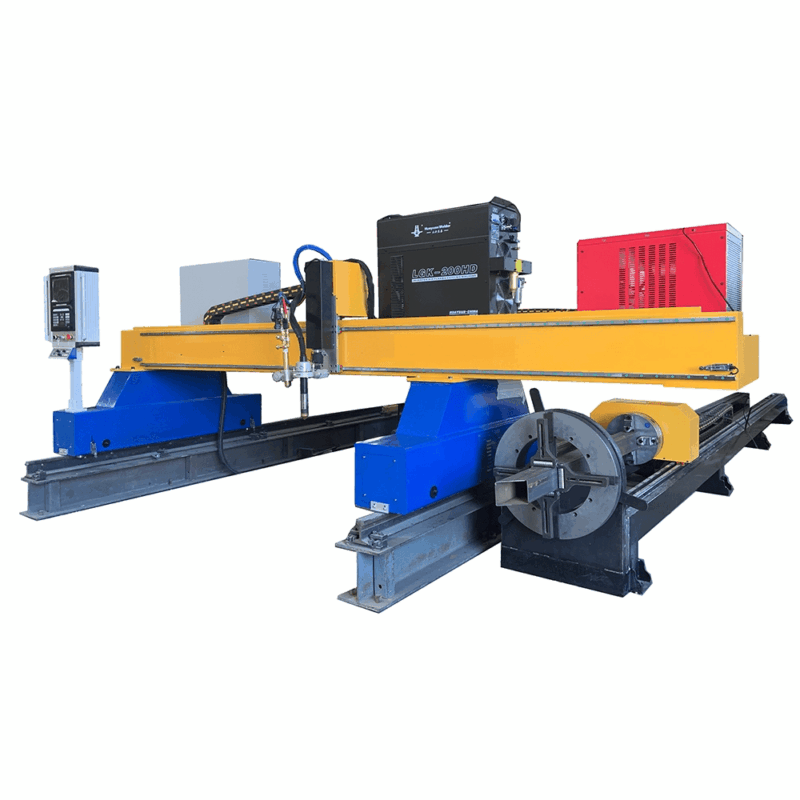
Achieving High-Precision Intersection Accuracy
One of the most significant challenges in H-beam fabrication for energy infrastructure is the precision of intersections. Whether it is a pipe-to-beam saddle cut or a complex miter joint, the fit-up must be nearly perfect to ensure structural stability. High-definition plasma systems, when integrated with robotic arms, provide the dexterity needed to navigate the internal corners of the H-beam profile.
Volumetric Compensation and Path Control
Intersection accuracy is maintained through real-time sensing and volumetric compensation. As the plasma torch moves across the web and transitions to the flange, the OLP-generated path adjusts for the torch’s arc voltage and kerf width. In LNG projects, even a 2mm deviation can lead to significant rework costs. By utilizing offline programming, the system calculates the exact entry and exit points of the plasma stream, ensuring that the “cope” or “notch” in the H-beam matches the mating component with high fidelity.
Thermal Management and Material Integrity
Industrial engineers favor plasma for these intersections because it balances heat input with cutting speed. While excessive heat can distort the grain structure of the steel—a critical concern for cryogenic applications—modern high-oxygen or nitrogen-shielded plasma processes minimize the Heat Affected Zone (HAZ). This ensures that the intersection remains ductile and capable of withstanding the thermal cycling inherent in LNG processing environments.
Optimizing Beveling for Structural Reliability
Beveling is an essential step in preparing H-beams for heavy-duty structural connections. for LNG Projects, “V,” “Y,” and “K” shaped bevels are standard requirements for full-penetration joints. A 6-axis plasma robot can perform these bevels in a single pass, a task that would require multiple setups and manual grinding if performed traditionally.
Multi-Axis Beveling Capabilities
The ability of the plasma head to tilt up to 45 or even 50 degrees allows for the creation of precise chamfers on both the web and the flanges of the H-beam. The OLP software calculates the necessary “twist” of the torch to maintain a consistent bevel angle even as the robot navigates the radius of the beam’s inner fillet. This consistency is vital for automated assembly, as it provides a uniform gap for subsequent processes, ensuring the structural integrity of the LNG module’s skeletal frame.
Surface Quality and Edge Preparation
Advancements in plasma gas technology have resulted in “dross-free” cutting zones. The high-velocity plasma stream ejects molten metal cleanly, leaving an edge that requires minimal post-process cleaning. For an industrial engineer, this reduces the “Total Cycle Time” of each beam. By eliminating the need for secondary grinding of the bevels, the production line achieves a higher throughput rate, directly impacting the project’s bottom line.
Low Maintenance Requirements of Plasma Systems
In the high-stakes environment of LNG infrastructure fabrication, equipment reliability is paramount. Plasma cutting systems are engineered for high duty cycles with relatively low maintenance overhead compared to mechanical cutting or older thermal methods. This reliability is a key factor in maintaining the H-beam production line uptime.
Simplified Consumable Management
Modern plasma torches are designed with “quick-change” consumables. The electrode, nozzle, and swirl ring are the only primary wear parts. Integrated diagnostic systems monitor the wear on these components and alert operators via the OLP interface when a change is required. This predictive maintenance approach prevents catastrophic failures during critical cutting operations and ensures that the quality of the bevel remains consistent over long production runs.
Durability in Industrial Environments
Unlike mechanical saws that require constant blade lubrication and sharpening, or complex optical systems that are sensitive to dust, plasma systems are robust. The gantry and rail systems used in H-beam lines are designed to withstand the vibration and metallic dust typical of a heavy structural shop. The lack of physical contact between the cutting tool and the workpiece also reduces mechanical stress on the robotic arm, leading to longer service intervals and a lower Total Cost of Ownership (TCO).
Key Maintenance Advantages:
1. Reduced mechanical wear due to non-contact cutting technology.
2. Automated torch height control (THC) prevents accidental collisions with the workpiece.
3. Self-diagnostic software integrated with the OLP system for real-time monitoring.
4. Minimal particulate buildup compared to abrasive cutting methods.
Data-Driven Process Optimization
The synergy between plasma cutting hardware and offline programming software enables a data-driven approach to H-beam fabrication. Industrial engineers can track the “arc-on” time, gas consumption, and material utilization rates for every beam destined for the LNG site. This level of transparency is essential for the rigorous documentation and quality assurance protocols required in the energy sector.
Furthermore, the beveling accuracy achieved through this automated setup reduces the volume of filler material required in later stages, as the joints are tighter and more consistent. By focusing on the precision of the cut at the beginning of the fabrication sequence, the entire downstream workflow becomes more efficient, predictable, and cost-effective.
Conclusion
For LNG projects, where structural failure is not an option and timelines are aggressive, the H-beam production line must leverage the most efficient technologies available. The combination of 6-axis robotic plasma cutting and offline programming represents the pinnacle of modern structural engineering. By prioritizing intersection accuracy, mastering complex beveling profiles, and benefiting from the low maintenance requirements of plasma systems, fabricators can deliver the high-quality components necessary for the world’s most demanding energy infrastructure projects. The shift toward this automated, software-centric model is no longer an option but a necessity for remaining competitive in the global industrial landscape.
-
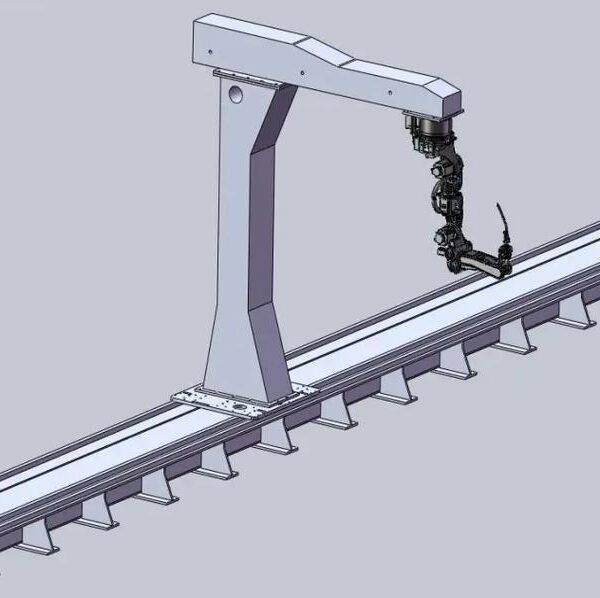

Cantilever Welding Robot solution
-
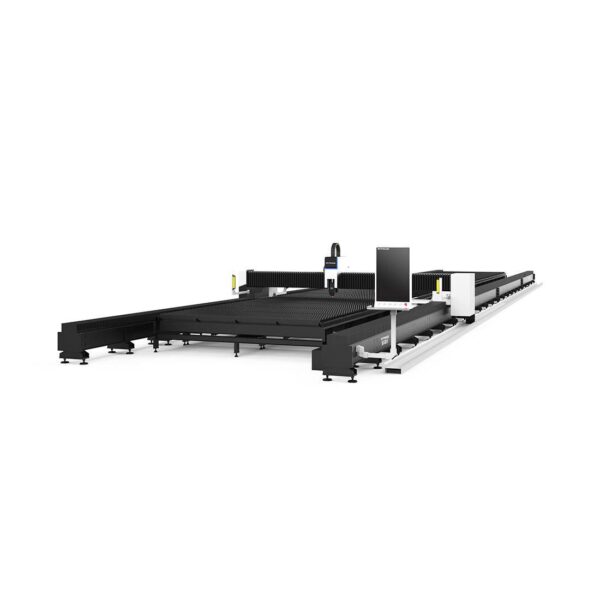

GF laser cutting machine
-
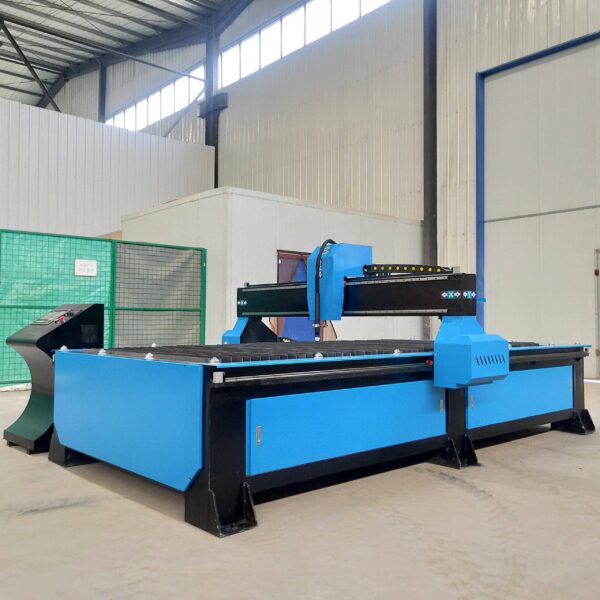
P3015 plasma cutting machine
-

LFP3015 Fiber Laser Cutter
-
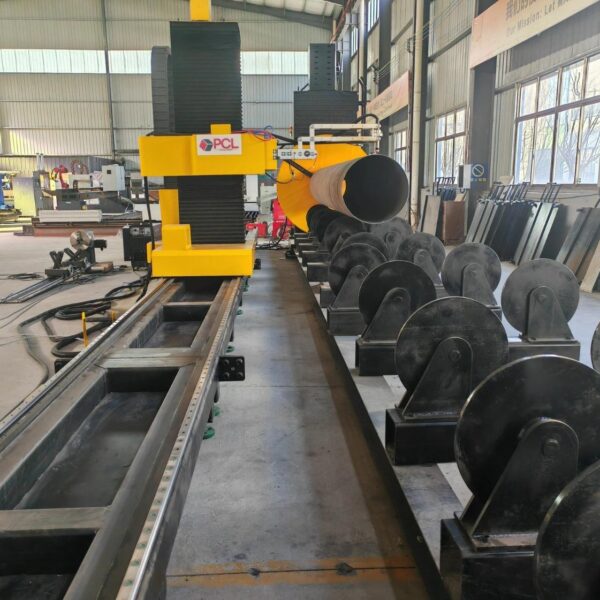
pipe plasma cutting machine
-
LFH 4020 Fiber Laser Cutting Machine
-
LFP4020
-
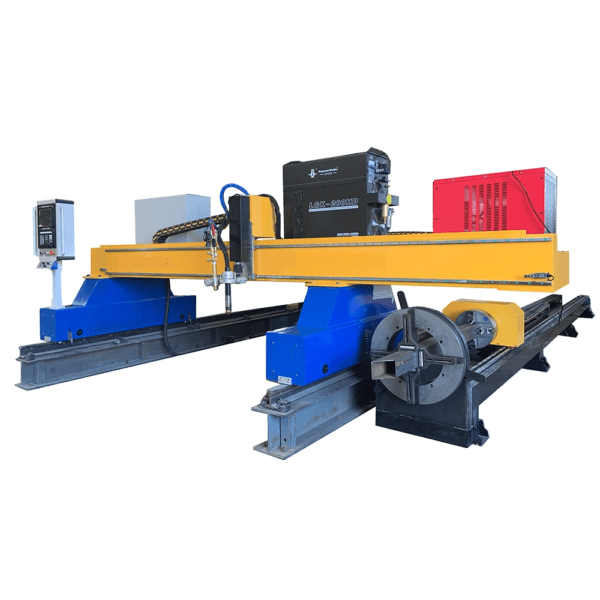
gantry plasma air cutting machine
-
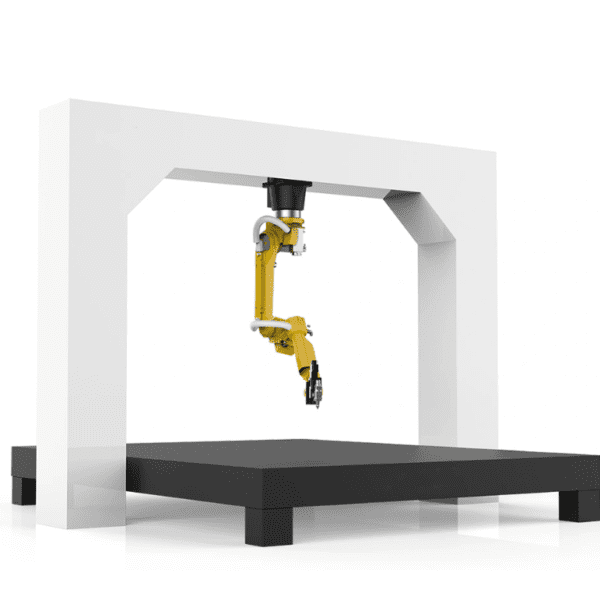
3D robot cutting machine
-
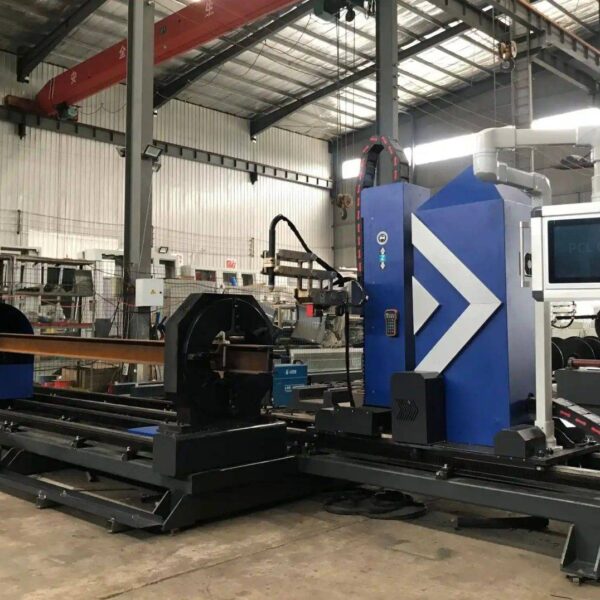
8 axis plasma cutting machine
-
5 axis plasma cutting machine
-

LT360 tube laser cutting machine
-
robot welding workstation
-
SF6060 fiber laser cutting machine
Advanced Fiber Laser Tube Processing Technology
Our CNC Fiber Laser Tube Cutting systems revolutionize metal fabrication by integrating high-precision cutting, punching, and profiling into a single automated workflow. Designed for versatility, this technology handles a wide array of profiles including Round, Square, Rectangular, and Oval tubes, as well as complex L-shaped and U-shaped channels.
- Precision Punching: High-speed hole punching with micron-level accuracy, eliminating the need for mechanical drilling or die-stamping.
- Complex Profiling: Advanced 3D pathing allows for intricate interlocking joints and specialized notch cuts, ideal for structural frames.
- High Material Efficiency: Intelligent nesting software minimizes scrap, reducing raw material costs across large production runs.
- Clean Finish: Delivers oxide-free, burr-free edges that require zero secondary grinding before welding.

Seamlessly processing multiple profiles with consistent precision.
Global Delivery & Logistics



From our high-tech manufacturing facility directly to your global site. PCL WeldCut ensures secure packaging, professional handling, and reliable international logistics to safeguard your equipment throughout the entire journey.