Optimizing H-Beam Fabrication for Maritime Structural Integrity
In the specialized field of shipbuilding, the structural framework relies heavily on the precision of H-beam assemblies. The transition toward Narrow Gap Welding (NGW) has redefined the prerequisite standards for edge preparation and sectional fitting. As industrial engineers seek to maximize throughput while minimizing material waste, the role of the Plasma Cutting station becomes the pivot point for the entire production line. Unlike traditional fabrication methods, NGW requires a significantly reduced groove angle—often between 3 to 7 degrees—to decrease the volume of filler metal and the total heat input into the hull’s skeleton. Achieving this requires a level of mechanical accuracy that only advanced CNC-controlled plasma systems can provide at scale.
The engineering challenge lies in the sheer scale of maritime components. Shipbuilding H-beams are frequently subjected to immense dynamic loads, necessitating deep penetration welds that are free from slag inclusion or geometric irregularities. By implementing high-definition Plasma Cutting at the start of the line, manufacturers can ensure that every web and flange intersection is prepped to sub-millimeter tolerances, facilitating the subsequent automated welding processes that characterize modern shipyard operations.
Achieving Superior Intersection Accuracy in Heavy Sections
The geometry of an H-beam—comprising a central web fused between two parallel flanges—demands rigorous Intersection Accuracy. In a narrow gap configuration, the tolerance for the root opening is extremely tight. If the web height varies or the flange contact surface is uneven, the NGW process risks burn-through or lack of fusion. High-definition plasma systems utilize multi-axis robotic heads that compensate for the natural mechanical deviations found in hot-rolled steel profiles.
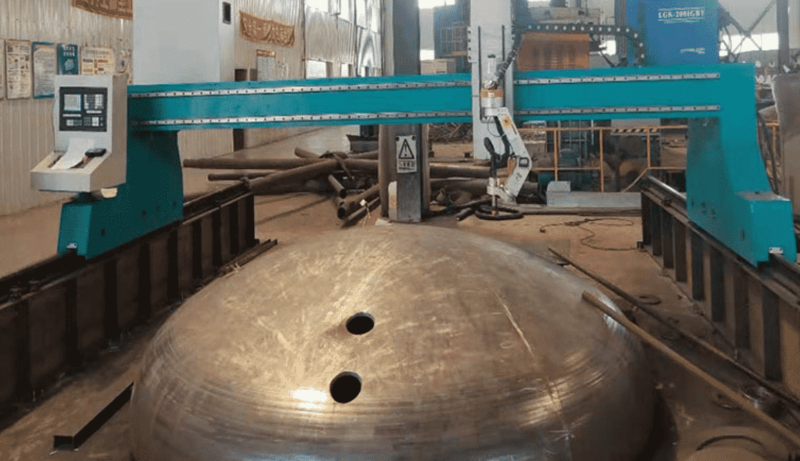
Industrial engineers prioritize the integration of laser-based probing or mechanical tactile sensors at the plasma station. These sensors map the actual dimensions of the incoming beam in real-time. The CNC software then adjusts the cutting path to compensate for camber, sweep, or flange tilt. This ensures that when the web is positioned for the narrow gap joint, the fit-up is seamless. High intersection accuracy also reduces the need for manual grinding or “fitting” on the assembly floor, directly lowering the man-hours per ton of steel processed.
Advanced Beveling Strategies for Narrow Gap Preparation
Narrow gap welding is predicated on the ability to weld thick plates with a minimum of passes. To achieve this, the plasma torch must perform complex 3D beveling. Modern 5-axis plasma heads allow for the creation of V, Y, K, and J-grooves with extreme consistency. In the context of H-beams for ships, the plasma system must execute these bevels along the entire length of the web-to-flange interface.
The beveling profile is not merely a matter of angle; it is a matter of surface finish and kerf control. High-definition plasma units use constricted arcs and specialized gas mixtures (such as Oxygen or H35) to produce a narrow heat-affected zone (HAZ). This is critical for NGW because a large HAZ can alter the metallurgy of the narrow joint, potentially leading to stress corrosion cracking or reduced fatigue life in the harsh saline environments where these ships operate. By maintaining a clean, dross-free bevel, the plasma line ensures that the subsequent welding arc remains stable within the narrow confines of the groove.
Engineering for Low Maintenance and High Duty Cycles
A primary metric for any industrial engineer is the Total Cost of Ownership (TCO). In high-volume H-beam production, downtime is the single greatest threat to profitability. Therefore, the selection of H-beam Low Maintenance plasma components is a strategic necessity. Modern plasma power supplies are engineered with modular internal components, allowing for rapid diagnostics and replacement. Furthermore, the evolution of consumable technology—nozzles, electrodes, and swirl rings—has significantly extended the operational life between changeouts.
To maintain a low-maintenance profile, integrated dust extraction and filtration systems are essential. Plasma cutting generates fine metallic particulates and ozone. A well-designed H-beam line incorporates a water table or a high-vacuum downdraft system that protects the precision motion components (linear guides and rack-and-pinion drives) from abrasive dust. By isolating the mechanical drive systems and utilizing pressurized cabinets for electronics, the production line can operate in the heavy-duty environment of a shipyard without frequent failures or the need for constant recalibration.
Kerf Compensation and CNC Synchronization
Precision in plasma cutting is a function of kerf width management. As the plasma electrode wears, the width of the cut (the kerf) changes slightly. Advanced CNC systems used in H-Beam Production Lines feature automatic kerf compensation. The software tracks the number of pierces and the total inches cut, automatically adjusting the torch offset to maintain the required dimensions. This level of automation is vital for narrow gap preparation, where even a 0.5mm deviation can disrupt the automated welding parameters.
Furthermore, the synchronization between the beam-handling conveyor and the cutting head must be absolute. Using absolute encoders and high-torque servo motors, the system ensures that the longitudinal position of the bevel remains consistent. In shipbuilding, where H-beams can exceed 15 meters in length, maintaining this level of precision across the entire span is what separates industrial-grade plasma lines from general fabrication tools.
Thermal Management and Stress Mitigation
While plasma is a thermal process, the speed at which it operates provides a significant advantage in stress management. By cutting at higher speeds compared to oxy-fuel, the total heat input per linear inch is reduced. This minimizes the risk of warping the flanges or inducing longitudinal stress in the web. For narrow gap welding, where the joint geometry is sensitive to even minor thermal movement, this localized heat control is indispensable. Industrial engineers often specify specific cutting sequences—starting from the center and moving outward—to further balance the thermal load and preserve the structural integrity of the H-beam profile.
Conclusion: The Synergy of Precision and Productivity
The integration of high-definition plasma cutting into the H-beam production cycle represents a fundamental shift in shipbuilding efficiency. By focusing on intersection accuracy and the specific requirements of narrow gap welding, shipyards can produce structural sections that are both stronger and lighter. The move toward low-maintenance, CNC-driven plasma systems reduces the reliance on highly skilled manual labor and ensures a level of repeatability that is essential for modern maritime certification. As the industry continues to evolve, the precision established at the plasma cutting stage will remain the foundation of high-quality, high-throughput ship construction.
-


LT240S tube laser cutting machine
-
LT120S tube laser cutting machine
-
Sale

Tank Fillet Welding Machine
Original price was: $1,000.00.$900.00Current price is: $900.00. -
Sale

MAK100 tube laser cutting machine
Original price was: $5,500.00.$5,000.00Current price is: $5,000.00. -

portable plasma air cutting machine
$1,200.00 -

2in1 fiber laser cutting machine
-

Air cooling Laser welding machine
-

HF h beam laser cutting machine
-

LT240 laser cutting machine
-

Laser welding machine
-


Cobot Welding Station
-

Gantry welding robot solution
-

Tracked Wheeled AGV Welding robot
-

LFH6020 Fiber laser cutting machine
-
LFP6020
-

robotic welidng machine
Advanced Fiber Laser Tube Processing Technology
Our CNC Fiber Laser Tube Cutting systems revolutionize metal fabrication by integrating high-precision cutting, punching, and profiling into a single automated workflow. Designed for versatility, this technology handles a wide array of profiles including Round, Square, Rectangular, and Oval tubes, as well as complex L-shaped and U-shaped channels.
- Precision Punching: High-speed hole punching with micron-level accuracy, eliminating the need for mechanical drilling or die-stamping.
- Complex Profiling: Advanced 3D pathing allows for intricate interlocking joints and specialized notch cuts, ideal for structural frames.
- High Material Efficiency: Intelligent nesting software minimizes scrap, reducing raw material costs across large production runs.
- Clean Finish: Delivers oxide-free, burr-free edges that require zero secondary grinding before welding.

Seamlessly processing multiple profiles with consistent precision.
Global Delivery & Logistics



From our high-tech manufacturing facility directly to your global site. PCL WeldCut ensures secure packaging, professional handling, and reliable international logistics to safeguard your equipment throughout the entire journey.
One thought on “H-Beam Production Line with Narrow Gap welding for for Shipbuilding”
The customer support for the Fiber Laser was very helpful during installation.