Optimization of H-Beam Production via Plasma Arc Voltage Control
In the domain of heavy steel fabrication, the H-beam serves as the primary load-bearing element. Achieving dimensional precision during the cutting phase is critical for the structural integrity of the entire assembly. The implementation of Arc Voltage Height Control within a Plasma Cutting production line addresses the inherent challenges of processing large-scale structural sections. Unlike flat plate processing, H-beams often exhibit slight deviations in flange parallelism and web flatness due to the cooling cycles of the rolling process. Automated plasma systems equipped with height sensors compensate for these variances in real-time, maintaining a constant distance between the nozzle and the workpiece.
The Mechanics of Arc Voltage Control in Structural Cutting
The fundamental principle of Arc Voltage Control (AVC) relies on the linear relationship between the arc length and the voltage across the plasma arc. As the distance between the plasma torch and the H-beam surface increases, the voltage rises; conversely, as the distance decreases, the voltage drops. The CNC controller monitors these fluctuations at millisecond intervals, sending corrective signals to the Z-axis lifter station.
For an industrial engineer, this precision translates to a stabilized kerf width. Without AVC, the torch might dip into the workpiece or move too far away, leading to excessive dross formation or incomplete penetration. In an H-Beam Production Line, where the torch must transition between the web and the flanges, the ability to maintain thermal cutting precision is the difference between a high-quality joint and a rejected component.
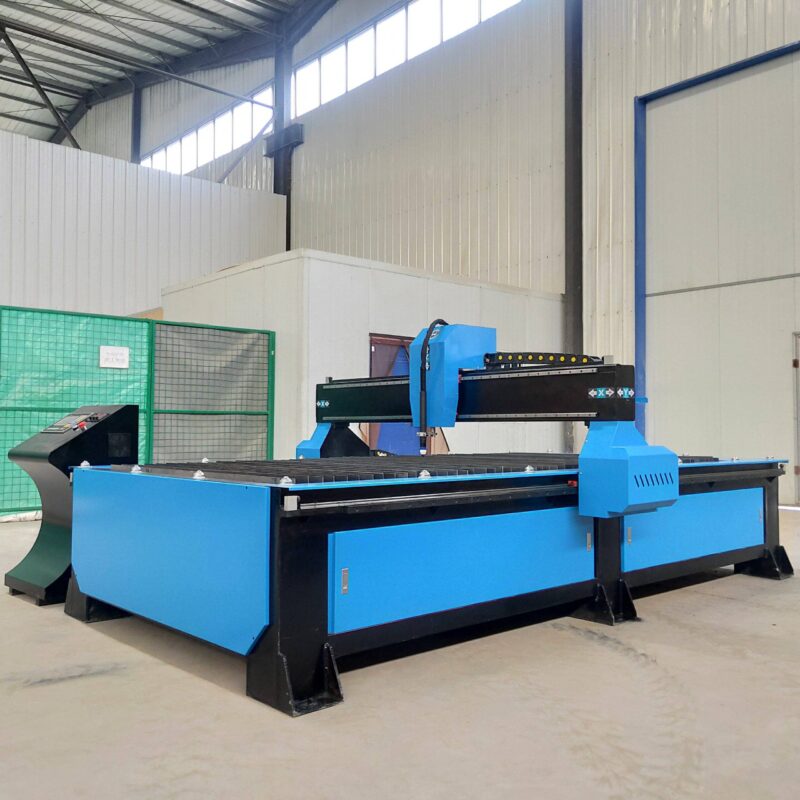
Achieving Superior Intersection Accuracy
Complex steel structures require H-beams to be joined at various angles, requiring precise coping, notches, and bolt hole clusters. Intersection accuracy is paramount when beams must interlock or support secondary members. Plasma cutting systems utilize multi-axis robotic arms or specialized gantry configurations to navigate the three-dimensional profile of the beam.
The accuracy of these intersections is heavily dependent on the synchronization between the mechanical motion of the machine and the plasma arc’s stability. By utilizing high-definition plasma power sources, the production line can execute radius cuts and “rat holes” (weld access holes) with tolerances that meet AISC (American Institute of Steel Construction) standards. This eliminates the need for manual grinding and secondary fit-up adjustments, significantly reducing the labor hours per ton of steel processed.
Advanced Multi-Axis Plasma Beveling
One of the most significant advantages of modern plasma systems in an H-beam line is the capability for multi-axis plasma beveling. Weld preparation requires the edges of the beam flanges and webs to be beveled to specific angles (V, Y, or X profiles) to ensure full penetration welds during the assembly phase.
Traditional mechanical beveling or manual oxy-fuel cutting is slow and prone to inconsistency. A CNC-controlled plasma bevel head can rotate and tilt while the beam moves through the cutting zone, or while the gantry traverses the beam’s length. The arc voltage control remains active during these maneuvers, ensuring that even as the torch tilts to a 45-degree angle, the distance to the material is calculated and adjusted for the hypotenuse of the angle. This results in a clean, weld-ready surface that requires zero post-process cleaning.
Low Maintenance Requirements for H-Beam Lines
From an operational efficiency standpoint, the maintenance profile of a plasma cutting line is a key performance indicator. Plasma systems are designed for high-duty cycles in harsh industrial environments. Unlike other cutting technologies that may be sensitive to dust, vibration, or ambient temperature fluctuations, plasma hardware is inherently robust.
Consumable Longevity and System Durability
Modern plasma torches feature liquid-cooling systems that extend the life of electrodes and nozzles, even when operating at high amperages for thick-walled H-beams. The absence of complex optical components means the system is less susceptible to the vibrations typically found in heavy fabrication shops. Furthermore, the integration of self-diagnostics in the power supply allows maintenance teams to predict consumable failure before it affects cut quality.
The mechanical drive systems—typically helical rack and pinion sets—are protected by bellows or shielding to prevent the ingress of metal dust and slag. This focus on H-beam structural integrity and equipment uptime ensures that the production line can maintain a consistent throughput of tons per shift without frequent calibration intervals.
Workflow Integration and Data-Driven Manufacturing
The H-beam production line is not merely a collection of hardware; it is a data-driven ecosystem. Standardized DSTV files generated by structural BIM (Building Information Modeling) software are fed directly into the plasma line’s controller. The software automatically calculates the optimal nesting and cutting sequence to minimize scrap and maximize torch-on time.
As the H-beam moves through the measuring conveyor, the plasma system identifies the leading edge and begins the cutting program. The AVC ensures that any “camber” or “sweep” (natural bowing in the beam) does not result in a collision or a lost cut. This level of automation allows a single operator to oversee multiple stages of the fabrication process, shifting the focus from manual labor to quality assurance and logistics management.
Conclusion on Industrial Efficiency
For the industrial engineer, the goal of an H-beam production line is to maximize output while minimizing the cost per cut. By prioritizing plasma systems with integrated arc voltage control, facilities achieve a level of intersection accuracy and beveling quality that was previously unattainable with manual methods. The combination of low maintenance requirements and the ability to handle the geometric irregularities of structural steel makes plasma the industry standard for high-volume H-beam processing. Investing in these automated cutting solutions ensures that the final steel structures are delivered on time, within tolerance, and with the structural reliability required for modern infrastructure.
-


Cantilever Welding Robot solution
-


GF laser cutting machine
-

P3015 plasma cutting machine
-

LFP3015 Fiber Laser Cutter
-

pipe plasma cutting machine
-
LFH 4020 Fiber Laser Cutting Machine
-
LFP4020
-

gantry plasma air cutting machine
-

3D robot cutting machine
-

8 axis plasma cutting machine
-

5 axis plasma cutting machine
-

LT360 tube laser cutting machine
-

robot welding workstation
-

SF6060 fiber laser cutting machine
Advanced Fiber Laser Tube Processing Technology
Our CNC Fiber Laser Tube Cutting systems revolutionize metal fabrication by integrating high-precision cutting, punching, and profiling into a single automated workflow. Designed for versatility, this technology handles a wide array of profiles including Round, Square, Rectangular, and Oval tubes, as well as complex L-shaped and U-shaped channels.
- Precision Punching: High-speed hole punching with micron-level accuracy, eliminating the need for mechanical drilling or die-stamping.
- Complex Profiling: Advanced 3D pathing allows for intricate interlocking joints and specialized notch cuts, ideal for structural frames.
- High Material Efficiency: Intelligent nesting software minimizes scrap, reducing raw material costs across large production runs.
- Clean Finish: Delivers oxide-free, burr-free edges that require zero secondary grinding before welding.

Seamlessly processing multiple profiles with consistent precision.
Global Delivery & Logistics



From our high-tech manufacturing facility directly to your global site. PCL WeldCut ensures secure packaging, professional handling, and reliable international logistics to safeguard your equipment throughout the entire journey.