Optimizing H-Beam Fabrication via Plasma Arc Voltage Control
In the maritime construction industry, the structural integrity of a vessel relies heavily on the precision of its skeletal framework. The H-beam remains a fundamental component, providing the necessary section modulus to withstand cyclic loading and hydrostatic pressure. Unlike standard construction, shipbuilding requires extreme precision in the preparation of these beams. The introduction of Arc Voltage Control (AVC) in Plasma Cutting lines has revolutionized how shipyards process large-scale structural steel.
AVC technology functions as a real-time height sensing mechanism. As the plasma torch moves across the surface of an H-beam, it monitors the electrical potential between the electrode and the workpiece. In an industrial environment, H-beams are rarely perfectly flat; they often possess slight bows, twists, or surface irregularities resulting from the rolling process. Without a responsive height control system, the distance between the torch nozzle and the steel would vary, leading to kerf width inconsistency and potential torch collisions. By maintaining a constant voltage, the system ensures a consistent stand-off distance, which is the foundational requirement for high-quality thermal cutting.
The Mechanics of Intersection Accuracy in Heavy Profiles
One of the most significant challenges in H-beam processing for Shipbuilding is the execution of complex intersections. Ship designs frequently require H-beams to be notched, slotted, or cut at oblique angles to allow for the passage of longitudinal stiffeners or to facilitate bulkhead fit-ups. Achieving intersection accuracy in these areas is critical because any gap exceeding specified tolerances requires manual rework or excessive filler material during subsequent assembly stages.
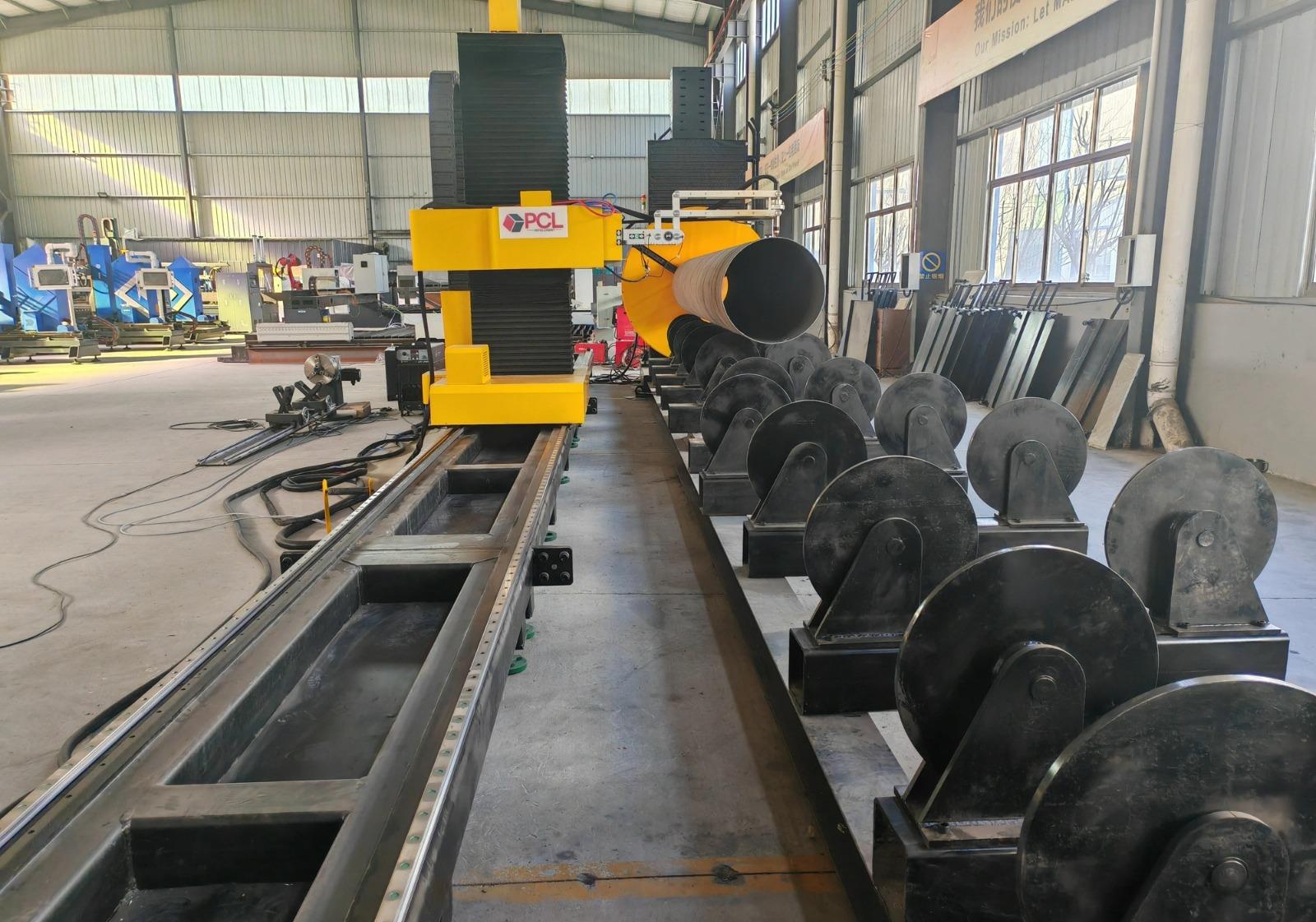
Plasma cutting systems equipped with multi-axis robotic arms or specialized gantry rotators utilize AVC to navigate the transition between the web and the flanges of the H-beam. The “dead zone” or the radius where the web meets the flange is historically difficult to cut cleanly. However, advanced plasma lines use localized coordinate sensing and AVC to adjust the arc parameters instantaneously as the torch moves through different material thicknesses and orientations. This ensures that the cut path remains true to the CAD/CAM model, producing clean, sharp corners and precise apertures that allow for “drop-in” fitment of secondary structural members.
Advanced H-Beam Beveling for Maritime Standards
Shipbuilding protocols demand high-penetration joints, which necessitates sophisticated H-beam beveling. Plasma technology excels in this area due to its ability to perform high-speed, multi-angle cuts on thick-walled sections. Beveling on H-beams isn’t limited to simple 45-degree chamfers; it often involves variable angle transitions and “Y” or “X” preparations on both the flanges and the web.
The integration of AVC is particularly vital during the beveling process. When a plasma torch is tilted to create a bevel, the physical distance between the center of the arc and the plate surface changes relative to the vertical axis. Sophisticated control software compensates for this geometric shift, using the arc voltage feedback to maintain the focal point of the plasma stream at the correct depth within the material. This precision eliminates the “dross” or slag buildup that typically occurs when the stand-off distance fluctuates, resulting in a weld-ready surface that requires minimal grinding.
Low Maintenance Requirements and Operational Uptime
From an industrial engineering perspective, the total cost of ownership (TCO) is a primary KPI for any production line. Plasma cutting systems are engineered for high-duty cycles in harsh shipyard environments. One of the key advantages of a plasma-based line is that it offers low maintenance compared to alternative thermal cutting processes.
The mechanical simplicity of a plasma torch, which lacks complex internal optics or sensitive alignment components, makes it resilient to the vibrations and dust typical of heavy fabrication shops. Modern plasma power sources are modular, allowing for rapid replacement of consumables like electrodes and nozzles. Furthermore, the AVC system itself reduces maintenance by preventing “torch crashes.” By sensing the material’s proximity through electrical feedback rather than physical contact, the system avoids collisions with tipped parts or warped plates, significantly extending the lifespan of the torch body and reducing unplanned downtime.
Thermal Distortion Management and Material Efficiency
Plasma cutting, while a thermal process, utilizes a highly concentrated energy stream that allows for high travel speeds. In shipbuilding, where beams can exceed 12 meters in length, managing thermal distortion is essential. Faster cutting speeds mean a smaller Heat Affected Zone (HAZ), which preserves the metallurgical properties of the high-tensile steel used in maritime applications.
The precision provided by AVC-enabled plasma lines also contributes to better nesting and material utilization. When the system can guarantee accuracy within fractions of a millimeter, designers can nest parts more tightly. This reduces scrap rates, which is a significant cost factor when dealing with specialized marine-grade alloys. The ability to perform “common cut” profiles where one cut path serves the edges of two separate parts is only possible when the arc voltage is stabilized to prevent deviations in the kerf.
Data Integration and Digital Twin Compatibility
Modern H-Beam Production Lines are no longer standalone mechanical units; they are nodes in a digital manufacturing ecosystem. The data generated by the AVC system—such as voltage fluctuations, cutting speeds, and consumable wear rates—can be fed back into a centralized Management Information System (MIS).
For shipbuilders, this provides a transparent view of the fabrication progress. If a specific H-beam profile shows consistent voltage deviations, the system can alert engineers to potential upstream issues in the steel rolling or storage process. This level of data-driven insight ensures that the cutting line is not just a tool for shaping steel, but a diagnostic component that maintains the quality standards required for ocean-going vessels. The synergy between robust mechanical design and intelligent arc control defines the modern standard for H-beam processing in the global shipbuilding industry.
-


Cantilever Welding Robot solution
-


GF laser cutting machine
-

P3015 plasma cutting machine
-

LFP3015 Fiber Laser Cutter
-

pipe plasma cutting machine
-
LFH 4020 Fiber Laser Cutting Machine
-
LFP4020
-

gantry plasma air cutting machine
-

3D robot cutting machine
-

8 axis plasma cutting machine
-

5 axis plasma cutting machine
-

LT360 tube laser cutting machine
-

robot welding workstation
-

SF6060 fiber laser cutting machine
Advanced Fiber Laser Tube Processing Technology
Our CNC Fiber Laser Tube Cutting systems revolutionize metal fabrication by integrating high-precision cutting, punching, and profiling into a single automated workflow. Designed for versatility, this technology handles a wide array of profiles including Round, Square, Rectangular, and Oval tubes, as well as complex L-shaped and U-shaped channels.
- Precision Punching: High-speed hole punching with micron-level accuracy, eliminating the need for mechanical drilling or die-stamping.
- Complex Profiling: Advanced 3D pathing allows for intricate interlocking joints and specialized notch cuts, ideal for structural frames.
- High Material Efficiency: Intelligent nesting software minimizes scrap, reducing raw material costs across large production runs.
- Clean Finish: Delivers oxide-free, burr-free edges that require zero secondary grinding before welding.

Seamlessly processing multiple profiles with consistent precision.
Global Delivery & Logistics



From our high-tech manufacturing facility directly to your global site. PCL WeldCut ensures secure packaging, professional handling, and reliable international logistics to safeguard your equipment throughout the entire journey.