Precision Engineering in H-Beam Production for Pressure Vessel Skids
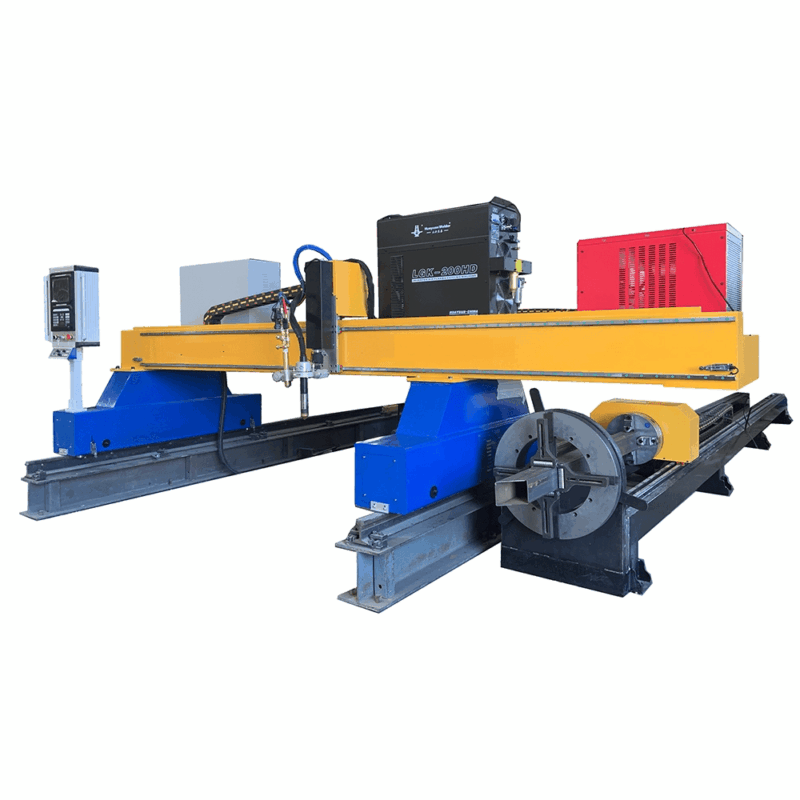
In the fabrication of pressure vessels, the structural integrity of the supporting skid or frame is as critical as the vessel itself. These frames typically utilize heavy-duty H-beams that must withstand significant static and dynamic loads. An automated H-Beam Production Line designed for this sector must prioritize dimensional accuracy and metallurgical consistency. The transition from manual layout and mechanical sawing to integrated Plasma Cutting systems has redefined the throughput capabilities of modern fabrication shops. By utilizing Arc Voltage Control (AVC), engineers can ensure that the plasma torch maintains an optimal distance from the workpiece, regardless of material warping or flange irregularities.
The Mechanics of Arc Voltage Control in Plasma Systems
Arc Voltage Control is a closed-loop feedback mechanism essential for high-precision plasma cutting. In the context of H-beam processing, the distance between the plasma electrode and the steel surface—commonly referred to as the torch-to-work distance—directly dictates the kerf width and the angularity of the cut. As the plasma arc is established, the system measures the voltage between the torch head and the beam. Because the voltage is proportional to the length of the arc, the AVC system can instantaneously adjust the Z-axis position to maintain a constant voltage setpoint.
For pressure vessel supports, where H-beams may exhibit slight mill tolerances or thermal bowing, AVC prevents torch collisions and ensures that the plasma stream remains at its most concentrated focal point. This level of automation eliminates the need for manual height adjustments, allowing the production line to maintain consistent intersection accuracy across long production runs.
Enhancing Intersection Accuracy for Complex Geometries
Pressure vessel skids often require H-beams to be notched, coped, or intersected by piping and reinforcement members. Achieving high intersection accuracy in these scenarios is a matter of multi-axis kinematic synchronization. When an H-beam must receive a cylindrical vessel or a secondary structural pipe, the cut profile is rarely a simple straight line. It is a complex 3D saddle or fish-mouth geometry that must be executed across both the web and the flanges of the beam.
The integration of a multi-axis plasma robotic head within the production line allows for the interpolation of X, Y, Z, and rotational axes. By feeding CNC data directly from 3D modeling software, the plasma torch can follow the exact mathematical intersection of the beam and the vessel component. This precision ensures that when the components move to the assembly stage, the fit-up is tight, reducing the volume of filler metal required and minimizing the risk of structural misalignment under high pressure.
Advanced Beveling for High-Pressure Structural Integrity
Structural components for Pressure Vessels are subject to rigorous non-destructive testing (NDT). Therefore, the preparation of the joints is paramount. Plasma cutting systems on H-beam lines are now equipped with tilting torches capable of executing complex beveling maneuvers. Whether the design calls for a V-bevel, Y-bevel, or K-bevel, the ability to cut the profile and the bevel in a single pass is a significant efficiency gain.
The AVC system plays a vital role during beveling. As the torch tilts to an angle, the effective distance to the metal changes. Advanced software algorithms compensate for this geometric shift, maintaining the arc length to prevent “rounding” of the top edge or excessive dross at the bottom of the cut. This results in a clean, weld-ready surface that meets the stringent requirements of ASME or ISO standards for pressure-containing systems. High-quality beveling ensures deep penetration and a uniform heat-affected zone (HAZ), which are critical for the longevity of the skid under cyclic loading.
Engineering for Low Maintenance and High Duty Cycles
From an industrial engineering perspective, the Total Cost of Ownership (TCO) is heavily influenced by the maintenance requirements of the production line. Traditional mechanical cutting tools involve blades, coolants, and frequent sharpening cycles. In contrast, a plasma-based H-beam production line is engineered for low maintenance and high uptime.
Modern plasma systems utilize “long-life” consumable technology, which optimizes the flow of swirl gas and cooling air to extend the lifespan of the nozzle and electrode. Furthermore, the absence of physical contact between the cutting tool and the workpiece reduces the mechanical stress on the gantry and drive systems. To further ensure low maintenance, these lines often feature heavy-duty rack-and-pinion drives with bellows-protected guideways to keep metallic dust and slag away from sensitive bearings. Automated slag extraction systems and high-efficiency dust collectors are integrated to maintain a clean working environment, further protecting the electronic components of the AVC system.
Thermal Management and Material Distortion Control
One challenge in plasma cutting H-beams is the management of thermal input. Excessive heat can lead to localized hardening or structural distortion. By utilizing high-definition plasma power sources and optimized travel speeds, the heat-affected zone is kept to a minimum. The speed of the plasma process, combined with the precision of the Arc Voltage Control, ensures that the energy is concentrated specifically on the kerf. This rapid processing prevents the heat from soaking into the surrounding flanges, thereby preserving the structural properties of the beam as specified in the original mill certification.
Workflow Integration and Data-Driven Manufacturing
The modern H-beam line functions as a node within a larger digital ecosystem. Material handling conveyors feed the beams into the cutting cell, where laser sensors first probe the dimensions to identify any deviations from the nominal CAD model. The software then nests the required parts—notches, holes, and bevels—to maximize material utilization. Throughout the cutting process, the system logs performance data, including arc-on time and consumable wear rates. This data-driven approach allows for predictive maintenance, ensuring that the line only stops for scheduled intervals rather than unexpected failures.
Conclusion: Optimization of the Fabrication Cycle
The implementation of an automated H-beam production line with Arc Voltage Control represents a strategic investment for manufacturers of pressure vessel infrastructure. By focusing on the precision of plasma cutting, companies can achieve superior intersection accuracy and high-quality beveling that manual processes cannot replicate. The shift towards non-contact, automated cutting not only enhances the quality of the final product but also ensures a low maintenance cycle that supports 24/7 production demands. As global standards for pressure vessel safety and reliability continue to tighten, the role of high-precision structural preparation becomes an indispensable component of the industrial engineering workflow.
-


Cantilever Welding Robot solution
-


GF laser cutting machine
-

P3015 plasma cutting machine
-

LFP3015 Fiber Laser Cutter
-

pipe plasma cutting machine
-
LFH 4020 Fiber Laser Cutting Machine
-
LFP4020
-

gantry plasma air cutting machine
-

3D robot cutting machine
-

8 axis plasma cutting machine
-

5 axis plasma cutting machine
-

LT360 tube laser cutting machine
-

robot welding workstation
-

SF6060 fiber laser cutting machine
Advanced Fiber Laser Tube Processing Technology
Our CNC Fiber Laser Tube Cutting systems revolutionize metal fabrication by integrating high-precision cutting, punching, and profiling into a single automated workflow. Designed for versatility, this technology handles a wide array of profiles including Round, Square, Rectangular, and Oval tubes, as well as complex L-shaped and U-shaped channels.
- Precision Punching: High-speed hole punching with micron-level accuracy, eliminating the need for mechanical drilling or die-stamping.
- Complex Profiling: Advanced 3D pathing allows for intricate interlocking joints and specialized notch cuts, ideal for structural frames.
- High Material Efficiency: Intelligent nesting software minimizes scrap, reducing raw material costs across large production runs.
- Clean Finish: Delivers oxide-free, burr-free edges that require zero secondary grinding before welding.

Seamlessly processing multiple profiles with consistent precision.
Global Delivery & Logistics



From our high-tech manufacturing facility directly to your global site. PCL WeldCut ensures secure packaging, professional handling, and reliable international logistics to safeguard your equipment throughout the entire journey.