Optimizing H-Beam Fabrication via Automated Plasma Systems
The manufacturing of heavy construction machinery, ranging from crawler crane booms to excavator chassis, demands structural components with high load-bearing capacities. H-beams serve as the primary structural element in these assemblies. Transitioning from manual layout and traditional oxy-fuel cutting to automated Plasma Cutting lines represents a significant shift in production efficiency. The core of this transition lies in the integration of Arc Voltage Control systems, which ensure that the plasma torch maintains a constant distance from the workpiece, regardless of material warping or surface irregularities.
In the context of industrial engineering, the objective is to eliminate bottleneck stages in the fabrication shop. A plasma-based H-beam line addresses this by combining high-speed thermal cutting with multi-axis robotic movement. This setup allows for complex geometry execution, including holes, notches, and longitudinal splits, without removing the beam from the conveyor system. The result is a streamlined workflow that prioritizes throughput and dimensional repeatability.
The Role of Arc Voltage Control in Thermal Cutting
Arc Voltage Control (AVC) is the foundational technology for precision in plasma cutting. During the cutting process, the voltage between the plasma torch electrode and the metal workpiece is directly proportional to the distance of the arc gap. If the distance increases, the voltage rises; if the distance decreases, the voltage drops. In an automated H-Beam Production Line, the AVC system continuously monitors this voltage at millisecond intervals and adjusts the Z-axis motor to maintain a preset target voltage.
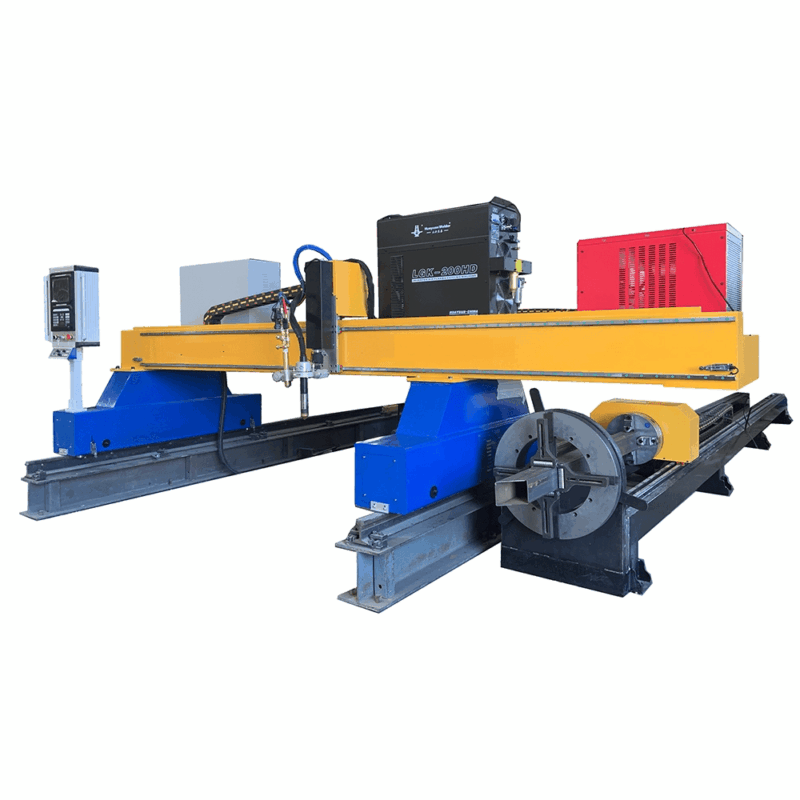
for Construction Machinery, where beams can be 12 meters or longer, slight deviations in the flatness of the flange or web are inevitable. Without AVC, these deviations would lead to kerf width variations or even torch collisions. By stabilizing the torch height, the system ensures a consistent plasma jet focus, which is critical for achieving a dross-free edge and maintaining a constant heat-affected zone (HAZ). This level of control is essential when the subsequent process involves high-stress structural assembly.
Achieving Superior Intersection Accuracy
In heavy equipment manufacturing, H-beams rarely exist as isolated components. They are part of a complex lattice of intersecting members. Intersection Accuracy refers to the precision with which one beam is cut to fit the profile of another. Traditional methods often require manual grinding and “fit-and-trim” maneuvers on the shop floor, which consume excessive man-hours and introduce human error.
Modern plasma lines utilize 5-axis or 6-axis robotic heads that can trace the exact contour of an H-beam’s web and flanges. When coupled with advanced nesting software, the system calculates the exact intersection geometry, accounting for the beam’s radius and thickness. The precision of the plasma arc, governed by the AVC, allows for tolerances within +/- 0.5mm over a wide cross-section. This accuracy ensures that when the beams are moved to the assembly jig, the gaps are minimal, facilitating superior penetration during the final welding stages and reducing the volume of filler metal required.
Enhanced Hole Positioning and Bolt Pattern Consistency
Beyond profile cutting, construction machinery often requires precise bolt patterns for modular attachments. Plasma cutting lines equipped with high-definition power sources can produce bolt-ready holes. The synchronization between the motion controller and the plasma gas console allows for “hole-mapping” where the gas flow and current are modulated to prevent the “tapering” effect common in older plasma systems. This eliminates the need for secondary drilling or reaming operations, further reducing the total cost per part.
Plasma Beveling for Structural Integrity
Weld preparation is perhaps the most critical stage in the H-beam fabrication process for heavy-duty applications. Construction machinery is subjected to cyclic loading and high vibration, making the quality of the weld joint paramount. Plasma Beveling allows for the creation of V, Y, X, and K-groove profiles directly on the production line. By tilting the plasma torch during the cutting pass, the system creates the necessary chamfers for deep penetration welds.
The advantage of using plasma for beveling over mechanical milling or oxy-fuel is the speed-to-quality ratio. Plasma can maintain high travel speeds even when cutting at an angle, provided the AVC system can compensate for the increased voltage required to jump a longer arc distance during a bevel cut. The integration of 3D cutting heads allows for the beveling of the web and the flanges simultaneously, ensuring a seamless transition at the “k-area” of the H-beam, which is a common failure point in poorly fabricated structural members.
Thermal Management and Material Distortion
One of the primary concerns in H-beam cutting is the heat input. Excessive heat can cause the beam to “bow” or twist, ruining the dimensional accuracy. Industrial-grade plasma systems manage this through localized high-energy density. Because the plasma arc is more concentrated than oxy-fuel flames, the total heat input into the surrounding metal is significantly lower. The speed of the process further mitigates distortion. By optimizing the cutting sequence—starting with internal features and finishing with the outer profile—engineers can control the thermal expansion and ensure the finished H-beam meets the stringent tolerances required for machinery frames.
H-Beam Low Maintenance and Operational Reliability
From a facility management perspective, H-beam Low Maintenance is a key performance indicator. Plasma systems are designed for the “dirty” environment of a heavy fabrication shop. Unlike more sensitive optical cutting technologies, plasma torches are robust and relatively simple to maintain. The consumable parts—nozzles, electrodes, and swirl rings—are designed for rapid replacement, often featuring “quick-change” designs that minimize machine downtime.
Furthermore, the absence of complex mirrors or external beam delivery systems reduces the sensitivity of the machine to vibrations caused by overhead cranes or nearby forging equipment. The primary maintenance requirements involve the regular inspection of the gas filtration system to ensure moisture-free air/oxygen and the lubrication of the heavy-duty rack-and-pinion drives. In a high-volume construction machinery plant, this reliability translates to higher Up-Time and a more predictable production schedule.
Optimizing Consumable Life with AVC
The Arc Voltage Control system also plays a defensive role in maintenance. By preventing “snagging” where the torch might hit a tipped-up piece of scrap metal, the AVC protects the torch body and the internal components from mechanical shock. Advanced controllers also track the number of “pierces” and the total “arc-on” time, providing the operator with predictive maintenance data. This prevents the degradation of cut quality that occurs when a nozzle is used past its optimal lifespan, ensuring that the Intersection Accuracy remains consistent throughout the work shift.
Conclusion: The Future of Automated Heavy Fabrication
The integration of Arc Voltage Control within a plasma-based H-beam production line is not merely a technical upgrade; it is a strategic necessity for manufacturers in the construction machinery sector. By focusing on the precision of intersections and the efficiency of the beveling process, companies can significantly reduce secondary processing time. The mechanical robustness of plasma cutting equipment ensures that these lines can operate in multi-shift environments with minimal intervention. As the demand for larger, more complex machinery grows, the ability to produce high-precision H-beam components with consistent structural integrity will remain a defining factor in manufacturing competitiveness.
-
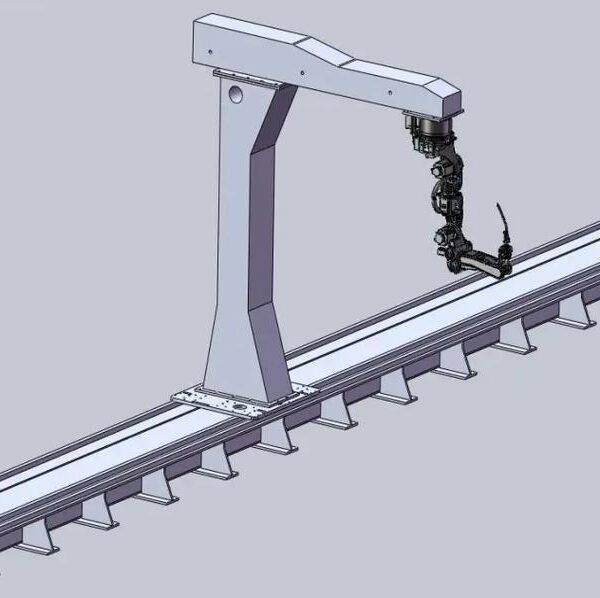

Cantilever Welding Robot solution
-
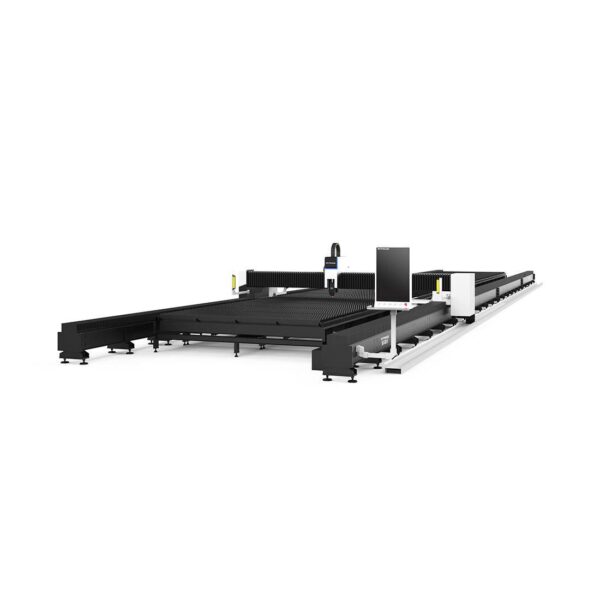

GF laser cutting machine
-
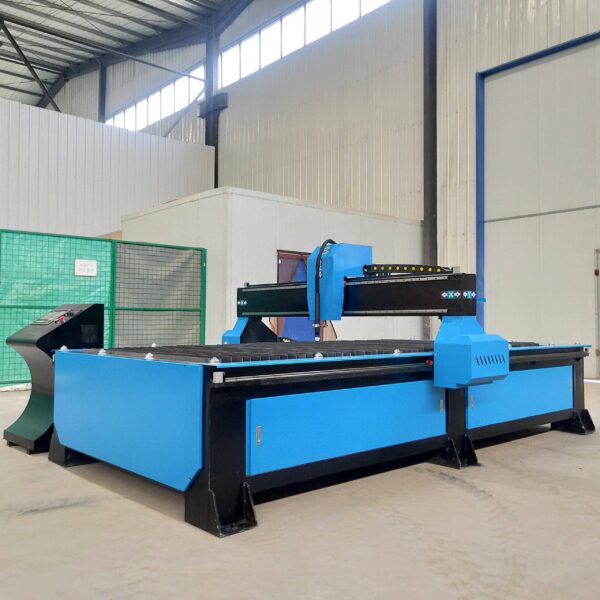
P3015 plasma cutting machine
-

LFP3015 Fiber Laser Cutter
-
pipe plasma cutting machine
-
LFH 4020 Fiber Laser Cutting Machine
-
LFP4020
-
gantry plasma air cutting machine
-
3D robot cutting machine
-
8 axis plasma cutting machine
-
5 axis plasma cutting machine
-

LT360 tube laser cutting machine
-
robot welding workstation
-
SF6060 fiber laser cutting machine
Advanced Fiber Laser Tube Processing Technology
Our CNC Fiber Laser Tube Cutting systems revolutionize metal fabrication by integrating high-precision cutting, punching, and profiling into a single automated workflow. Designed for versatility, this technology handles a wide array of profiles including Round, Square, Rectangular, and Oval tubes, as well as complex L-shaped and U-shaped channels.
- Precision Punching: High-speed hole punching with micron-level accuracy, eliminating the need for mechanical drilling or die-stamping.
- Complex Profiling: Advanced 3D pathing allows for intricate interlocking joints and specialized notch cuts, ideal for structural frames.
- High Material Efficiency: Intelligent nesting software minimizes scrap, reducing raw material costs across large production runs.
- Clean Finish: Delivers oxide-free, burr-free edges that require zero secondary grinding before welding.

Seamlessly processing multiple profiles with consistent precision.
Global Delivery & Logistics



From our high-tech manufacturing facility directly to your global site. PCL WeldCut ensures secure packaging, professional handling, and reliable international logistics to safeguard your equipment throughout the entire journey.