Optimizing H-Beam Production via Plasma Arc Voltage Control
In the fabrication of heavy-duty construction machinery, the structural integrity of H-beams serves as the primary load-bearing foundation for equipment such as excavators, cranes, and chassis frames. Industrial engineers must prioritize high-efficiency throughput without compromising the geometric tolerances required for complex assemblies. The implementation of a dedicated Plasma Cutting line, augmented by sophisticated Arc Voltage Control (AVC), addresses the inherent challenges of processing thick-walled structural steel.
Unlike lighter fabrication methods, construction machinery components demand deep penetration and the ability to handle material irregularities. Plasma cutting technology, when integrated into an automated H-beam line, provides the thermal energy necessary to sever thick flanges and webs while maintaining a stable kerf. The reliance on AVC ensures that the distance between the plasma torch and the steel profile remains constant, compensating for any physical deviations in the beam’s straightness or surface leveling.
The Mechanics of Arc Voltage Control in Structural Fabrication
Arc Voltage Control is a closed-loop feedback mechanism essential for high-precision plasma operations. In an H-beam production environment, the physical distance between the torch nozzle and the workpiece—the stand-off height—directly influences the arc’s stability and the resulting cut quality. As the plasma arc is an electrical conductor, the voltage across the arc is proportional to its length.
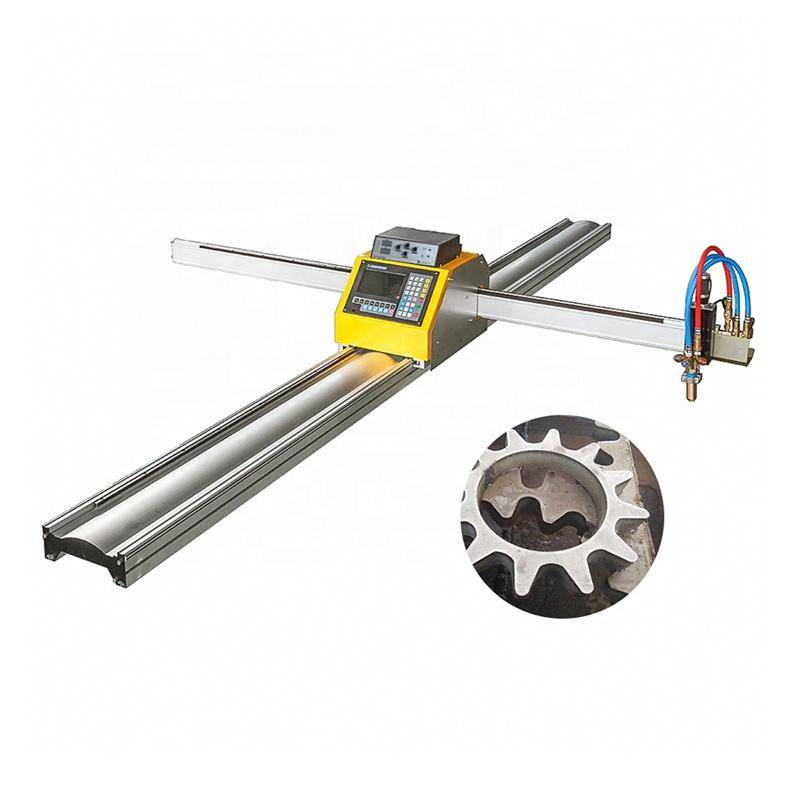
The AVC system continuously monitors this voltage during the cutting process. If the system detects a voltage increase, it indicates the torch is too far from the H-beam; the Z-axis motor immediately corrects the height. This real-time adjustment is critical when processing long-span H-beams that may exhibit slight bowing or thermal warping during the cut. By maintaining a precise stand-off, the system prevents dross accumulation and ensures a perpendicular cut face, which is vital for the subsequent assembly of machinery components.
Achieving Superior Intersection Accuracy
One of the most complex aspects of H-beam fabrication for Construction Machinery is the execution of intersections, notches, and bolt-hole patterns. Intersection accuracy determines the fit-up quality between the H-beam and its mating parts. In traditional setups, manual measurements often lead to cumulative errors that require expensive rework or excessive gap filling.
Automated plasma lines utilize multi-axis robotic arms or gantry systems that can rotate around the H-beam’s geometry. When the plasma torch transitions from the flange to the web, the software must account for the change in material thickness and the radius of the inner corner. The integration of AVC ensures that even during these rapid transitions, the arc remains focused. High intersection accuracy translates to tighter tolerances in the final machine frame, ensuring that load distributions align with the original engineering simulations. This precision reduces the reliance on heavy grinding and ensures that the structural geometry remains true to the CAD model.
Plasma Beveling: Streamlining Edge Preparation
For heavy construction equipment, simple square cuts are rarely sufficient. Thick structural members require specific edge profiles—V, Y, K, or X-shaped bevels—to facilitate full-penetration structural joints. Plasma beveling integrated directly into the production line eliminates the need for secondary beveling stations or manual oxygen-fuel torching.
Modern plasma systems feature a rotating “tilt and swivel” head capable of varying the angle of the torch during the cut. This capability allows for complex 3D contouring on the ends of H-beams. When combined with Arc Voltage Control, the bevel angle remains consistent even if the beam’s surface is not perfectly planar. This consistency is paramount for automated assembly processes where variations in bevel depth can lead to defects in the structural integrity of the machinery’s chassis. By completing the cut and the bevel in a single pass, the production cycle time is significantly reduced.
Low Maintenance Requirements in Harsh Environments
Industrial engineers prioritize equipment uptime. Plasma cutting systems are favored in the construction machinery sector due to their low maintenance profile compared to other high-energy cutting methods. The hardware is designed to withstand the dust, vibration, and temperature fluctuations common in heavy fabrication shops.
Consumable Longevity and System Reliability
Modern plasma torches are engineered with “long-life” consumable technology. The electrodes and nozzles are designed for hundreds of pierces and extended arc-on times. Because the system relies on a ruggedized electrical arc rather than sensitive optical components, it is less susceptible to failure from the ambient particulates found in a steel mill or fabrication yard. Furthermore, the simplicity of the plasma gas delivery system—often utilizing compressed air or oxygen/nitrogen mixes—minimizes the complexity of the utility infrastructure required for the production line.
Reduced Mechanical Wear
By utilizing non-contact height sensing through AVC, the risk of “torch crashes” is nearly eliminated. In older systems, mechanical sensors often snagged on the workpiece or failed due to heat exposure. The electronic nature of arc voltage sensing removes these mechanical failure points, further contributing to the low-maintenance nature of the H-beam line. For a production manager, this means fewer emergency stops and a more predictable preventive maintenance schedule.
Engineering ROI: Throughput and Quality Control
The decision to implement a plasma-based H-beam line is driven by the bottom-line metrics of throughput and rework reduction. In the context of construction machinery, where material costs are high, the reduction of scrap through precision cutting is a major financial advantage. The speed of plasma cutting on medium to thick plate (typically 12mm to 50mm for H-beam components) far exceeds that of traditional oxy-fuel methods.
From an industrial engineering perspective, the workflow is optimized by digitizing the “nesting” and “cutting” phases. The software communicates directly with the plasma power supply and the AVC unit to adjust amperage and gas flow based on the specific material grade of the H-beam. This level of control ensures that every beam produced meets the rigorous safety standards required for heavy lifting and earthmoving equipment.
Conclusion: The Future of Heavy Structural Fabrication
The integration of plasma technology into H-Beam Production Lines represents a strategic move toward highly autonomous, high-accuracy manufacturing. By focusing on the synergy between Arc Voltage Control and multi-axis movement, manufacturers can achieve the intersection accuracy and beveling quality necessary for the next generation of construction machinery. The combination of high speed, low maintenance, and technical precision ensures that plasma remains the industry standard for processing the structural backbone of the world’s most demanding machines.
-


LT240S tube laser cutting machine
-
LT120S tube laser cutting machine
-
Sale

Tank Fillet Welding Machine
Original price was: $1,000.00.$900.00Current price is: $900.00. -
Sale

MAK100 tube laser cutting machine
Original price was: $5,500.00.$5,000.00Current price is: $5,000.00. -

portable plasma air cutting machine
$1,200.00 -

2in1 fiber laser cutting machine
-

Air cooling Laser welding machine
-

HF h beam laser cutting machine
-

LT240 laser cutting machine
-

Laser welding machine
-


Cobot Welding Station
-

Gantry welding robot solution
-

Tracked Wheeled AGV Welding robot
-

LFH6020 Fiber laser cutting machine
-
LFP6020
-

robotic welidng machine
Advanced Fiber Laser Tube Processing Technology
Our CNC Fiber Laser Tube Cutting systems revolutionize metal fabrication by integrating high-precision cutting, punching, and profiling into a single automated workflow. Designed for versatility, this technology handles a wide array of profiles including Round, Square, Rectangular, and Oval tubes, as well as complex L-shaped and U-shaped channels.
- Precision Punching: High-speed hole punching with micron-level accuracy, eliminating the need for mechanical drilling or die-stamping.
- Complex Profiling: Advanced 3D pathing allows for intricate interlocking joints and specialized notch cuts, ideal for structural frames.
- High Material Efficiency: Intelligent nesting software minimizes scrap, reducing raw material costs across large production runs.
- Clean Finish: Delivers oxide-free, burr-free edges that require zero secondary grinding before welding.

Seamlessly processing multiple profiles with consistent precision.
Global Delivery & Logistics



From our high-tech manufacturing facility directly to your global site. PCL WeldCut ensures secure packaging, professional handling, and reliable international logistics to safeguard your equipment throughout the entire journey.