Optimizing H-Beam Production for Wind Energy Infrastructure
The manufacturing of wind tower internal components—ranging from service platforms to ladder supports and structural reinforcements—demands extreme repeatability and structural integrity. Within this sector, the H-Beam Production Line has transitioned from manual layout and mechanical cutting to fully automated thermal processing. The primary driver for this shift is the need to handle heavy-walled sections with complex geometries while maintaining the strict tolerances required by international wind energy standards.
Industrial engineers focusing on shop-floor throughput must prioritize the cutting phase, as it dictates the fit-up quality for all subsequent assembly stages. High-definition plasma technology serves as the backbone of these lines, offering a balance between cutting speed and edge quality that exceeds traditional oxy-fuel methods for the thickness ranges typically found in secondary wind tower structures.
The Role of 5-Axis Plasma Beveling in Complex Geometries
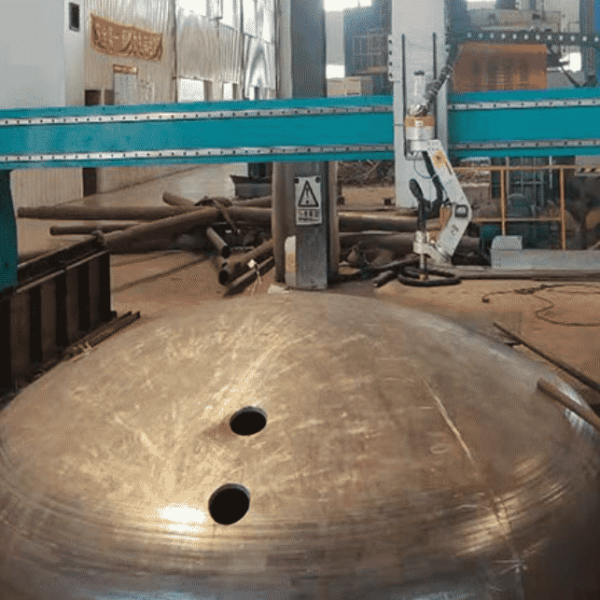
Standard 2D cutting is insufficient for the sophisticated intersection points found in wind tower structural frames. The integration of a 5-axis plasma beveling head allows for the simultaneous control of X, Y, and Z axes alongside tilt (A-axis) and rotation (C-axis). This kinematic capability is essential for creating non-perpendicular edges and specialized weld preparations such as V, Y, K, and X-cuts directly on the H-beam flanges and webs.
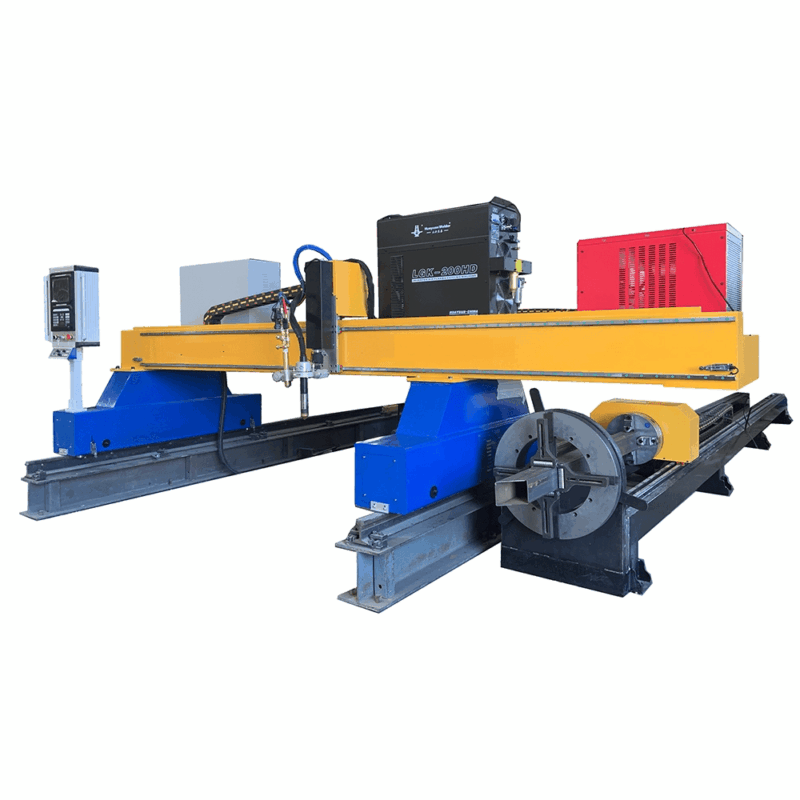
In a 5-axis environment, the software must calculate the torch angle in real-time to compensate for the beam’s geometric deviations. Since hot-rolled H-beams often exhibit slight structural inconsistencies, such as flange tilt or web centering offsets, the production line utilizes advanced probing systems. These sensors map the actual profile of the beam before the arc is struck, ensuring the bevel angle remains constant relative to the actual material surface rather than a theoretical CAD model.
Achieving High-Level Intersection Accuracy
Intersection accuracy is the most critical metric when fabricating lattice-style supports or platform joists that must contour perfectly against the curved interior wall of a wind tower shell. When an H-beam meets a curved surface, the cut profile is an intricate three-dimensional curve. Traditional mechanical sawing or 3-axis cutting leaves significant gaps, requiring excessive filler material and increasing the risk of structural failure under cyclic loading.
The 5-axis plasma system solves this by executing “saddle cuts” and complex miters that follow the precise radius of the tower section. By maintaining a constant standoff distance via high-speed voltage regulation, the plasma arc delivers a consistent kerf width. This precision ensures that the beam sits flush against the mating surface, eliminating the need for secondary grinding and ensuring that the structural load is distributed evenly across the joint.
Maintenance Profiles of Modern Plasma Systems
From an operational engineering perspective, low maintenance is a prerequisite for high-volume wind tower fabrication. Plasma systems have evolved to minimize the downtime associated with consumable changes and system calibrations. Modern power supplies feature “long-life” oxygen and air plasma technologies that significantly extend the duty cycle of electrodes and nozzles.
Unlike mechanical cutting tools that require frequent sharpening or hydraulic systems prone to seal leaks, the Plasma Cutting torch is a non-contact tool. This reduces the mechanical stress on the gantry and drive system. Maintenance protocols for these lines are primarily focused on the extraction system (dust collection) and the periodic inspection of the rack-and-pinion drives. The absence of heavy mechanical cutting forces allows the production line to maintain its calibration for longer intervals, ensuring that the 5-axis head remains accurate over thousands of duty cycles.
Thermal Control and Material Integrity
A common concern in thermal cutting is the Heat Affected Zone (HAZ). Industrial engineers mitigate this by optimizing cutting speeds and gas selections. For H-beams used in wind towers, maintaining the metallurgical properties of the S355 or higher-grade steel is paramount. High-definition plasma systems use constricted arc technology to narrow the heat input, resulting in a very thin HAZ that typically does not require post-cut machining to meet structural codes.
The 5-axis head also plays a role in thermal management. By precisely controlling the torch angle, the system can maximize the efficiency of the arc’s energy, directing it exactly where the material needs to be severed. This reduces wasted energy and prevents over-heating of the thinner web sections of the H-beam, preserving the dimensional stability of the entire part.
Workflow Integration and Automation Synergy
The modern H-beam line is a cohesive ecosystem. Raw sections are loaded onto motorized conveyor beds equipped with cross-transfer systems. As the beam enters the cutting cell, laser measurement units detect the leading edge and cross-sectional dimensions. The 5-axis plasma unit then executes the nested cutting program, which includes bolt holes, coping cuts, and beveling in a single pass.
This level of integration removes the human error associated with manual marking and repositioning. In wind tower production, where hundreds of beams may be required for a single offshore project, the ability to move from raw stock to a finished, beveled component in a single automated sequence is the primary factor in meeting tight project deadlines.
Concluding Engineering Summary
The adoption of 5-axis plasma technology in H-beam production lines represents a significant leap in fabrication efficiency for the wind energy sector. By focusing on the precision of the cut and the geometric flexibility of the 5-axis movement, manufacturers can achieve superior fit-up quality. The low maintenance requirements of the plasma hardware ensure high uptime, while the accuracy of the intersections guarantees the long-term structural reliability of the wind tower internals. As tower heights increase and structural requirements become more stringent, the role of automated thermal beveling will continue to be a cornerstone of industrial metal fabrication.
-
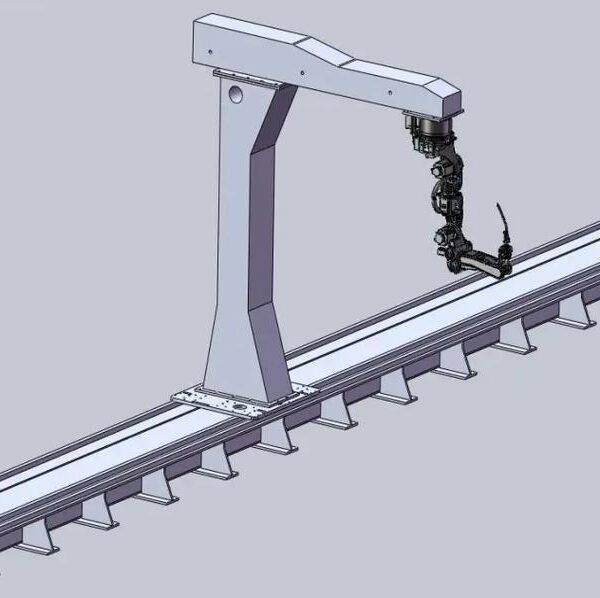

Cantilever Welding Robot solution
-
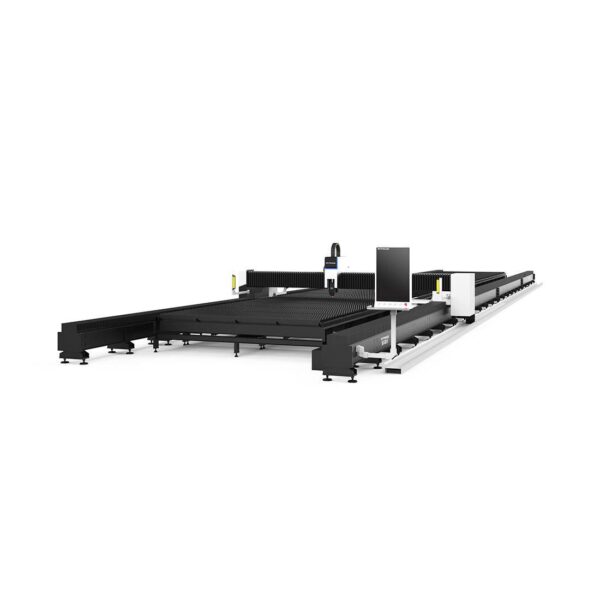

GF laser cutting machine
-
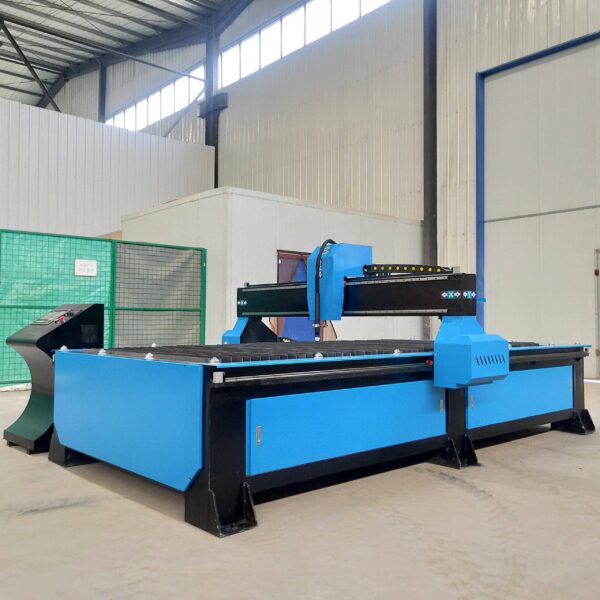
P3015 plasma cutting machine
-

LFP3015 Fiber Laser Cutter
-
pipe plasma cutting machine
-
LFH 4020 Fiber Laser Cutting Machine
-
LFP4020
-
gantry plasma air cutting machine
-
3D robot cutting machine
-
8 axis plasma cutting machine
-
5 axis plasma cutting machine
-

LT360 tube laser cutting machine
-
robot welding workstation
-
SF6060 fiber laser cutting machine
Advanced Fiber Laser Tube Processing Technology
Our CNC Fiber Laser Tube Cutting systems revolutionize metal fabrication by integrating high-precision cutting, punching, and profiling into a single automated workflow. Designed for versatility, this technology handles a wide array of profiles including Round, Square, Rectangular, and Oval tubes, as well as complex L-shaped and U-shaped channels.
- Precision Punching: High-speed hole punching with micron-level accuracy, eliminating the need for mechanical drilling or die-stamping.
- Complex Profiling: Advanced 3D pathing allows for intricate interlocking joints and specialized notch cuts, ideal for structural frames.
- High Material Efficiency: Intelligent nesting software minimizes scrap, reducing raw material costs across large production runs.
- Clean Finish: Delivers oxide-free, burr-free edges that require zero secondary grinding before welding.

Seamlessly processing multiple profiles with consistent precision.
Global Delivery & Logistics



From our high-tech manufacturing facility directly to your global site. PCL WeldCut ensures secure packaging, professional handling, and reliable international logistics to safeguard your equipment throughout the entire journey.