Optimizing Shipbuilding Throughput with Advanced H-Beam Processing
In the heavy-duty environment of a shipyard, the structural integrity of the vessel depends heavily on the precision of its skeletal framework. The H-beam, serving as a primary load-bearing element, requires rigorous processing to meet maritime classification standards. Traditional manual layout and cutting methods are no longer viable for modern scales of production. The transition to a dedicated H-Beam Production Line equipped with 5-axis plasma technology represents a fundamental shift in how structural steel is prepared for assembly.
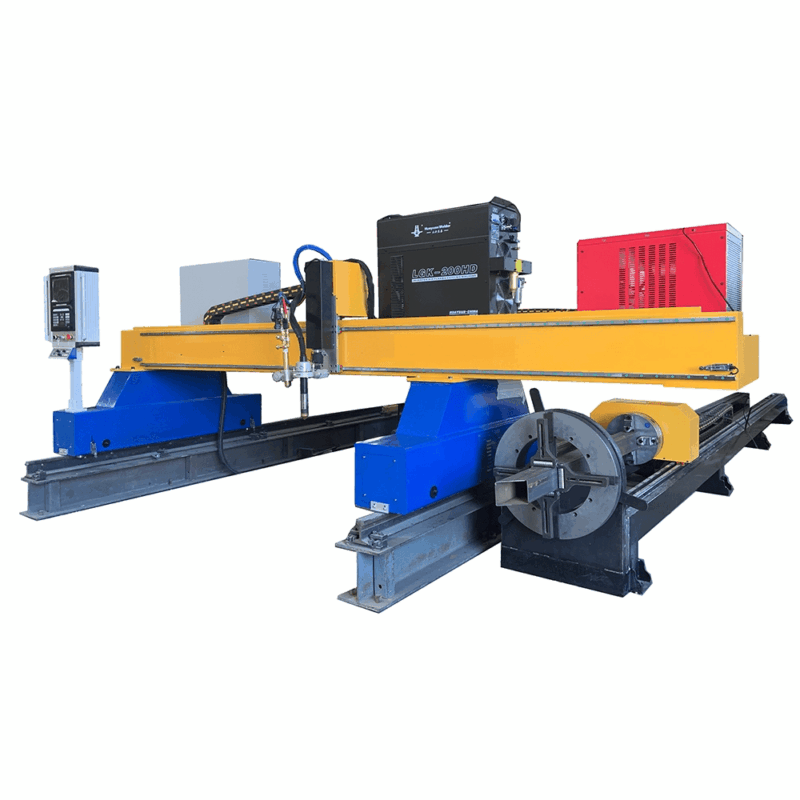
The primary challenge in shipbuilding is the sheer volume of steel and the complexity of the intersections between beams, ribs, and hull plates. Plasma Cutting offers a high-velocity ionized gas stream that slices through heavy-gauge H-beams with a speed and efficiency that mechanical methods cannot match. By integrating 5-axis motion, the production line moves beyond simple 90-degree cuts, allowing for the complex geometries required for curved hull reinforcement and multi-planar structural junctions.
Mechanical Kinematics of 5-Axis Plasma Cutting
The core of the high-performance H-beam line is the 5-axis cutting head. Unlike standard 3-axis systems that operate on a Cartesian plane, a 5-axis system introduces two rotational axes (typically A and B). This allows the plasma torch to tilt and rotate dynamically during the cutting process. In the context of H-beam processing, this means the torch can follow the profile of the flange and web simultaneously, creating precise bevels and notches.
Achieving Superior Intersection Accuracy
In shipbuilding, H-beams rarely meet at simple right angles. They often intersect at oblique angles or follow the curvature of the vessel’s frame. This necessitates high-precision “fish-mouth” cuts or complex cope notches. The 5-axis plasma system utilizes advanced CNC algorithms to calculate the exact torch angle required to maintain a consistent kerf width across varying material thicknesses.
Intersection accuracy is further enhanced by laser-based probing systems integrated into the plasma cutting technology. Before the arc is struck, the system maps the actual dimensions of the H-beam, accounting for mill tolerances such as web eccentricity or flange tilt. By adjusting the cutting path in real-time based on these physical measurements, the system ensures that every intersection fits tightly during assembly, reducing the need for gap-filling during subsequent processes.
Thermal Beveling and Weld Preparation
The ability to perform 5-axis beveling in a single pass is the most significant time-saver in the production line. Shipbuilding requires various bevel types—V, Y, K, and X—to ensure full penetration in critical joints. A 5-axis plasma head can transition between these bevel types without stopping the machine. This eliminates the secondary process of manual grinding or using portable beveling machines, which are labor-intensive and prone to human error.
From an engineering standpoint, the quality of the plasma-cut surface is vital. Modern high-definition plasma power sources produce a narrow heat-affected zone (HAZ), which preserves the metallurgical properties of the high-strength steel used in marine environments. The resulting edge is clean, with minimal dross, making it immediately ready for the next stage of the assembly process.
Maintenance Profiles of Plasma-Based H-Beam Lines
Operational uptime is a critical metric for any industrial engineer. One of the primary advantages of a plasma-based shipbuilding structural steel line is its low maintenance overhead. Unlike mechanical cutting tools such as saws or drills, plasma is a non-contact process. There is no mechanical force exerted on the gantry or the cutting head, which significantly reduces wear and tear on the drive systems and linear guides.
Consumable Management and Durability
The maintenance routine for a plasma system is largely concentrated on the torch consumables—nozzles, electrodes, and swirl rings. Modern CNC systems track the number of pierces and the arc-on time, providing predictive alerts for consumable replacement. This prevents torch failure during a critical cut. Furthermore, the absence of cooling fluids and metal chips (common in mechanical sawing) leads to a cleaner work environment and less frequent cleaning of the machine’s internal components.
The structural design of the H-beam line itself focuses on longevity. Heavy-duty rack-and-pinion drives and oversized servo motors ensure that the high-speed movements required for plasma cutting do not degrade the machine’s accuracy over time. By minimizing the number of moving parts involved in the actual cutting action, the facility reduces the risk of unplanned downtime.
Software Integration and Automated Nesting
The efficiency of the hardware is only as good as the instructions it receives. In shipbuilding, where thousands of unique parts are required, specialized nesting software is used to maximize material utilization. This software communicates directly with the 5-axis controller, translating CAD/CAM files into complex motion commands. The software accounts for the H-beam’s geometry, ensuring that cuts on the web and flanges are synchronized to prevent structural deformation during the thermal cutting process.
Automated nesting also handles the identification of parts. Many 5-axis plasma systems include marking capabilities, where the torch uses a low-amperage arc to etch part numbers, alignment marks, or bending lines directly onto the steel. This digital integration ensures that the precision achieved at the cutting stage is carried through to the final assembly on the slipway.
Operational Economic Impact
Implementing a 5-axis plasma line for H-beams directly impacts the bottom line by reducing the cost per ton of processed steel. The speed of plasma cutting, combined with the elimination of secondary beveling and the reduction in manual labor, creates a high-throughput environment. For shipyards, where project timelines are measured in months and years, the ability to rapidly produce accurate structural components is a major competitive advantage.
Furthermore, the reduction in scrap material through precise nesting and the high first-time-right rate afforded by automated measurement systems significantly lowers material costs. In an industry where steel prices are volatile, maximizing the utility of every H-beam is a priority for production management.
Conclusion: The Future of Maritime Structural Fabrication
The move toward fully automated H-beam production lines is an inevitability in the shipbuilding sector. By focusing on the strengths of 5-axis plasma cutting—specifically its ability to handle complex intersections and provide ready-to-weld bevels—engineers can drastically improve the efficiency of their fabrication workflows. The combination of high-speed processing, low maintenance requirements, and extreme accuracy makes plasma the technology of choice for the demanding requirements of modern naval architecture.
-
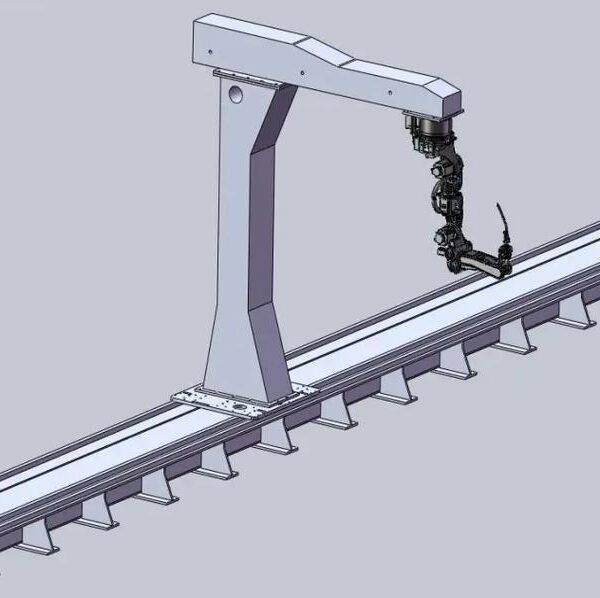

Cantilever Welding Robot solution
-
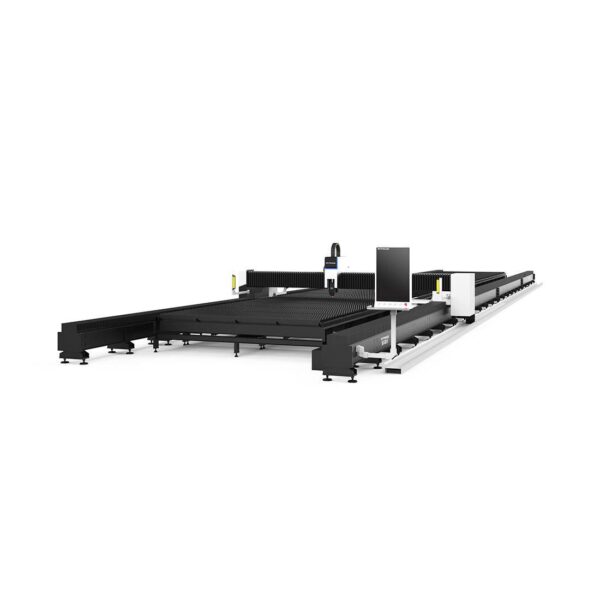

GF laser cutting machine
-
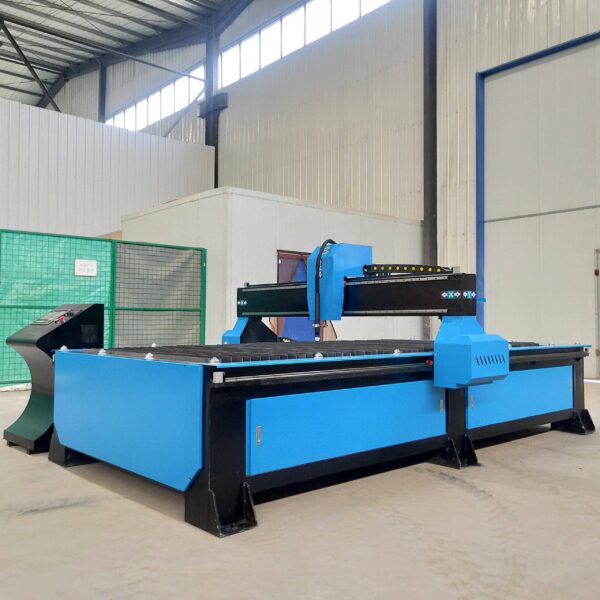
P3015 plasma cutting machine
-

LFP3015 Fiber Laser Cutter
-
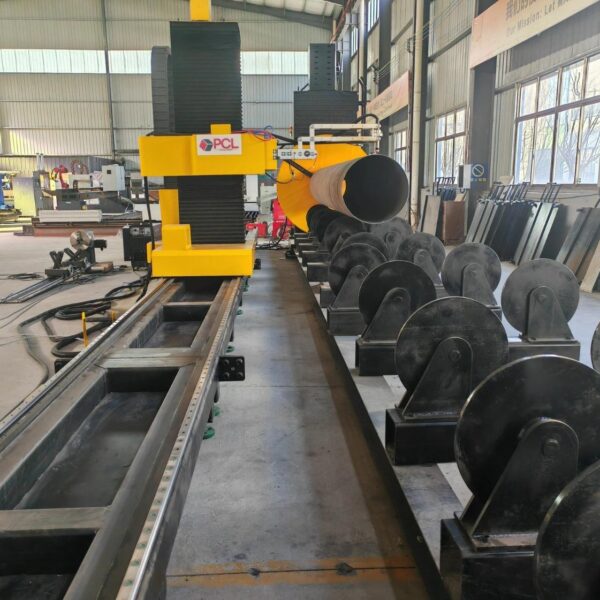
pipe plasma cutting machine
-
LFH 4020 Fiber Laser Cutting Machine
-
LFP4020
-
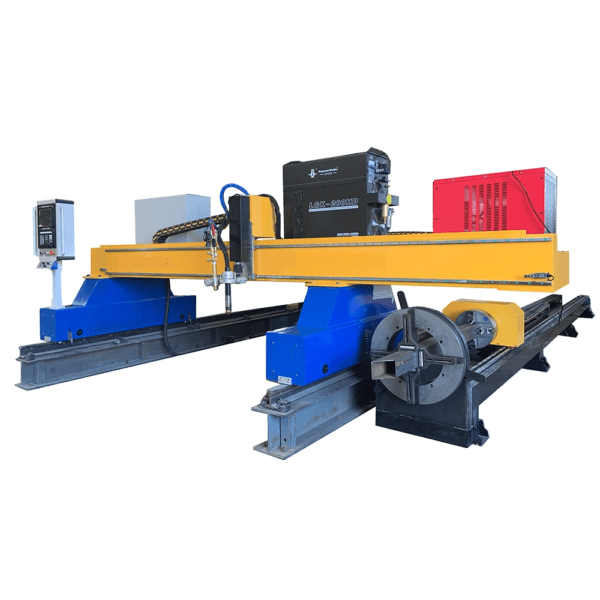
gantry plasma air cutting machine
-
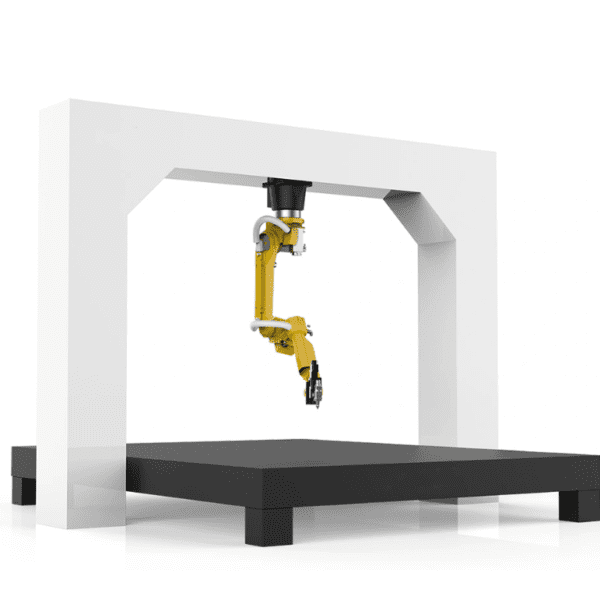
3D robot cutting machine
-
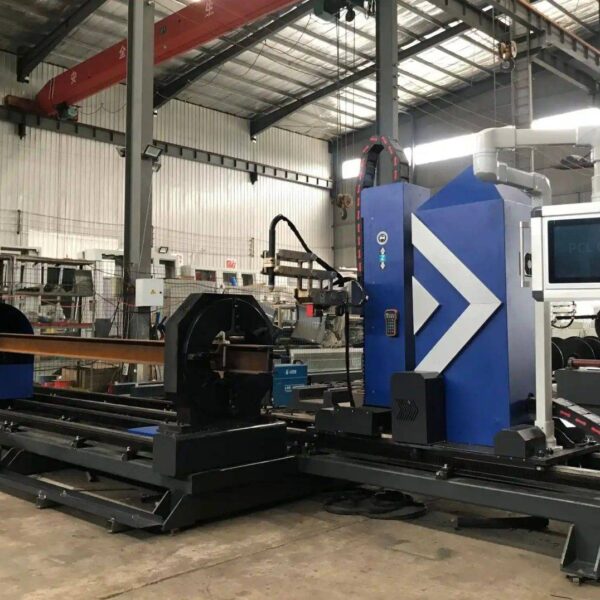
8 axis plasma cutting machine
-
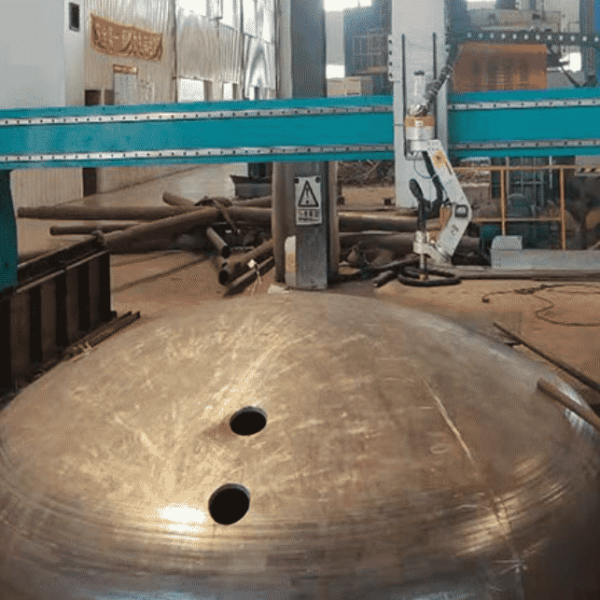
5 axis plasma cutting machine
-

LT360 tube laser cutting machine
-
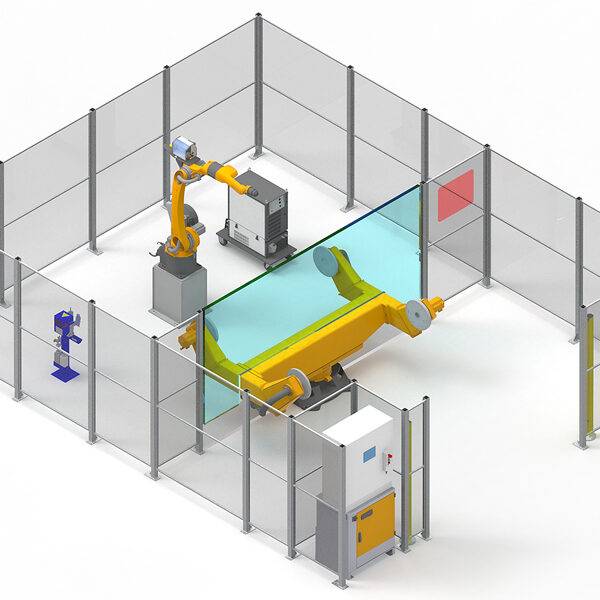
robot welding workstation
-
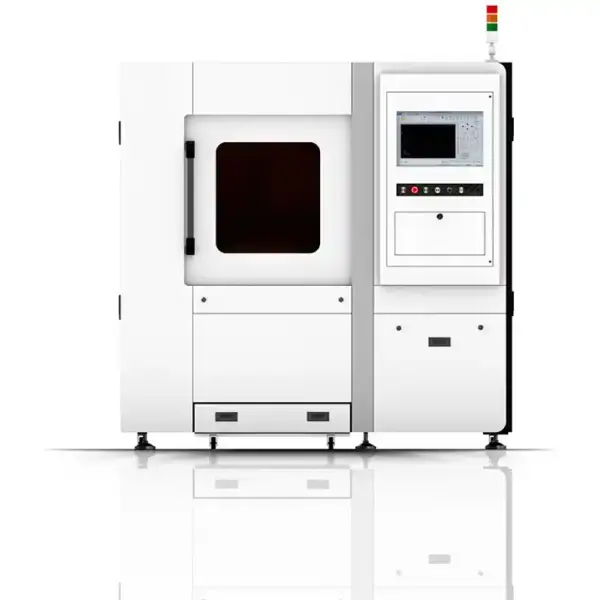
SF6060 fiber laser cutting machine
Advanced Fiber Laser Tube Processing Technology
Our CNC Fiber Laser Tube Cutting systems revolutionize metal fabrication by integrating high-precision cutting, punching, and profiling into a single automated workflow. Designed for versatility, this technology handles a wide array of profiles including Round, Square, Rectangular, and Oval tubes, as well as complex L-shaped and U-shaped channels.
- Precision Punching: High-speed hole punching with micron-level accuracy, eliminating the need for mechanical drilling or die-stamping.
- Complex Profiling: Advanced 3D pathing allows for intricate interlocking joints and specialized notch cuts, ideal for structural frames.
- High Material Efficiency: Intelligent nesting software minimizes scrap, reducing raw material costs across large production runs.
- Clean Finish: Delivers oxide-free, burr-free edges that require zero secondary grinding before welding.

Seamlessly processing multiple profiles with consistent precision.
Global Delivery & Logistics



From our high-tech manufacturing facility directly to your global site. PCL WeldCut ensures secure packaging, professional handling, and reliable international logistics to safeguard your equipment throughout the entire journey.
One thought on “H-Beam Production Line with 5-Axis Beveling for for Shipbuilding”
The Cutting System exceeded our expectations in terms of speed and stability.