Optimizing Wind Tower Production via Fiber Laser Technology
In the current landscape of renewable energy infrastructure, the fabrication of wind towers demands a rigorous adherence to dimensional tolerances and structural integrity. Industrial engineers are increasingly moving away from traditional mechanical processing toward fiber Laser Cutting efficiency. The primary driver is the ability to handle heavy-gauge steel plates and large-diameter tubes with a level of precision that mechanical methods cannot match. Fiber laser resonators, operating at wavelengths approximately 1.06 microns, provide a focused energy density capable of vaporizing carbon steel instantly, resulting in a narrow kerf and a minimal heat-affected zone (HAZ).
The Mechanics of Zero-Tailing Technology
Material cost constitutes a significant portion of the total cost of goods sold (COGS) in wind tower manufacturing. Conventional cutting methods often leave a “tail” or scrap piece at the end of a raw material feed, particularly in tube and pipe processing for internal tower structures. Zero-tailing technology utilizes advanced multi-chuck configurations—often a three-chuck or four-chuck synchronized system—to maintain constant support and rotation of the workpiece.
By allowing the laser head to cut between or right up to the final clamping point, the system minimizes the remnant length to nearly zero. From an industrial engineering perspective, this improves the material utilization rate by 10% to 15% across high-volume production runs. This is not merely a scrap reduction strategy; it is a fundamental optimization of the raw material supply chain.
Integration of Punch, Mark, and Cut Operations
One of the most significant throughput bottlenecks in tower fabrication is the transit time between different workstations. Fiber Laser Cutting Machines solve this by consolidating three distinct operations into a single CNC program:
1. Precision Hole Punching (Laser Piercing)
Instead of using mechanical drills or punches which are subject to tool wear, the fiber laser performs high-speed piercing. The CNC control adjusts the frequency and duty cycle of the laser pulse to create perfectly circular holes for flange bolting. This ensures that the assembly fit-up is seamless, reducing the need for field adjustments.
2. Structural Marking
The fiber laser can be de-focused or set to a lower power density to etch layout lines, part numbers, and alignment markers directly onto the steel surface. This wind tower fabrication precision eliminates manual layout work, which is often a source of human error in large-scale assembly.
3. Final Contour Cutting
The high-wattage fiber source (typically 12kW to 30kW for tower applications) executes the final profile cut. Because the beam quality is so high, the edge finish is smooth and perpendicular.
Eliminating Secondary Grinding Processes
In traditional heavy-duty fabrication, edges often require grinding to remove dross, slag, or carbonization before they can be moved to the assembly stage. Fiber laser cutting, when optimized with the correct assist gases (Oxygen or Nitrogen depending on thickness), produces an edge with a surface roughness (Ra) value that meets or exceeds international standards for structural steel.
The absence of dross means that the “no grinding” workflow is finally achievable. For an industrial engineer, this means the removal of a non-value-added step. It reduces labor costs, decreases the footprint of the factory floor dedicated to manual finishing, and improves the overall health and safety environment by reducing metallic dust and noise pollution.
Thermal Management and Structural Integrity
Wind towers are subject to extreme fatigue loads. The material utilization and structural health are paramount. Fiber lasers offer a distinct advantage over other thermal cutting methods due to the speed of the process. The “dwell time” of the heat source on any given point is extremely low. Consequently, the microscopic grain structure of the steel remains largely unchanged.
This precision ensures that the mechanical properties of the tower sections—such as yield strength and ductility—are not compromised at the edges. When the sections are brought together for assembly, the fit is airtight, ensuring that the structural integrity of the tower remains consistent over its 25-year service life.
Calculated ROI and Operational Efficiency
When evaluating the transition to a zero-tailing fiber laser system, engineers must look at the Overall Equipment Effectiveness (OEE). The calculation involves:
Availability:
Fiber lasers have no moving parts in the light-generating source, leading to high uptime.
Performance:
Cutting speeds for 20mm plate can exceed 2.0 meters per minute depending on the power source.
Quality:
The scrap rate is reduced not only by the zero-tailing hardware but also by the accuracy of the laser itself, which typically holds tolerances within +/- 0.1mm.
By reducing the cost per part through material savings and the elimination of secondary labor, the payback period for high-power fiber laser installations in wind tower facilities is significantly shorter than that of traditional mechanical or older thermal processing lines.
Conclusion: The Future of Lean Fabrication
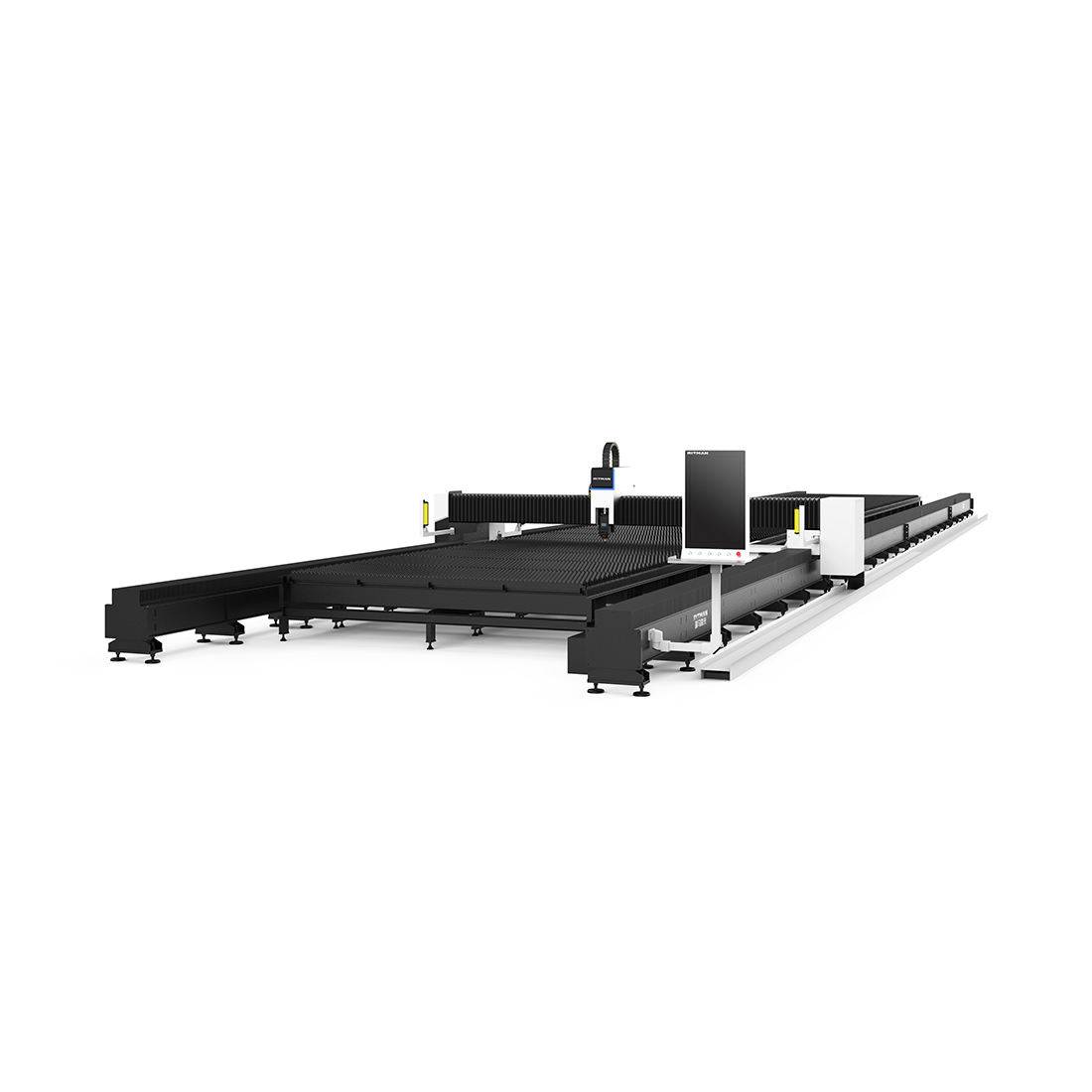
The implementation of fiber laser cutting machines with zero-tailing capabilities is a strategic move for any wind energy manufacturer aiming for a lean production model. By consolidating the punch, mark, and cut phases and delivering a “ready-to-assemble” edge that requires no grinding, facilities can achieve a continuous flow of production. This technological adoption is the cornerstone of modern industrial engineering in the heavy fabrication sector, ensuring that renewable energy components are produced with the highest efficiency and the lowest possible waste.
-


LT240S tube laser cutting machine
-
LT120S tube laser cutting machine
-
Sale

Tank Fillet Welding Machine
Original price was: $1,000.00.$900.00Current price is: $900.00. -
Sale

MAK100 tube laser cutting machine
Original price was: $5,500.00.$5,000.00Current price is: $5,000.00. -

portable plasma air cutting machine
$1,200.00 -

2in1 fiber laser cutting machine
-

Air cooling Laser welding machine
-

HF h beam laser cutting machine
-

LT240 laser cutting machine
-

Laser welding machine
-


Cobot Welding Station
-

Gantry welding robot solution
-

Tracked Wheeled AGV Welding robot
-

LFH6020 Fiber laser cutting machine
-
LFP6020
-

robotic welidng machine
Advanced Fiber Laser Tube Processing Technology
Our CNC Fiber Laser Tube Cutting systems revolutionize metal fabrication by integrating high-precision cutting, punching, and profiling into a single automated workflow. Designed for versatility, this technology handles a wide array of profiles including Round, Square, Rectangular, and Oval tubes, as well as complex L-shaped and U-shaped channels.
- Precision Punching: High-speed hole punching with micron-level accuracy, eliminating the need for mechanical drilling or die-stamping.
- Complex Profiling: Advanced 3D pathing allows for intricate interlocking joints and specialized notch cuts, ideal for structural frames.
- High Material Efficiency: Intelligent nesting software minimizes scrap, reducing raw material costs across large production runs.
- Clean Finish: Delivers oxide-free, burr-free edges that require zero secondary grinding before welding.

Seamlessly processing multiple profiles with consistent precision.
Global Delivery & Logistics



From our high-tech manufacturing facility directly to your global site. PCL WeldCut ensures secure packaging, professional handling, and reliable international logistics to safeguard your equipment throughout the entire journey.