Fiber Laser Cutting Machine with Zero-tailing technology for Wind Tower fabrication
In this article
Optimization of Wind Tower Fabrication via Fiber Laser Integration
The fabrication of wind towers demands extreme structural integrity and dimensional accuracy. As tower heights increase to capture more consistent wind speeds at higher altitudes, the thickness and scale of the steel plates used in their construction have evolved. Traditional thermal cutting methods often struggle with the precision required for the massive diameters involved. High-power fiber Laser Cutting has emerged as the industrial standard for processing these heavy-gauge plates, offering a focused energy density that minimizes the heat-affected zone (HAZ) and ensures superior edge quality.
From an industrial engineering perspective, the primary objective is the reduction of cycle times and the elimination of non-value-added activities. Fiber laser systems achieve this by providing a finished edge that requires no secondary processing. Unlike legacy systems that produce significant dross or slag, a properly calibrated fiber laser produces a clean, square cut. This precision is critical for the subsequent fit-up of the tower sections, where tight tolerances are mandatory for structural stability.
The Mechanics of Zero-Tailing Technology
Material cost represents a significant portion of the total expenditure in wind tower production. Zero-tailing technology is a specialized material handling and nesting advancement designed to minimize the “remnant” or scrap material left at the end of a production run. In large-format plate cutting or tube processing for internal tower structures, traditional clamping and feeding mechanisms often leave a substantial portion of the workpiece unusable because the cutting head cannot reach the end of the material while it is securely held.
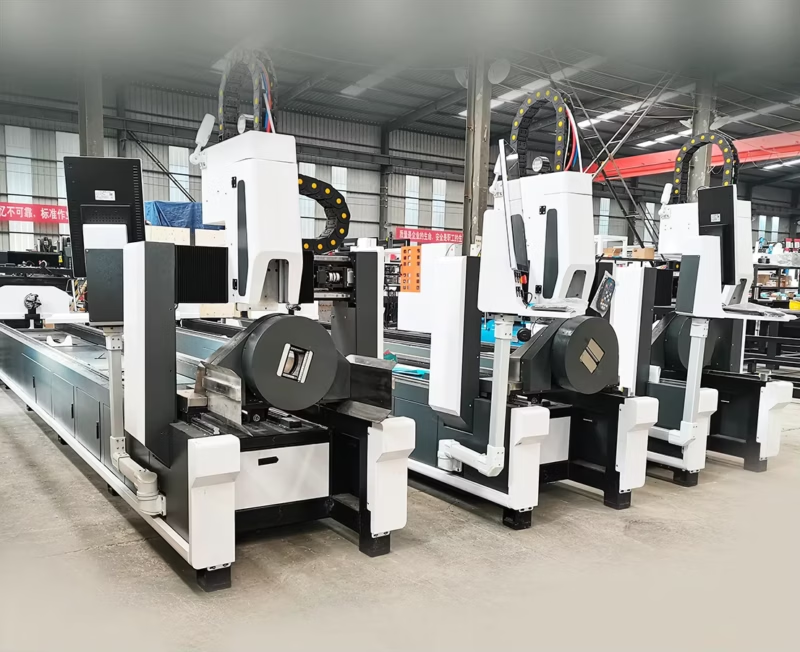
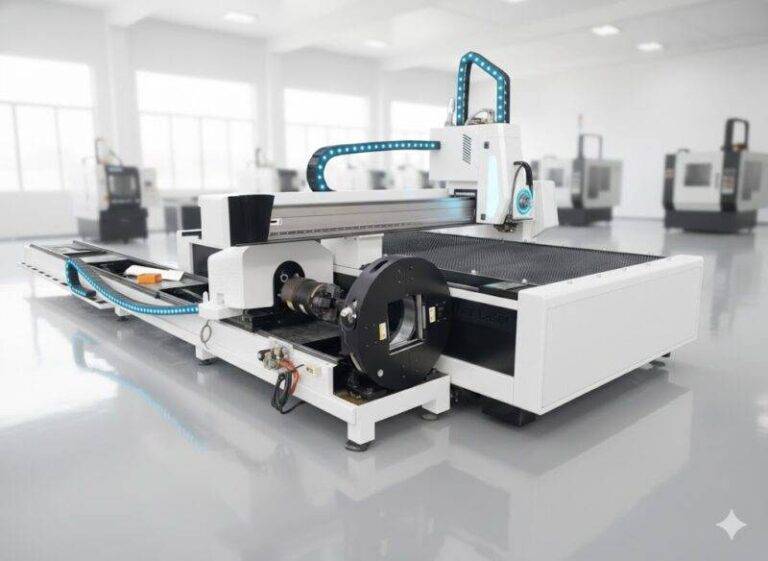
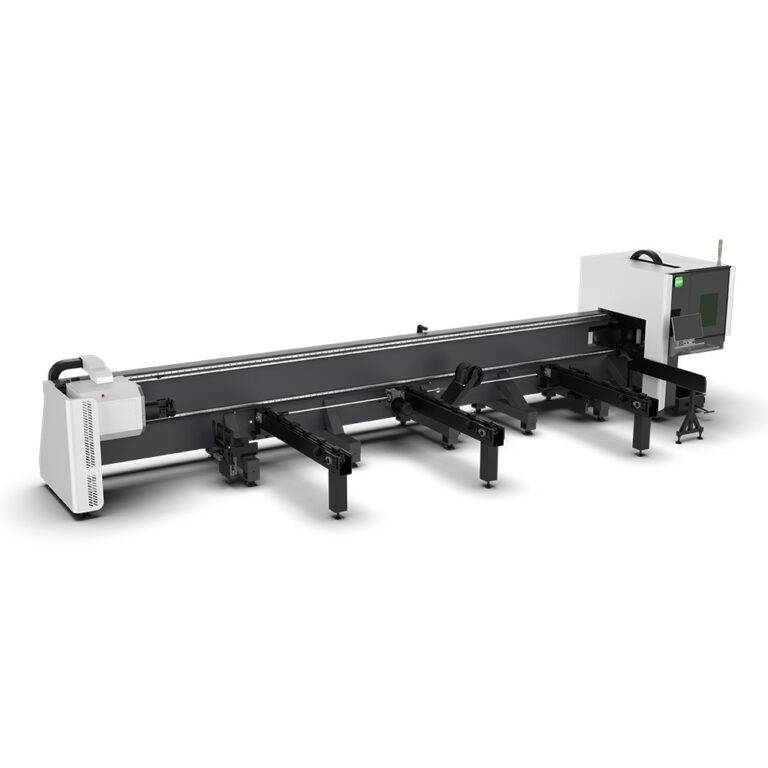
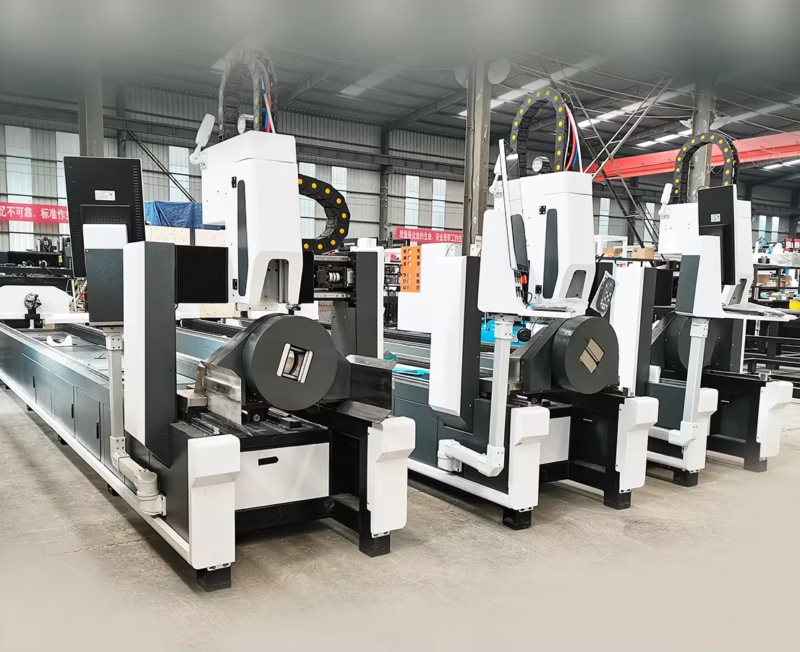
Modern fiber laser machines utilize multi-chuck systems or synchronized feeding beds that allow the cutting head to process material directly up to the edge of the clamping zone. By dynamically shifting the grip points or using specialized “passing” maneuvers, the machine ensures that the final segment of the steel plate or pipe is fully utilized. This leads to a measurable increase in material yield, which, when calculated over thousands of tons of steel annually, results in significant bottom-line savings.
High Precision and Geometrical Accuracy
Wind tower segments are essentially truncated cones. The geometry requires precise arc cutting and beveling to ensure that when the plates are rolled, the longitudinal and circumferential seams align perfectly. Fiber lasers, driven by high-resolution CNC controllers and linear motor drives, maintain positional accuracies within microns. This level of high precision is essential because even a minor deviation in the cut path can lead to massive misalignments during the assembly phase of a 100-meter tower.
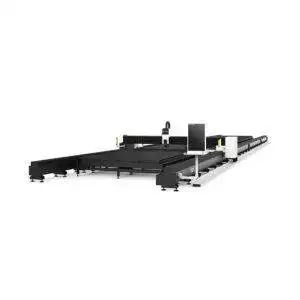
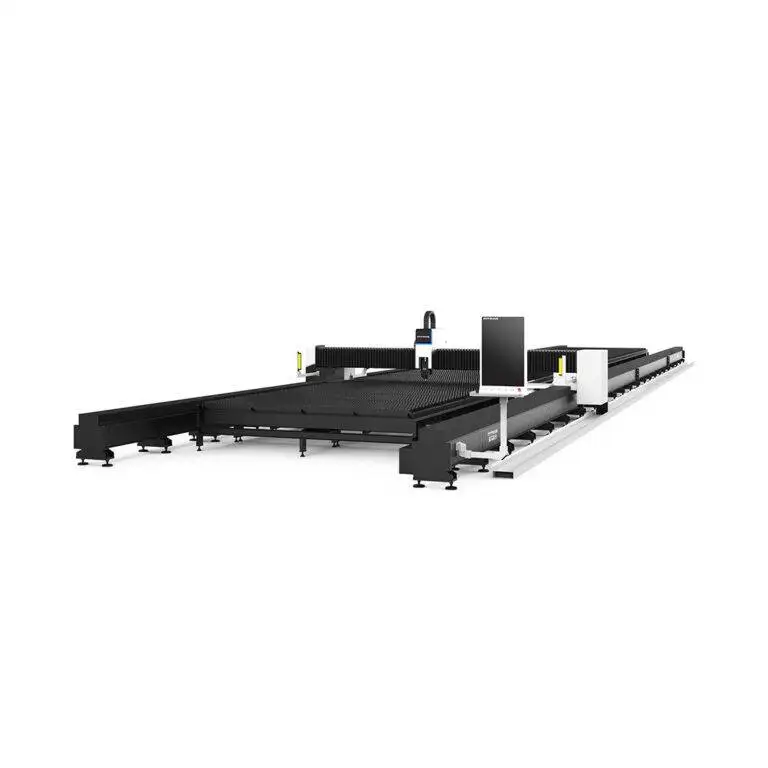
The optical beam quality of a fiber laser remains consistent regardless of the distance from the source. This is particularly advantageous for the extra-large cutting beds used in wind energy fabrication, which can exceed 30 meters in length. The stability of the beam ensures that the kerf width and edge taper remain uniform across the entire surface area of the plate, preventing the structural inconsistencies often found in alternative thermal cutting methods.
Single-Pass Efficiency: Punch, Mark, and Cut
One of the most significant advantages of modern fiber laser centers is the ability to consolidate multiple manufacturing steps into a single setup. In the context of wind tower internals—such as platforms, ladders, and flange connections—the machine can perform three distinct operations sequentially:
Integrated Punching and Hole Piercing
Fiber lasers can pierce thick carbon steel in fractions of a second. The system uses high-pressure oxygen or nitrogen as an assist gas to create bolt holes that are perfectly round and free of taper. This eliminates the need for mechanical drilling or separate punching stations, reducing the movement of heavy materials across the shop floor.
Automated Part Marking
Traceability is a regulatory requirement in the energy sector. Fiber lasers can be switched to a low-power marking mode to etch serial numbers, heat codes, and alignment guides directly onto the surface of the steel. This high-contrast marking survives subsequent coating processes and ensures that every component is tracked throughout the tower’s lifecycle.
Final Profile Cutting
Once marking and piercing are complete, the laser immediately transitions to full-power profile cutting. Because the part remains clamped in the same coordinate system throughout all three phases, the spatial relationship between the holes, the markings, and the outer profile is maintained with absolute fidelity. This no grinding workflow ensures that components are ready for immediate assembly upon leaving the laser bed.
Eliminating Secondary Surface Preparation
In traditional heavy-plate fabrication, the “edge preparation” phase is often a bottleneck. When edges are cut with less precise methods, they must be manually ground to remove oxidation, slag, and surface hardening. This process is labor-intensive, creates significant noise and dust, and introduces the risk of human error. Fiber laser cutting utilizes high-frequency pulses and optimized gas flow to produce an edge that is chemically and physically ready for the next stage of production.
By eliminating the need for manual grinding, manufacturers can redirect labor to more complex assembly tasks. Furthermore, the absence of a significant heat-affected zone means that the metallurgical properties of the S355 or S420 grade steels commonly used in wind towers are not compromised. The integrity of the grain structure remains intact, which is vital for the fatigue resistance of the tower under the dynamic loads of the rotating turbine.
Nesting Software and OEE Optimization
The software layer of a fiber laser system is as important as the hardware. Advanced nesting algorithms take full advantage of zero-tailing capabilities by calculating the optimal layout for various parts on a single sheet. These algorithms can perform “common line cutting,” where two parts share a single cut path, further reducing the time the laser is active and saving gas consumption.
From a management perspective, the integration of these machines into a factory’s ERP system allows for real-time monitoring of Overall Equipment Effectiveness (OEE). Data regarding cutting speed, gas usage, and downtime is captured and analyzed. Because fiber lasers have no moving parts in the light-generating source, they offer significantly higher uptime compared to older technologies. This reliability is a cornerstone for the just-in-time manufacturing schedules required in the renewable energy supply chain.
Conclusion: The Future of Sustainable Fabrication
The adoption of fiber laser cutting with Zero-tailing technology represents a shift toward more sustainable and cost-effective wind tower fabrication. By maximizing material utilization and removing the friction of secondary grinding and manual layout, industrial engineers can achieve a streamlined production flow. The precision of the laser ensures that the towers of tomorrow are built with the highest standards of safety and efficiency, supporting the global transition to clean energy through superior manufacturing technology.