Optimization of Oil & Gas Tank Fabrication via Fiber Laser Systems
In the demanding landscape of energy infrastructure, the fabrication of storage tanks and pressure vessels requires a level of precision that traditional thermal cutting methods often struggle to maintain. Industrial engineers are increasingly pivoting toward high-wattage Fiber Laser Cutting platforms to meet stringent API and ASME standards. Unlike CO2 variants, fiber lasers utilize an optical fiber doped with rare-earth elements, resulting in a beam with a significantly smaller focal diameter and higher energy density. For the Oil & Gas sector, this translates to cleaner edges, reduced heat-affected zones (HAZ), and the total elimination of post-process grinding.
The shift toward these systems is driven by the need for structural integrity. In tank fabrication, every nozzle cutout and shell plate must align with sub-millimeter accuracy to ensure structural stability under high-pressure conditions. Fiber laser technology provides the mechanical stability and software-driven control necessary to execute complex geometries while maintaining the metallurgical properties of the parent material.
The Mechanics of Zero-Tailing Technology
Material waste is a significant cost driver in the production of tank supports, piping manifolds, and internal structural components. Traditional tube and plate cutting systems often leave a “tail” or “dead zone”—a section of material that the chucks cannot reach or stabilize, leading to significant scrap rates. Zero-tailing technology addresses this inefficiency through advanced multi-chuck synchronization.
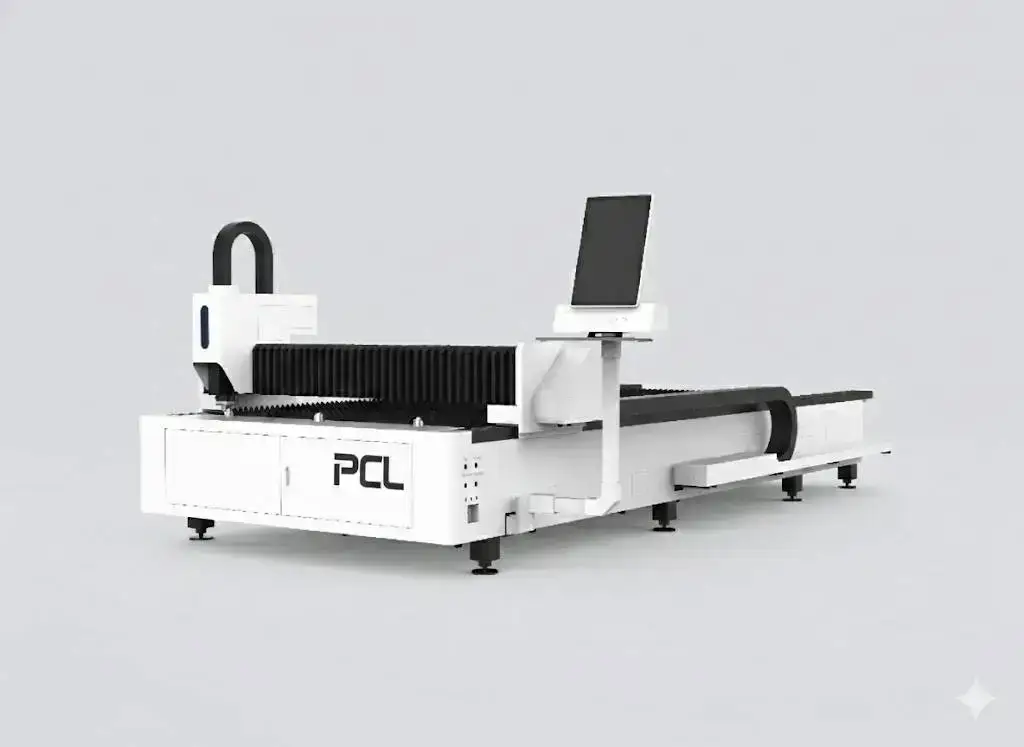
In a zero-tailing configuration, typically involving a three-chuck or four-chuck pneumatic system, the machine can pass the workpiece through the final chuck. This allows the laser head to cut directly up to the edge of the material held by the remaining supports. From an industrial engineering perspective, this maximizes the yield per raw material unit. When processing expensive alloys or heavy-wall carbon steel for gas storage, the reduction in scrap directly improves the ROI of the equipment. The synchronized movement of the chucks ensures that even as the material length decreases, the center-line stability is maintained, preventing vibration-induced deviations in the cut path.
Integrated Workflow: Punch, Mark, and Cut
One of the primary advantages of fiber laser systems in tank production is the ability to consolidate multiple manufacturing stages into a single CNC program. This “Punch, Mark, and Cut” capability streamlines the shop floor layout and reduces the Total Cost of Ownership (TCO).
High-Speed Piercing (Punch)
Before a cut can begin, the laser must “punch” through the material. Fiber lasers utilize frequency-modulated pulsing to pierce thick steel without creating large craters or excessive slag. This controlled piercing is critical for the thick wall sections common in Oil & Gas tanks, as it protects the integrity of the surrounding material and ensures a clean start point for the subsequent contour cutting.
Automated Component Traceability (Mark)
Traceability is non-negotiable in the energy sector. Fiber lasers can be detuned via software to perform high-speed surface marking. This allows the machine to etch heat numbers, part ID codes, and assembly markers directly onto the tank plates or nozzle pipes before they are cut. Because this is done by the same laser source with the same coordinate system, the accuracy of the marking relative to the cut geometry is absolute.
Precision Contour Execution (Cut)
The final phase involves the actual separation of the material. The high beam quality of Fiber Laser Cutting systems ensures a narrow kerf width. This narrow cut path allows for tighter nesting of parts, complementing the zero-tailing hardware to further reduce material waste. The resulting edge quality (low Ra value) is such that the components can move directly to assembly without the need for manual edge dressing or grinding.
Thermal Management and Structural Integrity
Industrial engineers must account for thermal distortion when designing tank components. Traditional high-heat processes can alter the grain structure of the steel, leading to potential failure points under cyclic loading. Fiber lasers operate at a wavelength (typically 1.06 microns) that is highly absorbed by metals, allowing for faster cutting speeds at lower total heat inputs.
By minimizing the duration of heat exposure, the heat-affected zone is kept remarkably small. This is particularly vital for the longitudinal and circumferential joints of a tank shell. When the cut edge remains metallurgically sound, the subsequent fit-up is more precise. This precision eliminates the “gaps” often found in lower-quality fabrication, ensuring that the final assembly meets the high-safety requirements of the Oil & Gas industry.
Operational Efficiency and Labor Reduction
The implementation of Zero-tailing technology combined with fiber laser precision significantly reduces the man-hours required per tank. In conventional workflows, parts often require secondary processing to remove dross or to correct dimensional inaccuracies caused by mechanical shear or lower-tier cutting methods.
By achieving a “ready-to-assemble” state directly from the laser bed, the bottleneck of the grinding station is eliminated. Furthermore, the automation of the chucks in zero-tailing systems reduces the need for manual material repositioning. Modern CNC interfaces allow for seamless integration with ERP systems, enabling engineers to track material usage in real-time and optimize nesting patterns for upcoming production runs based on current inventory.
Conclusion for Industrial Implementation
For facilities specializing in Oil & Gas tank fabrication, the adoption of fiber laser systems with zero-tailing capabilities represents a shift toward “lean” manufacturing. The technology addresses the two most significant overheads in heavy fabrication: material waste and secondary labor. By utilizing the “Punch, Mark, and Cut” workflow, manufacturers ensure that every component—from the smallest nozzle flange to the largest shell plate—is produced with a level of repeatability that manual processes cannot match.
As the industry moves toward more stringent environmental and safety regulations, the precision afforded by fiber lasers becomes a competitive necessity. The ability to utilize nearly 100% of a raw pipe or sheet through zero-tailing synchronization, while maintaining the thermal integrity of the metal, positions these machines as the centerpiece of the modern industrial fabrication shop.
-
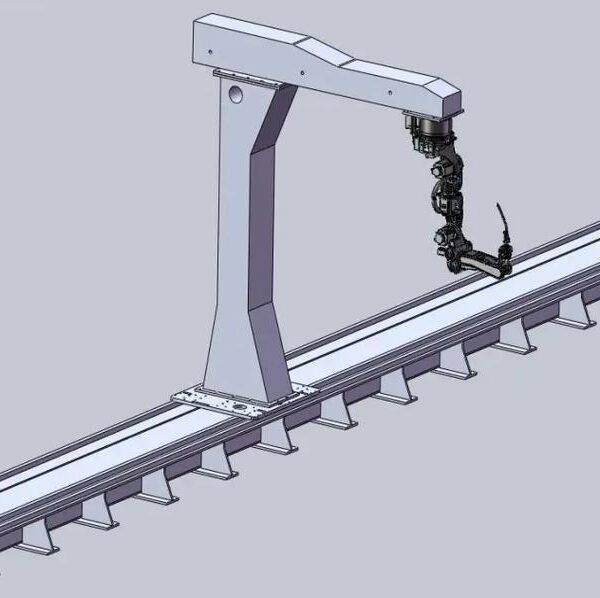

Cantilever Welding Robot solution
-
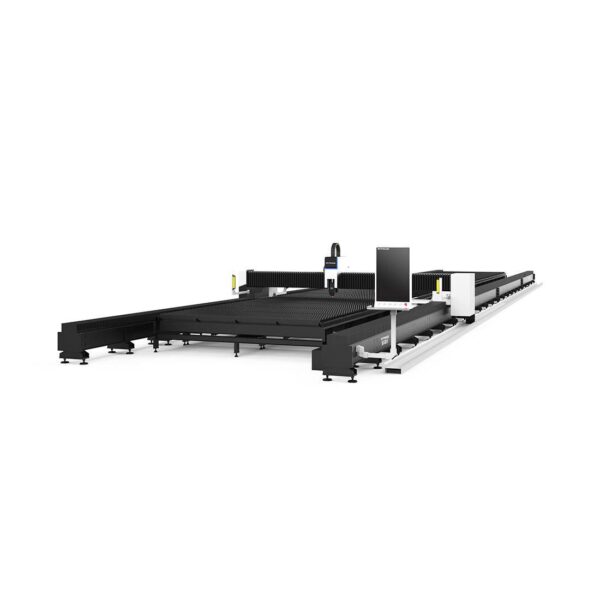

GF laser cutting machine
-
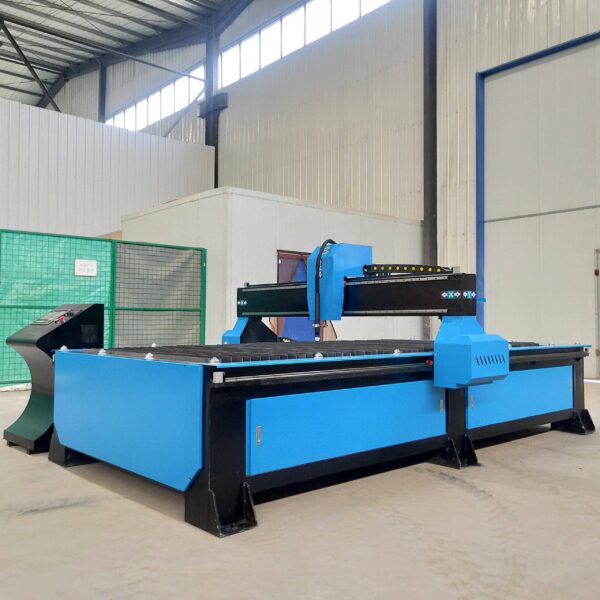
P3015 plasma cutting machine
-

LFP3015 Fiber Laser Cutter
-
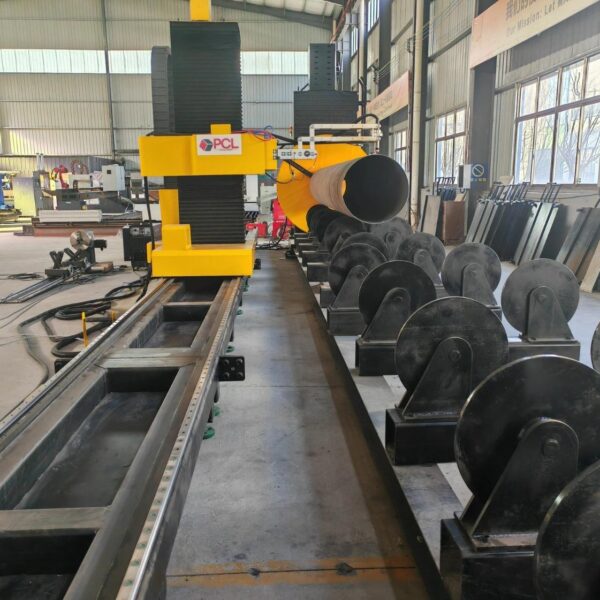
pipe plasma cutting machine
-
LFH 4020 Fiber Laser Cutting Machine
-
LFP4020
-
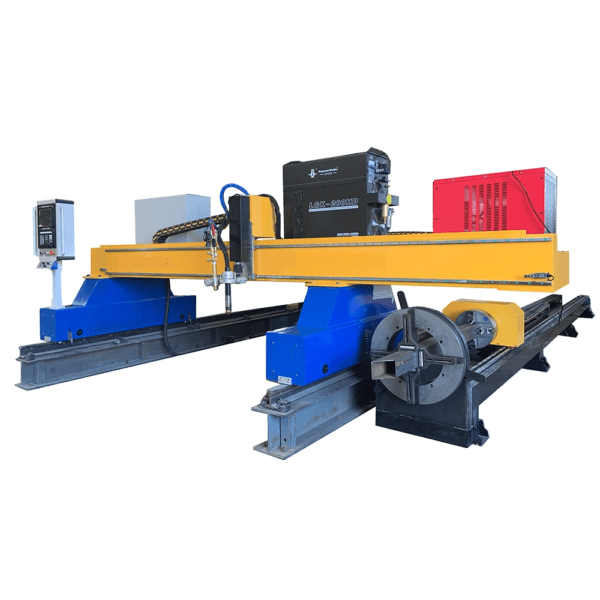
gantry plasma air cutting machine
-
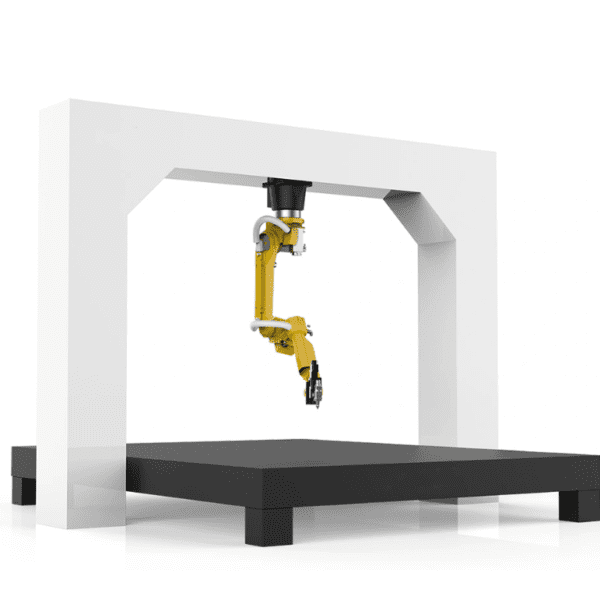
3D robot cutting machine
-
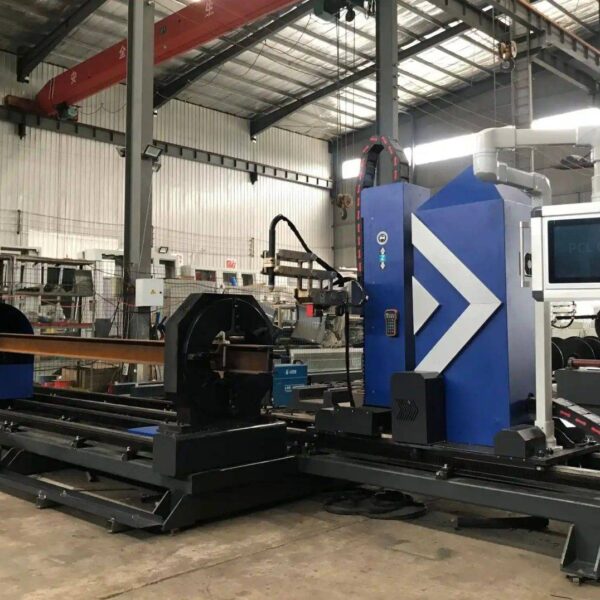
8 axis plasma cutting machine
-
5 axis plasma cutting machine
-

LT360 tube laser cutting machine
-
robot welding workstation
-
SF6060 fiber laser cutting machine
Advanced Fiber Laser Tube Processing Technology
Our CNC Fiber Laser Tube Cutting systems revolutionize metal fabrication by integrating high-precision cutting, punching, and profiling into a single automated workflow. Designed for versatility, this technology handles a wide array of profiles including Round, Square, Rectangular, and Oval tubes, as well as complex L-shaped and U-shaped channels.
- Precision Punching: High-speed hole punching with micron-level accuracy, eliminating the need for mechanical drilling or die-stamping.
- Complex Profiling: Advanced 3D pathing allows for intricate interlocking joints and specialized notch cuts, ideal for structural frames.
- High Material Efficiency: Intelligent nesting software minimizes scrap, reducing raw material costs across large production runs.
- Clean Finish: Delivers oxide-free, burr-free edges that require zero secondary grinding before welding.

Seamlessly processing multiple profiles with consistent precision.
Global Delivery & Logistics



From our high-tech manufacturing facility directly to your global site. PCL WeldCut ensures secure packaging, professional handling, and reliable international logistics to safeguard your equipment throughout the entire journey.
One thought on “Fiber Laser Cutting Machine with Zero-tailing technology for for Oil & Gas Tanks”
Fast shipping to our facility. The setup was straightforward for our team.