Optimizing Bridge Truss Fabrication via Fiber Laser Cutting Systems
Bridge truss manufacturing demands rigorous adherence to dimensional tolerances and structural reliability. In traditional industrial workflows, the preparation of heavy-duty sections—such as H-beams, I-beams, and square tubing—often involved multi-step processes that introduced cumulative errors. The advent of high-power Fiber laser cutting technology has redefined these workflows by consolidating disparate operations into a single, high-precision CNC environment. For industrial engineers, the primary objective is to maximize throughput while minimizing secondary labor costs and material waste.
The Mechanics of Zero-Tailing Technology
In the context of heavy structural sections used in bridge trusses, material cost represents a significant portion of the total project expenditure. Conventional tube or profile cutting machines often leave a substantial “tailing” at the end of the stock material because the chuck cannot feed the final section into the cutting head’s path. This results in scrap pieces ranging from 300mm to 800mm in length.
Multi-Chuck Coordination for Material Savings
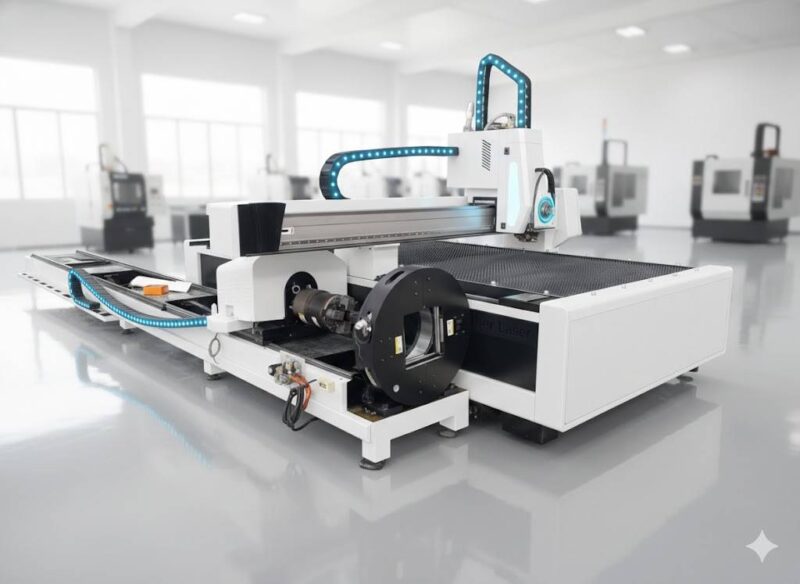
Zero-tailing technology utilizes a multi-chuck system—typically involving three or four independent CNC chucks—to facilitate continuous material support. As the laser reaches the end of a profile, the chucks reposition dynamically, handing off the workpiece so the cutting head can process the material up to the very edge. for Bridge Trusses, where material thickness and weight are substantial, reducing this waste to near-zero provides a measurable increase in material utilization rates, directly impacting the bottom line of large-scale infrastructure projects.
Structural Implications of Precision Feeding
Beyond simple waste reduction, the mechanical stability of a zero-tailing system ensures that the profile does not vibrate or shift during the final cuts. This stability is critical when cutting complex geometries or interlocking joints required for truss nodes, where a deviation of even a millimeter can compromise the load-bearing integrity of the entire assembly.
Precision Processing: Punching, Marking, and Cutting
A significant advantage of the modern fiber laser is its ability to perform multiple functions without unloading the workpiece. In bridge truss fabrication, the “one-hit” philosophy reduces handling time and eliminates the risk of misalignment between different machines.
Integrated Hole Punching and Percussion Drilling
While traditional mechanical punching can deform the surrounding crystalline structure of the steel, fiber lasers use ultra-fast percussion or helical drilling techniques to create bolt holes. These holes are perfectly perpendicular and exhibit a mirror-like finish. Because the laser beam diameter is extremely narrow, the kerf width is minimal, allowing for tight-tolerance bolt placements that are essential for the vibration resistance of bridge structures.
Automated Part Marking and Traceability
Traceability is a non-negotiable requirement in bridge engineering. Fiber lasers can be programmed to etch assembly codes, heat numbers, and orientation markers directly onto the surface of the truss members. This marking is performed at high speed with low power, ensuring that the structural integrity of the metal is not compromised while providing permanent, legible data for on-site assembly teams.
High-Speed Contour Cutting
The primary function remains the high-speed cutting of the profiles. Whether it is a simple 90-degree cut or a complex bevel for a specialized joint, the fiber laser maintains constant speed and power. The high energy density of the 10kW+ fiber source allows for rapid vaporization of the metal, resulting in a cut that is vastly superior to mechanical or older thermal methods.
Eliminating Secondary Processes: The No-Grinding Advantage
From an industrial engineering standpoint, the “hidden” cost of manufacturing is often found in post-processing. Traditional cutting methods often leave dross, slag, or a hardened carbon layer that must be manually removed via grinding before the components can be treated or joined.
Metallurgical Integrity and Heat-Affected Zones
Fiber lasers operate with a localized heat source, which results in an extremely narrow Heat-Affected Zone (HAZ). This is particularly important for high-strength structural steels used in bridges, where excessive heat can alter the mechanical properties of the alloy. Because the HAZ is so small, the edges do not undergo significant phase transformation or hardening. This means the cut surface remains ductile and ready for immediate use.
Surface Quality for Coating Adhesion
The edges produced by a fiber laser are remarkably smooth, often achieving an Ra value that meets international standards for bridge construction without additional surfacing. This “no-grinding” reality eliminates hours of manual labor per truss. Furthermore, the absence of slag ensures that protective coatings—such as galvanization or high-performance paint systems—adhere perfectly to the edges, preventing the onset of corrosion in critical structural joints.
Industrial Efficiency and Throughput Analysis
Implementing a fiber laser with zero-tailing capability shifts the bottleneck from the cutting stage to the assembly stage. By utilizing sophisticated nesting software, engineers can optimize the layout of multiple truss components on a single length of raw material. The software accounts for the zero-tailing chuck movements, ensuring that the sequence of cuts maintains structural integrity throughout the process.
Reduction in Labor Hours
By consolidating marking, punching, and cutting into one machine cycle, the labor hours per ton of steel are drastically reduced. The elimination of manual layout—formerly done with chalk and tape measures—further removes human error from the equation. The precision of the laser-cut components ensures that during field assembly, parts “click” together with minimal force, reducing the need for on-site adjustments.
Maintenance and Operational Uptime
Fiber lasers are solid-state devices with no moving parts in the light-generation source. This leads to higher uptime compared to other thermal cutting systems. In the context of bridge project deadlines, which often carry heavy liquidated damages for delays, the reliability of the fiber laser system provides a necessary safeguard for the production schedule.
Conclusion
The integration of zero-tailing fiber laser cutting systems represents a fundamental shift in how bridge trusses are engineered and manufactured. By focusing on high-precision output, eliminating the need for secondary grinding, and maximizing material yield through advanced chuck configurations, manufacturers can achieve unprecedented levels of efficiency. As infrastructure demands grow more complex, the ability to produce perfectly marked, punched, and cut structural members in a single pass will remain the benchmark for industrial excellence in bridge construction.
-
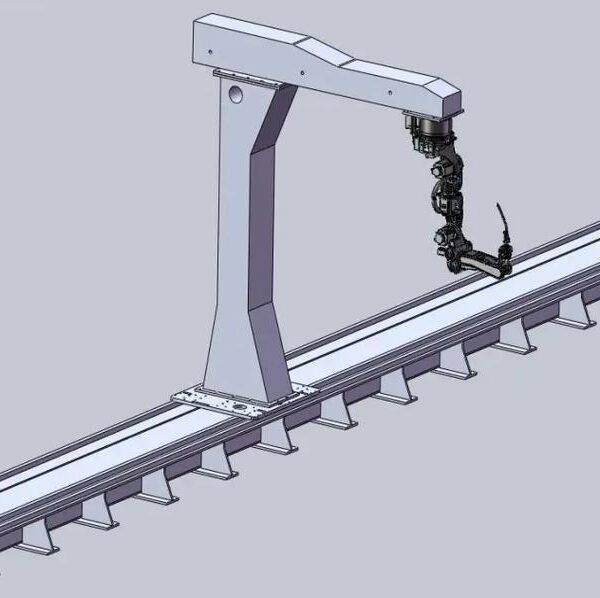

Cantilever Welding Robot solution
-
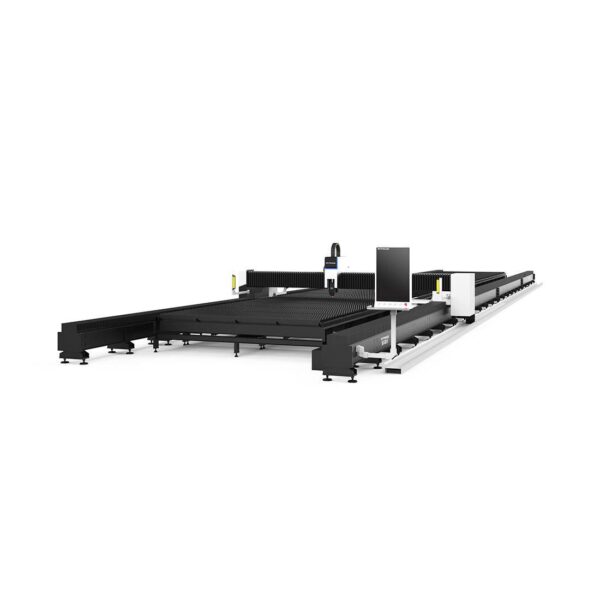

GF laser cutting machine
-
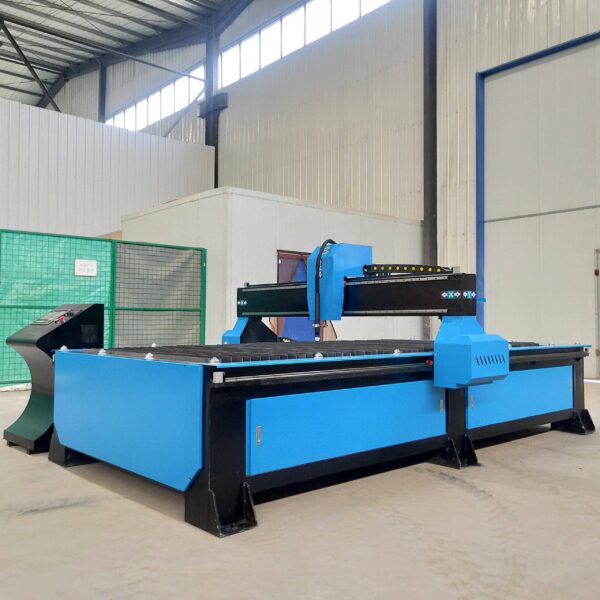
P3015 plasma cutting machine
-

LFP3015 Fiber Laser Cutter
-
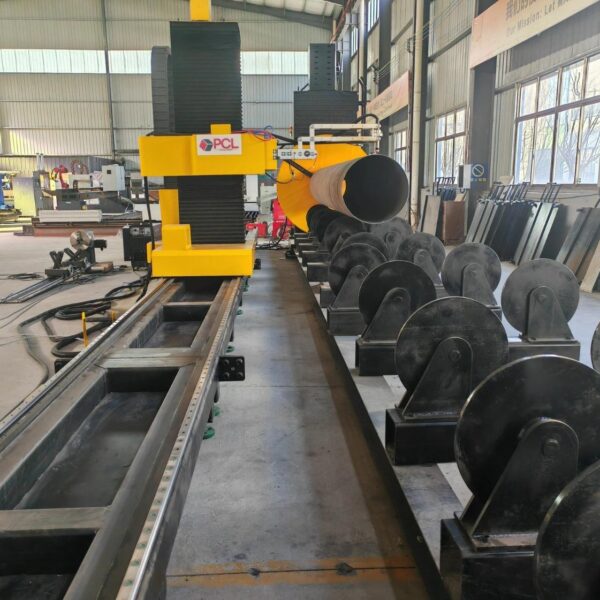
pipe plasma cutting machine
-
LFH 4020 Fiber Laser Cutting Machine
-
LFP4020
-
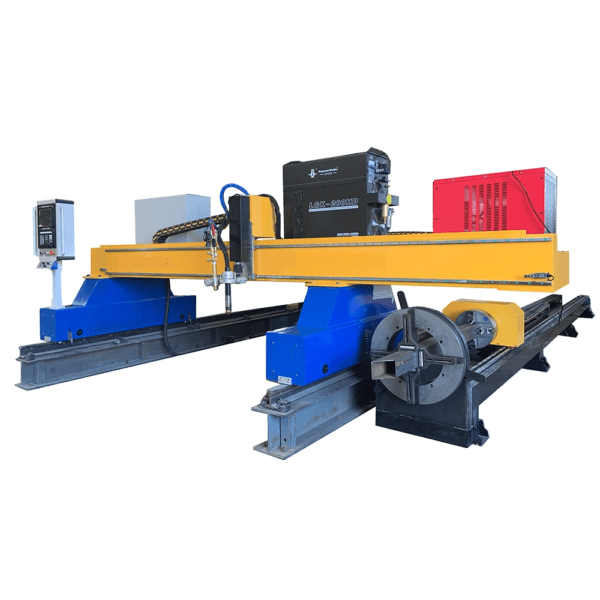
gantry plasma air cutting machine
-
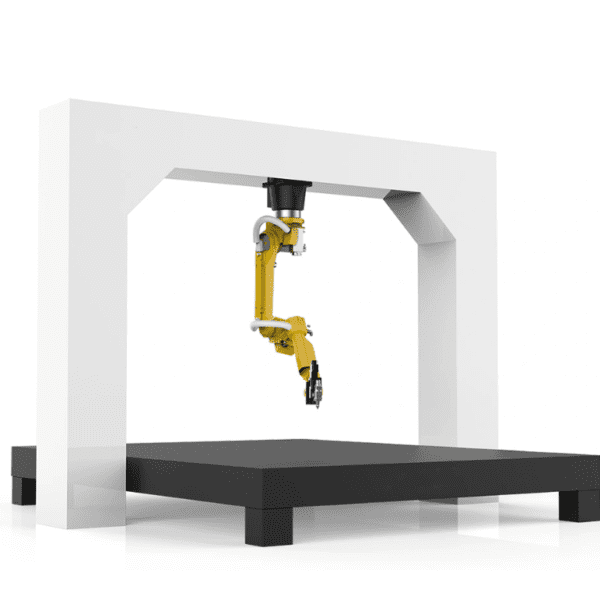
3D robot cutting machine
-
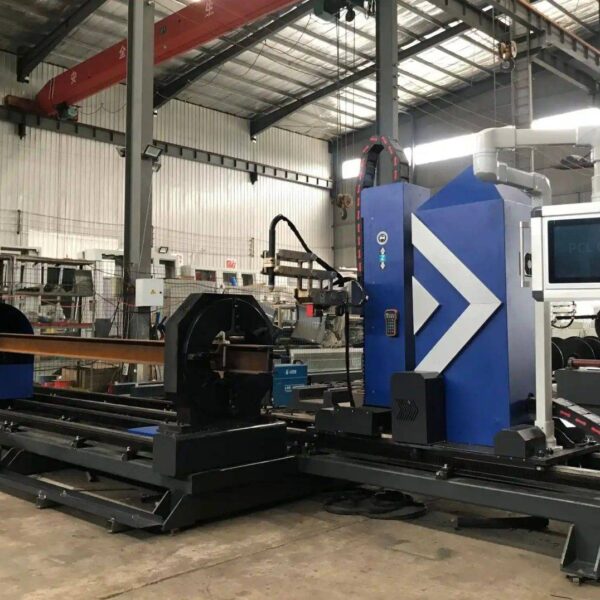
8 axis plasma cutting machine
-
5 axis plasma cutting machine
-

LT360 tube laser cutting machine
-
robot welding workstation
-
SF6060 fiber laser cutting machine
Advanced Fiber Laser Tube Processing Technology
Our CNC Fiber Laser Tube Cutting systems revolutionize metal fabrication by integrating high-precision cutting, punching, and profiling into a single automated workflow. Designed for versatility, this technology handles a wide array of profiles including Round, Square, Rectangular, and Oval tubes, as well as complex L-shaped and U-shaped channels.
- Precision Punching: High-speed hole punching with micron-level accuracy, eliminating the need for mechanical drilling or die-stamping.
- Complex Profiling: Advanced 3D pathing allows for intricate interlocking joints and specialized notch cuts, ideal for structural frames.
- High Material Efficiency: Intelligent nesting software minimizes scrap, reducing raw material costs across large production runs.
- Clean Finish: Delivers oxide-free, burr-free edges that require zero secondary grinding before welding.

Seamlessly processing multiple profiles with consistent precision.
Global Delivery & Logistics



From our high-tech manufacturing facility directly to your global site. PCL WeldCut ensures secure packaging, professional handling, and reliable international logistics to safeguard your equipment throughout the entire journey.