Fiber Laser Cutting Machine with Narrow Gap welding for Oil & Gas Tanks
In this article
- Optimizing Oil & Gas Tank Fabrication via High-Power Fiber Laser Cutting
- The Technical Superiority of Fiber Laser Precision
- The Integrated Punch-Mark-Cut Workflow
- Eliminating Post-Processing: The No-Grinding Mandate
- Metallurgical Integrity and the Heat Affected Zone (HAZ)
- Synergy with Narrow Gap welding Preparations
- Economic Impact and Resource Efficiency
- Final Engineering Summary
Optimizing Oil & Gas Tank Fabrication via High-Power Fiber Laser Cutting
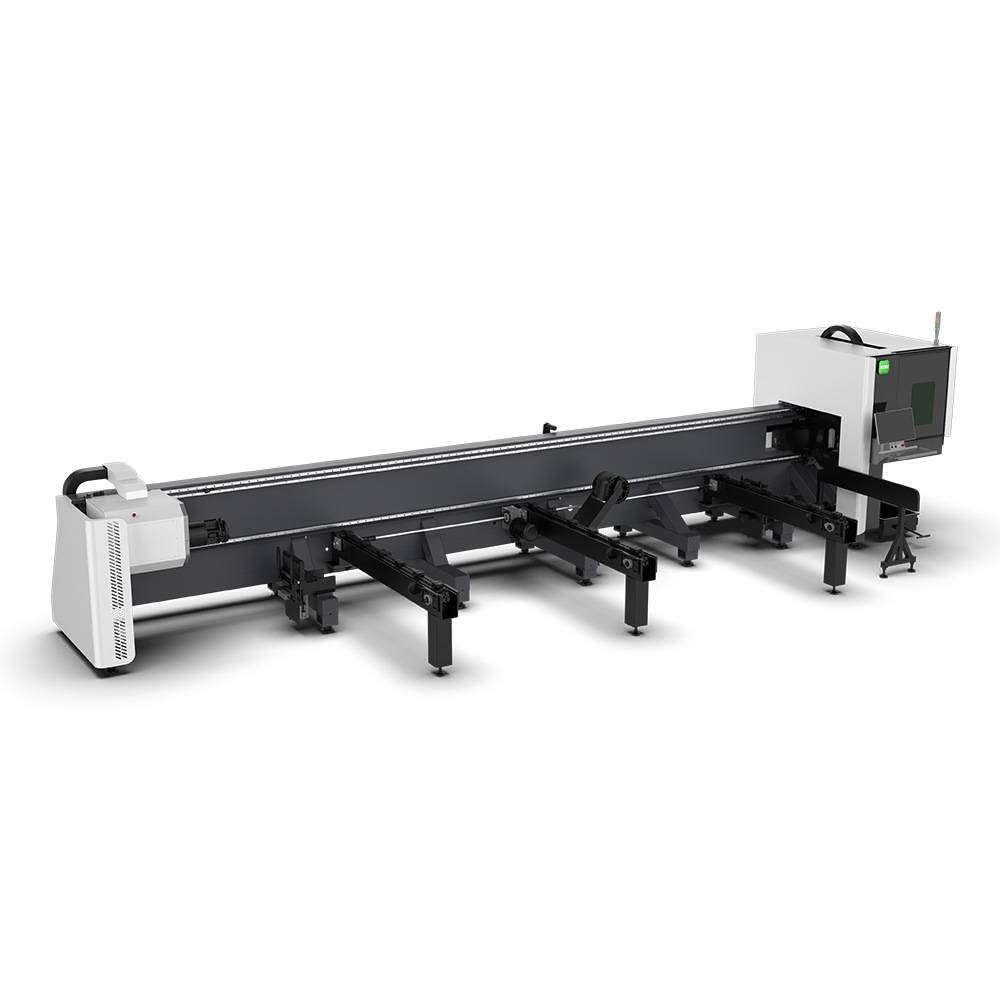
In the heavy industrial sector, specifically the manufacturing of Oil & Gas storage tanks and pressure vessels, the requirement for structural integrity is absolute. The transition from legacy thermal cutting methods to Fiber Laser Technology has redefined the precision standards for plate preparation. When preparing heavy-gauge carbon steel or stainless steel plates for Narrow Gap Welding (NGW), the tolerances for edge squareness and surface finish become critical variables. This engineering report details how Fiber Laser Cutting Machines act as the primary catalyst for reducing downstream assembly errors and enhancing metallurgical reliability.
The Technical Superiority of Fiber Laser Precision
Fiber lasers operate at a wavelength of approximately 1.06 microns, allowing for a much smaller focal spot size compared to traditional CO2 alternatives. for Oil & Gas Tanks, which often utilize thicknesses ranging from 12mm to over 30mm, this focusability translates into an exceptionally narrow kerf. High-power systems, often exceeding 12kW, provide the necessary energy density to achieve verticality tolerances that meet or exceed ISO 9013 Class 1 standards.
Precision in the cutting phase is not merely about dimensional accuracy; it is about the geometric consistency of the bevel and the straight edge. When plates are prepared for NGW, any deviation in the root face or the groove angle can lead to inconsistent penetration during the welding phase. Fiber laser cutting ensures a Dimensional Accuracy within +/- 0.05mm, which eliminates the “fit-up” struggles commonly found in large-scale tank shell assembly. This level of repeatability is essential for automated welding cells where the robot or tractor expects a perfectly uniform path.
The Integrated Punch-Mark-Cut Workflow
One of the most significant operational advantages of modern fiber laser machines is the ability to execute a multi-functional sequence in a single nesting program. For tank fabrication, this involves three distinct phases: punching/piercing, marking, and final cutting.
1. Dynamic Piercing (Punching)
High-speed pulsing techniques allow the laser to “punch” through thick plate with minimal splatter. By controlling the frequency and duty cycle, the machine avoids the “crater” effect at the start point. This is vital for the integrity of the plate, as it ensures that the entry point of the cut does not create a localized stress riser in the tank wall.
2. Strategic Marking
The marking function uses the laser at a lower power setting to etch part numbers, alignment lines, and nozzle locations directly onto the surface. In Oil & Gas applications, where traceability is a regulatory requirement, the ability to mark the plate during the cutting process ensures that heat numbers and material certifications remain permanently associated with the physical component without the need for manual stamping or secondary ink-jetting.
3. High-Precision Cutting
The final cutting phase utilizes high-pressure assist gases—typically oxygen for carbon steel or nitrogen for stainless steel—to eject molten material. The result is a clean, oxide-free or low-oxide edge that requires no secondary cleanup. This leads directly to the next critical engineering advantage: the elimination of manual labor in edge preparation.
Eliminating Post-Processing: The No-Grinding Mandate
In traditional fabrication shops, thermal cutting is almost always followed by intensive mechanical grinding. The dross, slag, and hardened edges produced by lower-quality cutting methods are unacceptable for Narrow Gap Welding. Grinding not only introduces labor costs but also risks thinning the base material or introducing contaminants into the weld zone.
Fiber laser cutting produces a surface finish (Ra) that is significantly smoother than other thermal processes. The high energy density and precise gas flow control result in a dross-free bottom edge. From an industrial engineering perspective, the “as-cut” surface is ready for immediate fit-up. By removing the grinding station from the workflow, manufacturers reduce the total cycle time per tank section by 20-30%. Furthermore, the reduction in airborne particulates from grinding improves the health and safety environment of the facility.
Metallurgical Integrity and the Heat Affected Zone (HAZ)
The Heat Affected Zone is a primary concern for engineers designing pressure vessels under ASME Section VIII or similar codes. Excessive heat input during the cutting process can alter the grain structure of the steel, leading to localized hardening or embrittlement. This is particularly dangerous in Oil & Gas environments where hydrogen-induced cracking (HIC) or stress corrosion cracking (SCC) are risks.
The high travel speeds of fiber laser cutting—often 3 to 5 times faster than older technologies on medium thicknesses—ensure that the total heat input into the material remains low. The concentrated beam creates a very narrow HAZ, often measuring less than 0.1mm. This minimal thermal impact ensures that the parent metal retains its specified mechanical properties right up to the edge of the cut. For Narrow Gap Welding, which relies on precise control of the fusion zone, having a pristine, metallurgically stable edge is a prerequisite for passing non-destructive testing (NDT), such as ultrasonic or radiographic inspection.
Synergy with Narrow Gap welding Preparations
Narrow Gap Welding is characterized by a reduced groove angle (often between 1 and 5 degrees) compared to standard V-grooves. This reduction significantly decreases the volume of weld metal required, which in turn reduces the number of weld passes and the total heat input into the tank shell. However, NGW is highly sensitive to variations in the gap width.
The fiber laser’s ability to maintain perfectly straight, parallel edges over long lengths (up to 12 meters or more for large tank sections) makes it the ideal companion for NGW. When the fiber laser provides a perfectly consistent root face and a precise bevel, the automated welding system can operate at peak efficiency. There is no need for the welding operator to compensate for “wavering” gaps or uneven plate edges. This synergy results in a higher “arc-on” time and a drastic reduction in weld defects such as lack of side-wall fusion or inclusions.
Economic Impact and Resource Efficiency
From an ROI standpoint, the fiber laser cutting machine offers a multifaceted benefit. Beyond the speed of the cut, the material utilization is optimized through advanced nesting software that can place parts closer together due to the small kerf. In the fabrication of large-diameter oil tanks, even a 2% increase in material utilization can result in significant annual savings on raw steel costs.
Furthermore, the electrical efficiency of fiber laser resonators—often exceeding 40% wall-plug efficiency—lowers the operational cost per meter of cut. When combined with the lack of secondary finishing and the reduced consumables in the welding phase (due to NGW), the total cost of ownership (TCO) for the tank fabrication process is substantially lowered. The engineering goal of “doing it right the first time” is achieved through the mechanical precision of the laser, which stabilizes the entire production chain.
Final Engineering Summary
The adoption of fiber laser cutting in the Oil & Gas sector is not merely an upgrade in speed; it is a fundamental shift in quality control. By providing a high-precision, low-heat method for plate preparation, fiber lasers enable the successful implementation of Narrow Gap Welding techniques. The elimination of grinding, the integration of marking for traceability, and the maintenance of tight dimensional tolerances ensure that the resulting tanks and vessels meet the highest safety and performance standards. For the industrial engineer, the fiber laser is the foundational tool that permits a leaner, more repeatable, and technically superior fabrication process.