Integrating Fiber Laser Precision in Large-Scale Steel Fabrication
In the current landscape of structural steel engineering, the transition from traditional thermal cutting to high-density Fiber Laser Technology represents a fundamental shift in production efficiency. Large-scale components, such as H-beams, bridge girders, and maritime plates, have historically required significant manual intervention to meet tolerance standards. The introduction of a magnetic crawler-mounted fiber laser system addresses the mobility constraints of stationary machines, bringing the precision of a CNC laser center directly to the workpiece.
The industrial logic behind this technology centers on the elimination of the heat-affected zone (HAZ) variances and the mechanical stresses associated with traditional shearing or mechanical punching. By utilizing a high-energy fiber beam delivered via flexible transport fibers, the crawler system maintains a consistent focal point even when traversing irregular surfaces. This ensures that the kerf width remains uniform across the entire length of the cut, which is critical for the subsequent assembly of complex steel frameworks.
The Mechanics of Magnetic Crawler Adhesion and Motion Control
The core of the system is the Magnetic Crawler Integration, which utilizes high-intensity permanent magnets or switchable electromagnets to adhere to carbon steel surfaces. From an engineering perspective, the stability of this platform is paramount. Any vibration or slip during the motion cycle would translate into serrations on the cut edge, compromising the structural certification of the component. The crawler employs high-torque servo motors paired with precision encoders to achieve positioning accuracy within +/- 0.1mm.
Because the laser head is mounted on a multi-axis gantry atop the crawler, it can compensate for slight deviations in the steel plate’s flatness. Capacitive height sensors maintain a constant distance between the nozzle and the material, ensuring that the laser’s power density is maximized at the point of impact. This level of motion control allows for the execution of complex geometries that were previously impossible for portable equipment.
Eliminating Secondary Processes: No Grinding Required
One of the primary bottlenecks in steel fabrication is the requirement for secondary grinding. When conventional thermal methods are used, the resulting edge often exhibits heavy dross, oxidation, and roughness that prevents immediate assembly. A fiber laser, operating at a wavelength of approximately 1.06 microns, produces a concentrated energy spot that vaporizes metal almost instantly.
The result is a dross-free, clean edge with a surface finish that meets or exceeds ISO 9013 Grade 1 standards. For structural engineers, this means that parts can move directly from the cutting stage to the assembly stage. The removal of the grinding phase not only reduces labor costs by approximately 30-40% per component but also improves the safety of the workshop environment by significantly reducing metallic dust and noise pollution.
Triple Functionality: Punching, Marking, and Cutting
Modern Automated Steel Fabrication requires more than just severance. The magnetic crawler fiber laser system is engineered to perform three distinct operations in a single programmed sequence, which significantly optimizes the workflow of the industrial shop floor.
1. Precision Punching and Hole Piercing
Unlike mechanical punching, which can cause deformation around the hole circumference, the fiber laser “punches” through high-speed piercing cycles. This allows for the creation of bolt holes with perfect circularity and no taper. The system can handle various thickness-to-diameter ratios, ensuring that even thick-walled structural members are prepped for high-strength bolting without the need for subsequent reaming.
2. High-Contrast Marking and Layout
Before the cutting begins, the laser can be detuned to a lower power setting to perform marking. This involves etching part numbers, assembly lines, or weld prep indicators directly onto the steel surface. Because this is done in the same coordinate system as the cutting, the placement of these marks is mathematically perfect. This eliminates manual layout errors and speeds up the fit-up process for downstream assembly teams.
3. Final High-Speed Cutting
The final phase is the high-speed severance of the part. The fiber laser’s ability to maintain high speeds on thick carbon steel (up to 20mm or more depending on wattage) ensures that the thermal input into the rest of the plate is kept to a minimum. This prevents the warping or “bowing” often seen in large plates, maintaining the geometric integrity of the entire structural section.
Thermal Management and Material Integrity
From a metallurgical standpoint, Non-Contact Cutting Precision is vital for maintaining the specified yield strength of the steel. Traditional methods often result in a large heat-affected zone that can alter the grain structure of the metal, potentially leading to brittle fractures in high-stress applications. The fiber laser’s high power density allows for extremely fast travel speeds, which means the heat is localized to a very narrow strip.
This localized heating preserves the mechanical properties of the surrounding material. For engineers working on bridge construction or skyscraper skeletons, this means the “as-cut” piece retains its design characteristics without the need for post-cut heat treatment or stress-relieving cycles. The narrow kerf also allows for tighter nesting of parts, reducing material waste and improving the overall buy-to-fly ratio of the steel stock.
Operational Efficiency and ROI for Steel Fabricators
The implementation of a magnetic crawler fiber laser system is a strategic investment in throughput. When calculating the Return on Investment (ROI), industrial engineers must look beyond the initial capital expenditure. The value is found in the reduction of “total cycle time.” By combining marking, punching, and cutting into one mobile unit, the number of material handling steps is reduced from five or six down to two.
Furthermore, the maintenance requirements of fiber lasers are significantly lower than other technologies. With no internal moving parts in the resonator and a long diode life, the uptime of these systems often exceeds 98%. When combined with the mobility of the magnetic crawler, the machine can be deployed across different sections of a large-scale project, effectively acting as a mobile CNC factory floor.
Conclusion: The Future of On-Site Structural Processing
The convergence of fiber laser precision and robotic mobility marks a new era for the steel structure industry. By prioritizing edge quality, eliminating secondary grinding, and utilizing multi-functional toolpaths, manufacturers can achieve a level of accuracy that was once reserved for controlled laboratory environments. As structural designs become more complex and tolerances tighter, the magnetic crawler fiber laser stands as the essential tool for the modern industrial engineer, ensuring that every cut, mark, and punch contributes to a safer, more efficient build.
-


LT240S tube laser cutting machine
-
LT120S tube laser cutting machine
-
Sale

Tank Fillet Welding Machine
Original price was: $1,000.00.$900.00Current price is: $900.00. -
Sale

MAK100 tube laser cutting machine
Original price was: $5,500.00.$5,000.00Current price is: $5,000.00. -

portable plasma air cutting machine
$1,200.00 -

2in1 fiber laser cutting machine
-

Air cooling Laser welding machine
-

HF h beam laser cutting machine
-

LT240 laser cutting machine
-

Laser welding machine
-


Cobot Welding Station
-

Gantry welding robot solution
-

Tracked Wheeled AGV Welding robot
-

LFH6020 Fiber laser cutting machine
-
LFP6020
-

robotic welidng machine
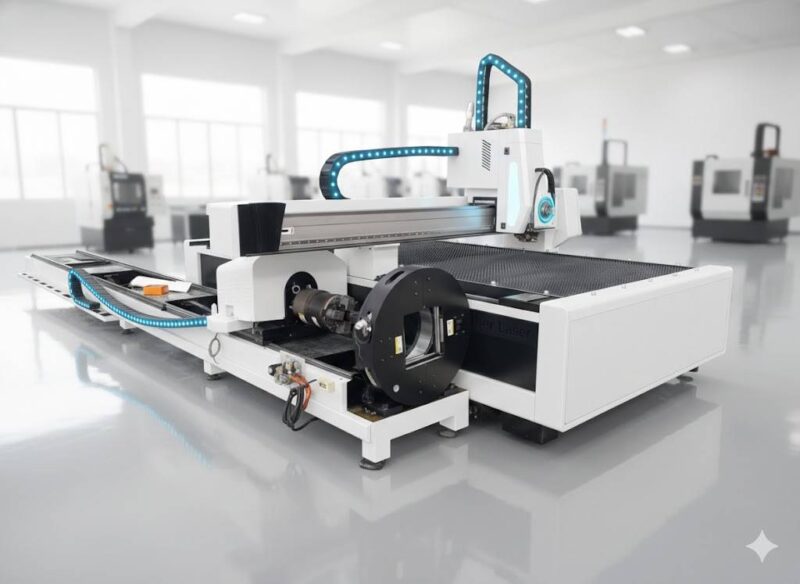
Advanced Fiber Laser Tube Processing Technology
Our CNC Fiber Laser Tube Cutting systems revolutionize metal fabrication by integrating high-precision cutting, punching, and profiling into a single automated workflow. Designed for versatility, this technology handles a wide array of profiles including Round, Square, Rectangular, and Oval tubes, as well as complex L-shaped and U-shaped channels.
- Precision Punching: High-speed hole punching with micron-level accuracy, eliminating the need for mechanical drilling or die-stamping.
- Complex Profiling: Advanced 3D pathing allows for intricate interlocking joints and specialized notch cuts, ideal for structural frames.
- High Material Efficiency: Intelligent nesting software minimizes scrap, reducing raw material costs across large production runs.
- Clean Finish: Delivers oxide-free, burr-free edges that require zero secondary grinding before welding.

Seamlessly processing multiple profiles with consistent precision.
Global Delivery & Logistics



From our high-tech manufacturing facility directly to your global site. PCL WeldCut ensures secure packaging, professional handling, and reliable international logistics to safeguard your equipment throughout the entire journey.