Advanced Integration of Fiber Laser Technology in Steel Fabrication
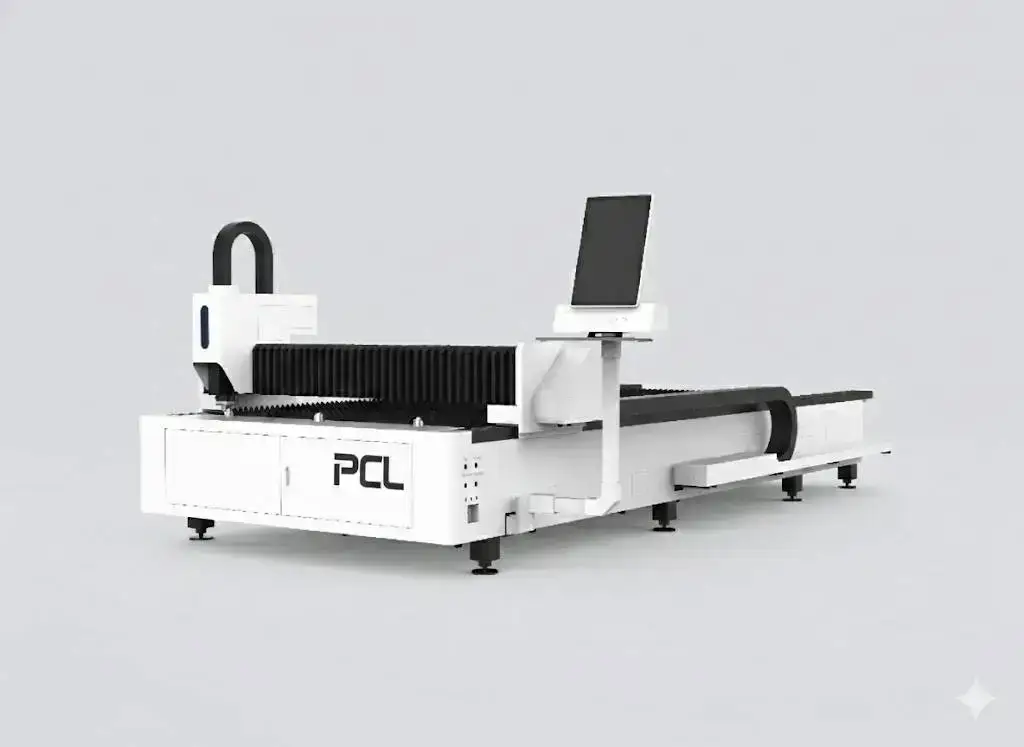
In the current landscape of industrial steel construction, the demand for tighter tolerances and accelerated project timelines has rendered traditional onsite processing obsolete. The implementation of fiber Laser Cutting technology mounted on magnetic crawler units represents a significant shift toward automated precision. Unlike stationary workshop lasers, these mobile systems bring high-energy density cutting capabilities directly to large-scale structural components such as bridge girders, storage tanks, and high-rise frameworks.
From an industrial engineering perspective, the primary objective is the reduction of non-value-added time. Traditional methods often require separate stages for layout marking, pilot hole drilling, and final cutting. The crawler-based fiber laser consolidates these steps into a single CNC-controlled sequence. By utilizing a high-brightness laser source, the system maintains a narrow kerf width and a minimal heat-affected zone (HAZ), which is critical for maintaining the structural integrity of high-tensile steel.
Mechanical Stability: The Role of Magnetic Crawler Systems
The efficacy of a mobile laser system is fundamentally dependent on the stability of its motion platform. Magnetic crawler systems utilize permanent or electro-permanent magnets to adhere to the steel substrate with forces exceeding several kilonewtons. This adhesion allows the crawler to navigate vertical, horizontal, and overhead surfaces without loss of position.
For the industrial engineer, the focus is on the precision of the drive train. High-torque stepper motors or AC brushless servos, coupled with high-reduction planetary gearboxes, ensure that the laser head moves with a repeatability of ±0.05mm. This level of accuracy is essential when executing complex geometries or circular apertures that must meet strict structural standards. The integration of encoders provides real-time feedback, allowing the system to compensate for surface irregularities or minor slippage, ensuring the digital blueprint is translated perfectly onto the steel.
The Precision Loop: Punching, Marking, and Cutting
One of the most significant advantages of fiber laser systems is the versatility of the beam parameters. By modulating the pulse frequency and power density, a single machine can perform three distinct functions:
1. High-Speed Marking
Before the structural cut begins, the fiber laser can mark assembly lines, part numbers, and welding reference points. This is achieved by lowering the average power and increasing the frequency to etch the surface of the steel without compromising the material depth. This eliminates the manual labor associated with chalk lines or mechanical scribing.
2. Precision Punching (Piercing)
Traditional mechanical punching or drilling introduces compressive stress into the steel. The fiber laser utilizes a multi-stage piercing process, where the beam gradually increases in intensity to create a clean entry point. This “soft-piercing” technique prevents blowback and ensures that the starting point of a cut is as clean as the finish.
3. Final Profile Cutting
The core of the operation is the high-velocity cutting phase. Using a focused beam of light with a wavelength of approximately 1.06 microns, the automated steel fabrication process achieves a melt-and-blow dynamic. Oxygen or nitrogen assist gases are used to expel the molten metal, resulting in a cut surface that meets ISO 9013 standards for perpendicularity and roughness.
Eliminating Secondary Operations: The “No-Grinding” Standard
A critical metric in industrial production is the cost of post-processing. Mechanical cutting or oxygen-fuel methods often leave significant dross, slag, and carbonization on the cut edge. This requires laborers to spend hours grinding the edges to prepare them for assembly or coating.
Fiber laser cutting, however, produces a dross-free edge due to the high energy concentration and the velocity of the assist gas. The resulting surface finish is often smooth enough for immediate assembly. By eliminating the grinding phase, facilities can reduce their labor costs by 30-40% and significantly decrease the risk of repetitive strain injuries among the workforce. Furthermore, the absence of mechanical impact means there is no deformation of the base material, ensuring that holes for bolts or fasteners align perfectly during site erection.
Thermal Management and Material Integrity
Engineers often express concern regarding the thermal impact of laser cutting on structural steel. Fiber lasers operate with such high speed that the dwell time of the heat source on any given point is extremely low. This results in a high-precision thermal processing environment where the Heat Affected Zone is virtually negligible.
The metallurgical properties of the steel—such as hardness and ductility—remain largely unchanged beyond a few microns from the cut edge. This is vital for structures subject to dynamic loads or fatigue, where a brittle HAZ could lead to crack initiation. By optimizing the cutting parameters (feed rate, gas pressure, and laser power), the crawler system ensures that the structural integrity of the workpiece is preserved throughout the fabrication cycle.
Operational Efficiency and ROI
The return on investment (ROI) for a magnetic crawler fiber laser system is realized through several channels:
- Material Utilization: CNC nesting algorithms can be applied to onsite materials, reducing scrap rates compared to manual layout and cutting.
- Labor Optimization: One technician can oversee multiple crawler units, shifting the labor focus from manual tool operation to system monitoring and quality assurance.
- Project Lead Times: By performing all hole punching and profile cutting in situ, the lead time for structural assemblies is reduced, allowing for faster project completion.
Furthermore, the fiber laser source itself is highly efficient, boasting wall-plug efficiencies of over 30%, which is significantly higher than older laser technologies. With no moving parts in the resonator and no mirrors to align in the delivery system (due to the fiber optic cable), maintenance intervals are extended, and downtime is minimized.
Safety and Environmental Considerations
Deploying a laser system in a field environment requires stringent safety protocols. Magnetic crawlers are equipped with “safety tether” systems and fail-safe magnetic locks to prevent detachment in the event of power loss. For the laser itself, the use of local shielding or “housing-on-head” designs minimizes the risk of reflected radiation.
Environmentally, the fiber laser is a cleaner alternative to chemical etching or high-waste mechanical processes. The particulate matter generated is localized and can be managed through integrated suction nozzles on the crawler, maintaining a cleaner work area and reducing the environmental footprint of the construction site.
Conclusion
The synergy between fiber laser precision and magnetic crawler mobility marks a new era in steel structure fabrication. By integrating punching, marking, and cutting into a single automated workflow, industrial engineers can achieve unprecedented levels of accuracy and efficiency. The elimination of secondary grinding and the preservation of material properties make this technology an essential asset for modern infrastructure projects. As the industry continues to move toward “smart” construction, the adoption of mobile, high-precision laser systems will be a defining factor in operational success.
-
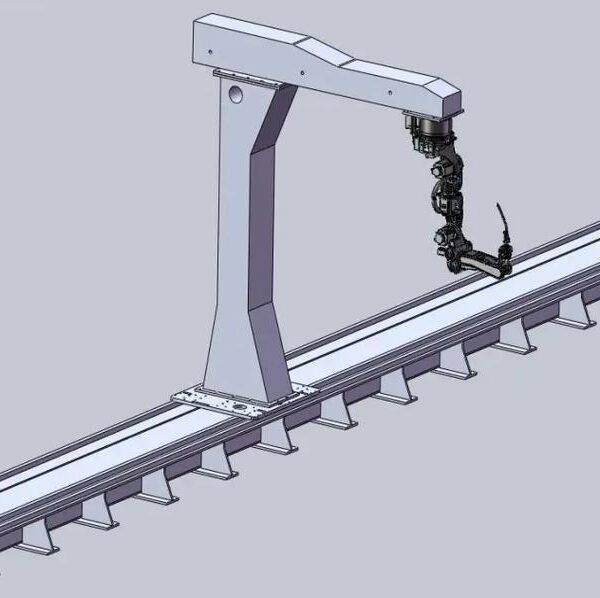

Cantilever Welding Robot solution
-
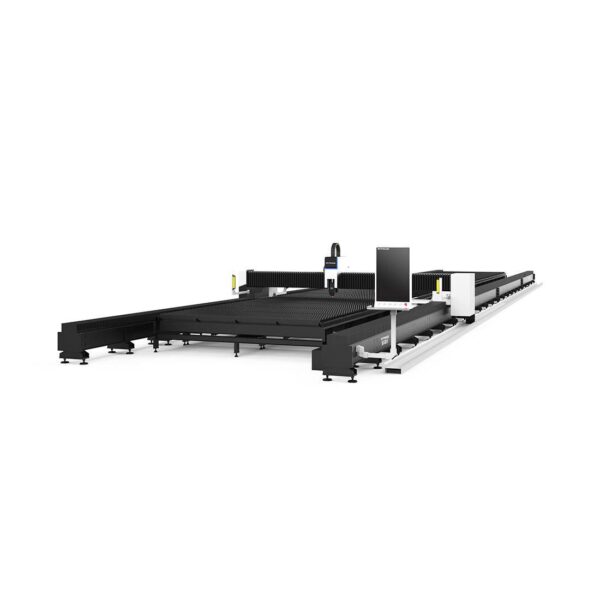

GF laser cutting machine
-
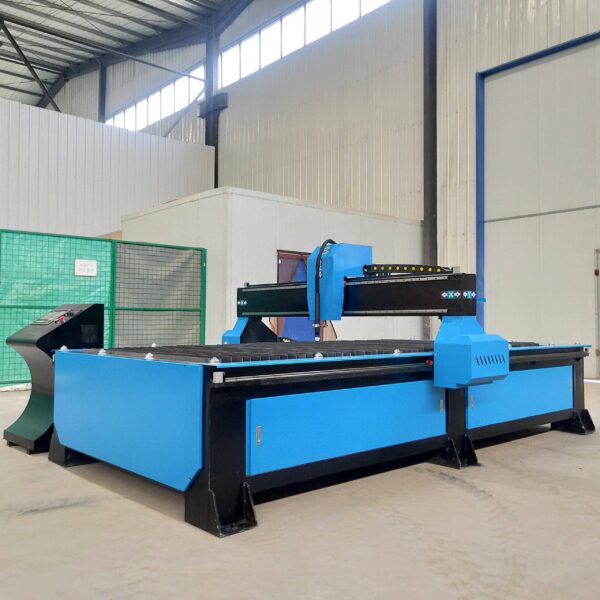
P3015 plasma cutting machine
-

LFP3015 Fiber Laser Cutter
-
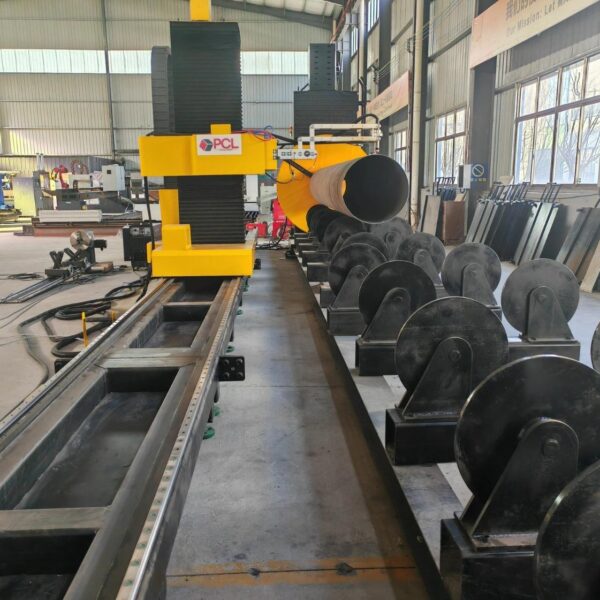
pipe plasma cutting machine
-
LFH 4020 Fiber Laser Cutting Machine
-
LFP4020
-
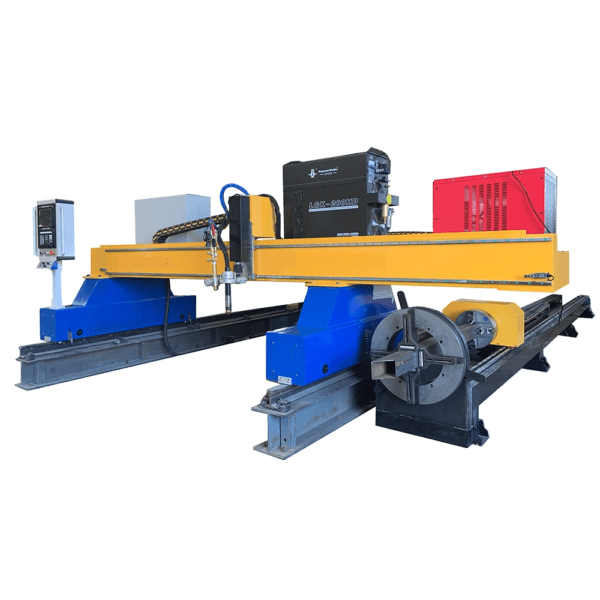
gantry plasma air cutting machine
-
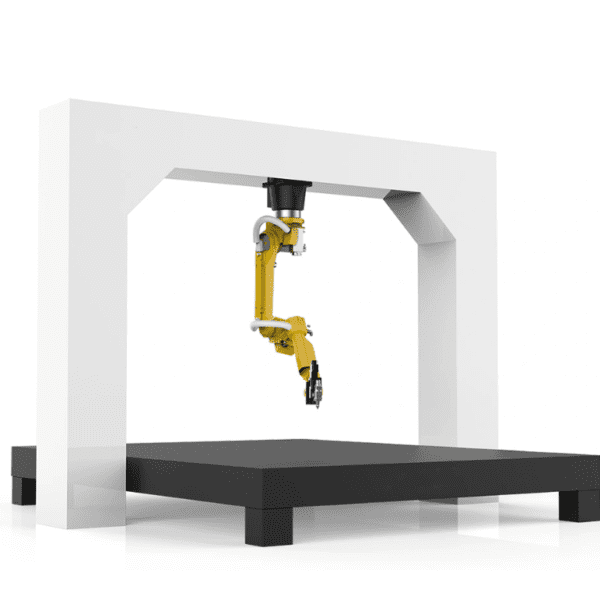
3D robot cutting machine
-
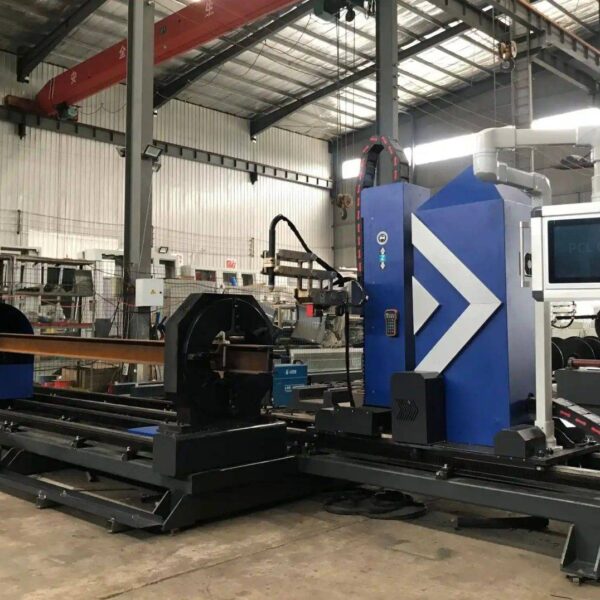
8 axis plasma cutting machine
-
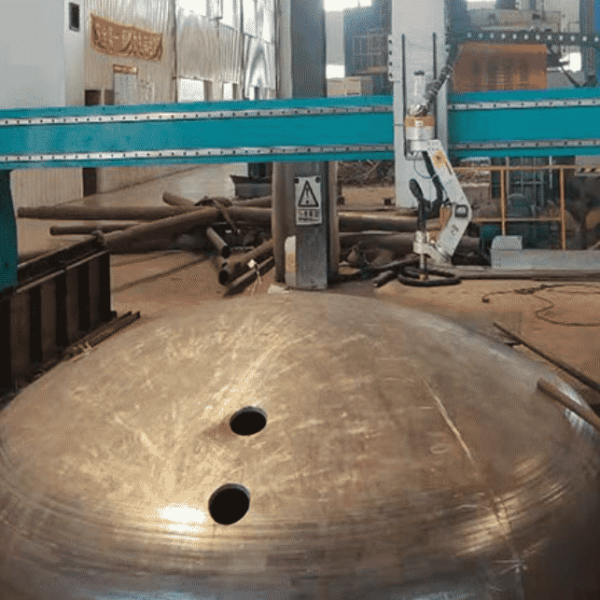
5 axis plasma cutting machine
-

LT360 tube laser cutting machine
-
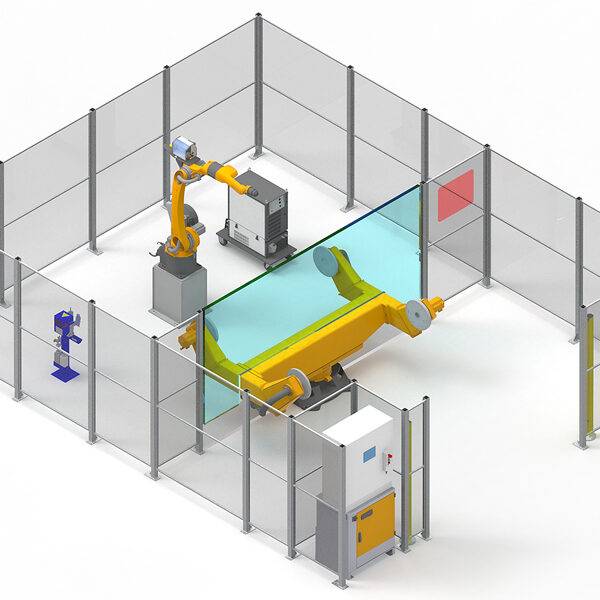
robot welding workstation
-
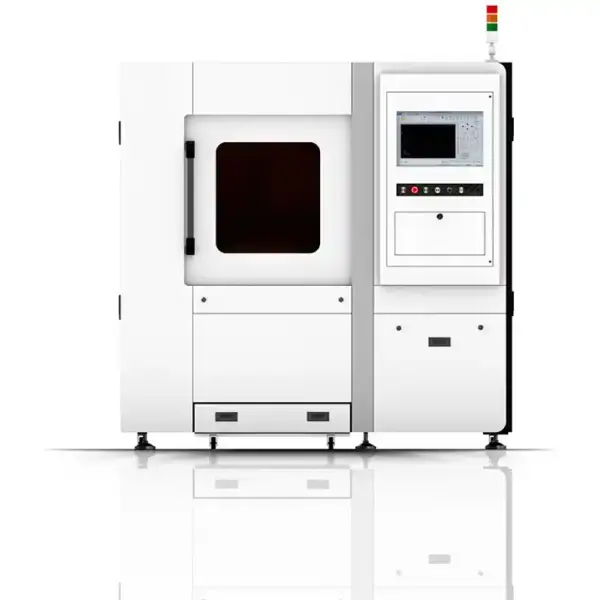
SF6060 fiber laser cutting machine
Advanced Fiber Laser Tube Processing Technology
Our CNC Fiber Laser Tube Cutting systems revolutionize metal fabrication by integrating high-precision cutting, punching, and profiling into a single automated workflow. Designed for versatility, this technology handles a wide array of profiles including Round, Square, Rectangular, and Oval tubes, as well as complex L-shaped and U-shaped channels.
- Precision Punching: High-speed hole punching with micron-level accuracy, eliminating the need for mechanical drilling or die-stamping.
- Complex Profiling: Advanced 3D pathing allows for intricate interlocking joints and specialized notch cuts, ideal for structural frames.
- High Material Efficiency: Intelligent nesting software minimizes scrap, reducing raw material costs across large production runs.
- Clean Finish: Delivers oxide-free, burr-free edges that require zero secondary grinding before welding.

Seamlessly processing multiple profiles with consistent precision.
Global Delivery & Logistics



From our high-tech manufacturing facility directly to your global site. PCL WeldCut ensures secure packaging, professional handling, and reliable international logistics to safeguard your equipment throughout the entire journey.