Advanced Fiber Laser Integration in Heavy-Duty Wind Tower Production
The global demand for renewable energy infrastructure has placed unprecedented pressure on the throughput and precision of wind tower manufacturing. Historically, heavy plate fabrication relied on multi-step processes that introduced cumulative tolerances and required significant manual intervention. The transition to high-power fiber laser technology has redefined these parameters. Modern fiber lasers, often ranging from 12kW to 30kW, provide the energy density required to penetrate the thick carbon steel plates typical of tower shells and flanges with extreme velocity and narrow kerf widths.
Unlike legacy thermal cutting methods, the fiber laser operates at a wavelength of approximately 1.06 microns, allowing for superior absorption in metallic materials. This results in a concentrated heat-affected zone (HAZ), which is critical for maintaining the metallurgical properties of the S355 or higher-grade steels used in wind energy. By minimizing the HAZ, the structural fatigue resistance of the tower remains intact, a non-negotiable requirement for offshore installations subjected to constant cyclic loading.
The Role of Laser Seam Tracking in Large-Scale Geometries
One of the primary challenges in wind tower fabrication is the sheer scale of the workpieces. Plates can exceed 12 meters in length and 4 meters in width, often featuring tapered geometries to accommodate the conical shape of the tower. During the loading and positioning phase, mechanical alignment is rarely perfect. This is where laser seam tracking becomes a vital component of the industrial engineering workflow.
A laser seam tracking system utilizes a dedicated optical sensor mounted adjacent to the cutting head. This sensor projects a laser line across the intended path, capturing real-time topographic data of the plate surface and any pre-cut edges. The system compensates for material bowing, thermal expansion, or minor misalignment of the raw plate on the cutting bed. By feeding this data back to the CNC controller with millisecond latency, the machine adjusts the Z-axis height and XY-coordinates dynamically. This ensures that the focal point remains optimal throughout the entire cut, preventing dross formation and ensuring that the bevel or vertical cut remains within the strict tolerances required for subsequent assembly phases.
Optimizing the Punch-Mark-Cut Workflow
Efficiency in a lean manufacturing environment is measured by the reduction of “touches”—the number of times a workpiece is handled or moved between stations. High-precision fiber laser machines designed for wind towers incorporate a comprehensive “punch-mark-cut” strategy.
Automated Marking and Identification
Before the primary cutting sequence begins, the fiber laser is utilized at lower power frequencies to mark the plate. This includes part identification numbers, fold lines for rolling, and orientation markers for internal components like ladders and platforms. Because the marking is performed by the same tool that performs the cutting, there is zero offset error between the identification marks and the part geometry. This digital continuity is essential for traceability in quality management systems.
Precision Punching and Hole Production
Bolt holes for flange connections and access doors must meet stringent circularity and diameter tolerances. The high-power fiber laser allows for “laser punching,” where holes are pierced and cut with such precision that they require no further reaming or drilling. The beam’s stability ensures that the taper of the hole is negligible, even in plates exceeding 25mm in thickness. This eliminates the need for secondary drilling stations, reducing the factory footprint and labor costs associated with material transport.
High-Speed Contour Cutting
The final stage is the high-speed contour cut. Fiber lasers excel here by maintaining feed rates that are significantly higher than traditional methods. The result is a clean, oxide-free (when using nitrogen) or low-oxide (when using oxygen) edge. The surface finish achieved is typically within the range of Rz 30-60 microns, which meets the requirements for immediate coating or welding without the need for manual grinding.
Eliminating Post-Process Grinding and Surface Preparation
In traditional industrial engineering models, a significant percentage of man-hours is dedicated to “clean-up” operations. Grinding dross and smoothing rough edges consume abrasive consumables and introduce ergonomic risks to the workforce. The precision of automated plate processing using fiber lasers virtually eliminates these requirements.
The high-pressure assist gas (typically O2 for carbon steel) flushes the molten material from the kerf so efficiently that the bottom edge of the cut remains dross-free. For the wind tower industry, where coatings must adhere to the steel for 25+ years in corrosive marine environments, the edge quality provided by the laser is a critical quality differentiator. The absence of mechanical stress during the cut also prevents micro-cracking at the edges, further enhancing the longevity of the tower sections.
Kinematics and Gantry Stability for Heavy Plate Cutting
To handle the weights and dimensions associated with wind tower fabrication, the fiber laser machine must be built on a heavy-duty gantry system. These gantries are often driven by dual-motor rack-and-pinion systems with high-resolution encoders. The stability of the gantry is paramount when the laser seam tracking system is making micro-adjustments at high speeds.
Industrial engineers must ensure that the cutting bed is designed with a high weight-bearing capacity and a slat configuration that minimizes “back-reflection” damage to the fiber optics. Modern systems also include sophisticated dust extraction and filtration units to handle the high volume of particulates generated by 20kW+ laser sources, ensuring a safe and clean working environment that complies with environmental regulations.
Economic Impact and ROI for Tower Manufacturers
The capital expenditure for a high-power fiber laser system is substantial, yet the Return on Investment (ROI) is realized through three primary channels:
Increased Throughput
By combining marking, punching, and cutting into a single cycle, the total processing time per tower section is reduced by 30-40%. The higher cutting speeds of fiber technology compared to older thermal methods directly translate to more “kilowatts on the plate” per hour.
Reduction in Consumable and Energy Costs
Fiber lasers operate at electrical efficiency rates of 35-45%, compared to the 10-12% of older CO2 technology. Furthermore, the lack of mechanical tooling (drills, punches) reduces the ongoing cost of consumables. The primary costs are shifted to electricity and assist gases, both of which are more predictable and manageable.
Labor Optimization
The high level of automation provided by laser seam tracking and CNC integration means that a single operator can oversee multiple machines. The elimination of manual grinding and secondary drilling allows the workforce to be reallocated to higher-value assembly and quality assurance roles.
Future-Proofing Wind Energy Infrastructure
As wind turbines grow in size and move further offshore, the components will only become larger and more complex. The flexibility of fiber laser technology allows manufacturers to adapt to these changes without replacing their core machinery. Software updates and sensor refinements for laser seam tracking can accommodate new alloy compositions or thicker plate specifications. By focusing on precision at the source—the cutting table—manufacturers ensure that every subsequent step in the wind tower fabrication process is more accurate, faster, and more cost-effective. The move toward a fully automated plate processing environment is not merely a trend; it is a technical necessity for the scalable production of renewable energy hardware.
-


Cantilever Welding Robot solution
-


GF laser cutting machine
-

P3015 plasma cutting machine
-

LFP3015 Fiber Laser Cutter
-

pipe plasma cutting machine
-
LFH 4020 Fiber Laser Cutting Machine
-
LFP4020
-

gantry plasma air cutting machine
-

3D robot cutting machine
-

8 axis plasma cutting machine
-

5 axis plasma cutting machine
-

LT360 tube laser cutting machine
-

robot welding workstation
-

SF6060 fiber laser cutting machine
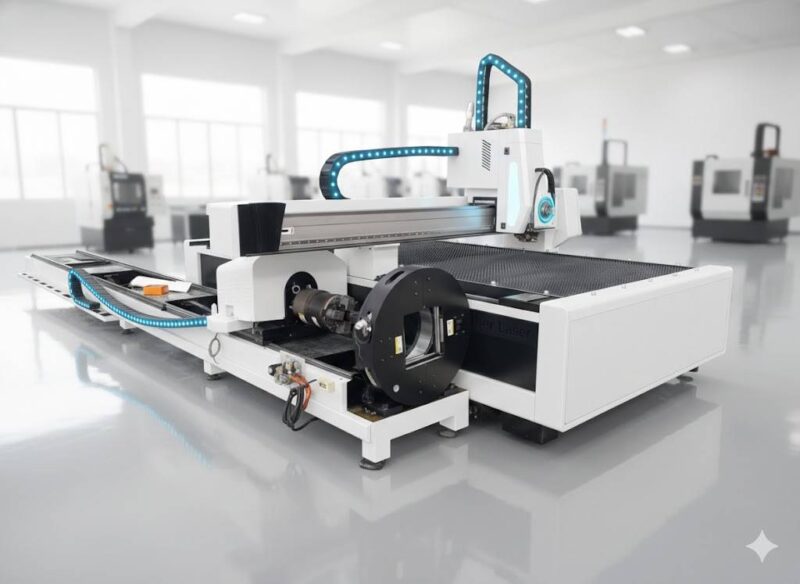
Advanced Fiber Laser Tube Processing Technology
Our CNC Fiber Laser Tube Cutting systems revolutionize metal fabrication by integrating high-precision cutting, punching, and profiling into a single automated workflow. Designed for versatility, this technology handles a wide array of profiles including Round, Square, Rectangular, and Oval tubes, as well as complex L-shaped and U-shaped channels.
- Precision Punching: High-speed hole punching with micron-level accuracy, eliminating the need for mechanical drilling or die-stamping.
- Complex Profiling: Advanced 3D pathing allows for intricate interlocking joints and specialized notch cuts, ideal for structural frames.
- High Material Efficiency: Intelligent nesting software minimizes scrap, reducing raw material costs across large production runs.
- Clean Finish: Delivers oxide-free, burr-free edges that require zero secondary grinding before welding.

Seamlessly processing multiple profiles with consistent precision.
Global Delivery & Logistics



From our high-tech manufacturing facility directly to your global site. PCL WeldCut ensures secure packaging, professional handling, and reliable international logistics to safeguard your equipment throughout the entire journey.