Advanced Fiber Laser Integration in Wind Tower Production
The manufacturing of wind towers requires high-volume throughput combined with stringent dimensional tolerances. Traditional fabrication methods often result in significant downtime due to secondary processing requirements. However, the adoption of fiber Laser Cutting technology has redefined the efficiency of processing large-format heavy plates. Unlike legacy systems, fiber lasers utilize an optical fiber doped with rare-earth elements to amplify light, resulting in a beam with high power density and exceptional focal stability. This allows for the precise cutting of thick-walled steel plates used in tower sections, ranging from the base flange to the top segments.
Precision Dynamics and Real-Time Seam Tracking
One of the critical challenges in large-scale plate fabrication is the inherent variance in material flatness and positioning. Laser seam tracking systems solve this by utilizing high-speed sensors that scan the material surface ahead of the cutting head. These sensors employ laser triangulation to detect the exact position of the plate edge or a pre-defined path.
From an industrial engineering perspective, this feedback loop is vital. The system adjusts the cutting head’s X, Y, and Z coordinates in real-time, compensating for thermal expansion or physical deviations in the plate. This ensures that the kerf remains consistent throughout the entire length of the tower segment, which can often exceed 10 meters. By maintaining a constant standoff distance, the fiber laser ensures uniform energy delivery, preventing dross formation and ensuring a clean exit melt.
Eliminating Post-Process Grinding Operations
In traditional heavy-duty fabrication, the cut edge often requires mechanical grinding to remove oxide layers or slag before the plates can move to the rolling station. Fiber laser systems operating with high-pressure nitrogen or oxygen assist gases produce an edge finish that meets the highest ISO standards for surface roughness.
Surface Quality and Metallurgical Integrity
The concentrated energy of a fiber laser results in a remarkably narrow Heat Affected Zone (HAZ). This is critical for wind tower structural integrity, as a wide HAZ can lead to grain growth and reduced fatigue resistance in the steel. Because the fiber laser produces a square, clean edge with minimal thermal distortion, the need for secondary grinding is eliminated. This reduction in labor-intensive steps directly improves the wind tower fabrication efficiency and reduces the overall floor space required for the production line.
Multifunctional Processing: Punch, Mark, and Cut
The modern fiber laser machine for wind towers is not merely a cutting tool; it is a multi-process machining center. High-speed fiber resonators allow for the integration of three distinct operations within a single nesting program.
Automated Punching and Piercing
Before the perimeter of a section is cut, the laser can perform ultra-fast piercing or “punching” for bolt holes or drainage ports. The software controls the ramp-up of laser power to ensure that the pierce point does not create a crater, maintaining the integrity of the surrounding material.
Precision Marking for Downstream Assembly
Automated marking and punching capabilities allow the machine to etch identification codes, alignment lines, and attachment points directly onto the plate surface. By using a lower power setting, the laser creates high-contrast marks that survive the subsequent rolling and coating processes. This eliminates manual layout work and the risk of human error during the assembly of internal components like platforms and ladder brackets.
Optimization of Kerf and Nesting Strategies
Material utilization is a primary driver of operational costs in wind energy. Fiber lasers offer a kerf width significantly narrower than other thermal cutting methods. Industrial engineers can utilize tighter nesting algorithms, reducing the scrap bridge between parts. When processing the trapezoidal or curved plates required for tapered tower sections, the precision of the fiber laser ensures that every millimeter of material is accounted for. The lack of mechanical force applied to the plate also means that smaller parts can be cut without the risk of shifting, further increasing the Yield Per Plate (YPP).
Technical Specifications of High-Power Fiber Resonators
For wind tower applications, resonators typically range from 12kW to 40kW. At these power levels, the cutting speed for 20mm to 50mm carbon steel is significantly higher than equivalent technologies. The beam quality (BPP) remains stable, ensuring that the taper of the cut is minimized. This is essential for the longitudinal seams of the tower, where the fit-up must be airtight and structurally perfect.
The integration of a laser seam tracking sensor also facilitates “on-the-fly” adjustments to the cutting parameters. If the sensor detects a change in material thickness or a slight change in alloy composition (detected via back-reflection monitoring), the CNC controller can modulate the frequency and duty cycle of the laser pulse to maintain the desired edge quality.
Operational Reliability and Maintenance Metrics
From an OEE (Overall Equipment Effectiveness) standpoint, fiber lasers offer a superior MTBF (Mean Time Between Failures) compared to CO2 or other gas-based lasers. The absence of moving parts in the laser source (such as turbines or blowers) and the elimination of external mirrors simplify the maintenance schedule. In a wind tower facility, where uptime is paramount, the reliability of a solid-state fiber system ensures that the cutting station does not become a bottleneck in the production flow.
Strategic Impact on Fabrication Cycles
The transition to fiber laser cutting with integrated seam tracking represents a shift toward “lean” fabrication in the wind energy sector. By delivering plates that are “ready-to-roll” immediately after cutting, manufacturers can shave hours off the production cycle of a single tower section. The precision of the laser-marked lines and the clean, dross-free edges ensure that the subsequent assembly stages proceed without the fit-up issues that typically plague large-scale steel construction.
Furthermore, the digitalization of the cutting process allows for full traceability. Every cut, mark, and punch is logged by the CNC system, providing a digital twin of the tower segment’s fabrication history. This level of data integration is essential for quality assurance in offshore and onshore wind projects where structural failure is not an option.
Conclusion: The Future of Tower Fabrication
The implementation of high-power fiber laser systems is no longer an optional upgrade but a necessity for competitive wind tower manufacturing. By combining the speed of fiber optics with the intelligence of laser seam tracking, facilities can achieve a level of precision that eliminates post-cut labor and maximizes material yield. This technological synergy ensures that the fabrication process is as sustainable and efficient as the energy the towers are built to produce.
-


LT240S tube laser cutting machine
-
LT120S tube laser cutting machine
-
Sale

Tank Fillet Welding Machine
Original price was: $1,000.00.$900.00Current price is: $900.00. -
Sale

MAK100 tube laser cutting machine
Original price was: $5,500.00.$5,000.00Current price is: $5,000.00. -

portable plasma air cutting machine
$1,200.00 -

2in1 fiber laser cutting machine
-

Air cooling Laser welding machine
-

HF h beam laser cutting machine
-

LT240 laser cutting machine
-

Laser welding machine
-


Cobot Welding Station
-

Gantry welding robot solution
-

Tracked Wheeled AGV Welding robot
-

LFH6020 Fiber laser cutting machine
-
LFP6020
-

robotic welidng machine
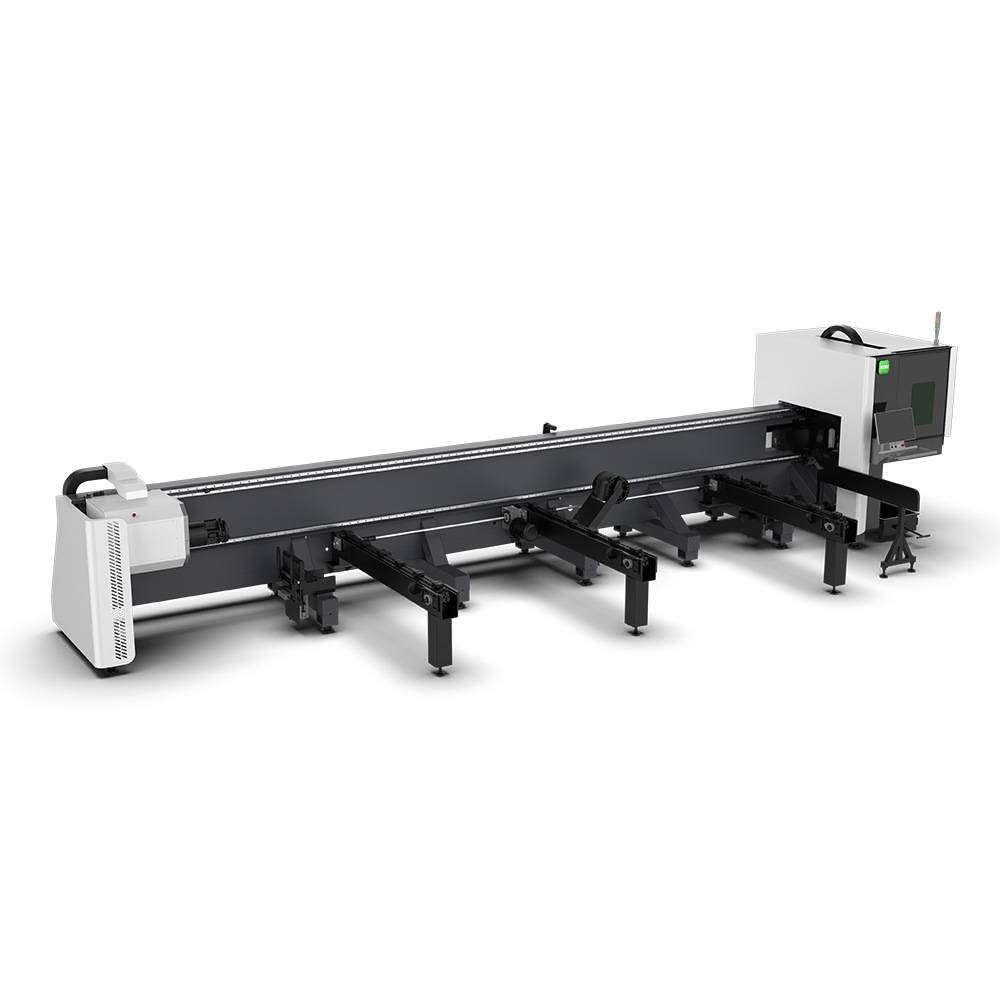
Advanced Fiber Laser Tube Processing Technology
Our CNC Fiber Laser Tube Cutting systems revolutionize metal fabrication by integrating high-precision cutting, punching, and profiling into a single automated workflow. Designed for versatility, this technology handles a wide array of profiles including Round, Square, Rectangular, and Oval tubes, as well as complex L-shaped and U-shaped channels.
- Precision Punching: High-speed hole punching with micron-level accuracy, eliminating the need for mechanical drilling or die-stamping.
- Complex Profiling: Advanced 3D pathing allows for intricate interlocking joints and specialized notch cuts, ideal for structural frames.
- High Material Efficiency: Intelligent nesting software minimizes scrap, reducing raw material costs across large production runs.
- Clean Finish: Delivers oxide-free, burr-free edges that require zero secondary grinding before welding.

Seamlessly processing multiple profiles with consistent precision.
Global Delivery & Logistics



From our high-tech manufacturing facility directly to your global site. PCL WeldCut ensures secure packaging, professional handling, and reliable international logistics to safeguard your equipment throughout the entire journey.