Optimizing Maritime Fabrication with High-Power Fiber Laser Systems
In the rigorous environment of modern shipbuilding, dimensional accuracy and structural integrity are the primary benchmarks of production quality. The transition toward a Fiber Laser Cutting Machine as the primary fabrication tool marks a significant departure from traditional thermal cutting methods. For an Industrial Engineer, the objective is clear: maximize the material utilization rate while minimizing post-processing man-hours. Fiber laser technology achieves this by delivering a high-energy density beam that maintains a narrow kerf width, ensuring that the thermal input is localized and the Heat Affected Zone (HAZ) is kept to an absolute minimum.
The application of fiber lasers in shipbuilding is not merely about speed; it is about the consolidation of manufacturing stages. A single machine now handles the complex geometries required for hull plates, bulkheads, and intricate internal stiffeners. By utilizing high-wattage resonators (often exceeding 20kW in heavy-duty yards), these systems penetrate thick carbon steel and stainless alloys with a level of edge quality that was previously unattainable without mechanical machining.
The Technical Role of Laser Seam Tracking in Large-Format Cutting
One of the greatest challenges in shipbuilding is the sheer scale of the workpieces. Plates measuring 12 to 24 meters in length are prone to inherent material stresses and physical warping. This is where Laser Seam Tracking becomes an indispensable asset. Unlike static cutting heads, a system equipped with seam tracking utilizes high-speed optical sensors to scan the topography of the plate in real-time.
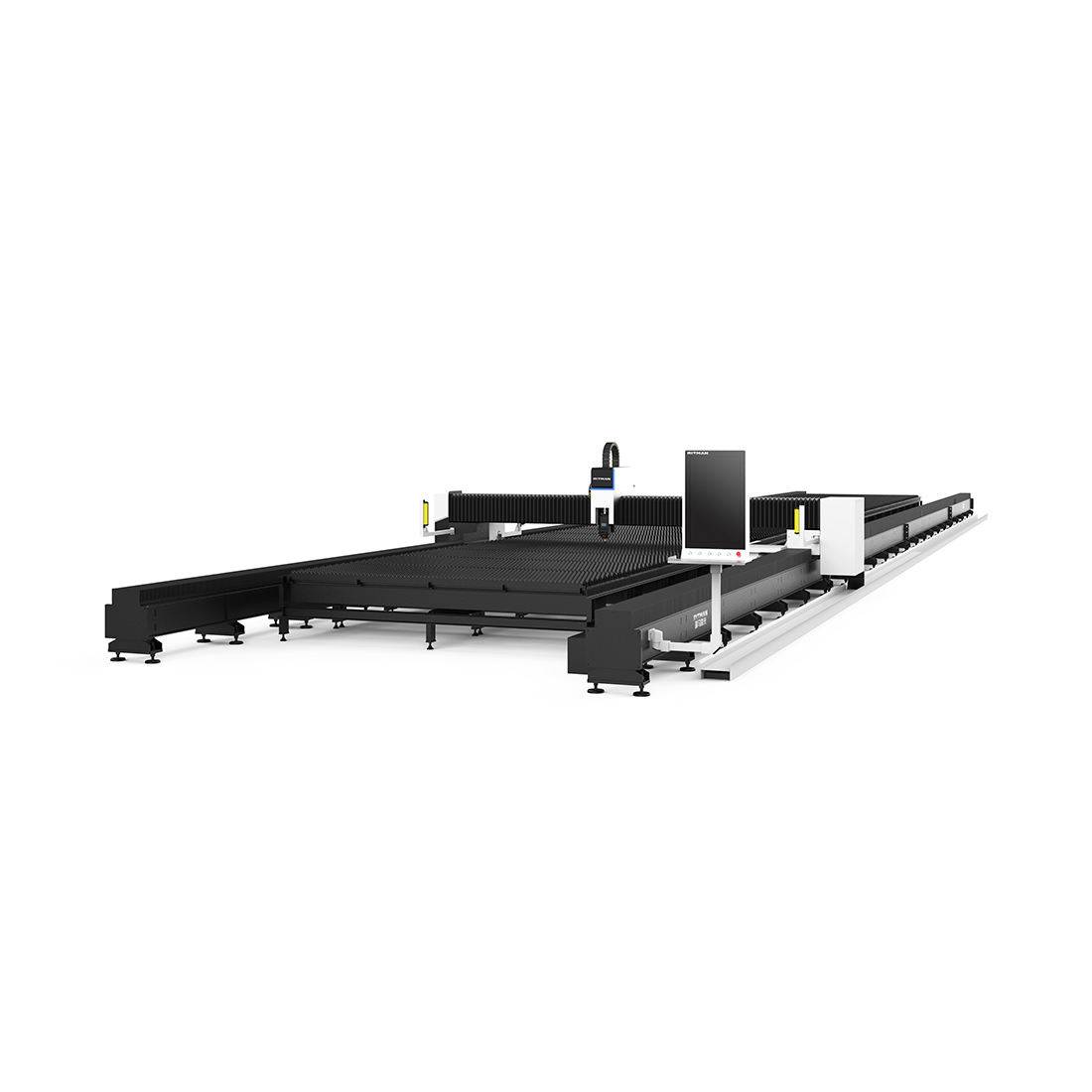
This sensor-driven feedback loop allows the CNC controller to adjust the Z-axis height and the X-Y trajectory instantaneously. By maintaining a constant standoff distance, the machine ensures that the focal point of the laser remains perfectly positioned relative to the material surface. In engineering terms, this eliminates the “dross” or slag that typically forms when the focal length fluctuates. For the shipyard, this means the edges are ready for immediate assembly, fulfilling the “zero-gap” requirement for modern automated fit-up stations.
Punch, Mark, and Cut: The Three-in-One Workflow
Efficiency in the fabrication shop is measured by the reduction of “touches” per part. A fiber laser system designed for Shipbuilding Automation integrates three distinct operations into a single continuous program:
1. Precision Punching (Piercing)
Instead of mechanical drilling or separate piercing stations, the fiber laser utilizes advanced pulsing parameters to create high-aspect-ratio holes. This is critical for fastener locations and drainage ports. The “intelligent pierce” sensors monitor the back-reflection of the laser to determine exactly when the material has been penetrated, moving to the cutting phase without wasting a millisecond of cycle time.
2. High-Speed Marking
Traceability is a regulatory requirement in maritime engineering. The laser can be modulated to etch part numbers, fold lines, and alignment marks directly onto the steel plate at extremely high speeds. Because this is done by the same tool head that performs the cut, the positional accuracy of the marks relative to the edges is perfect, removing the risk of human error during manual layout.
3. High-Precision Cutting
The final stage is the high-speed profile cut. Because the fiber laser operates at a wavelength that is highly absorbed by the metal, the cutting speed is significantly higher than alternative methods for thin to medium-thickness plates. Even on the thickest hull sections, the consistency of the cut surface is maintained by the laser seam tracking system, ensuring verticality and smoothness.
Eliminating the Grinding Bottleneck
From a lean manufacturing perspective, grinding is a non-value-added activity. In traditional shipyards, secondary grinding of edges is mandatory to remove oxidized layers and dross before the plates can be moved to the assembly jig. Using a Fiber Laser Cutting Machine eliminates this entire department. The fiber laser’s ability to use nitrogen or high-pressure oxygen as a shielding gas results in a clean, oxide-free, or minimally oxidized edge that is weld-ready.
The economic impact of removing grinding from the production flow is substantial. It reduces labor costs, eliminates the noise and dust pollution associated with abrasive tools, and prevents the ergonomic injuries common in manual finishing tasks. Furthermore, the precision of the laser cut (often within +/- 0.1mm) ensures that when plates are brought together for joining, the fit-up is perfect, which is a prerequisite for subsequent automated processes.
Structural Integrity and Material Science
In shipbuilding, the metallurgical properties of the cut edge are as important as the dimensions. Fiber lasers deliver a concentrated energy beam that moves quickly, which means the surrounding metal spends very little time at critical phase-transformation temperatures. This results in a very narrow Heat Affected Zone. For high-tensile steels used in ice-breaking vessels or naval applications, preserving the base metal’s characteristics is vital. The lack of micro-cracking on the laser-cut edge increases the fatigue life of the ship’s hull, a critical factor for vessels operating in harsh maritime environments.
Advanced Nesting and Material Utilization
Shipbuilding involves cutting thousands of unique, often curved, parts. Modern fiber laser systems are paired with sophisticated nesting software that calculates the most efficient layout on the plate. Because the laser beam is so narrow (the kerf is roughly 0.2mm to 0.4mm), parts can be nested much closer together than with any other thermal process.
This improves the Shipbuilding Plate Processing yield by several percentage points. When dealing with specialized marine-grade steel, a 3% to 5% increase in material utilization can translate to hundreds of thousands of dollars in annual savings. Additionally, the software can utilize “common line cutting,” where two parts share a single cut path, further reducing the total time the laser is active and saving gas consumption.
Conclusion: The Engineer’s Perspective on ROI
The decision to implement a Fiber Laser Cutting Machine with Laser Seam Tracking is driven by the need for technical excellence and operational speed. By integrating punching, marking, and cutting into a single automated cycle, shipyards can bypass the traditional bottlenecks of manual layout and secondary grinding. The result is a streamlined production line where accuracy is guaranteed by sensor-based tracking, and the final output meets the highest standards of maritime structural engineering. As the industry moves toward further digitalization, the fiber laser stands as the foundational tool for the next generation of vessel construction.
-


LT240S tube laser cutting machine
-
LT120S tube laser cutting machine
-
Sale

Tank Fillet Welding Machine
Original price was: $1,000.00.$900.00Current price is: $900.00. -
Sale

MAK100 tube laser cutting machine
Original price was: $5,500.00.$5,000.00Current price is: $5,000.00. -

portable plasma air cutting machine
$1,200.00 -

2in1 fiber laser cutting machine
-

Air cooling Laser welding machine
-

HF h beam laser cutting machine
-

LT240 laser cutting machine
-

Laser welding machine
-


Cobot Welding Station
-

Gantry welding robot solution
-

Tracked Wheeled AGV Welding robot
-

LFH6020 Fiber laser cutting machine
-
LFP6020
-

robotic welidng machine
Advanced Fiber Laser Tube Processing Technology
Our CNC Fiber Laser Tube Cutting systems revolutionize metal fabrication by integrating high-precision cutting, punching, and profiling into a single automated workflow. Designed for versatility, this technology handles a wide array of profiles including Round, Square, Rectangular, and Oval tubes, as well as complex L-shaped and U-shaped channels.
- Precision Punching: High-speed hole punching with micron-level accuracy, eliminating the need for mechanical drilling or die-stamping.
- Complex Profiling: Advanced 3D pathing allows for intricate interlocking joints and specialized notch cuts, ideal for structural frames.
- High Material Efficiency: Intelligent nesting software minimizes scrap, reducing raw material costs across large production runs.
- Clean Finish: Delivers oxide-free, burr-free edges that require zero secondary grinding before welding.

Seamlessly processing multiple profiles with consistent precision.
Global Delivery & Logistics



From our high-tech manufacturing facility directly to your global site. PCL WeldCut ensures secure packaging, professional handling, and reliable international logistics to safeguard your equipment throughout the entire journey.